There are few sights that leave you speechless like the mighty Hubbard Glacier Alaska. Stretching across the rugged coast where icy wilderness meets the sea, this massive river of ice feels alive — creaking, cracking, and groaning as it slowly reshapes the landscape. For me, seeing Hubbard Glacier was one of those moments that stops you mid-sentence, camera in hand, just watching in awe.
We visited Hubbard Glacier as part of our Alaska cruise, and it turned out to be one of the most unforgettable stops along the way. Standing on the deck surrounded by floating icebergs while the glacier calved in the distance was a reminder of just how powerful nature can be.
If you’re planning an Alaska trip — whether by cruise or by land — Hubbard Glacier deserves a place on your list. In this post, I’ll take you through what makes it so extraordinary: how it formed, how big it is, what calving really means, and how you can see it for yourself.
What Is Hubbard Glacier?
Hubbard Glacier is one of Alaska’s true natural giants — a massive tidewater glacier that flows from the heart of the Saint Elias Mountains all the way to the Gulf of Alaska. It’s named after Gardiner Hubbard, the founder of the National Geographic Society, which feels fitting for something so jaw-droppingly photogenic.
What makes Hubbard Glacier so fascinating is that it’s still actively advancing. While most glaciers around the world are retreating due to climate change, Hubbard is one of the rare few that continues to grow. Its steady push toward the sea is a reminder that glaciers are living, moving entities — sculpting valleys, grinding rock, and slowly reshaping the Alaskan landscape with each passing year.
Formed over thousands of years from compacted snow that turned into dense blue ice, Hubbard Glacier stretches about 76 miles (122 kilometers) from its source all the way to Disenchantment Bay, where it meets the ocean. At its face, the glacier towers roughly 600 feet high, with around 350 feet visible above the water and the rest hidden below the surface — an icy mountain in motion.
When you first spot it, you’ll notice the deep blue color glowing from within. That color comes from years of pressure that forced out air bubbles, allowing the dense ice to absorb all colors of the spectrum except blue. It’s one of those rare natural phenomena that makes photographers like me go quiet for a second, just taking it all in through the lens.
The Power of Calving – When Ice Meets the Sea
What Is Calving?
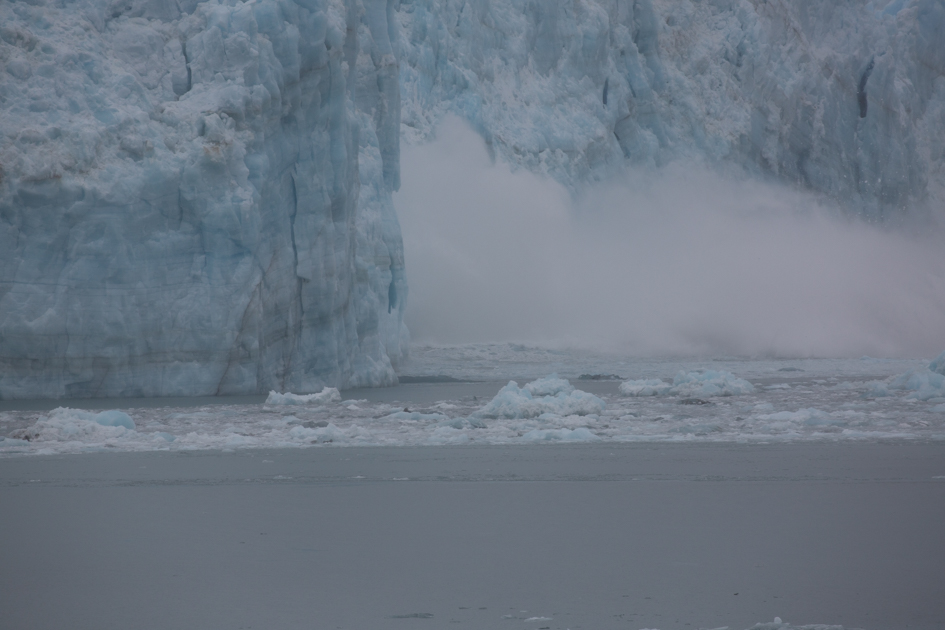
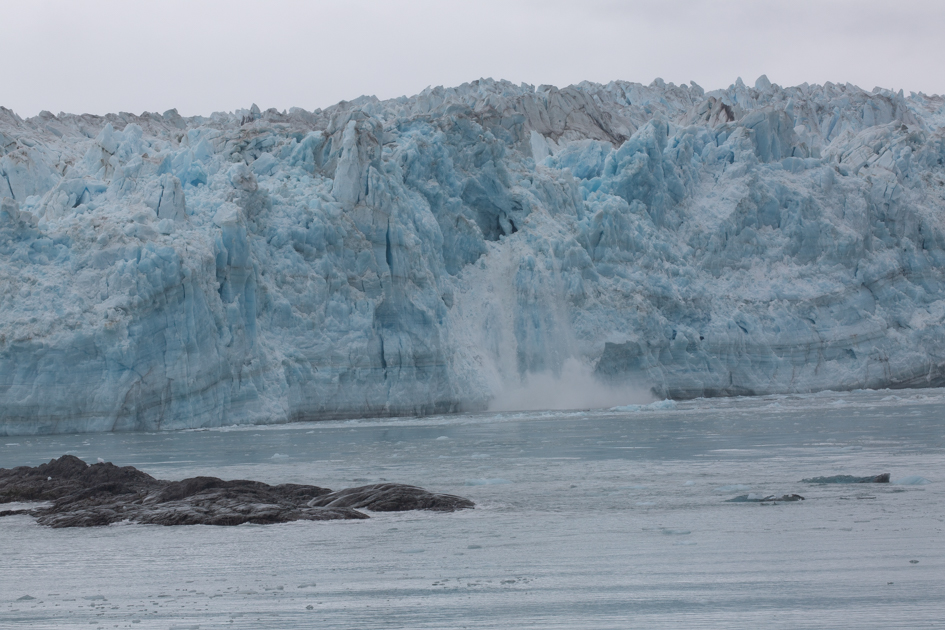
If you’ve never seen a glacier calve before, imagine a skyscraper of ice cracking apart and crashing into the sea with a thunderous roar — followed by a wave that ripples across the bay. That’s calving. It’s nature’s version of fireworks, and Hubbard Glacier puts on one of the best shows in Alaska.
Calving happens when pressure builds as the glacier pushes forward into warmer seawater. The front edge, called the glacial terminus, can no longer support its own weight, so huge chunks of ice — sometimes the size of a house — break off and tumble into the ocean. The sound alone is unforgettable. It starts with a faint rumble, then a sharp crack, followed by a booming echo that bounces off the surrounding mountains.
The Age of the Ice
What’s truly mind-blowing is realizing that the ice you’re watching fall has been on a thousand-year journey. Some of those deep blue blocks began as snow that fell over 400 years ago — compacted, compressed, and pushed slowly toward the sea by the glacier’s immense weight. When one breaks free, you’re literally seeing centuries of frozen history meet the ocean in a single, fleeting moment.
That color — that brilliant, almost electric blue — comes from the same age and density that’s taken centuries to form. With all the air squeezed out, the ice absorbs every color of the spectrum except blue, creating that glow that seems to come from within.
Witnessing the Spectacle
As we stood on the deck of our ship, cameras ready, the glacier came alive. Every few minutes, another section would shear off, sending a plume of spray into the air and scattering smaller icebergs across the bay. You can almost feel the ground vibrate beneath your feet, even from a distance.
Calving isn’t just a dramatic spectacle — it’s part of how a glacier maintains balance. As snow and ice continue to accumulate up high, the glacier flows forward and sheds ice at its front. This constant movement is why Hubbard Glacier is often called a “living glacier.” It’s always changing, reshaping itself, and reminding visitors that Alaska’s wilderness is anything but still.
For photographers, calving moments are pure gold. The best approach? Have your camera ready before it happens. By the time you hear the crack, it’s usually too late to capture the action. I’ll share more photography tips later in the post, but trust me — you’ll want your shutter finger ready for this one.
How to See Hubbard Glacier
Getting There
Most travelers experience Hubbard Glacier as part of an Alaska cruise, and that’s exactly how we saw it. Cruise ships sail into Disenchantment Bay, slowly approaching the glacier’s towering face while weaving through fields of floating ice. The sound of cracking ice against the hull and the cold, crisp air make the experience feel almost otherworldly.
We visited on a Royal Caribbean cruise, and the experience couldn’t have been more perfect. The ship spent nearly an hour at the glacier, turning a full 360 degrees so that everyone on board could enjoy uninterrupted views. We had a balcony room, which meant we could sit outside with a cup of coffee, bundled up in our jackets, and just watch as massive slabs of ancient ice calved into the water. It was one of those moments where time seemed to slow — just us, the sound of the ice, and the sheer immensity of Alaska’s wild beauty.
Some ships stop just a few miles from the glacier’s face, giving passengers plenty of time to watch for calving events and photograph the incredible shades of blue. If you’re lucky, the captain might linger a little longer so everyone can capture that perfect shot. Smaller expedition cruises and charter boats sometimes get even closer — weather and ice permitting.
If you’re traveling independently, you can also reach Hubbard Glacier Alaska by flying into Yakutat, a small coastal town between Anchorage and Juneau. From there, day excursions and scenic flights give you a bird’s-eye view of this massive ice field and the surrounding mountain range.
Best Time to Visit
The Alaska cruise season runs from May through September, with June and July offering the best chance of clear skies and active calving. Morning visits often bring softer light — perfect for photography — while later in the day, the sun tends to hit the glacier face more directly, deepening the contrast and that signature blue glow.
If you’re after great light for photos, think back to my post on Understanding Light in Landscape Photography for a few practical tips. Early morning and late afternoon often produce that subtle golden touch on the ice, though even midday can work when clouds act as a giant softbox.
What to Bring
Even in summer, Disenchantment Bay can be chilly, so layer up. Bring gloves thin enough to handle your camera, a warm hat, and something to keep your gear dry from sea spray. A zoom lens in the 70-300mm range works beautifully for isolating details on the glacier face or catching a calving moment in action. I wrote more about that in Travel Photography for Beginners and Building Your Travel Photography Kit.
If you’re shooting from a cruise ship, use the railing or a monopod for extra stability — those subtle vibrations can blur your shots when you zoom in tight. And don’t forget to just put the camera down once in a while and take it all in. Some memories are meant to live outside the viewfinder.
Photography Tips for Capturing Hubbard Glacier Alaska
Dealing with Bright Light and Glare
Photographing a glacier is a bit like photographing a giant mirror — everything reflects. Between the ice, water, and sky, your camera’s meter can easily get confused. I recommend shooting in manual mode or using exposure compensation to dial things down by about –⅔ to –1 stop. This keeps the highlights from blowing out and helps preserve all those subtle blue tones that make Hubbard Glacier so mesmerizing.
If you have one, a polarizing filter can be a big help for cutting glare on the water and deepening the contrast in the sky. Just remember, if you’re on a cruise ship, the angle of light changes constantly as the ship turns, so check your filter often.
You can read more about managing light and tricky conditions in my post Understanding Light in Landscape Photography — it pairs perfectly with this kind of scene.
Framing the Shot from a Moving Ship
Shooting from a cruise balcony or deck adds its own set of challenges. Ships move — even when they seem still — so keep your shutter speed high enough to freeze the motion, especially if you’re zoomed in. I generally start around 1/500 second and adjust based on light.
Use railings for stability, or brace your arms against the balcony edge to minimize shake. If your camera has image stabilization, this is where it earns its keep. And if you’re traveling with a Fuji X-T5 or similar mirrorless camera, try setting your burst mode to capture a few frames per second. It increases your odds of catching that perfect calving moment mid-splash.
I talk more about shooting on the move in Mastering the Art of Composition on the Road — the principles there apply beautifully to photographing glaciers from a cruise ship.
Finding the Story in the Ice
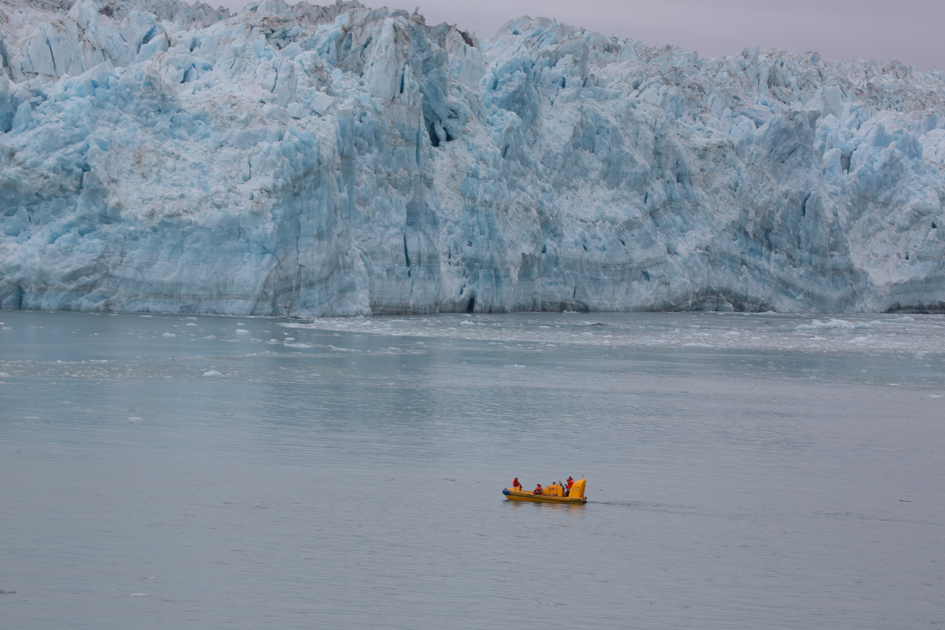
Beyond the technical side, remember that photography is about storytelling. Look for context — the contrast between the deep blue ice and the rugged brown cliffs, the scale of tiny tour boats below the glacier face, or even your fellow passengers bundled up on deck. Those details help tell the story of what it felt like to be there.
For me, that mix of stillness and power was unforgettable — the sound of ice cracking, the swirl of mist, and the quiet awe that fell over everyone on deck. If a photo can convey even a fraction of that feeling, it’s a keeper.
Standing Before Time: Why Hubbard Glacier Alaska Stays With You
There’s something humbling about standing before a wall of ice that has been moving, growing, and reshaping itself for centuries. Watching Hubbard Glacier Alaska calve isn’t just a sightseeing moment — it’s a reminder that we’re witnessing the Earth at work, still in motion after thousands of years.
As our Royal Caribbean ship slowly turned away and the glacier faded into the mist, I couldn’t help but feel a quiet respect for the raw power and patience of nature. The ice that crashed into the sea that morning had been frozen long before any of us were born — and will continue its slow journey long after we’ve left Alaska’s waters behind.
That’s what I love most about exploring places like this. They make you feel small in the best possible way — the kind of small that inspires gratitude, reflection, and maybe another trip to Alaska (because once you’ve seen one glacier, you’ll want to see them all).
If you’re planning your own Alaska adventure, make time for Hubbard Glacier. It’s not just another stop on a cruise — it’s a reminder of how beautiful and resilient our planet truly is. For other Alaska must see destinations see the Alaska Region Travel Guide.
Check out other Alaska gems to visit:
- Whale Watching in Alaska
- Ketchikan
- Skagway
- Alaska Back Roads
- White Pass and Yukon Railroad
- Denali National Park
- Fairbanks
For more inspiration on routes like this, visit my cornerstone post Scenic Drives and Road Trips Across America.
Stay Inspired – Subscribe to the Back Roads Lens Newsletter
If you love exploring hidden corners of the world, finding beauty in the details, and picking up a few travel photography tips along the way, make sure you’re signed up for the Back Roads Lens Newsletter. You’ll get new stories, photography guides, and destination ideas delivered straight to your inbox — perfect for your next road (or sea!) adventure.
👉 Join the Newsletter Here
For more details, see Hubbard Glacier Britannica.