When we think about photographing youth baseball, it’s easy to picture the obvious moments.
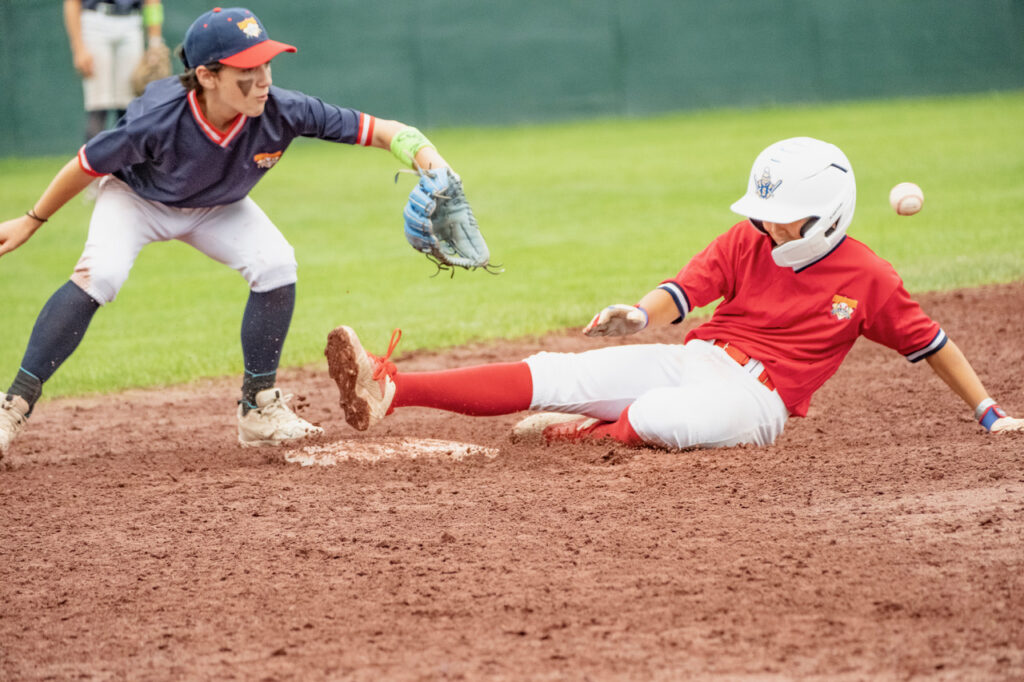
The pitcher releasing the ball. The bat making contact. A runner sliding into home. A player stretching his glove toward a ball that seems just beyond his reach.
Those are the photographs we naturally try to capture.
And they’re important.
But after spending a week photographing youth baseball at Cooperstown Dreams Park, I was reminded that some of my favorite photographs weren’t necessarily of the biggest plays.
They were the moments in between.
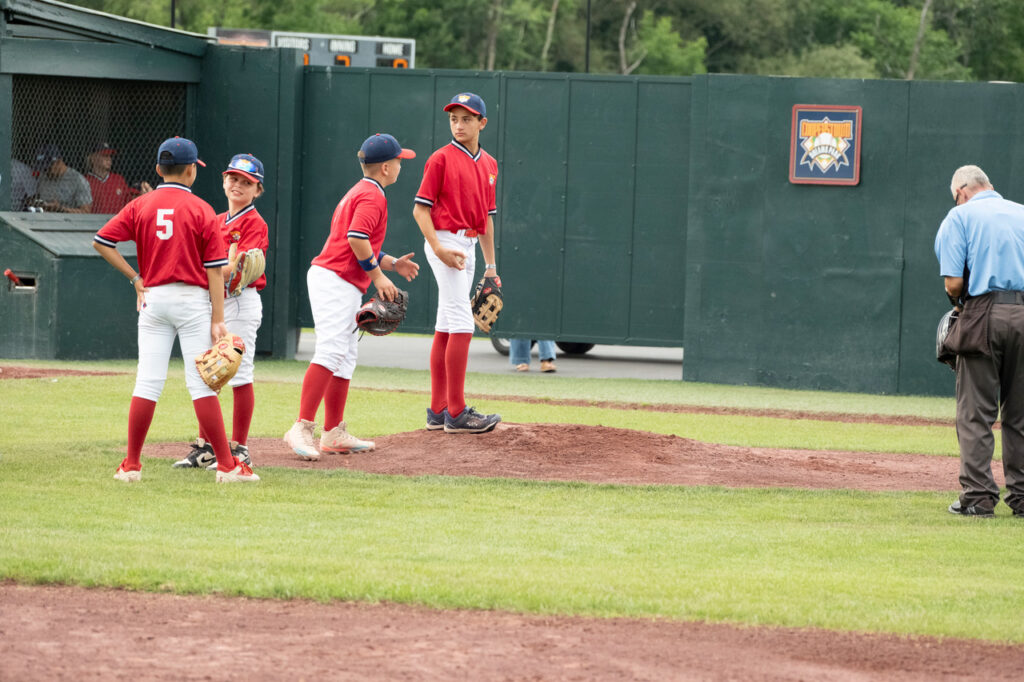
A conversation in the dugout.
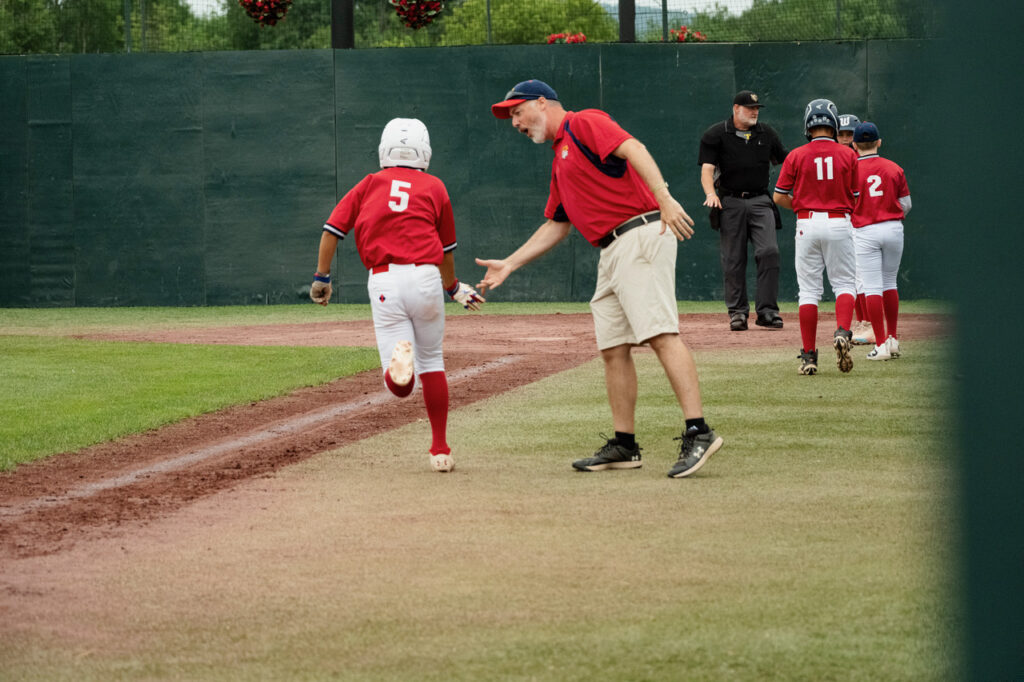
Teammates celebrating together.
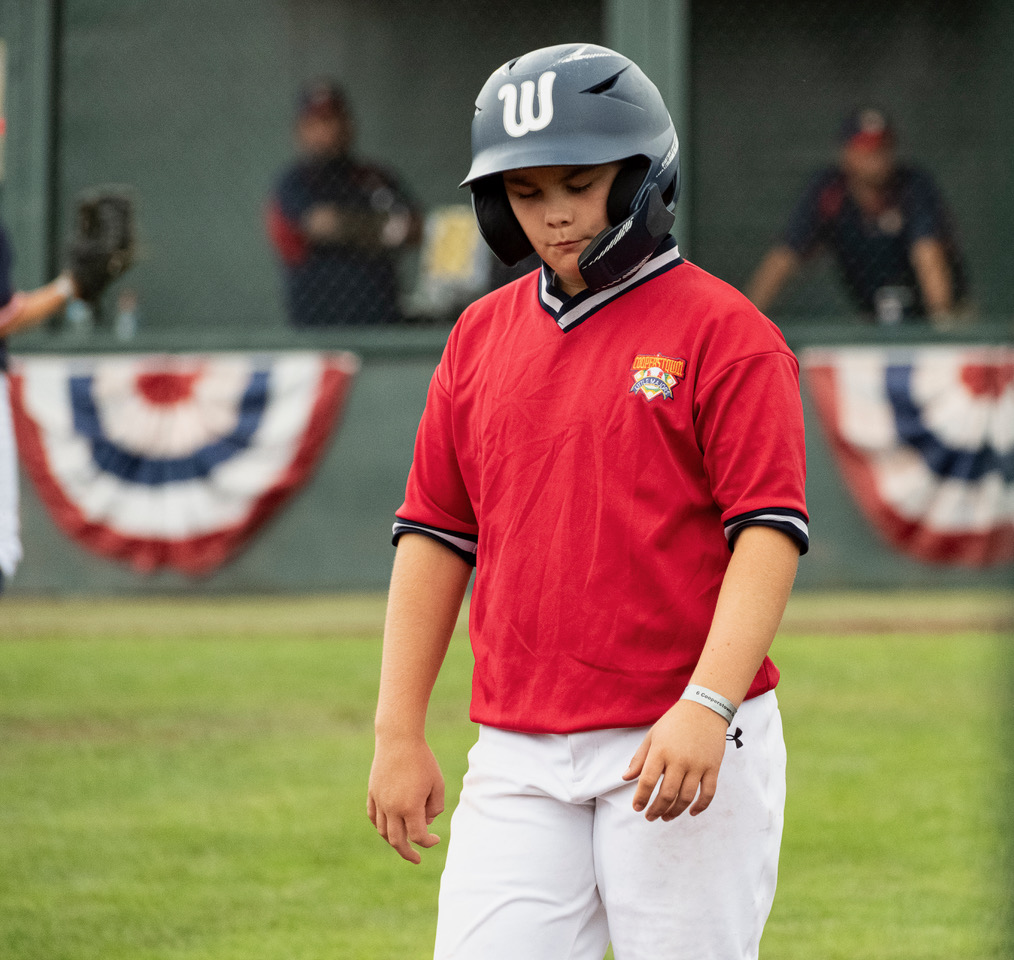
The expression on a boy’s face after a difficult inning.
A hand on a shoulder.
Players walking back to the bunkhouse together after a long day.
Those photographs reminded me of something I’ve learned repeatedly through travel photography:
If we only photograph the obvious, we often miss the story.
Sports Photography Is About More Than Action
There’s certainly a challenge to photographing baseball action.
Everything happens quickly. You have to anticipate where the ball is going, understand what might happen next and be ready before the play begins.
That’s part of the fun.
However, if I spend an entire game concentrating only on the ball, I’m documenting the game rather than telling its story.
There’s a difference.
The final score tells us who won.
An action photograph can show us how a run was scored.
A storytelling photograph can show us what that moment meant.
That’s the part of sports photography I find most interesting.
Learn to Anticipate the Game
You don’t need to be an expert in baseball to photograph it well, but understanding the rhythm of the game makes a tremendous difference.
Instead of reacting to every play, start thinking about what could happen next.
If there’s a runner on first, where might the next play develop?
With a runner approaching home, where will the catcher be looking?
After a big hit, where are the teammates likely to gather?
When a pitcher gets out of a difficult inning, what happens as he walks toward the dugout?
Anticipation gives you time to compose rather than simply react.
Sometimes that means keeping the camera on a player after the obvious action has ended.
The celebration may be better than the hit.
The reaction may tell more of the story than the play itself.
Use a Fast Enough Shutter Speed
Baseball may feel slow when you’re sitting in the stands, but it becomes surprisingly fast when you try to freeze it with a camera.
For most action, I like to start around 1/1000 second.
For faster movement—a pitch, a swing, a runner stealing a base or a close play—I may move toward 1/1600 or 1/2000 second when the available light allows.
The exact number isn’t as important as understanding what the shutter speed is doing.
If players aren’t sharp, increase it.
I would rather raise my ISO and capture a sharp, meaningful moment than end up with a beautifully clean file of a blurry player.
Modern cameras handle higher ISO remarkably well, so don’t be afraid to let the camera work a little harder when you need the shutter speed.
Let the Aperture Help Separate the Player
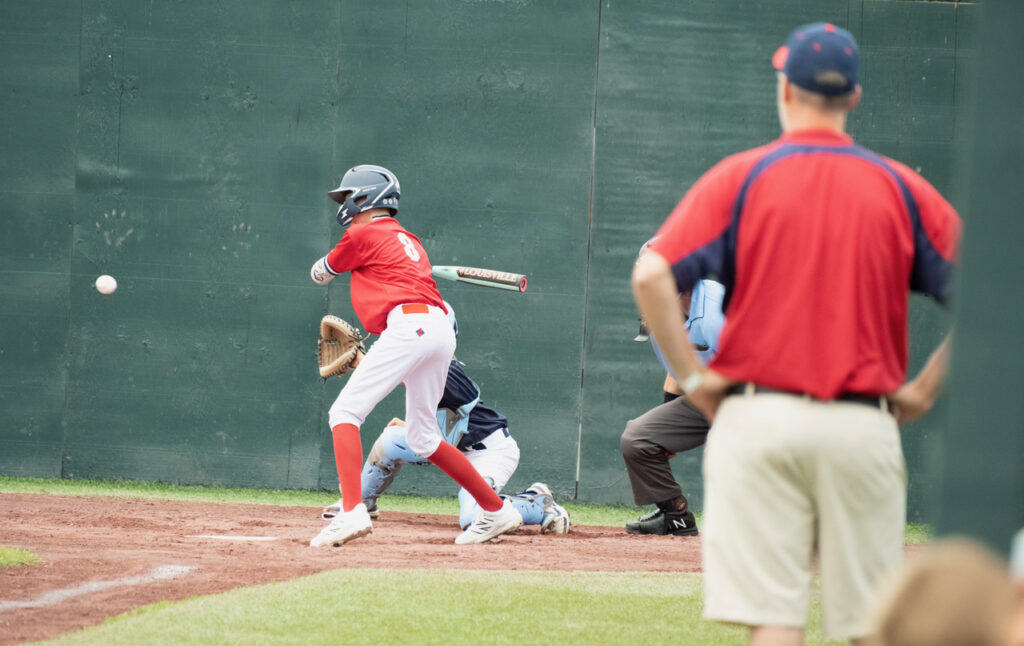
Youth baseball fields can be visually busy.
There are fences, signs, spectators, cars, equipment, dugouts and other players competing for attention in the background.
A wider aperture can help isolate your subject from that clutter.
Depending on the lens and how much depth of field I need, I might work around f/4 to f/5.6.
Still, I don’t automatically shoot everything wide open.
Sometimes the players around the main subject are part of the story.
A batter celebrating alone is one photograph.
A batter crossing home plate while his entire team erupts behind him is another.
Before choosing an aperture, ask yourself what needs to be sharp to tell the story.
Don’t Be Afraid of Higher ISO
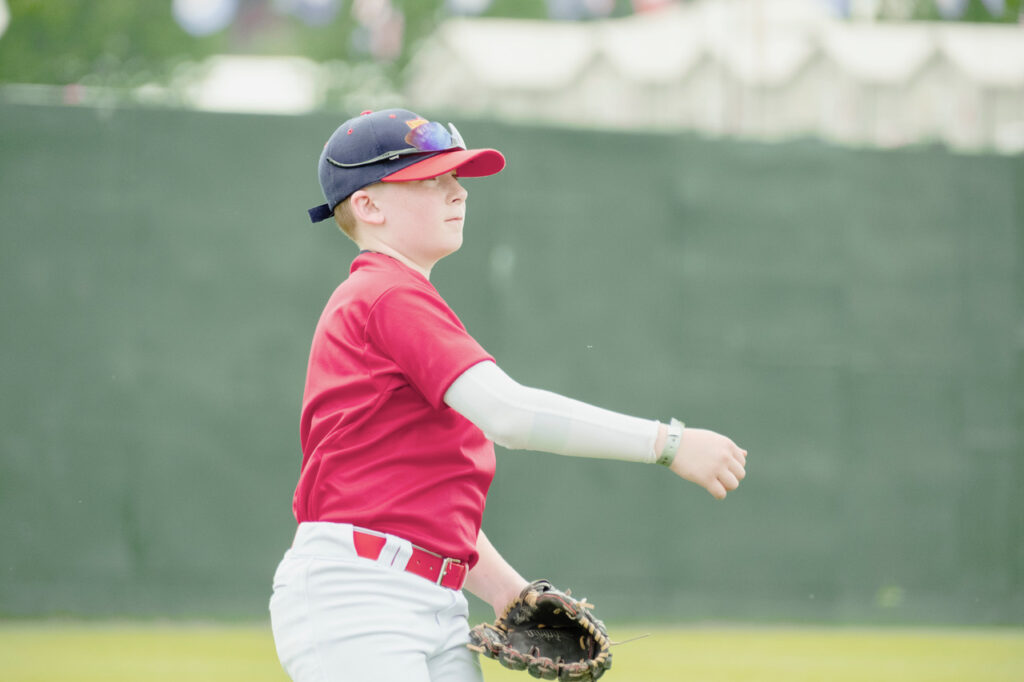
I think photographers sometimes become too concerned with keeping ISO as low as possible.
Baseball doesn’t care about our ISO.
The play happens whether the light is perfect or not.
Clouds move in. Evening games get darker. Shadows stretch across the field.
If maintaining a fast enough shutter speed means increasing the ISO, I increase it.
Noise can be managed.
Motion blur from a shutter speed that was too slow is much harder to fix.
More importantly, a photograph with a little noise can still be a wonderful photograph.
A missed moment is simply a missed moment.
Continuous Autofocus Is Your Friend
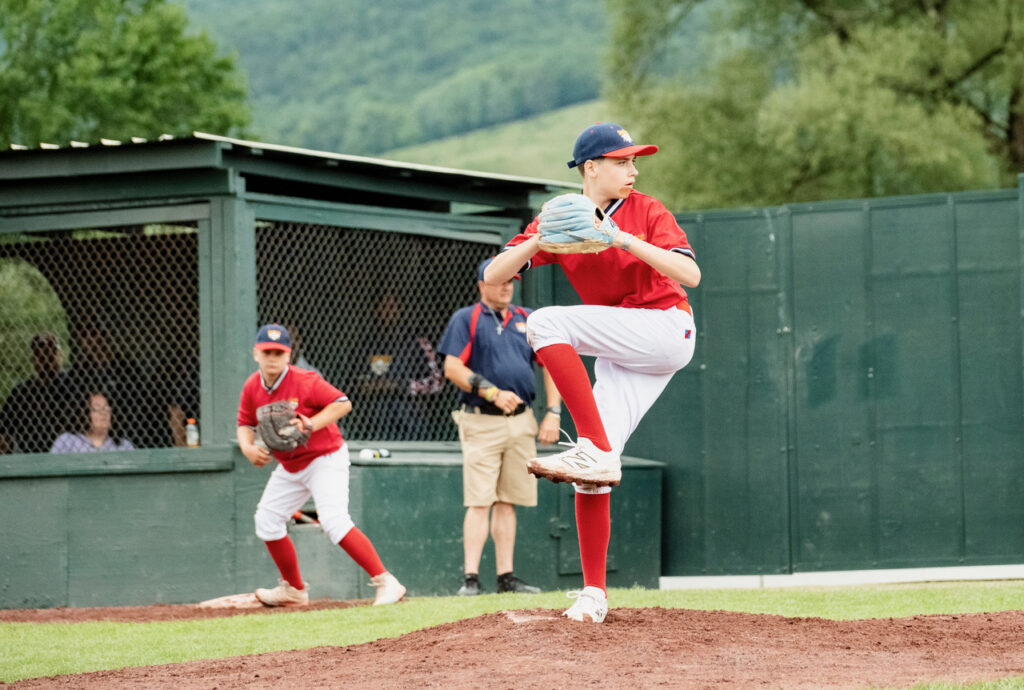
For moving players, continuous autofocus makes life much easier.
I want the camera adjusting focus as the player moves toward me, away from me or across the frame.
Modern subject detection can also be extremely helpful, but I don’t completely hand the photograph over to the camera.
Technology can track a player.
It can’t decide which player matters.
That’s still our job.
If several boys are clustered around home plate, the camera doesn’t know whether the important part of the story is the runner, the catcher or the teammate waiting to celebrate.
The photographer has to make that decision.
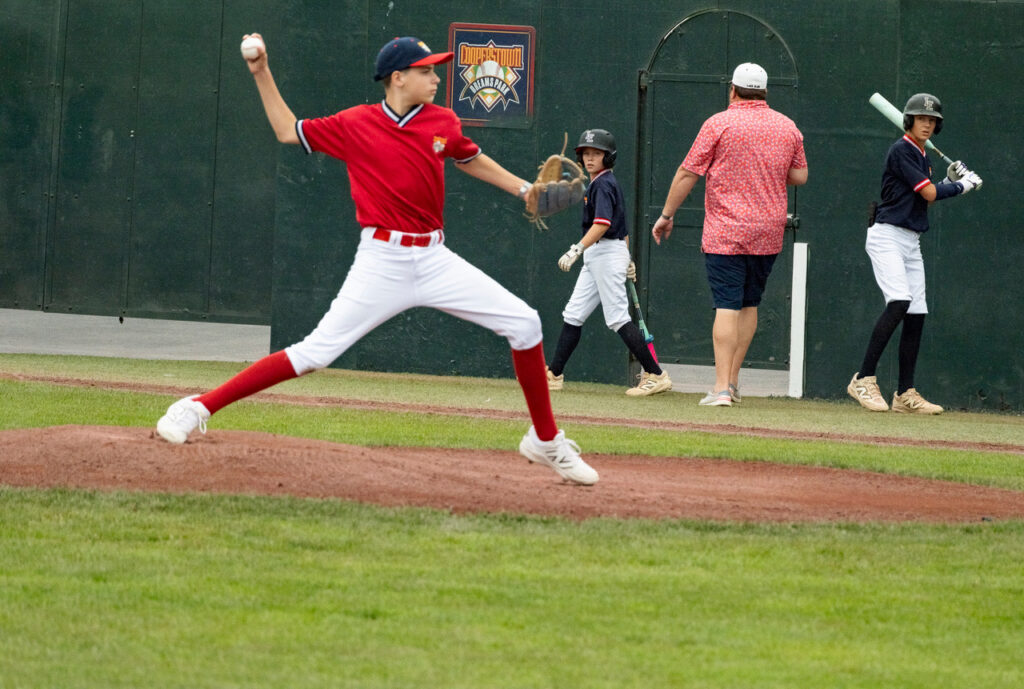
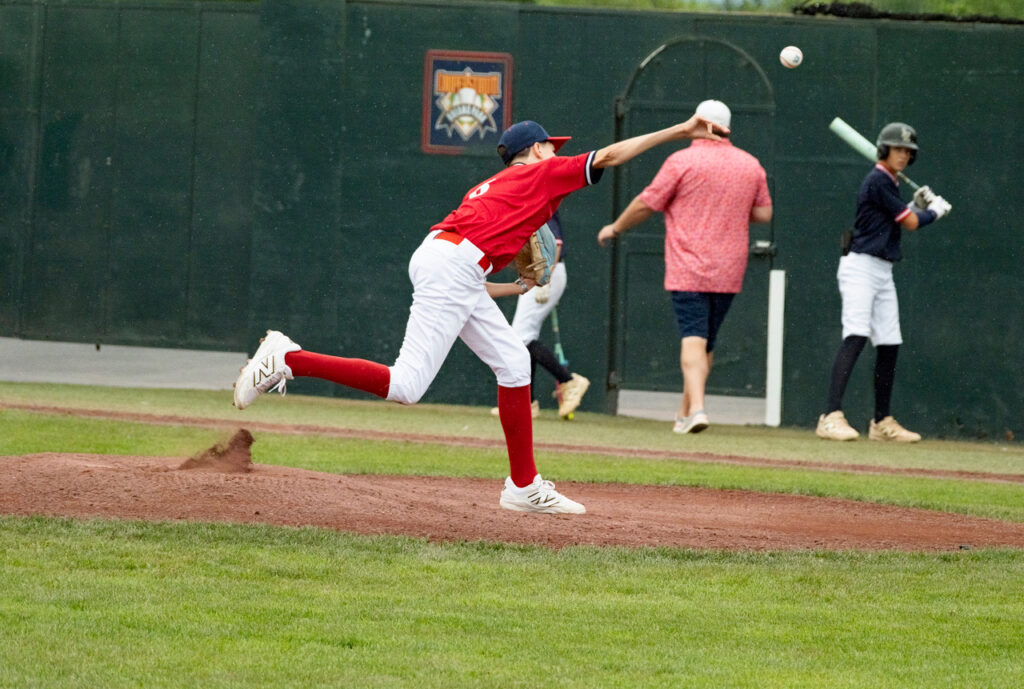
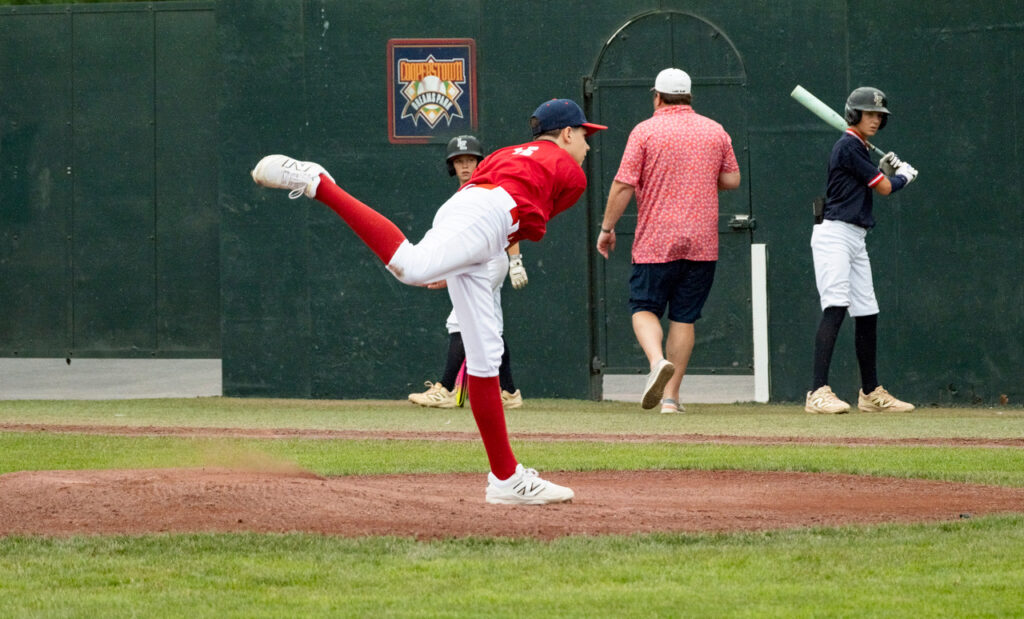
The series of pictures below was were shot with continuous focus and continuous shooting which allowed for the pitching sequence to be captured. I always use low continuous shooting in order to maintain focus better.
Burst Mode Helps—But Don’t Photograph Everything
Continuous shooting is another useful tool for baseball.
A swing happens incredibly quickly, and shooting a short burst gives you a much better chance of capturing the exact moment you want.
But there’s a temptation to hold down the shutter button and hope.
I try not to do that.
Instead, I anticipate the moment and use short, controlled bursts.
It makes reviewing photographs much easier later, but there’s another benefit.
It keeps me engaged with what’s happening.
I want to be watching the game, not simply asking the camera to record every second of it.
Photograph Faces Whenever You Can
Faces tell stories.
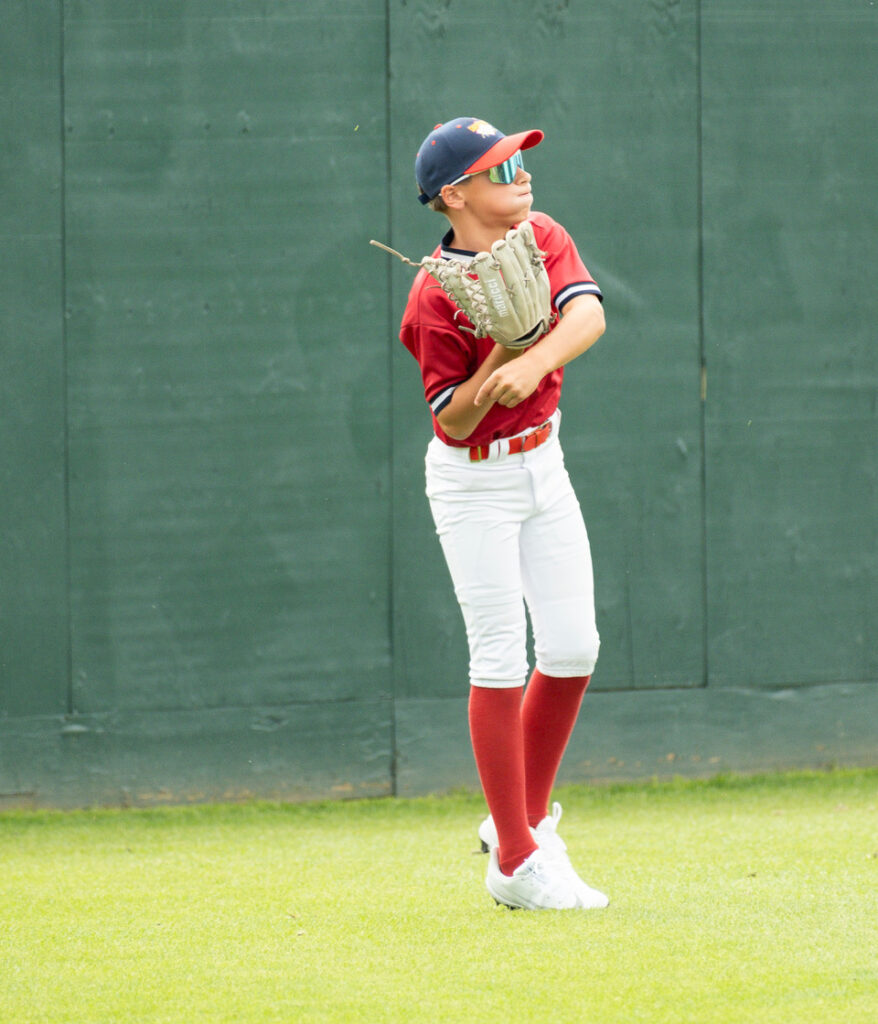
A perfectly timed photograph of a runner from behind may show impressive action, but being able to see his expression often makes the image much stronger.
Position matters.
Whenever possible, think about where the players will be facing.
From one side of the field, you may see the batter’s back. Move to another location and suddenly you can see his concentration as he waits for the pitch.
The same applies to pitchers, runners and fielders.
You can’t control everything at a baseball field, especially when photographing from spectator areas, but small changes in position can completely change the photographs you bring home.
Keep Photographing After the Play
This may be one of the most important lessons I’ve learned.
Don’t lower the camera just because the play is over.
Watch what happens next.
A player who strikes out may turn toward the dugout.
A pitcher may react after escaping an inning.
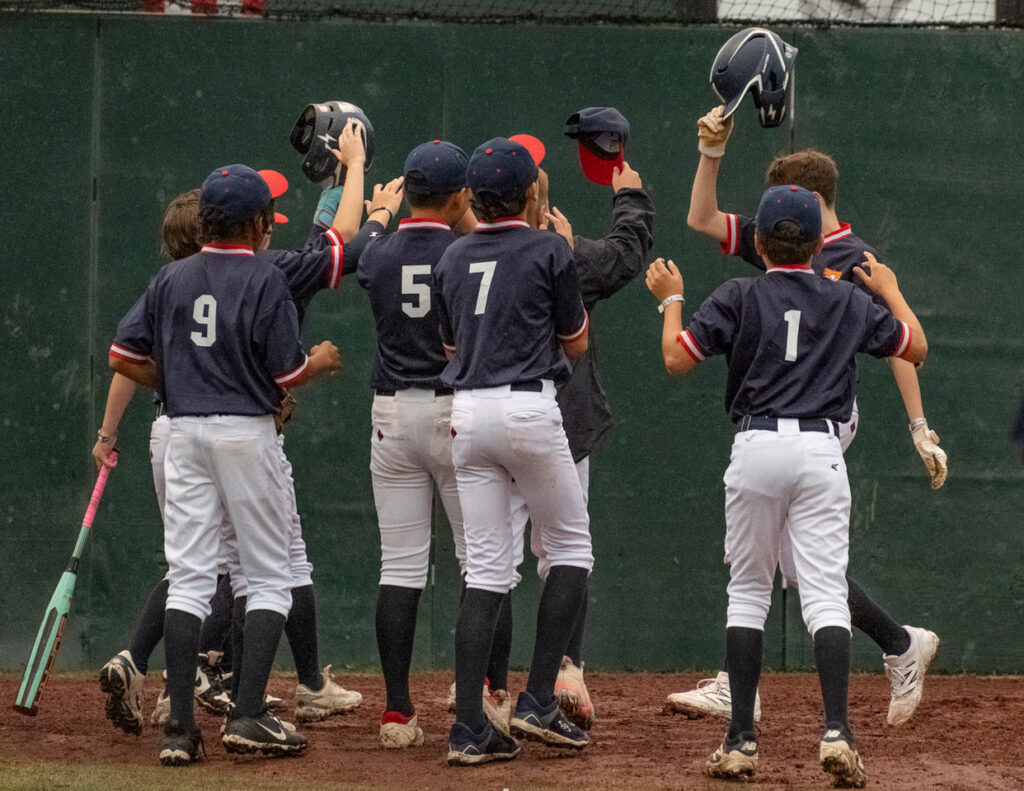
Teammates may rush toward a player who just scored.
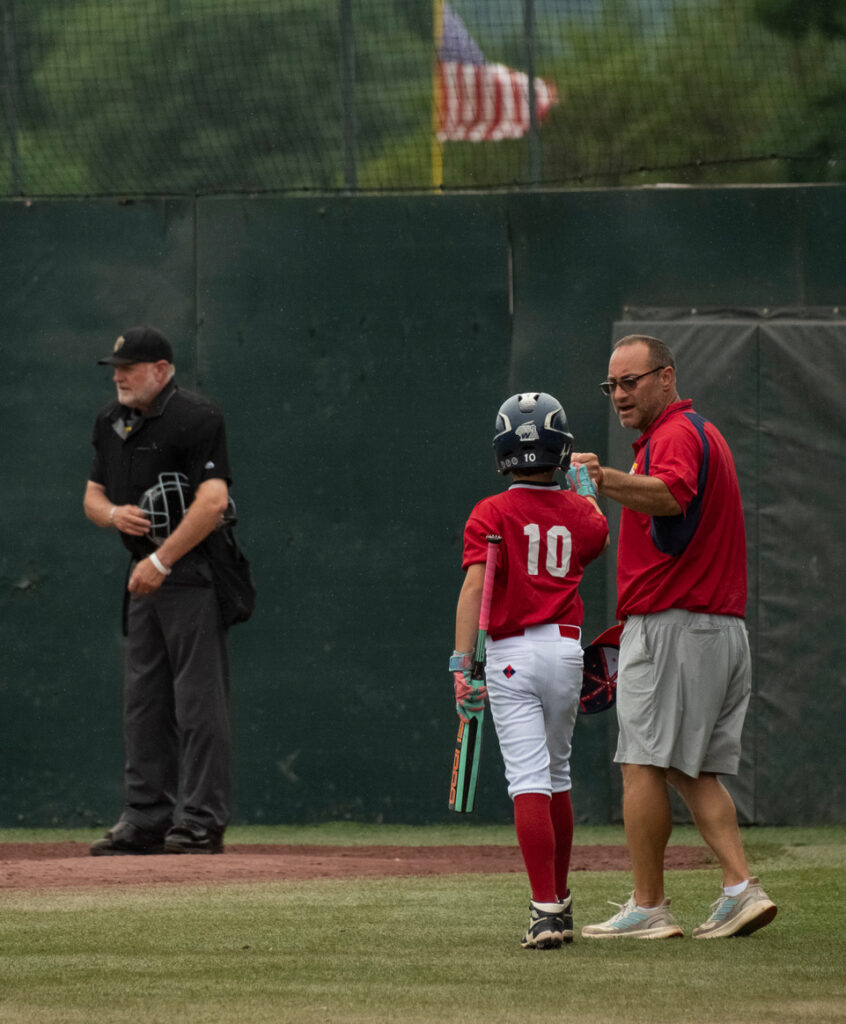
A coach may quietly talk to someone who made an error.
Those few seconds after the official action ends are often when the emotion begins.
If you’re only watching the ball, you’ll miss them.
Turn Your Camera Toward the Dugout
The dugout can tell you almost as much about a baseball game as the field.
Watch the boys when they aren’t playing.
Who’s encouraging his teammates?
Is someone completely absorbed in the game?
Who’s laughing?
Is anyone nervous?
Who’s celebrating someone else’s success?
Teamwork becomes visible in those moments.
At Cooperstown, I became increasingly interested in photographing those interactions because they showed what the week was really about.
The boys weren’t simply playing baseball together.
They were experiencing something together.
That’s a very different story.
Photograph the Disappointments Too
We naturally want photographs of happy moments.
The home run.
The win.
The celebration.
But childhood isn’t made entirely of victories, and neither is baseball.
There will be strikeouts, errors and losses.
Those moments deserve sensitivity, particularly when you’re photographing children. I’m not interested in embarrassing a young player or turning someone’s disappointment into a spectacle.
Still, disappointment is part of the story.
Sometimes the photograph isn’t the player who made the error.
It’s the teammate who walks over afterward.
Perhaps it’s a coach kneeling beside a player.
Maybe it’s the team walking quietly off the field together.
Handled respectfully, those photographs can say far more about character than a picture of the scoreboard.
Look for Relationships
Some of my favorite photographs have very little to do with the sport being played.
They’re about relationships.
Player and coach.
Father and son.
Grandparent and grandchild.
Two teammates sitting together.
An entire team gathered before a game.
When you start looking for relationships instead of plays, your photography changes.
You stop asking:
Where is the ball?
And start asking:
Where is the story?
That one change can transform the way you photograph almost any event.
Include the Environment
Not every photograph needs to be tight.
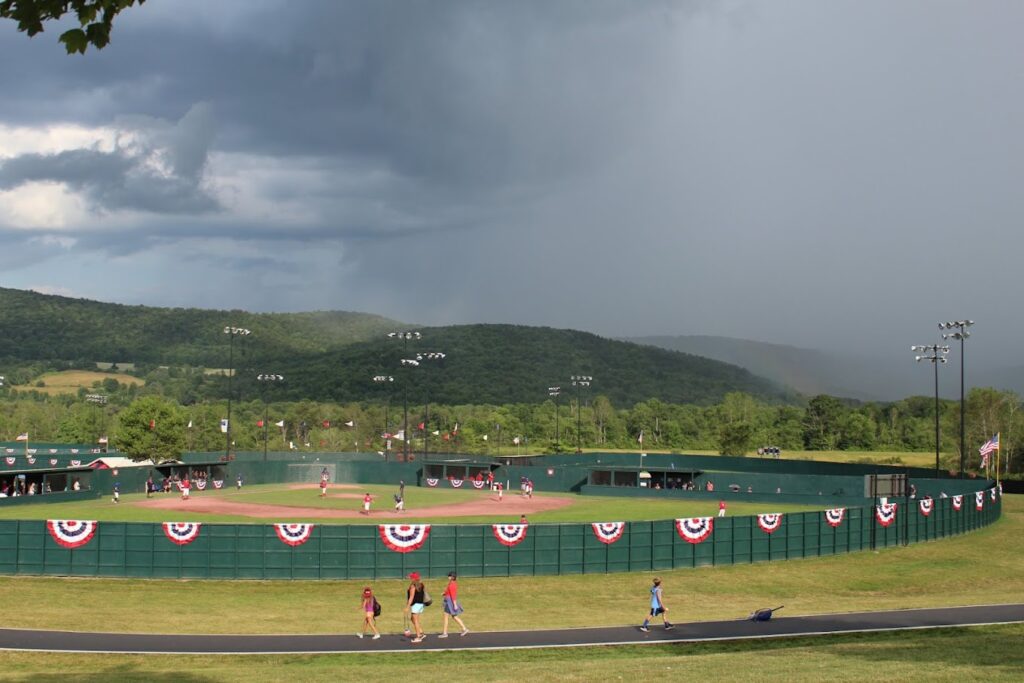
Close-ups and telephoto images are wonderful for showing expression and action, but wider photographs establish where the story is taking place.
At Cooperstown Dreams Park, the fields themselves were part of the experience.
So were the dugouts, the teams, the crowds and the atmosphere surrounding the games.
I like having a combination of photographs:
Tight action.
Mid-range interactions.
Wide environmental images.
Details.
Together, they create a much more complete visual story than 100 photographs of batters at home plate.
Don’t Forget the Details
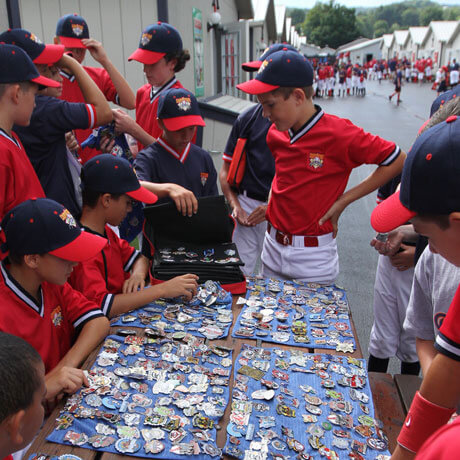
Details are easy to overlook.
A glove resting on the bench.
Cleats covered in dirt.
A row of bats.
Hands gripping the fence.
A baseball sitting in the grass.
Trading pins covering a towel or bag.
A name stitched across the back of a jersey.
Individually, these photographs may not seem particularly important.
Put them together with the action, portraits, emotions and environmental images, though, and suddenly you have a story.
Details give a photo essay texture.
They help the viewer feel as though they were there.
The Camera and Lens I Used at Cooperstown
For my week photographing baseball at Cooperstown Dreams Park, I used my Fujifilm X-T5 with the Fujinon XF 70-300mm lens.
It turned out to be an excellent combination for youth baseball.
The 70-300mm gave me the flexibility I needed because my shooting position and distance from the players were constantly changing. At 70mm, I could pull back enough to photograph interactions closer to me or include more of the field. When the action moved farther away, I could zoom toward 300mm and still isolate an individual player.
That flexibility is one of the reasons I prefer a zoom lens for situations like this. Baseball doesn’t give you time to change lenses every time the action moves from one part of the field to another.
I also brought my Fujifilm XF 1.4X teleconverter, thinking the extra reach might be useful.
In practice, I found it was too much.
The 70-300mm lens by itself gave me all the reach I needed for the fields and the locations where I was photographing. Adding the 1.4X teleconverter narrowed my field of view too much and made it harder to react when the action suddenly moved closer.
That’s an important lesson in itself.
More reach isn’t always better.
For wildlife photography, there are plenty of times when I appreciate every bit of reach I can get. Sports can be different. The action moves quickly and unpredictably, and being able to zoom back and include more of the scene can be just as important as getting close.
At Cooperstown, I found the 70-300mm without the teleconverter gave me a much better balance.
It allowed me to photograph the pitcher across the field, then quickly reframe for a runner, a celebration or an interaction closer to the dugout. I wasn’t locked into one type of photograph.
More importantly, the combination let me concentrate on what was happening rather than constantly thinking about my equipment.
That’s ultimately what I want from my camera gear.
A faster camera can help capture the moment. A telephoto lens can bring the action closer. Good autofocus can improve the chances of getting a sharp photograph.
But none of those things can recognize a meaningful moment for us.
The equipment gets us close enough to see the story. We still have to notice it.
Photographing Cooperstown Through a Different Lens
My week photographing baseball at Cooperstown Dreams Park was especially meaningful because I had been there before.
Twenty-four and twenty-five years earlier, I had watched my own son play there.
Returning all these years later as a grandmother gave me a completely different perspective.
In A Week at Cooperstown Dreams Park: So Much More Than Baseball, I wrote about what I saw beyond the games—the bunkhouse experience, friendships, pin trading, independence, victories, disappointments and the lessons young players carry home with them.
Photography helped me see those things even more clearly.
Once I stopped looking only for baseball photographs, I began seeing photographs about growing up.
Tell the Whole Story
At the end of a game, it’s tempting to judge our photographs by whether we captured the big moments.
Did I get the hit?
Did I capture the slide?
Was the ball visible leaving the pitcher’s hand?
Those are worthwhile photographs.
But they’re only part of the story.
Years from now, the photograph that matters most to a family may not be the perfectly timed image of a bat hitting a ball.
It may be the photograph of three teammates laughing in the dugout.
The boy walking beside his coach.
The muddy uniform after a long day.
The teammates gathered around someone who needed encouragement.
Or simply a child standing on a baseball field, completely unaware of how quickly this season of his life will pass.
Technical skills help us photograph sports.
Learning to recognize those quieter moments helps us photograph something else.
The game tells us what happened.
The photographs can remind us what it felt like.
I’ve learned the same lesson while Finding Stories Along America’s Back Roads. The photograph that tells me the most about a place isn’t always the landmark or scenic view. Often, it’s a small interaction, an overlooked detail or a fleeting moment that gives the larger story meaning.
Keep Looking Beyond the Action
Keep Looking Beyond the Action
The best photographs aren’t always the biggest plays. Sometimes they’re the encouragement between teammates, the concentration before a pitch, or the celebration that lasts only a few seconds. That’s the kind of storytelling I love most—using photography to capture not just where we’ve been, but what it felt like to be there.
If you enjoy travel photography, wildlife, back-road discoveries, and tips for telling stronger stories through your camera, join me at Back Roads Lens.
Join the Back Roads Lens Newsletter →]
No spam. No clutter. And I’ll never sell or share your information.