There are some places you return to and immediately feel the years between then and now disappear.
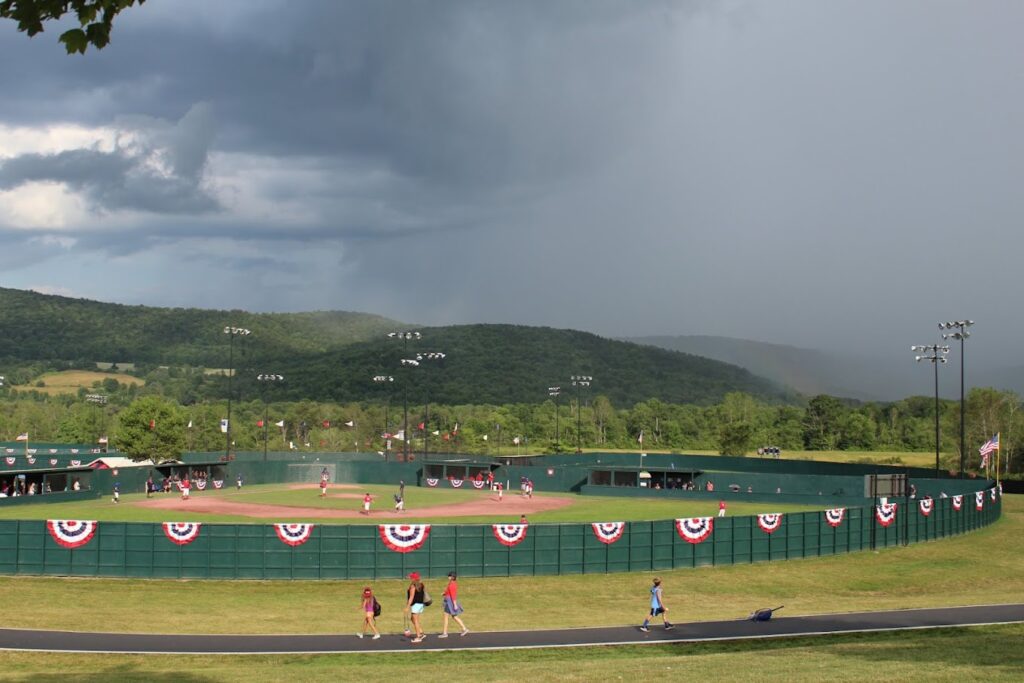
For me, Cooperstown Dreams Park is one of those places.
Twenty-four and twenty-five years ago, I came here to watch my son play baseball. He was fortunate enough to experience Dreams Park two years in a row, back when he was a boy with a glove, a uniform and dreams that probably felt much bigger than the baseball field in front of him.
Now, all these years later, I found myself back in Cooperstown.
This time, I was a grandmother.
Standing along the fence with my camera in my hands, watching another generation of young baseball players run onto those fields, I couldn’t help but think about how quickly the years had passed.
The teams were different, and so were the boys. Dreams Park itself had changed over the years.
Yet so much of what matters hadn’t changed at all.
After spending a week watching the Cooperstown Dreams Park experience unfold, I realized something I perhaps didn’t fully understand all those years ago.
Cooperstown Dreams Park isn’t really just about baseball.
Baseball is what brings them here.
What happens between the games is something much bigger.
The Cooperstown Dreams Park Experience Begins With the Team
Most youth baseball teams already spend plenty of time together. There are practices, games, tournaments, long drives and countless hours sitting in dugouts.
Dreams Park is different.
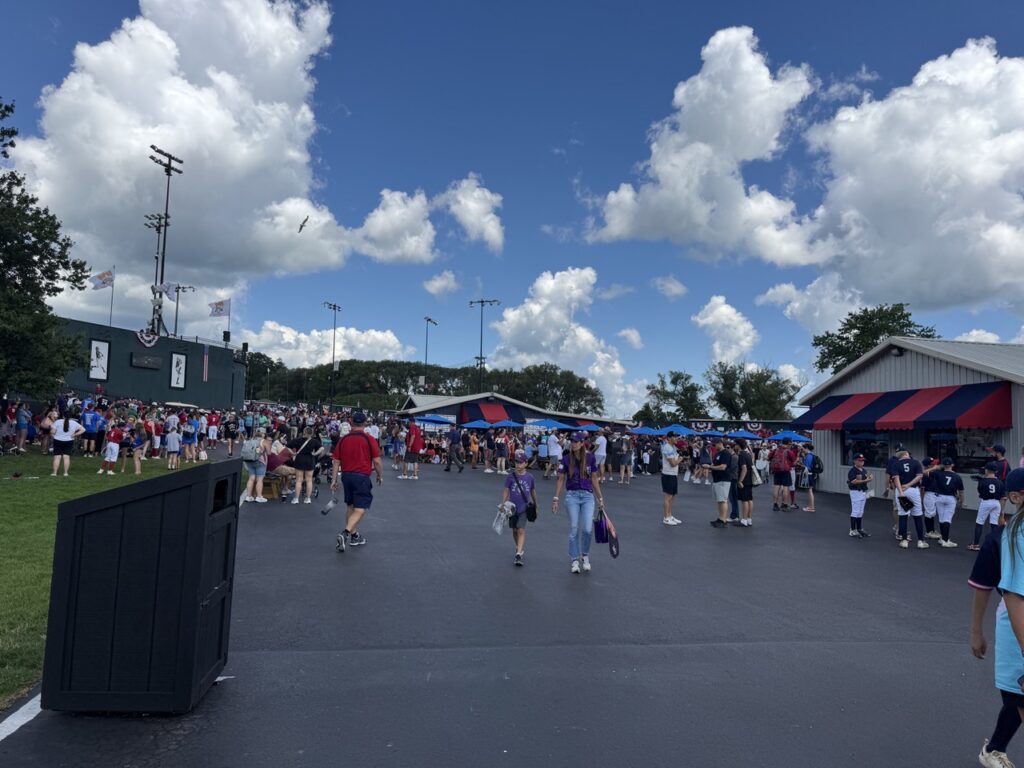
For an entire week, the boys stay together in bunkhouses, away from their parents and families. Meals are shared. They sleep in the same quarters, walk to the fields together and celebrate victories side by side.
When things don’t go quite as planned, they also have to figure some things out together.
For many of these boys, this may be one of their first real tastes of independence.
Mom and Dad aren’t staying with you. Home isn’t waiting at the end of the day’s games. Instead, teammates become their little community for the week.
I think that’s part of the magic of the place.
We talk a lot about building a baseball team, but experiences like this build something else too. They help young people begin to understand what it means to live and work alongside others.
Compromise becomes important. So does patience.
They discover that everyone has good days and bad days. They learn to encourage the teammate who struck out, celebrate the one who made a great play and find enough energy to get up the next morning and do it all over again.
None of those lessons will show up in a box score.
They may, however, stay with them far longer than the final score ever will.
Meeting Teams From Across the Country
One of the things I love most about Cooperstown Dreams Park is seeing teams arrive from all over the country.
For one week, boys who might otherwise never cross paths suddenly share the same fields.
They come from different hometowns, backgrounds and parts of the country. Some have traveled hundreds of miles to get here; others have traveled much farther.
Yet they all understand baseball.
That shared love of the game gives them an immediate connection.
Then there are the pins.
Trading pins might seem like a small part of the Cooperstown Dreams Park experience, but watch the boys for a while and you realize it is anything but small.
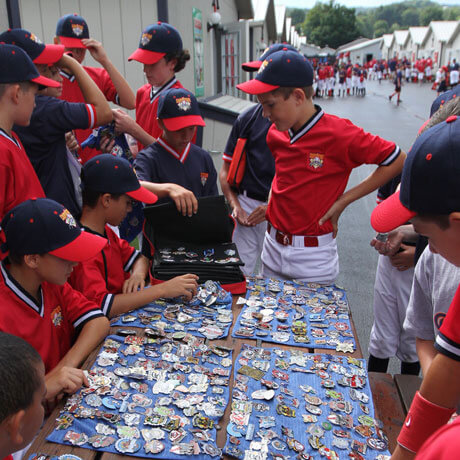
Players approach kids from other teams, introduce themselves, compare pins and negotiate trades. A boy from New York might trade with someone from California, Texas, Georgia or a small town he has never heard of before.
By the end of the week, those collections become little reminders of all the people they met along the way.
There’s a lesson hidden in that tradition, too.
The world is a very big place.
Sometimes, though, all it takes is one shared interest to make it feel a little smaller.
Winning Isn’t the Only Lesson
Of course, they want to win.
They should.
These boys have practiced for this. Their families have traveled to Cooperstown, and they put on those uniforms hoping to hit the ball a little farther, throw a little harder and play some of the best baseball of their young lives.
Then baseball does what baseball has always done.
Sometimes it gives you an incredible moment.
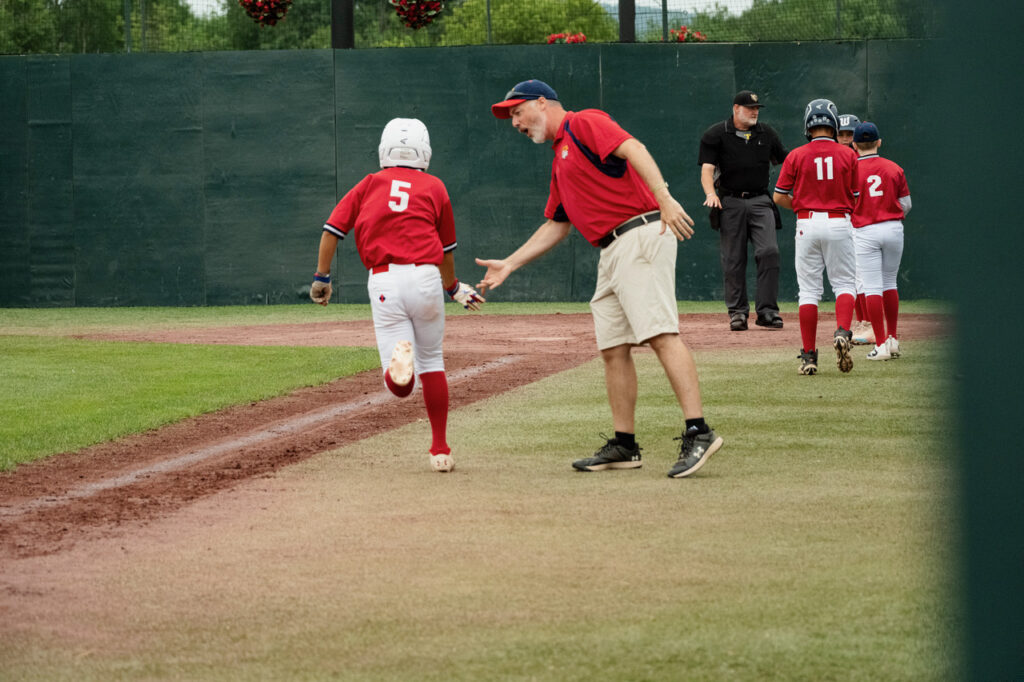
Other times, it breaks your heart.
There are home runs and strikeouts, great catches and missed opportunities, big wins and difficult losses.
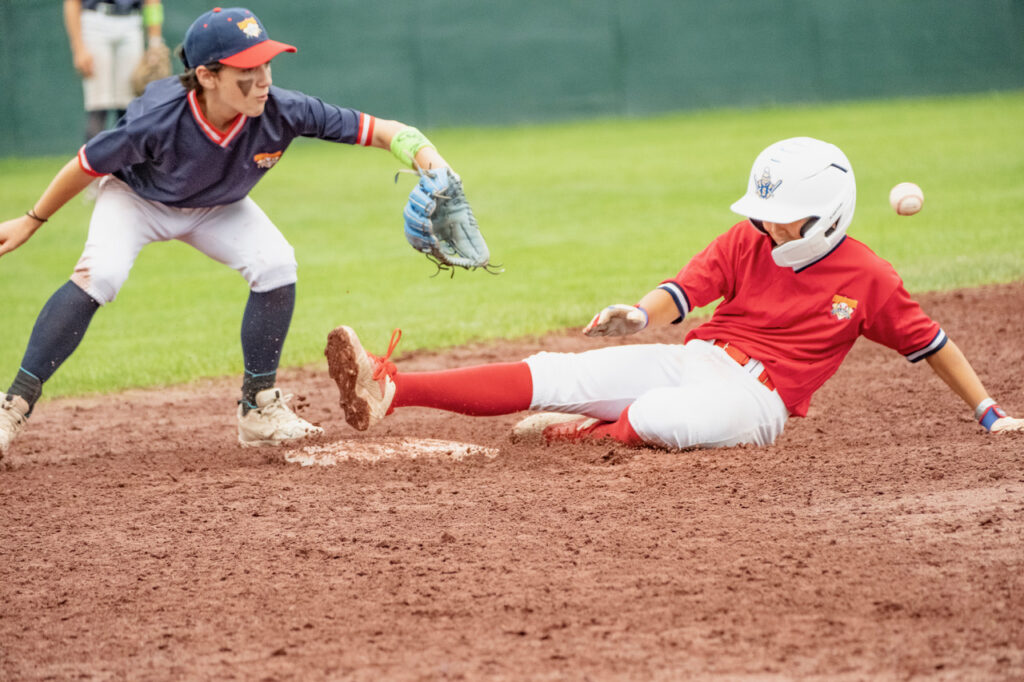
As adults, it can be tempting to protect children from the disappointment that comes with those moments.
Standing on the sidelines, however, I found myself thinking that maybe we shouldn’t.
Learning how to lose matters.
Being able to sit with disappointment, congratulate the other team, pick up your glove and come back tomorrow matters.
Learning how to win with humility matters just as much.
Baseball gives these boys a safe place to experience both.
Someday, the challenges they face will be much bigger than a missed ground ball or a game that didn’t go their way.
Maybe, without even realizing it, they’re practicing for those days too.
Watching Them Grow in Just One Week
A week isn’t very long.
Still, sometimes you can see a child grow right in front of you.
Not taller, of course.
I’m talking about something less obvious.
You see a little more confidence. A little more independence. Perhaps there’s a new willingness to walk up to someone they don’t know and introduce themselves.
Most importantly, they begin to understand what it really means to be part of a team.
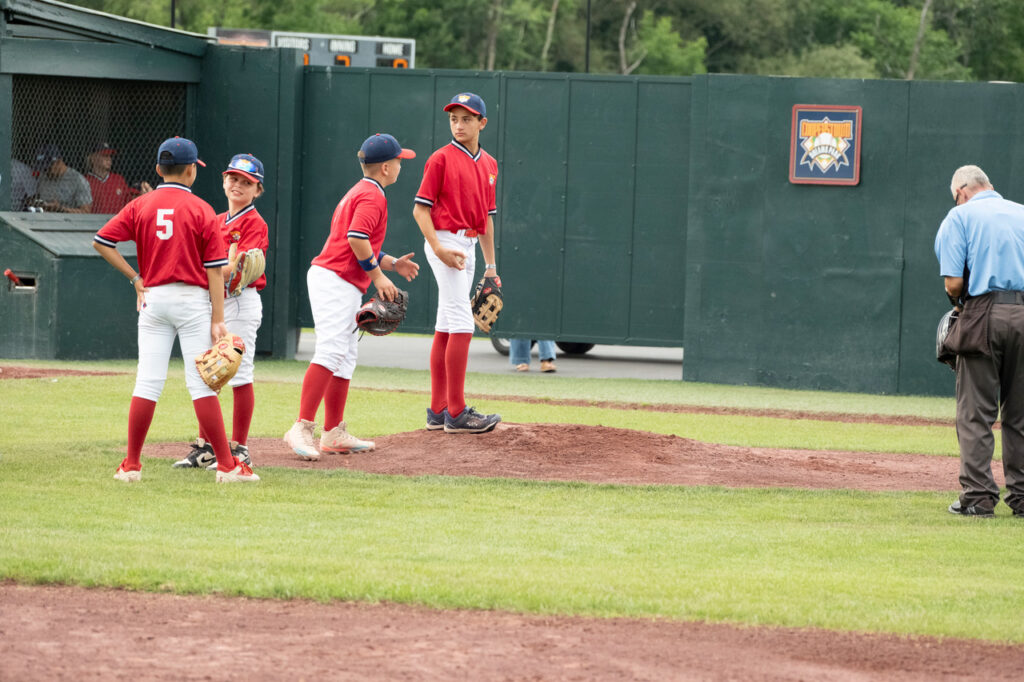
That’s what struck me as I watched these boys throughout the week.
We send them to Cooperstown thinking they are going there to play baseball. By the time they leave, they have experienced something much larger.
For seven days, they have lived alongside their teammates and met kids from across the country. Along the way, they’ve won games, lost games and probably laughed long after they were supposed to be sleeping.
They return home with collections of pins, stories and inside jokes.
More importantly, for one brief week, they have experienced a little bit of life without us standing quite so close beside them.
That’s a good thing.
Even when it’s a little hard for the adults to admit.
Returning to Cooperstown Dreams Park as a Grandmother
There was another part of this week that was impossible for me to ignore.
I had been here before.
More than two decades ago, I stood at Cooperstown Dreams Park watching my own son play on these fields.
At the time, I couldn’t have imagined that someday I would return as a grandmother and watch another generation of young baseball players experience many of the same traditions.
That’s the funny thing about raising children.
When you’re living through those years, they don’t always feel short.
There are practices to get to, uniforms to wash, equipment to remember and games to attend. Meals get squeezed into busy schedules, and weekends revolve around tournament times and ball fields.
Then somehow, you blink.
The boy on the field is grown.
Twenty-four or twenty-five years have passed.
And you’re standing at the fence again.
Only this time, you understand something you couldn’t possibly have understood the first time.
These really are the days you’ll remember.
Chances are, you won’t remember the score.
The batting average will fade, too. Eventually, you may not even remember who won the tournament.
What stays are the other moments.
You’ll remember the boys running onto the field.
You’ll remember the laughter and the friendships.
Most of all, you’ll remember how young they were.
Then you’ll wonder how all those years managed to pass so quickly.
Photographing More Than Baseball at Cooperstown
I brought my Fuji camera with me, of course.
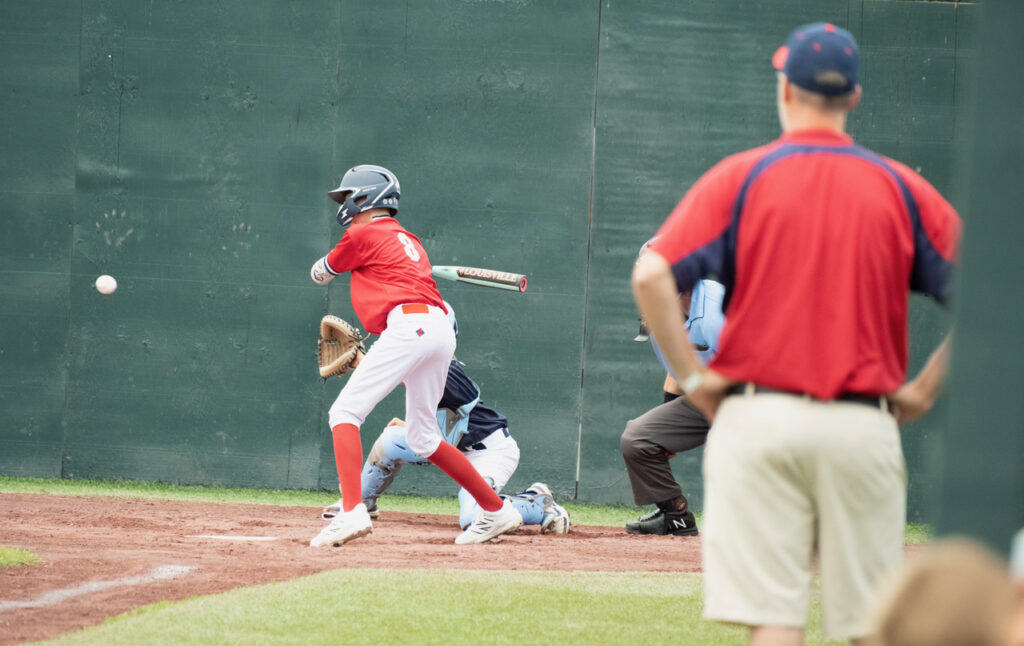
At first, the obvious goal was to photograph baseball: the pitch, the swing, the slide into home and the concentration on a boy’s face as he waited for the next play.
As the week went on, however, I found myself looking for something else.
I started watching for the conversations in the dugout and the hand on a teammate’s shoulder. I photographed the celebration after a good play and the disappointment after a tough inning.
My camera followed the boys walking together between games.
More and more, I found myself drawn to the moments when nobody seemed to realize I was taking a picture.
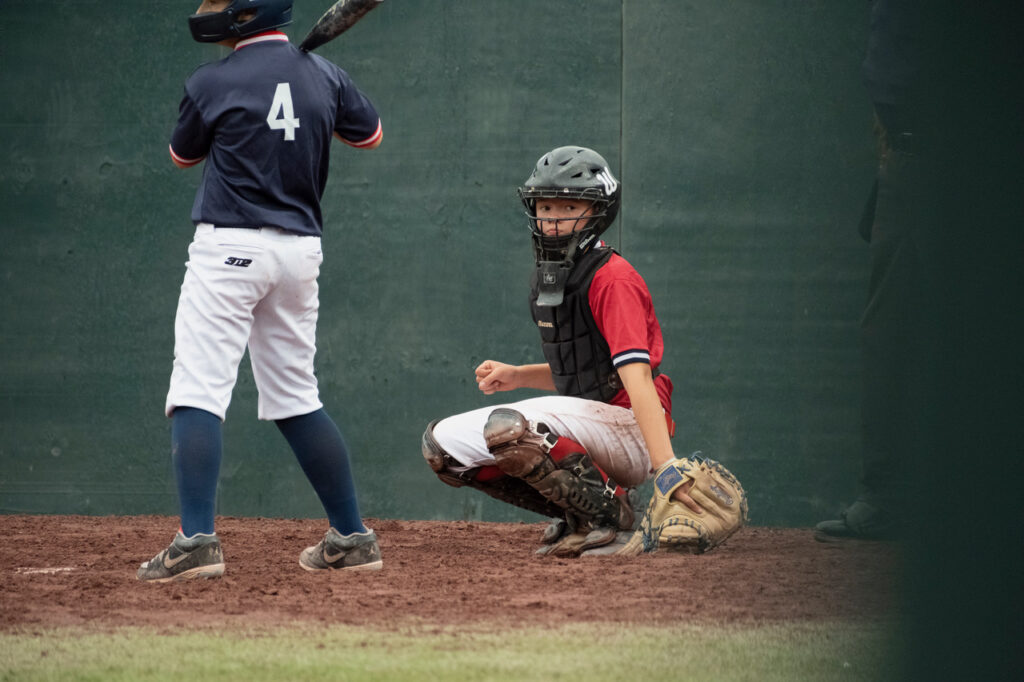
Those photographs tell the real story of the week.
Sports photography isn’t only about freezing the action. Some of the most meaningful photographs happen after the play is over.
They’re the images that show relationships, emotion and story.
For me, that’s what photography has always been about.
Photographing baseball taught me that the strongest sports images aren’t always about the action. In Photographing Youth Baseball: Capturing Action, Emotion and Story, I share the techniques I use to photograph both the game and the moments happening around it.
What Cooperstown Dreams Park Teaches Beyond Baseball
Thousands of young baseball players arrive at Cooperstown Dreams Park dreaming about what might happen on the field.
Maybe they’ll hit a home run.
Perhaps they’ll pitch the game of their life.
Their team might even make a great tournament run.
Those things matter, especially when you’re a boy standing on a baseball field in Cooperstown.
Years from now, though, I suspect many of them will discover that the things they remember most aren’t necessarily the things they thought were important at the time.
They’ll remember sleeping in the bunkhouse with their teammates and trading pins with kids from across the country.
The laughter will stick with them.
So will the teammate who picked them up after a bad play.
They may remember the excitement of walking onto those fields and realizing they had finally made it to Cooperstown.
Above all, I think they’ll remember being part of something.
I know this because I’ve seen how quickly twenty-five years can pass.
Once, I stood here watching my son.
Now I’ve returned as a grandmother, watching another generation create memories of its own.
That may be the greatest lesson Cooperstown gave me this time around.
Childhood moves quickly.
Baseball seasons end, and uniforms eventually get packed away.
Yet the experiences that teach children about friendship, resilience, independence, teamwork and belonging have a way of becoming part of who they are.
So yes, Cooperstown Dreams Park is about baseball.
But after watching it again through a grandmother’s eyes, I think baseball may simply be the vehicle that brings everyone together.
The real Cooperstown experience is everything that happens between the games.
Keep Looking Beyond the Obvious
The best photographs aren’t always the ones we set out to take. Sometimes they’re found in a quiet expression, an unexpected interaction or one of those small moments happening just outside the main event. If you enjoy photography that goes beyond camera settings to explore storytelling, creativity and seeing the world a little differently, I’d love to have you join the Back Roads Lens newsletter. Your inbox is safe with me—I never spam, and I never sell or share your information.