Introduction: Two Cameras, Two Completely Different Approaches
When it comes to travel photography, choosing the right camera isn’t just about specs—it’s about how you want to experience your trip.
On our recent winter road trip through Florida, I used two very different setups:
- The Leica Q3 43 as my primary camera
- The Fuji X-T5 when I needed more flexibility
And what I found wasn’t that one camera was better than the other.
They simply changed how I photographed—and how I experienced the journey.
If you’re trying to decide between these two, the answer comes down to one question:
Do you want simplicity—or flexibility?
Quick Answer: Which One Is Better for Travel?
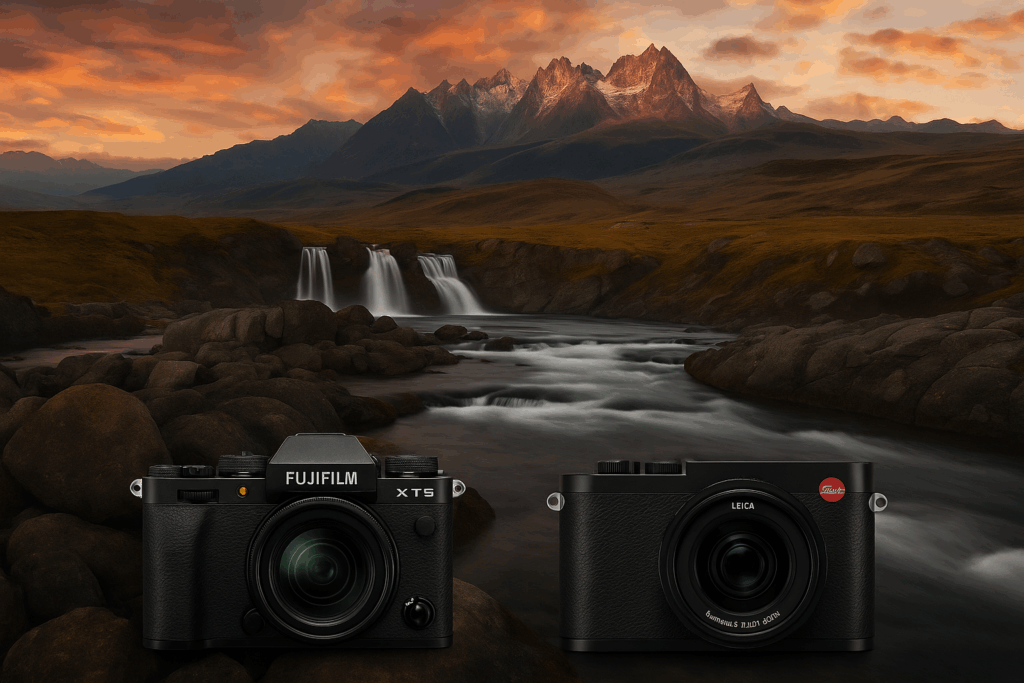
- Choose the Leica Q3 43 if you want a lightweight, simple, all-in-one camera that lets you focus on the experience
- Choose the Fuji X-T5 if you need versatility, zoom capability, and the ability to handle a wide range of situations
If you’re unsure, keep reading—because the differences matter more than you might expect.
Leica Q3 43: The Minimalist Travel Experience
The Leica Q3 43 is built around simplicity.
- Fixed 43mm lens
- No lens changes
- Minimal controls
- Compact and easy to carry
What this means in real travel situations:
- You spend less time thinking about gear
- You react faster to moments
- You stay more present in your surroundings
On most of this trip, this was the camera I reached for without thinking.
If you want a deeper look at how it performed on the road, I share that in my full Leica Q3 43 travel photography review.

Fuji X-T5: The Flexible Travel Workhorse
The Fuji X-T5 offers something completely different: flexibility.
With interchangeable lenses, you can adapt to almost any situation.
- Wide-angle for landscapes
- Telephoto for wildlife
- Mid-range zoom for everyday scenes
This is the setup I used in Big Pine Key, where photographing Key deer required more reach than the Leica could provide.
If your travel includes wildlife or distant subjects, this kind of flexibility becomes essential.
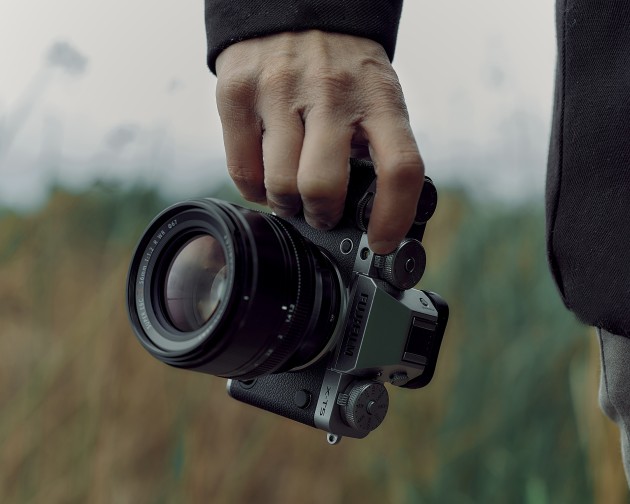
Side-by-Side Comparison
| Feature | Leica Q3 43 | Fuji X-T5 |
| Lens Type | Fixed (43mm) | Interchangeable |
| Portability | Very compact | Varies with lenses |
| Ease of Use | Extremely simple | Moderate |
| Flexibility | Limited (crop helps) | High |
| Image Quality | Excellent | Excellent |
| Best Use | Travel, street, storytelling | Wildlife, landscapes, varied conditions |
How They Feel in Real Travel Situations
This is where the difference really becomes clear.
With the Leica Q3 43
- You walk more
- You observe more
- You compose more intentionally
- You stop thinking about gear
With the Fuji X-T5
- You adapt to any scene
- You’re prepared for anything
- You have more creative options
- You carry more—and think more about it
Neither is wrong.
They just lead to different experiences.
Crop vs Zoom: What You Gain (and What You Don’t)
One of the biggest questions is whether the Leica’s crop modes can replace a zoom lens.
They help—but they don’t fully replace it.
Leica Q3 43 crop modes:
- Great for tightening compositions
- Useful for everyday scenes
- Maintain strong image quality
Fuji X-T5 with zoom:
- True optical reach
- Essential for wildlife
- Better for distant subjects
This is exactly why I switched to the Fuji in Big Pine Key.
Crop modes are a tool—but zoom still has its place.
When I Choose Each Camera
I choose the Leica Q3 43 when:
- I want to travel light
- I’m exploring towns or coastal areas
- I want a simple, distraction-free experience
- The focus is on the journey, not the gear
I choose the Fuji X-T5 when:
- Wildlife is involved
- I need telephoto reach
- The environment is unpredictable
- I want maximum flexibility
Can the Leica Q3 43 Replace a Full Camera Kit?
For many trips—yes.
For all situations—no.
If your travel is focused on:
- Cities
- Small towns
- Landscapes
- Everyday moments
The Leica can absolutely be enough.
But if your trip includes:
- Wildlife
- Distant subjects
- Specialized photography
You’ll likely want a second setup.
Which Camera Is Right for You?
Choose based on how you travel:
Go with the Leica Q3 43 if you:
- Want simplicity
- Prefer carrying less
- Enjoy a more intentional shooting style
Go with the Fuji X-T5 if you:
- Want versatility
- Need zoom capability
- Shoot a wide range of subjects

Final Thoughts: The Best Camera Is the One That Matches Your Travel Style
This comparison isn’t about which camera is better.
It’s about which one fits your approach.
For me, this trip showed that less gear can lead to a more meaningful experience.
But it also reminded me that having the right tool still matters.
And sometimes, the best solution is knowing when to use each.
FAQ: Leica Q3 43 vs Fuji X-T5 for Travel Photography
“These are some of the most common questions about choosing between the Leica Q3 43 and Fuji X-T5 for travel photography, based on real-world use on the road.”
Which is better for travel photography: Leica Q3 43 or Fuji X-T5?
The Leica Q3 43 is better if you want a simple, lightweight setup that lets you focus on the experience without constantly thinking about gear.
The Fuji X-T5 is better if you want flexibility—especially the ability to use different lenses for landscapes, wildlife, and varying conditions.
Neither is universally better. It comes down to whether you value simplicity or versatility.
Is the Leica Q3 43 enough for a full trip?
The Leica Q3 43 works well for:
– Small towns
– Street scenes
– Landscapes with context
– Everyday travel moments
However, it does have limitations. For wildlife or distant subjects, it’s not enough on its own—which is exactly when a camera like the Fuji X-T5 becomes useful.
Can crop mode on the Leica Q3 43 replace a zoom lens?
The crop modes on the Leica Q3 43 are great for tightening compositions and getting a little closer to your subject. They work well for everyday travel photography.
But they don’t replace a true zoom lens—especially for wildlife or subjects that are far away.
That’s where the Fuji X-T5 with a telephoto lens clearly has the advantage.
Is the Fuji X-T5 too bulky for travel?
The camera itself is relatively compact, but once you add multiple lenses, it becomes a heavier and more complex kit.
If you’re comfortable carrying a camera bag and switching lenses, it’s a great option.
If you prefer to travel light and move freely, the Leica Q3 43 may feel much easier to carry.
Which camera is better for beginners?
The Leica Q3 43 is often easier for beginners because:
– It’s simple to use
– There are fewer decisions to make
– It encourages learning composition
The Fuji X-T5 offers more control and flexibility, but it also comes with a steeper learning curve due to lenses and settings.
Which camera is better for wildlife photography?
Wildlife photography requires reach, and that means using a telephoto lens. The Leica Q3 43, even with crop modes, doesn’t provide enough distance for this type of photography.
Which camera produces better image quality?
In real-world use, the difference is less about quality and more about how you shoot.
The Leica Q3 43 offers a full-frame sensor and exceptional detail.
The Fuji X-T5 also delivers outstanding results, especially when paired with the right lens.
For most travel photography, both are more than capable.
Should I choose one camera or use both?
If your trip includes a mix of travel and wildlife—or situations where you need more flexibility—using both can be the best solution.
That’s exactly how I approached this trip:
– Leica Q3 43 for most of the journey
– Fuji X-T5 when reach was needed
Explore More
- Leica Q3 43 for Travel Photography: Real-World Review
- Travel Photography Gear Guide: Cameras, Lenses, and Accessories
- Mastering Travel Photography for Beginners
- Big Pine Key: Key Deer and Blue Hole
👉 Join the Back Roads Lens Newsletter
Get travel stories, photography tips, and real-world camera insights—straight from the road.
I don’t believe in inbox clutter. Just real experiences, practical tips, and the kind of places you won’t find on the main highway.
👉 Sign up here: