On the Riverbank with the Eagles
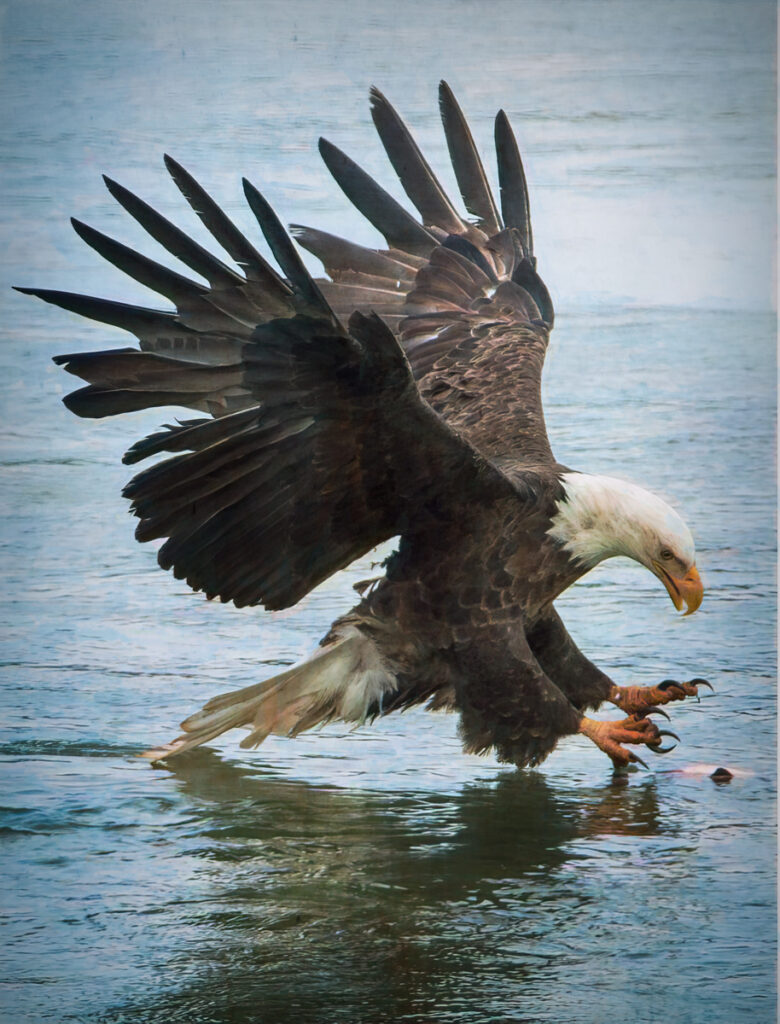
There’s a special kind of quiet that settles over the riverbank just before the eagles arrive. The air feels still, yet alive — a ripple of anticipation runs through the trees, and I find myself holding my breath, camera poised, waiting for that flash of white against the blue sky. Photographing bald eagles is both an art and a lesson in patience.
Here in upstate New York, those moments often come wrapped in winter. The river edges are lined with snow, my boots crunch through frozen ground, and the cold seeps in no matter how many layers I wear. But it’s worth every shiver. When the eagles return each year, the frozen landscape becomes their stage — and mine.
Freezing for the Picture
I’ve spent many mornings like this — boots planted in mud or snow, thermos in hand, fingers half-frozen on my camera. Photographing bald eagles isn’t a quick or easy pursuit. It’s a practice in patience, in reading light and movement, and in learning that nature doesn’t care about your schedule. But that’s exactly what I love about it. Out here, every shot has to be earned.
This post isn’t just about the technical side of photographing bald eagles — it’s about the lessons learned from the riverbank. The quiet ones, the humbling ones, and the ones that sneak up on you just as an eagle dives for its catch. If you’re just starting to explore photography and want a foundation to build from, my post Travel Photography for Beginners covers the essentials.”
If you’ve followed Back Roads Lens for a while, you know that I’m always drawn to those hidden corners of nature — the places where stories unfold quietly. Read: Finding the Wild Close to Home and The Season of Eaglets.
And along the river, those stories are written in wingbeats, reflections, and the rhythm of water.
Understanding Eagle Behavior and Timing Your Shots
If you want to photograph eagles, the first thing to understand is this — they run on their schedule, not yours. You can have all the gear in the world, but if you don’t take time to watch their patterns, you’ll end up with a lot of empty frames and cold fingers.
Seasonal Shifts and Feeding Habits
Over the years, I’ve learned that eagles are creatures of habit. Here in upstate New York, they shift their behavior with the seasons. Early in winter, before the heavy snow arrives, they spend time in open fields, scanning for mice and small prey. Once the snow covers the ground, they move to the rivers, where open water offers an easier meal — fish.
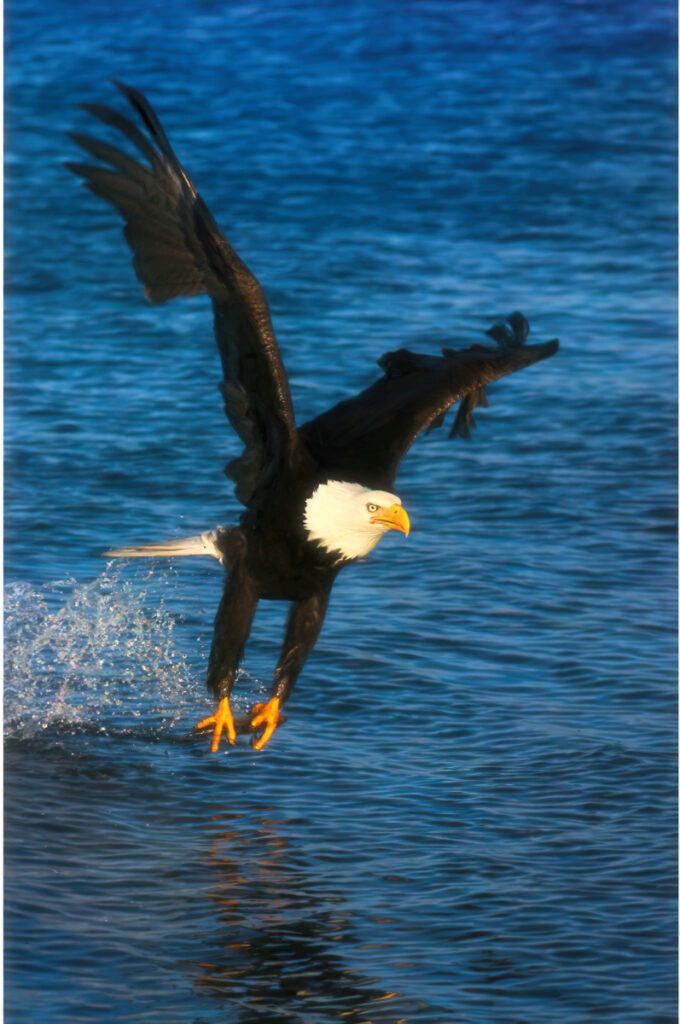
The river I frequent doesn’t freeze, which makes it a reliable gathering place. Once the fish start surfacing near the edges, the eagles glide in low, circle once or twice, and then—if you’re lucky—dive with perfect precision. That’s the moment every photographer waits for.
Best Times to Photograph Eagles
I usually arrive before sunrise, when the light is soft and golden and the mist curls off the water. The first eagles often appear around that time, taking advantage of the calm morning air. Midday tends to be quiet — they rest high in the trees, out of reach of good light and long lenses.
Afternoons can surprise you, though. I’ve had days where nothing happened for hours, and then just as the sun dipped low, an eagle swooped down and broke the stillness. Timing your shots means being willing to wait. Read more in Understanding Wildlife Behavior Before you Photograph.
Learning to Read Their Cues
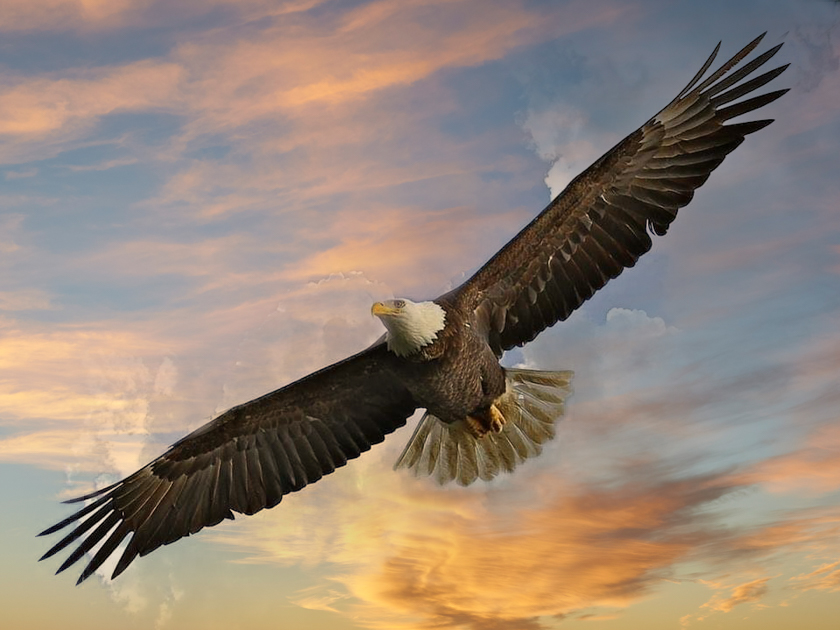
Sometimes it’s about instinct — you start to recognize that little shift in body language right before takeoff, the way their wings tense and their gaze sharpens. You begin to anticipate the moment before it happens, and that’s when your photography changes from reaction to connection.
Learning to read the eagles has made me a better photographer — and a more patient one. Nature doesn’t rush, and neither should we. Patience is everything when photographing wildlife — I talk more about that in The Art of Patience in Wildlife Photography.
Read next: Mastering the Art of Wildlife Photography
Lessons from Waiting on the Riverbank
There’s something about waiting for an eagle that changes how you see time. Out there on the riverbank, surrounded by nothing but water, sky, and the occasional rustle of a branch, the minutes stop being something to count. They just are.
When I first started photographing eagles, I used to fidget — checking camera settings, shifting positions, convincing myself I was missing something. Over time, I learned that the stillness is part of the process. The waiting sharpens your senses. You start to notice how the wind shifts just before a bird takes flight, how the river reflects the changing light, how silence can be a kind of rhythm all its own.
Quiet Hours, Quiet Shots
I’ve come to think of those quiet hours as some of the best parts of wildlife photography. They remind me that the goal isn’t just to capture a shot — it’s to be there for the moment when it happens. The river teaches patience, the eagles teach humility, and the combination keeps me grounded.
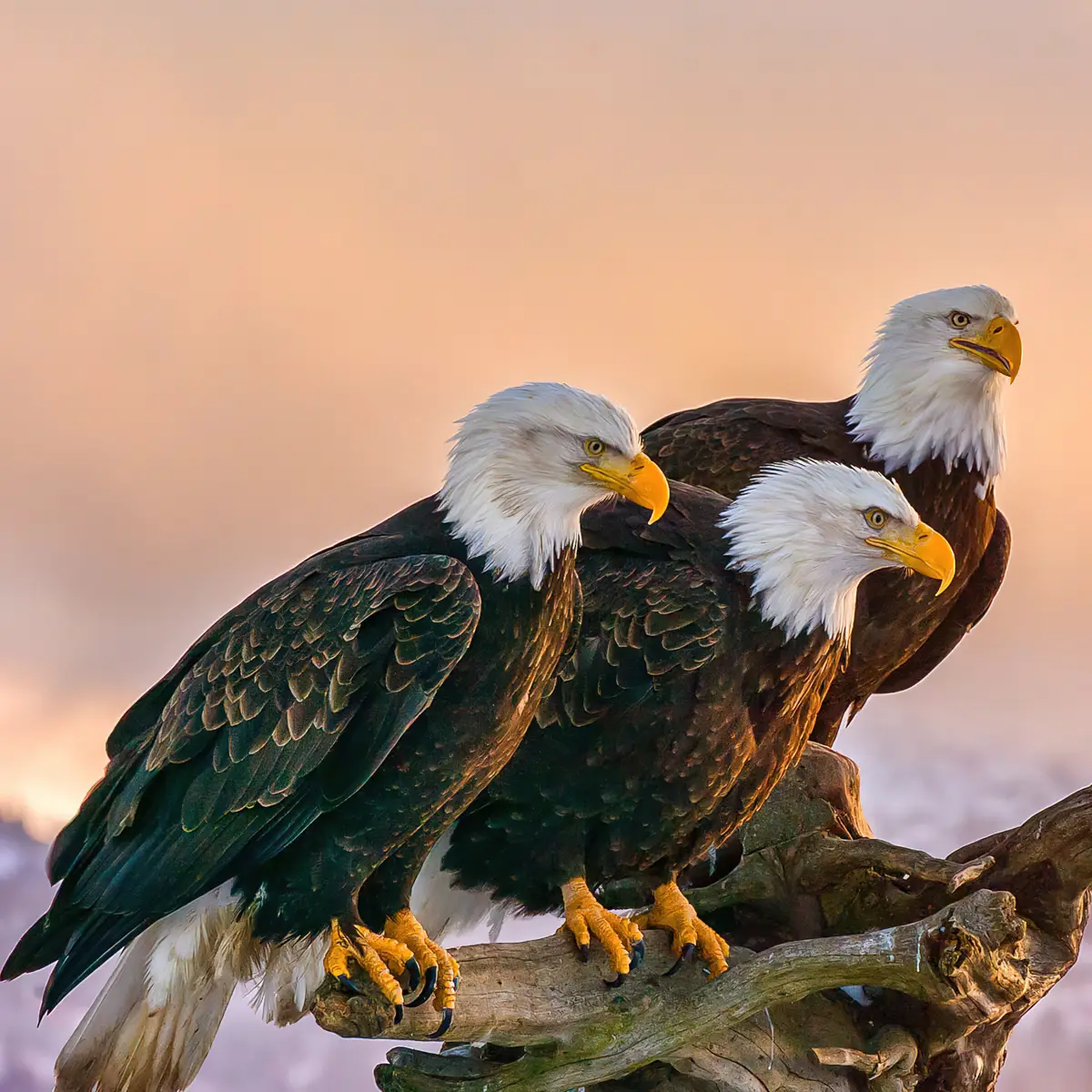
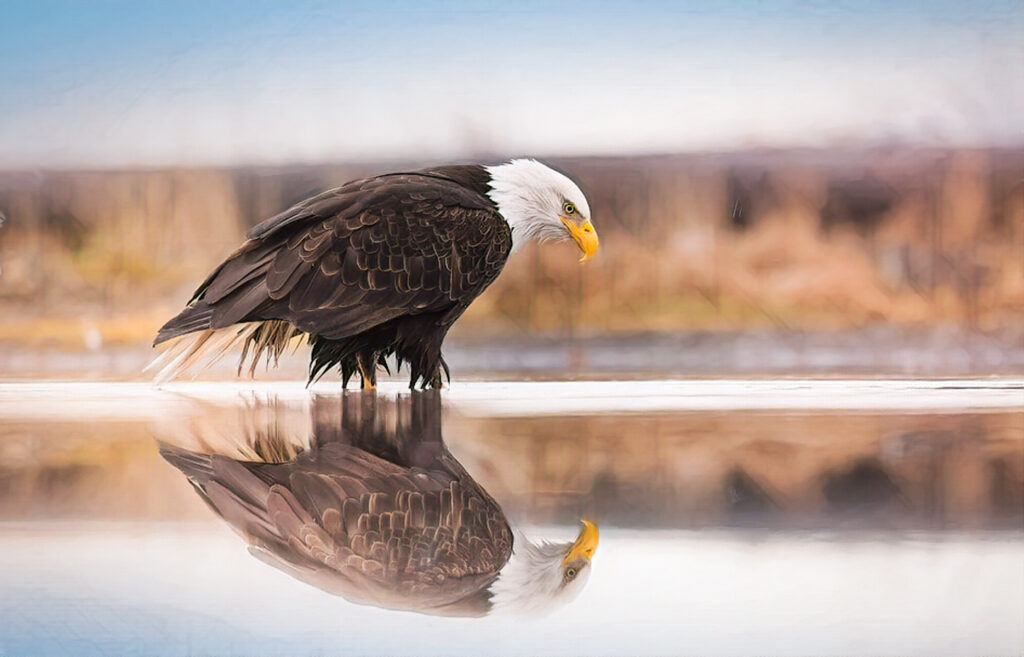
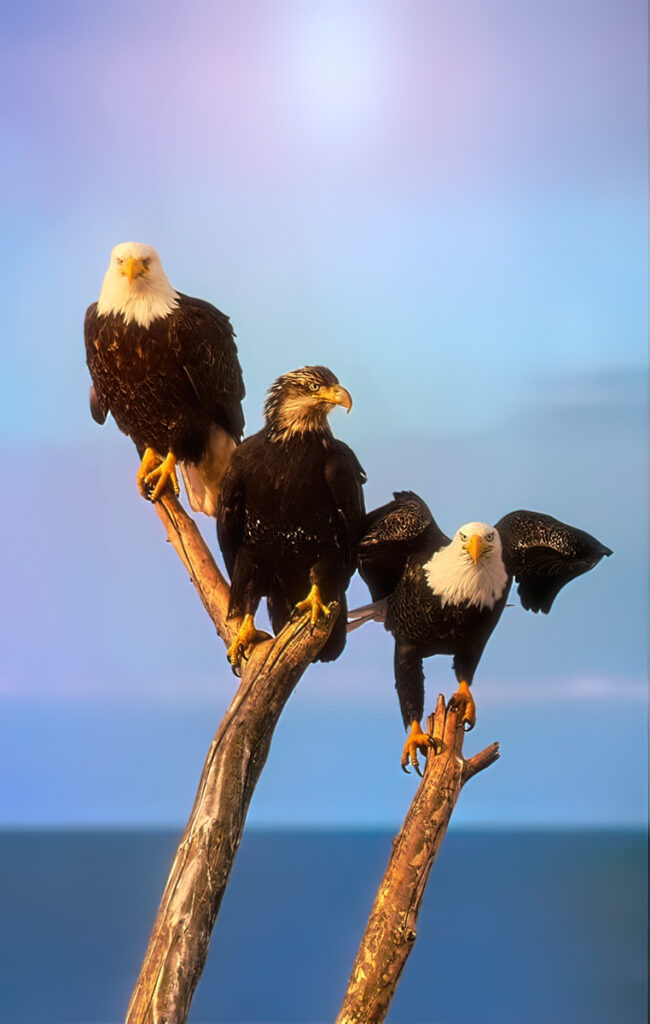
Some of my favorite photographs weren’t the dramatic ones — not the mid-dive or the talons-gripping-fish kind of shots — but the quiet ones: an eagle perched in the fog, a pair silhouetted against the morning sky, the reflection of wings on still water. Those are the moments that make you feel small in the best possible way. I shared this same pair of eagles in Ethics and Respect for Wildlife.
If you enjoy this kind of reflective photography, you might like Mastering Composition on the Road, where I talk about slowing down and letting the story of a place unfold naturally. Every field story carries a lesson — sometimes technical, sometimes emotional. If you enjoy the creative side of turning those experiences into lasting narratives, read Mastering Storytelling on the Road.
Respecting the Eagles and Their Space
It’s Their World — We’re Just Visitors
That’s something I remind myself every time I head down to the river. The eagles don’t owe us a photo opportunity. They’re wild, powerful birds who have carved out a life in a landscape that asks a lot of them — and the least we can do is respect that.
Keep Your Distance
Getting too close not only stresses them but can also push them away from feeding or nesting areas. I’ve watched people inch closer and closer until the bird takes off in panic — or worse, throw things at the trees trying to make them fly. That’s not wildlife photography; that’s harassment.
Let the Moment Come to You
Some of my favorite eagle photos came from staying still and letting the moment come to me. A long lens helps, of course, but patience helps more. If you’re quiet and respectful, the eagles often reward you with something far better than a forced shot — a glimpse into their real behavior.
Wildlife photography, at its core, is about connection, not control. When you stand on that riverbank long enough, you realize the best photographs come when you stop trying to make something happen and simply allow it to.
Read: Mastering the Art of Wildlife Photography
Moments That Stay With You
The Story of a Nesting Pair
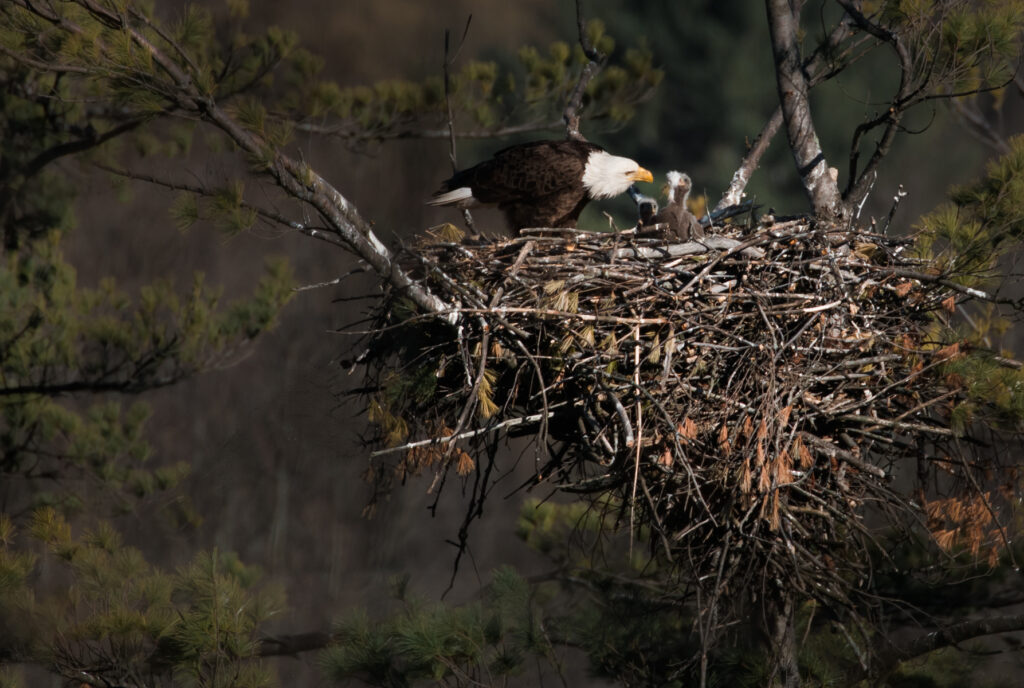
Every eagle season brings its own stories, but some moments stay etched in your memory long after you pack up your camera. There’s a nesting pair I’ve watched for years. Early in the season, one perches near the nest while the other hunts. They take turns sitting on the eggs, each standing guard with patient pride.
Then, one day, you notice a shift — the faint sound of eaglets calling from the nest, a soft movement as a parent leans in to feed them. It’s humbling to witness.
The Gift of Observation
You realize how much care and balance go into their world — how every meal, every flight, every protective glance is part of something bigger. The parents teach the young how to stretch their wings, how to navigate the wind, how to survive.
Those are the moments that remind me why I do this — why I brave the cold mornings and long waits. Because sometimes, behind the lens, you’re not just photographing wildlife. You’re watching a story of resilience and family unfold in real time.
Related: Finding the Wild Close to Home
Camera Gear and Techniques for Photographing Eagles
Eagles are one of those subjects that will test both your patience and your equipment. Whether they’re soaring overhead, perched in a tree watching the river, or feeding eaglets in the nest, they demand quick reflexes and thoughtful setup.
Lenses and Reach
Long lenses are your best friend. I typically shoot with my Fuji X-T5 paired with the XF 70-300mm + 1.4 teleconverter, which gives plenty of reach without feeling like I’m hauling a telescope through the woods. For perched shots or nest scenes, I’ll sometimes switch to the XF 50-140mm, especially when I want cleaner background compression or better light performance on overcast days.
If you’re photographing from a distance (and you should be), image stabilization and a sturdy monopod or tripod make a big difference. That extra steadiness helps when your hands start shaking from the cold or excitement — or both.
Camera Settings
For birds in flight, I keep my shutter speed high — around 1/2000 sec or faster — to freeze wing motion. Aperture around f/5.6–f/8 gives enough depth for detail while keeping the background soft. Continuous autofocus (AF-C) and burst mode are essential; eagles move fast, and those quick sequences often reveal subtle wing positions you’d miss in single shots. Shooting RAW + JPEG gives me room to recover detail if lighting shifts or the subject moves fast.
When they’re perched or at the nest, I slow things down. Lower ISO, smaller aperture, and time to compose the shot more deliberately. I use the electronic shutter when possible to stay quiet — no reason to draw attention to myself or disturb them. For tips on exposure see Mastering the Histogram: A Simple Guide to Better Exposure.
Light and Positioning
Eagles look incredible when the light hits their feathers just right. Early morning and late afternoon give the best warmth and contrast. If they’re perched, try to position yourself so the light catches their eyes; that small gleam brings the photo to life.
And remember — the best angle isn’t always the closest one. Sometimes stepping back allows the environment to tell part of the story: the river, the trees, the winter air. Those contextual shots often end up being my favorites.
If you want to dive deeper into light and timing, I cover this more in Understanding Light in Landscape Photography— the same principles apply when nature becomes your studio. If you are shooting in low light you may want to read: Mastering Shooting in Low Light.
Learn how to shoot wildlife in low light. I cover more in depth photography in Mastering the Art of Wildlife Photography.
What Eagles Have Taught Me About Photography (and Patience)
If there’s one thing photographing bald eagles has taught me, it’s that the best moments in nature can’t be rushed. You can’t control the light, the timing, or the birds. You can only show up — again and again — ready to see what the day offers.
Every season on the river reminds me that photography isn’t just about the images we take home. It’s about what we learn while waiting for them. The stillness between shots. The quiet respect you develop for your subject. The way your heart beats a little faster when the eagle finally spreads its wings and takes off into the wind.
Eagles have a presence that commands attention, but it’s their rhythm — steady, patient, deliberate — that lingers with me most. They’ve taught me that being a good photographer means being a good observer. To slow down. To notice the subtle moments most people miss.
When I head home after a long morning by the river, I often find that my favorite frame of the day isn’t the sharpest or most dramatic. It’s the one that captures the feeling of being there — the frost in the air, the ripple of the water, the quiet strength of a bird that’s seen more winters than I can count.
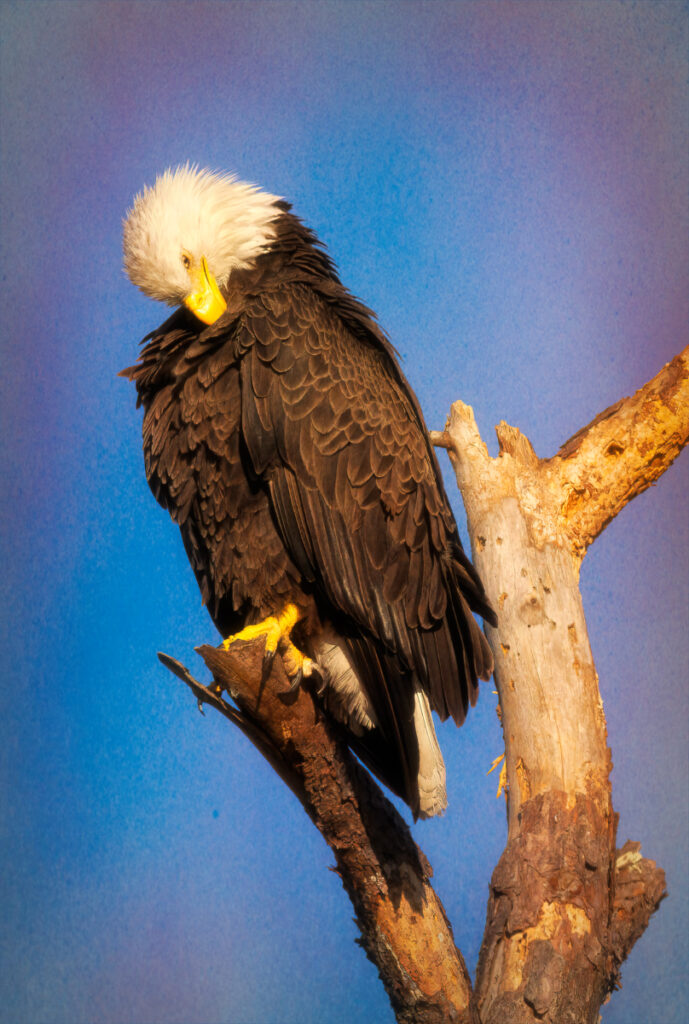
Those are the lessons from the riverbank. The kind you can’t learn from a manual, only from showing up — camera in hand, heart open, ready to wait.
If you enjoyed this story, you might also like Finding the Wild Close to Home, Seasons of Eaglets, Photographing Without Disturbing, and Bald Eagle Lifecycle, all reflections on slowing down and connecting with nature through your lens.
Newsletter Sign-Up
If you enjoy stories like this — quiet mornings, wild places, and the lessons hidden in nature — make sure to subscribe to the Back Roads Lens newsletter. You’ll get my latest travel and photography stories, behind-the-lens tips, and upcoming adventures delivered straight to your inbox.
👉 Subscribe to the Back Roads Lens Newsletter