Introduction: The Garden Isle That Feels Timeless
Kauai is the island that slows you down. While Oahu hums with energy and Maui dazzles with variety, Kauai feels almost untouched — a place where cliffs rise straight from the ocean, waterfalls carve green canyons, and roosters wander freely like they own the place. It’s known as the Garden Isle for good reason. Everything here seems to grow wild — from lush tropical ferns to the sense of peace that settles in the moment you arrive. This Kauai Travel Guide will help you plan your trip.
What sets Kauai apart is its mix of raw nature and small-town charm. You won’t find towering resorts or sprawling cities here. Instead, you’ll find winding backroads, mom-and-pop cafes, and viewpoints that make you pull over more often than you planned. From the red rock depths of Waimea Canyon to the soaring cliffs of Nā Pali Coast, every curve in the road reveals another scene that feels like it belongs on a movie screen (and often does — many films have been shot here).
For photographers and explorers alike, Kauai is paradise. I’ll cover some of my favorite routes and lookouts in this guide — and if you’re planning to capture its beauty through a lens, don’t miss my detailed Kauai Photographer’s Guide for practical tips and shooting locations.
Wandering Kauai
Kauai isn’t the kind of island you just visit — it’s one you wander. The roads twist, the views distract, and before you know it, you’ve pulled over again for “just one more photo.” A simple one lens setup is perfect here. Read my one lens philosophy in Packing: One-Lens Travel — How to Simplify Your Photography and See More.
The island may look small on a map, but travel here runs on “island time.” The road doesn’t loop all the way around (the Nā Pali Coast makes sure of that), so getting from one side to the other means planning your days by region.
Rent a Car — Trust Me on This One
If there’s one tip I can give you: rent the car. Kauai isn’t built for public transportation adventures. The island bus will get you to towns, but not to the remote lookouts or trailheads you’ll want to see — like Waimea Canyon or the Nā Pali Cliffs.
Plus, there’s something freeing about winding your way down a red-dirt backroad with no schedule, just you, a camera, and the sound of roosters crowing in the distance.
Rental cars are available at Līhuʻe Airport, and you’ll want to book early — inventory here can vanish faster than shave ice on a hot day.
Few Driving Tips
- Island speed limits are low — and that’s a good thing. You’ll want time to actually see what’s around you.
- Fuel up when you can. Gas stations get sparse in the western stretches near Waimea.
- Expect one-lane bridges and local courtesies. On Kauai, waving other drivers through isn’t just polite — it’s practically a tradition.
- Chickens will cross the road. Don’t ask why. Just brake and smile.
Do You Need a Car?
Technically, yes. Practically, you’ll miss a lot.
If you plan to stay near a beach in Poipu or Hanalei, you could spend a few days car-free — walking to cafes, hopping on a shuttle, or renting a bike. But to reach places like Kīlauea Lighthouse or drive up to Waimea Canyon Lookout, you’ll need wheels.
So, grab a car, roll down the windows, and let the road decide where you stop next.
Where to Stay on Kauai
Choosing where to stay on Kauai is like picking a favorite photo from a great trip — every area has its own personality, and no two feel quite the same.
South Shore — Sun-Kissed and Easygoing
If you’re after sunny days, beaches you can swim in, and easy access to restaurants, Poipu is your spot. It’s lively without being overbuilt and makes a great base for day trips west toward Waimea Canyon or east to Kapaʻa.
You’ll find resorts, condos, and plenty of places to grab poke or shave ice after a day in the sun. It’s the island’s most visitor-friendly region — and a solid choice for first-timers or families.
North Shore — Wild and Wonderful
Now, if you’d rather wake up to misty mountains and that jungle-meets-ocean magic, head for Hanalei or Princeville.
This is the Kauai you’ve seen in movies — emerald cliffs, long beaches, and a slightly slower rhythm of life. Bring a rain jacket (and your camera) — the north gets more showers, but that’s what keeps it so green.
It’s also home to the legendary Nā Pali Cliffs, where I promise you’ll lose track of time staring into the horizon.
East Side — Central and Convenient
Kapaʻa and Līhuʻe make good bases if you want to explore both north and south without changing hotels. You’ll find more local flavor here — coffee shops, beach parks, and rentals that suit every budget.
It’s not as scenic as the north or as sunny as the south, but it’s balanced and practical — a good fit for travelers who plan to be out exploring most of the time.
West Side — Off the Beaten Path
If you’re chasing the quiet corners, the west side is where you’ll find them. This is the doorstep to Waimea Canyon— all red rock, sweeping views, and old-Hawaii charm.
Accommodations are fewer, but the trade-off is peace. The kind where the loudest thing you’ll hear at night is the ocean.
Choosing Your Base
- First-time visitor? Go South.
- Photographer or adventurer? North or West.
- Traveling light and keeping it simple? East side.
And if you plan to photograph Kauai’s wild beauty (and you should), my Kauai Photographer’s Guide breaks down the best times and spots for those jaw-dropping sunrise shots.
Island Overview: Geography & Climate
Kauai is the oldest of the main Hawaiian Islands — and it wears its age beautifully.
Over millions of years, wind, rain, and volcanic activity have sculpted this island into a patchwork of cliffs, canyons, valleys, and waterfalls that feel almost too dramatic to be real. It’s smaller and quieter than Oahu or Maui, but that’s part of its charm — everything here feels a little more wild, a little less polished, and a lot more personal.
Quick Geography Lesson (the fun kind)
The island is roughly circular, about 33 miles across, with a single main highway that wraps around much — but not all — of it. The north and west coasts are separated by the sheer, rugged Nā Pali Coast, which means you can’t drive all the way around. That’s part of what keeps Kauai feeling untamed — there are still places here you can only reach by boat, air, or a very long hike.
At its center rises Mount Wai‘ale‘ale, one of the wettest spots on earth. All that rain spills outward through deep valleys and rivers, feeding waterfalls that seem to appear out of nowhere. It’s also what gives Kauai that signature emerald-green color that makes every photo look like it’s been lightly brushed by magic.
The island divides naturally into regions — each with its own look and feel:
- North Shore: lush, dramatic, and home to the island’s most cinematic views.
- East Side (Coconut Coast): central and breezy, with easy access around the island.
- South Shore: drier and sunnier — think golden beaches and evening sunsets.
- West Side: raw and remote, where the red earth of Waimea Canyon meets the endless Pacific.
Climate: Bring the Rain Jacket and the Sunscreen
Kauai’s weather changes faster than you can swap camera lenses. The north and interior see the most rainfall (that’s why they’re so green), while the south and west tend to stay sunnier.
Typical daytime temps sit comfortably in the 70s and 80s year-round — one of the reasons it’s a favorite escape from winter back on the mainland. But “occasional showers” here can mean five minutes of mist or an all-day downpour, so always pack a light rain jacket and maybe a dry bag for your camera.
If you’re a photographer, you’ll love the ever-changing skies. The shifting light brings out colors and contrast that make Kauai a living landscape painter’s dream — something I talk about more in my Understanding Light in Landscape Photography blog.
From Map to Magic: Exploring Kauai’s Natural Highlights
It’s one thing to read about Kauai’s geography — it’s another to stand in it.
Once you’ve figured out where to stay and how to get around, it’s time to hit the road (or the trail) and see what makes this island unforgettable. From the red-rock canyons of the west to the lush cliffs that guard the north shore, Kauai is full of places that make you pull over just to catch your breath — and maybe take far too many photos.
Let’s start with a few of my favorites — the ones that capture the island’s wild heart and will leave your camera (and your memory card) very full.
Top Natural Highlights of Kauai
Kauai’s beauty doesn’t hide behind resorts or fences — it’s out in the open, free to explore, photograph, and stand in awe of. The island’s building codes forbid any structure taller than a coconut tree, so the skyline stays true to its landscape. Every beach is public, too — no gates, no “guests only” signs, just sand, surf, and a front-row seat to paradise.
That’s the spirit of Kauai — a place where wild nature and local life blend effortlessly. You’ll find kids fishing off bridges, surfers chasing the last wave of the day, and photographers (like me) waiting for the light to turn just right.
Here are some of the island’s unforgettable landscapes — the ones that define Kauai’s rugged, breathtaking heart.
Waimea Canyon – The Grand Canyon of the Pacific
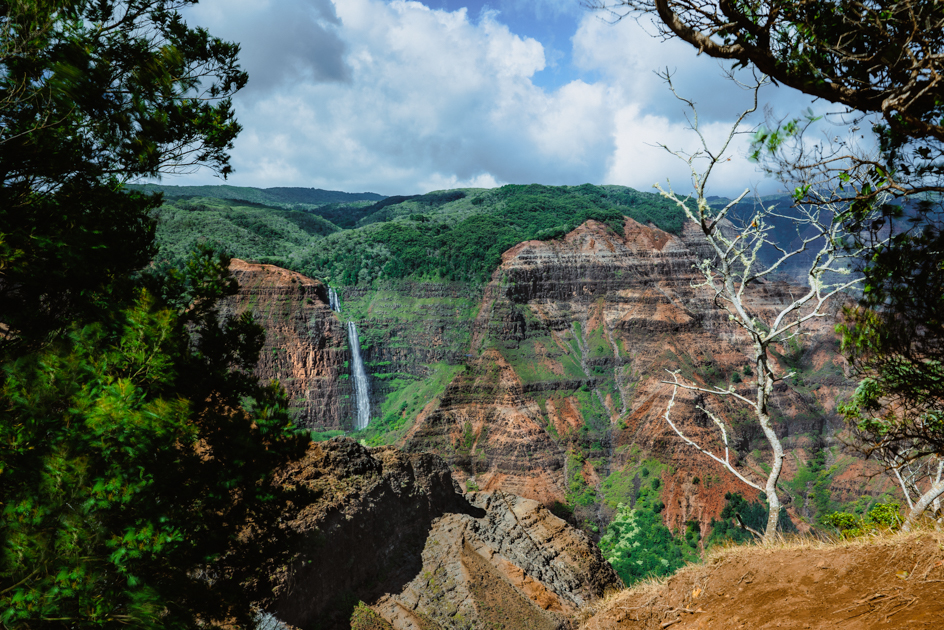
If you only have time for one inland adventure, make it Waimea Canyon. Carved over millions of years by the Waimea River, it’s over ten miles long and more than 3,000 feet deep — a landscape painted in layers of red, orange, and green. The colors shift as clouds roll through, giving the canyon a mood all its own.
Pull over at the main lookouts — Waimea Canyon Lookout, Puʻu Hinahina, and Puʻu o Kila Lookout — and take your time. Wait for the sun to peek through the clouds, and you’ll see the canyon come alive in color and contrast. (If you’re wondering how to make the most of changing light, my Understanding Light in Landscape Photography post dives deeper into that.)
From the upper viewpoints, you’ll even glimpse the beginning of the Nā Pali Cliffs — a preview of what lies beyond.
Nā Pali Coast – Wild, Remote, and Worth Every Effort
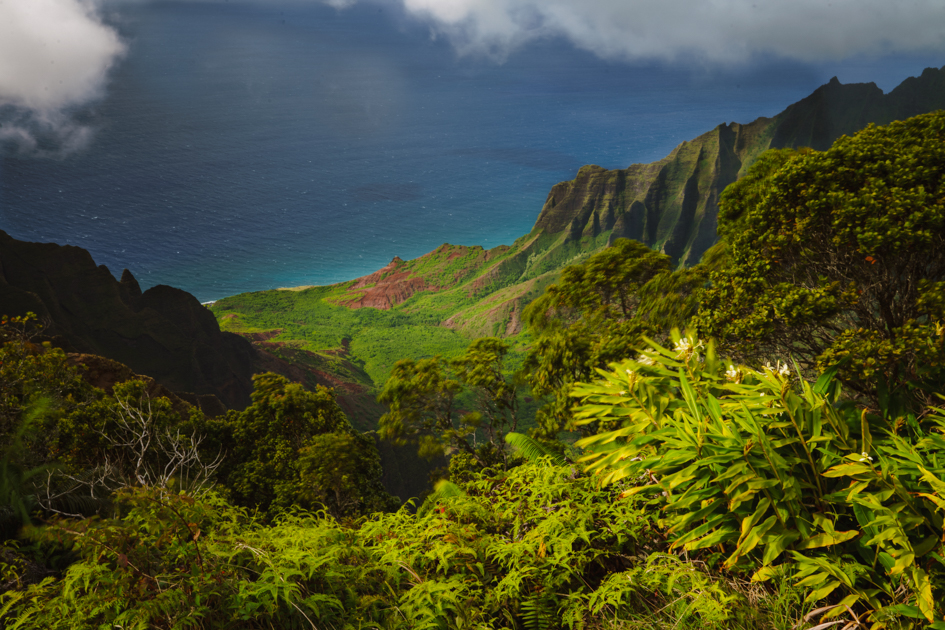
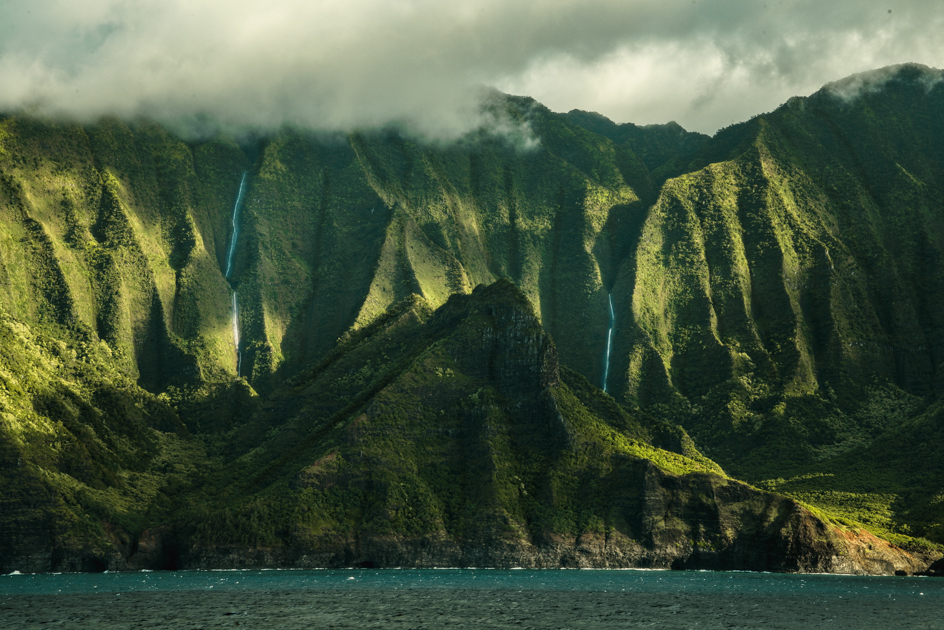
The Nā Pali Cliffs are Kauai’s crown jewel — a coastline so jaw-dropping it feels almost unreal. Towering green ridges rise straight out of the Pacific, waterfalls thread through hidden valleys, and clouds drift lazily across peaks that have stood untouched for centuries.
You can’t drive here — and that’s part of the magic. There are only a few ways to see Nā Pali, each with its own rewards:
- By boat: Glide beneath the cliffs and feel the ocean spray while spinner dolphins race beside you.
- By helicopter: Soar above the peaks and valleys for a view that belongs in a movie reel.
- By trail: The Kalalau Trail isn’t for the faint of heart, but it’s a once-in-a-lifetime hike through landscapes that seem suspended in time.
- By lookout: Head to Puʻu o Kila or Kalalau Lookout from Waimea Canyon for a view that takes in the cliffs from above — without breaking a sweat.
Each way shows a different side of Nā Pali, which is why I devoted an entire post to it — Exploring the Nā Pali Cliffs — with all the details, photos, and tips for choosing your best way to see this unforgettable stretch of coast.
Kīlauea Lighthouse – Where the Island Meets the Sky
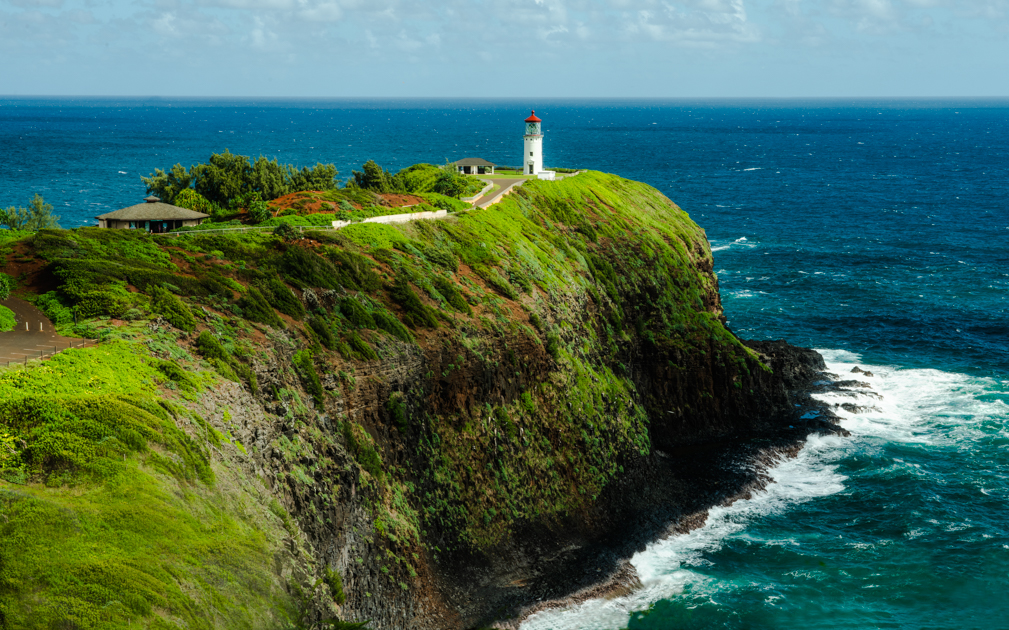
Perched on a windswept bluff at Kauai’s northernmost point, Kīlauea Lighthouse feels like a postcard brought to life. The bright white tower stands against a backdrop of deep blue ocean and rolling cliffs alive with seabirds.
Part of the Kīlauea Point National Wildlife Refuge, it’s a peaceful spot where nature still calls the shots. Bring binoculars — this is prime territory for red-footed boobies, frigatebirds, and even humpback whales in winter.
If you time it right, golden hour here is pure magic — warm light spilling across the cliffs while the waves crash below. It’s one of those moments that reminds you Kauai’s beauty is both wild and deeply serene.
Beaches for Everyone
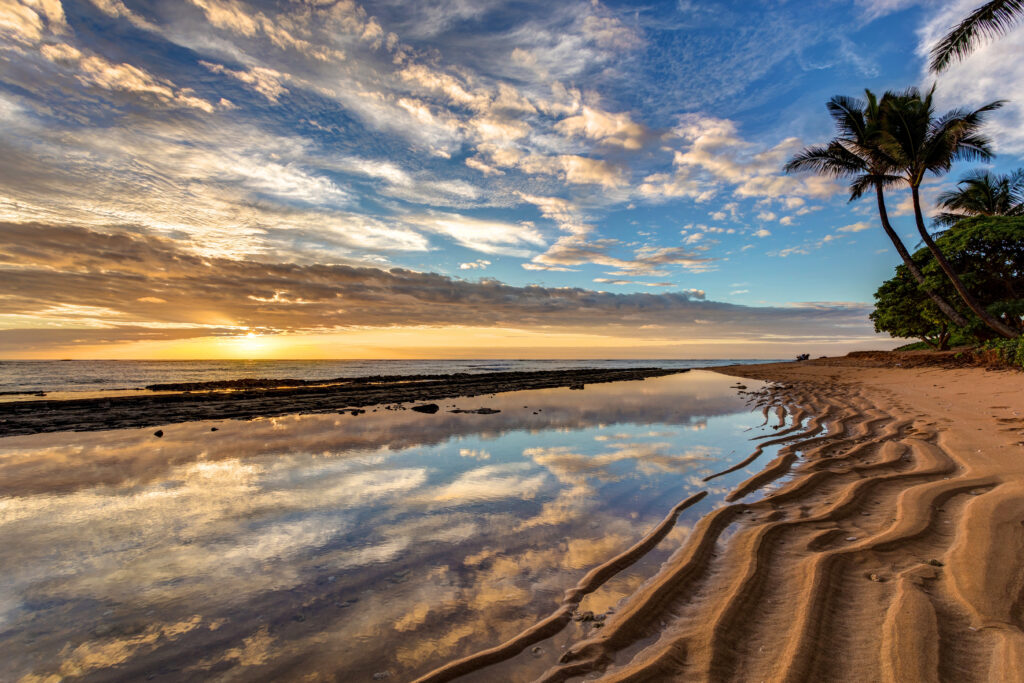
On Kauai, every beach belongs to everyone — and that’s something worth celebrating. Whether you’re walking the crescent of Hanalei Bay, swimming at sunny Poipu, or bouncing down the dirt road to Polihale State Park, you’ll find space to spread out and soak it all in.
The best part? No high-rises blocking your view. With those strict building codes keeping the island low and open, you can still watch the sunset the way nature intended — with nothing between you and the horizon but a little salt air.
So bring a towel, a camera, and a sense of wonder. On Kauai, even a “quick stop at the beach” has a way of turning into hours of pure joy.
Photography on Kauai
If you love photography, Kauai will test both your skills and your self-control. You’ll want to stop for every waterfall, ridge, and rooster — and that’s before you even reach the beach.
The Ever-Changing Light
Kauai’s weather is part of what makes it so photogenic. Clouds roll through fast, sunlight breaks dramatically across the cliffs, and rainbows seem to appear on cue. It’s a place where you can shoot five different moods in the same afternoon — and all of them will look amazing.
I talk more about working with changing light in Understanding Light in Landscape Photography, but on Kauai, the trick is to stay flexible. Don’t chase perfect skies; embrace the moments when the clouds open just enough to let a beam of light hit the valley floor. That’s when Kauai shows off.
Composition on the Road
Kauai rewards those who slow down. Pull over at the unmarked turnout. Wander down that little path you almost missed. Sometimes the best shots aren’t from the famous viewpoints but from the quiet corners — the ones where you’re the only one there.
In my Mastering the art of Composition on the Road post, I share how I build a story through framing and foreground. On Kauai, that means using layers — red dirt in the foreground, a waterfall mid-frame, and clouds wrapping the peaks in the distance. The island naturally lends itself to storytelling if you look beyond the postcard shot.
Gear and Practical Tips
Kauai’s humidity, salt air, and sudden rain showers will challenge your gear as much as your patience. Keep a microfiber cloth handy, bring extra batteries, and don’t be afraid to shoot between raindrops. The Leica Q3 and Fujifilm X-T5 have both earned their keep here. You can read my full review here: Leica Q3 (43mm) Review: Why This Version Fits My Travel Photography Even Better.
If you’re planning to shoot seriously, check out my full Kauai Photographer’s Guide — it covers the best times of day for major locations, recommended lenses, and how to plan your route so you’re always chasing the right light instead of the clock.
Finding the Story in the Scene
Kauai isn’t just about landscapes; it’s about atmosphere. The light on a rainy morning in Hanalei. The lone fisherman on the pier. The stillness before a wave breaks.
Those small details tell the island’s story — and they’re what transform your photos from “pretty” to personal.
For more ways to turn travel moments into visual stories, visit my cornerstone Mastering Travel Photography — where I dive deeper into seeing, composing, and creating images that make people feel what you felt when you pressed the shutter.
Travel & Photography Inspiration
Love finding the wild corners of the world through your lens? Subscribe to my newsletter for travel stories, photography tips, and updates from Back Roads Lens.
Why Kauai Stays With You
Some places you visit and leave behind. Kauai isn’t one of them. It lingers — in the sound of the surf that never really stops, the smell of rain on red dirt, and the way the light filters through palm fronds just before sunset.
Kauai doesn’t try to impress you — it just is. The cliffs don’t need a billboard, the canyons don’t need a crowd, and the beaches don’t need a resort to make them perfect. They simply exist, wild and timeless, waiting for whoever happens to wander by with open eyes.
For me, this island is more than another destination. It’s a reminder of what drew me to travel and photography in the first place — the beauty in slowing down, in watching light shift across a landscape, in finding the extraordinary tucked quietly into the everyday.
When you leave Kauai, you’ll take more than photos. You’ll carry a feeling — of peace, of wonder, of wanting just one more sunset before you go.
And when you’re ready to keep exploring, my Hawaii Region Travel Guide links to more stories from these islands — from Maui’s lava tubes to the Big Island’s black sand shores. Each one holds its own magic, but Kauai… Kauai holds a little piece of your heart.
Continue your Hawaii journey
Each island has its own story — from Maui’s winding Road to Hana to the Big Island’s lava flows and black sand beaches. Read about each region: