Where Greece Meets the Gulf
If you ever find yourself pedaling along Florida’s Pinellas Trail, follow the scent of sea salt and fresh-baked baklava — it’ll lead you straight to Tarpon Springs. We’ve ridden our bikes there a few times while staying along the Gulf Coast, and each time, the moment we roll into town feels like crossing into another world. Tarpon Springs may sit firmly in Florida, but its heart beats to a Greek rhythm — with sponge boats bobbing along the river, fishermen chatting in Greek, and cafés that smell of honey, coffee, and warm bread.
Natural Sponge Diving
This isn’t your typical beach stop. It’s a working harbor with roots that run deep, a place where natural sponge diving once built fortunes and where that heritage is still proudly on display. Every block tells a story — from murals honoring the early Greek divers to the hand-painted signs over family bakeries.
I first came to Tarpon Springs out of curiosity — drawn by tales of the sponge docks and the way photographers rave about the color and character of the harbor. But like most of my favorite off-the-beaten-path stops, what began as a short visit turned into hours of wandering. Between the docks, bakeries, and friendly locals, Tarpon Springs quickly earned a spot on my “return again” list.
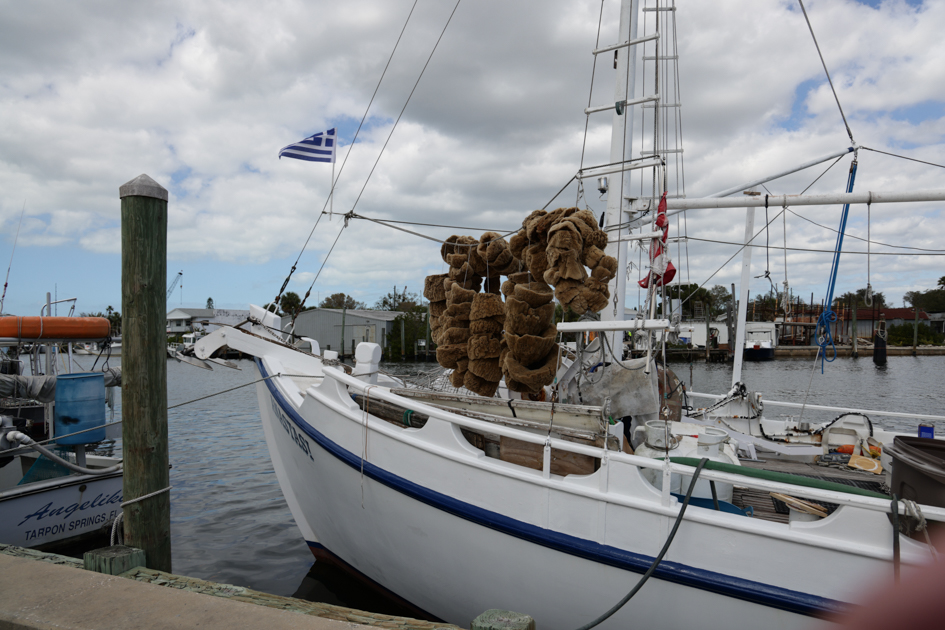
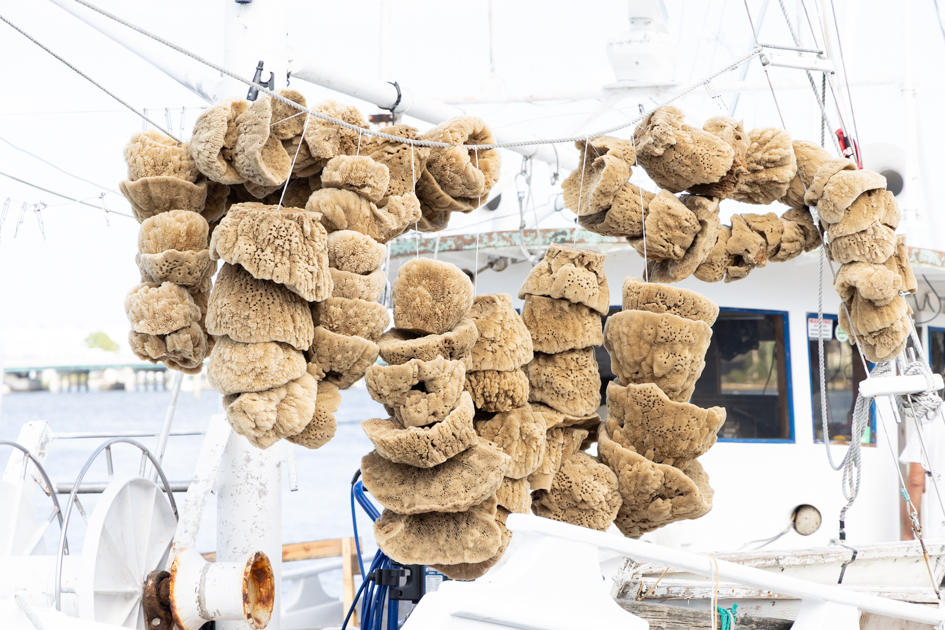
For photographers, it’s a treasure trove of light and texture — boats lined with ropes and sponges, reflections dancing across the Anclote River, and late-afternoon golden light spilling over weathered buildings. Tarpon Springs is a reminder that the best places to explore aren’t always far from the main route — sometimes, they’re just a bike ride away.
History and Greek Heritage
Tarpon Springs began as a quiet fishing village in the late 1800s, but everything changed when Greek sponge divers arrived in the early 1900s. Drawn by the Gulf’s shallow waters and its abundance of natural sponges, they brought with them the traditional techniques of diving that had been used for centuries in the Aegean. What followed was a boom that turned this little Florida town into the “Sponge Capital of the World.”
Walking the docks today, it’s easy to imagine those early days — the clatter of wooden boats, the hiss of diving helmets being lowered into the water, and families gathering at the end of each day to sort and dry the sponges that made their livelihoods. Many of the descendants of those original divers still call Tarpon Springs home, and their influence is everywhere — in the Greek Orthodox churches, the bakeries selling spanakopita and koulourakia, and the friendly greetings of “Kalimera” that you’ll hear along the riverfront.
For me, the charm of Tarpon Springs lies not only in its history but in how authentically that heritage endures. This isn’t a re-creation or a staged attraction; it’s a living culture that thrives through generations. When you photograph here, you’re not just capturing scenery — you’re documenting a community that’s proud of its roots. The fishermen mending their nets, the shopkeepers polishing sponge displays, the children running along the docks after school — all of it feels genuine and deeply human.
Exploring the Sponge Docks
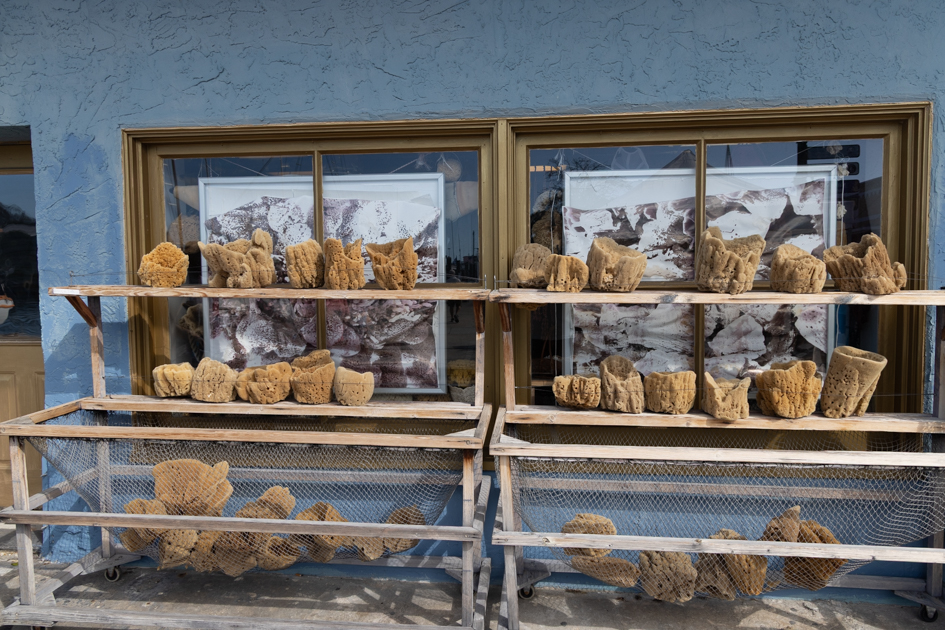
The heart of Tarpon Springs beats along Dodecanese Boulevard, where the historic sponge docks line the Anclote River. It’s one of those places where every sense comes alive — the salty air, the sound of gulls circling overhead, the hum of boat engines, and the earthy scent of drying sponges stacked in baskets along the sidewalk.
We wandered slowly, bikes parked nearby, just taking it all in. Wooden boats bobbed against the docks, their hulls splashed with faded paint and names like Aegean Diver and Sponge Queen. Some captains were loading gear for their next trip, while others sat under the shade of an awning, swapping stories that have probably been told a hundred times before — stories of dives that went right, dives that didn’t, and of the proud tradition that still keeps this harbor alive.
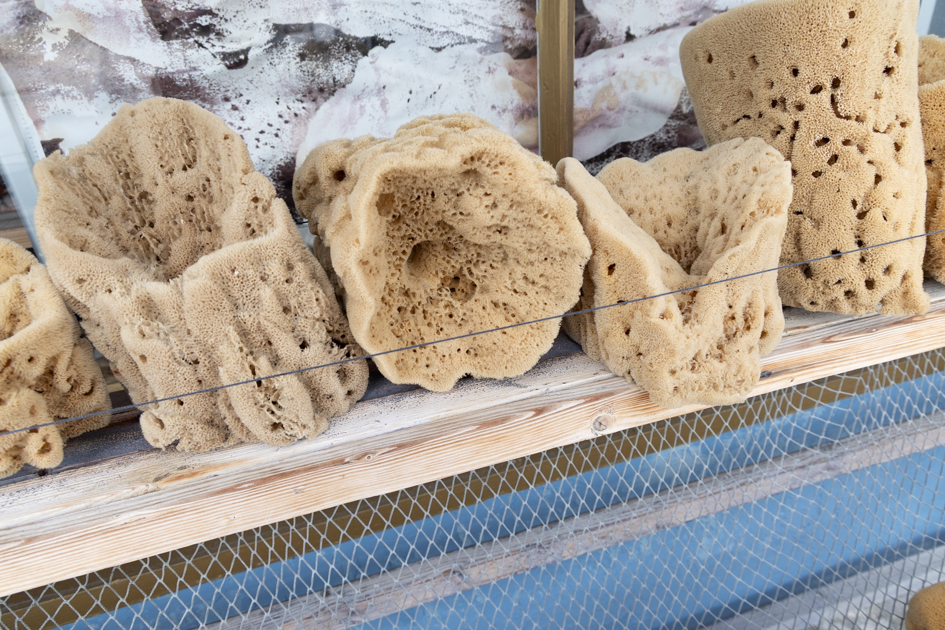
There’s a rhythm here that feels wonderfully unhurried. You can stop into a small shop and see sponges sorted by type and texture — wool, yellow, grass, finger — each with its own purpose. Some are soft and fine enough for a newborn’s bath, others coarse and rugged for cleaning decks or walls. The shop owners are always ready to explain the difference, and if you linger long enough, you’ll probably hear a story about how the sponges are harvested and dried.
Photographing Sponge Docks
For photographers, it’s pure magic. The textures and colors — golden sponges, cobalt boats, weathered ropes — play beautifully against the light. Late afternoon is my favorite time to shoot, when the sun drops low and the reflections ripple across the water, giving everything that warm, honeyed glow. I found myself snapping shots of small details: a sponge diver’s helmet glinting in the sun, coiled ropes against peeling blue paint, and a pelican perched like a dockside sentry.
By the time we rode back along the Pinellas Trail, the docks had quieted and the smell of grilled fish and garlic drifted through the air. It was the kind of moment that makes you pause — not because it’s spectacular, but because it’s real.
The Taste of Greece — Food and Local Flavor
If the sponge docks are the heart of Tarpon Springs, then the Greek restaurants and bakeries are its soul. Every visit here turns into a culinary adventure — one that starts with the smell of garlic and grilled fish drifting from the docks and ends with a plate of something so delicious you’ll swear you’ve crossed the Atlantic.
We stopped at one of the small cafés overlooking the water, where the owner greeted us like old friends and insisted we try the moussaka “just out of the oven.” The portions were generous, the flavors bold — layers of eggplant, potatoes, and spiced meat topped with creamy béchamel that somehow tasted like sunshine and comfort. A few doors down, a bakery tempted us inside with trays of baklava, galaktoboureko, and delicate koulourakia twists dusted with sesame. Each bite was a reminder that this town’s heritage lives not just in its history but in its kitchens.
Dining here feels wonderfully personal. The recipes are family treasures, the tables are filled with laughter, and someone always seems to be talking about “how Yia Yia used to make it.” It’s the kind of place where you linger over coffee, maybe order one more pastry, and forget about the time.
For photographers, these scenes are irresistible — golden pastries glistening in the window light, the rich blues and whites of restaurant façades, and plates bursting with color. I found myself taking photos before the first bite — not for the trend, but because everything here feels so alive and genuine.
Photography Highlights
Tarpon Springs is one of those rare places where you don’t have to go looking for good photographs — they find you. Everywhere you turn, there’s something that catches the eye: the sun glinting off a sponge diver’s helmet, reflections rippling across the Anclote River, the bold blue of a fishing boat set against the warm, weathered tones of the dock.
I found myself constantly switching between wide shots that captured the energy of the harbor and close-ups that told quieter stories — a sponge drying in the sun, ropes coiled like patterns of their own, or the proud face of a fisherman pausing mid-task. Morning light brings soft tones and long shadows, perfect for catching detail, while late afternoon wraps everything in that golden hue photographers dream about.
If you wander just off the main strip, you’ll find a different kind of beauty: narrow alleys with hand-painted murals, pastel homes trimmed with bougainvillea, and glimpses of daily life that feel intimate and unposed. These are the kinds of scenes that make you slow down and notice texture, pattern, and story — the heart of what I love about travel photography.
And if you’re biking along the Pinellas Trail, don’t forget your camera. The approach into Tarpon Springs offers beautiful framing opportunities — bridges, river crossings, and glimpses of boats through the trees. By the time you reach the sponge docks, you’ve already captured half the story.
Photography here isn’t just about documenting a place — it’s about celebrating a culture that has stood the test of time. Every frame feels connected to the people who’ve made Tarpon Springs what it is: hardworking, colorful, and full of life. For low light tips read: Mastering Shooting in Low Light.
Learn how to shoot wildlife in low light.
Wrap-Up and Explore More
By the time we rode back along the Pinellas Trail, the sun was low and the harbor was quiet — just the soft splash of water against the docks and the scent of the sea drifting inland. Tarpon Springs has a way of lingering with you. It’s not just the food or the history or even the photographs; it’s the feeling of having stepped into a small corner of the world where heritage and heart still shape everyday life.
Whether you arrive by car or by bike, take your time here. Wander through the shops, talk with the locals, taste everything you can, and let your camera follow your curiosity. Some of my favorite shots from this trip weren’t planned — they were small moments caught between the bustle: sunlight on a sponge pile, a fisherman’s laughter, or the quiet reflection of boats at dusk.
If you love discovering local culture and authentic stories, you might also enjoy a few of my other posts:
- Green World Coffee on Oahu – another community built around deep roots, local flavor, and the joy of slowing down.
- Keneke’s Grill on Oahu – a look at how food and personality shape a place just as much as scenery.
- Respecting Local Communities on the Road – a cornerstone post about traveling thoughtfully and honoring the places we visit.
- Scenic Drives and Road Trips Across America– if you love discovering towns like Tarpon Springs, this is where my off-the-beaten-path adventures begin.
- Off the Beaten Path Small Towns in the USA – a look at how I explore small towns
And as always, if you’d like to follow along with more hidden gems, photography tips, and road-trip inspiration, join my newsletter.