The Timeless Silhouette of the West
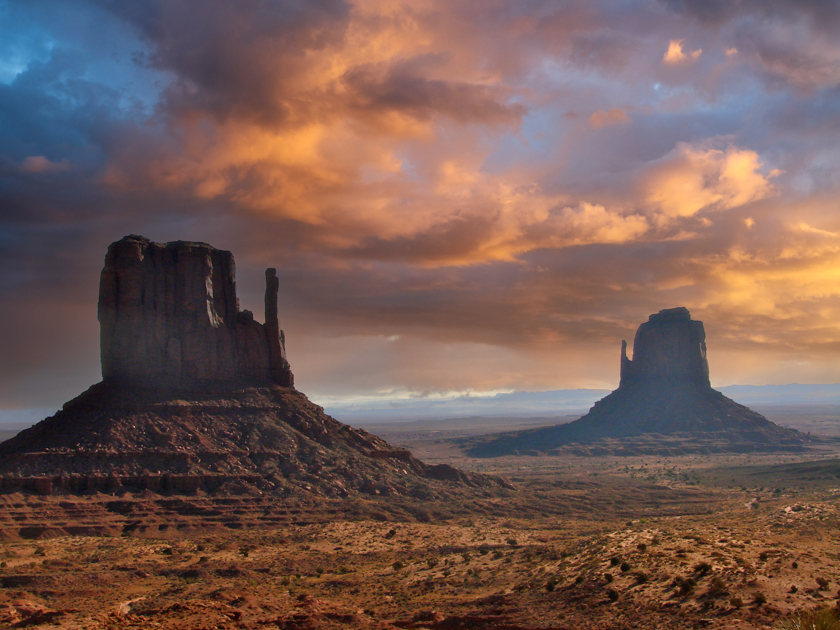
There’s a moment when the desert horizon opens wide and the first butte of Monument Valley rises into view — that moment when the road ahead seems to vanish into the red dust, and you realize you’re driving straight into a postcard. The towering monoliths stand silent and immovable, glowing under the changing light. I’ve seen them in films, calendars, and dreams, yet nothing prepared me for how immense and spiritual this landscape feels in person.
I began my journey here while tracing one of the Southwest’s most iconic scenic routes — a drive I first mentioned in my post Scenic Drives and Road Trips Across America: Finding Beauty Between the Lines on the Map. The same back-road spirit that led me along the Blue Ridge Parkway and Apache Junction’s Superstition Mountains guided me here too. Monument Valley may be world-famous, but it’s still a place where the land commands silence, where every rock holds a story.
The valley sits on the Navajo Nation Reservation, straddling the border between Arizona and Utah. This isn’t just a scenic stop on a road trip — it’s a homeland, a sacred landscape that continues to hold deep cultural significance for the Diné (Navajo people). Every formation here has a name, a story, and a spirit, and those stories are still told today.
The Land and Its People
Long before Monument Valley became a backdrop for Western films, it was — and still is — the heart of the Navajo Nation. To the Diné, this red rock country is more than scenery; it’s a living part of their spiritual geography. The mesas and buttes have names that tell creation stories, and the land is woven into chants, ceremonies, and generations of tradition.
Even today, many Navajo families live and herd sheep within the valley, continuing a way of life shaped by the desert’s rhythm. Visitors who take a guided Navajo tour often hear these stories firsthand — about the Hogan, the traditional Navajo home; about the four sacred mountains that frame their world; and about how Monument Valley became both sanctuary and teacher.
It’s humbling to realize that while we come to photograph the light shifting across these formations, the Navajo people come to honor what has always been theirs. I thought about this often, especially after writing Respecting Local Communities on the Road, where I reflected on traveling through places that still belong to someone else’s story. Monument Valley is a reminder of that respect — to move quietly, to listen, and to ask before assuming every view is ours to share.
The land itself tells of survival. Harsh summers, cold winters, and scarce water have shaped both people and landscape. Yet, this endurance gives Monument Valley its power — that sense of timelessness you feel standing at sunrise, camera ready, as the buttes catch fire with the first light.
The Hollywood Legacy and Modern Tourism
It’s almost impossible to stand at Monument Valley’s overlook and not see the shadow of Hollywood in the distance. From Stagecoach in 1939 to Forrest Gump and countless commercials, this landscape helped define what the world imagines when it pictures the American West. Director John Ford returned here again and again, making Monument Valley a character of its own — silent, stoic, and eternal.
But for the Navajo Nation, that fame has always been complicated. While the films brought worldwide attention and tourism, they rarely told the stories of the people who lived here. Today, the Monument Valley Navajo Tribal Park works hard to balance those two sides — honoring cultural preservation while welcoming travelers eager to see these formations in person.
Driving the Loop Road
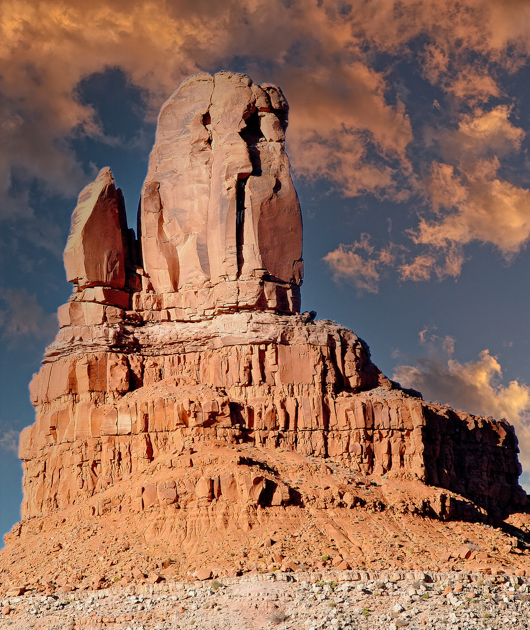
Visitors can drive the 17-mile loop road on a self-guided tour or, for a deeper experience, join a Navajo guide. Guided tours reach areas off-limits to most visitors, places where photography meets storytelling. These tours often include Hunts Mesa, Ear of the Wind Arch, and the Totem Pole — formations best understood through the stories told by those who’ve lived beside them for generations.
Standing there with my camera, I couldn’t help but think back to my post Mastering the Art of Composition on the Road. Monument Valley challenges you to slow down and let the scene build. Light bounces differently here, shadows move fast, and every angle shifts the story. It’s not about chasing the famous shot — it’s about finding your own quiet frame between the sun and the sandstone.
Tourism continues to support the local economy, from guided tours and handmade jewelry to small roadside stands selling frybread. Many of the artisans are descendants of families who appeared as extras in early Westerns. There’s a full-circle feeling to it — this place that once represented someone else’s story now proudly shares its own.
Capturing the Spirit of Monument Valley
The Quiet Before Sunrise
If there’s ever been a place that humbles a photographer, it’s Monument Valley. No matter how many times I’ve adjusted exposure or balanced tones on the road, this landscape still manages to surprise me. The desert light shifts minute by minute — warm golds bleeding into deep crimson shadows, the horizon glowing as if the land itself is breathing.
I set up my tripod before dawn, the air cool and still. When the sun first crests the horizon behind the Mittens, it’s pure magic — that fleeting moment when light kisses stone and every detail sharpens into life. It’s also the quietest time of day, when the only sound is the wind sweeping across the valley floor.

Tools of the Trade
This is where I rely on both my Leica Q3 and Fujifilm X-T5, switching between systems as the light changes. The Leica captures those razor-sharp contrasts and subtle tones of morning, while the Fuji’s film simulations bring warmth and texture to the sandstone. I often shoot in RAW + JPEG, giving me room to play with both authenticity and creativity when I edit later — something I explored in my post Mastering RAW + JPEG on the Road.
The Art of Patience
When photographing here, patience is everything. Clouds can turn an ordinary view into drama; a dust storm might scatter the light just enough to create a painterly haze. And sometimes, it’s not the wide shot that tells the story — it’s a closer look at a single butte’s shadow or the tracks leading toward it. As I mentioned in Mastering the Art of Patience in Wildlife Photography, slowing down often reveals the most powerful images.
Listening to the Land
Each frame becomes more than a photograph; it’s a reminder of place and presence. The land asks for respect — both in how you move through it and how you represent it. You don’t just take pictures in Monument Valley. First you listen. Then you wait. And when the light finally aligns with the land, you press the shutter and know you’ve witnessed something sacred.
Reflections from the Road
The Long Road Home
Leaving Monument Valley feels different from arriving. The first time you see it, you’re drawn in by the sheer wonder — the scale, the color, the cinematic sweep of it all. But when you leave, it’s quieter. The drive out feels like a slow exhale, one last look in the rearview mirror at the Mittens fading into dust and light.
I followed that long stretch north toward Utah, the same highway made famous in Forrest Gump when he stopped running and simply said, “I’m pretty tired.” I understood that. After a few days photographing this landscape, I was tired too — but in the best way. The kind of tired that comes from being fully present in a place that still feels ancient and alive.
Beyond the Postcard
There’s something grounding about the open desert — the way it connects every place I’ve explored across the Southwest. From Apache Junction and the Superstition Mountains, where legends hide in rocky canyons, to the sculpted cliffs of Canyonlands and Arches, each place tells its own version of time. Monument Valley feels like the center of it all — a reminder that the land doesn’t need us to define it.
As I wrote in From Desert to Mountains: A Southwest Road Trip, the beauty of this region lies in its rhythm — quiet mornings, endless skies, and the sense that there’s always more to discover beyond the next bend.
What the Land Teaches
Every journey has a lesson. Monument Valley teaches patience and perspective — that not every story needs words, and not every landscape needs movement. Sometimes the most powerful thing you can do is stop, listen, and let the silence tell its story.
Traveling America’s back roads always brings me back to that idea: that the most meaningful places aren’t found by rushing through, but by letting them reveal themselves one sunrise, one conversation, one photograph at a time. This stop was part of a larger trip I mapped out in How I Plan and Photograph the Perfect USA Road Trip.
🌄 Explore More from the Southwest
- Apache Junction: Where the Desert Meets the Superstitions
- From Desert to Mountains: A Southwest Road Trip
- Scenic Drives and Road Trips Across America: Finding Beauty Between the Lines on the Map
- Mastering Composition on the Road
- Regional Back Roads and Byways Across America
✉️ Join the Journey
If you love discovering hidden places and learning how to capture them through your lens, join my newsletter for behind-the-scenes stories, travel itineraries, and photography tips from the road. Every month, I share new blog posts, printable guides, and lessons learned while exploring America’s back roads.