Section 1 — When the Riverbank Starts to Wake Up
Every spring, there’s a moment when my riverbank quietly shifts into a new season. The air feels a little softer. The branches look just a bit fuller. And somewhere high in the pines, long before the sun crests over the water, the eagles start rearranging sticks with a sense of urgency that always makes me smile. It’s eaglet season — one of my favorite times of year — and the first hint of it is almost always sound.
Before I even see the nest, I hear that crisp, echoing call drifting along the river. Some people wake up to alarm clocks; I wake up to two very opinionated bald eagles telling the world they’re building a home. There’s a rhythm to it — fly out, bring a stick, reposition, lift, shake, repeat — and after watching them year after year, I swear they have debates about interior design.
This is the time of year when I start checking the sky a little more often, when my long lens stays closer to the door, and when my morning coffee magically tastes better if I drink it outside. Eaglet season feels like a promise wrapped inside a nest: new life, new stories, and new moments I haven’t photographed yet.
It’s also the season that taught me patience in a way no photography course ever could. I’ve learned to stand still long enough to feel the river breeze shift and to wait quietly as the eagles settle into routines only they understand. And every year, when the first tiny head peeks over the edge of the nest — wobbly, fuzzy, impossibly small — I’m reminded why I return to this spot day after day.
This is the beginning of that story.
Section 2 — Observing Without Disturbing: My Quiet Riverbank Routine
One of the first things you learn when photographing eagles is this:
your presence should matter less than the breeze.
So when eaglet season begins, my riverbank routine becomes quieter, slower, and a little more intentional. I move gently, step lightly, and treat the river’s edge like someone else’s living room — because it is. This is their home long before it’s my photography spot.
Most mornings start the same way. I slip outside just as the light begins to lift off the water, long lens in hand, camera strap wrapped around my wrist the same way I’ve done for years. There’s a soft hush at that hour — the kind of quiet that makes you realize how much noise we normally carry with us. I settle into my usual place beneath the trees, far enough away that the eagles barely acknowledge me. If they look down, it’s never in alarm — just a quick check-in, as if to say, “Oh, it’s her again.”
Intentional Distancing
This distance is intentional. I know their patterns, and I know the difference between curious and concerned. If the adults start shifting, calling out, or circling unexpectedly, I back up. No photograph is worth disrupting their day, especially when eaglets demand so much from their parents.
Over the years, I’ve learned to blend in with the landscape:
- stillness when they fly in
- silence when they feed
- patience when everything goes still
Sometimes I’ll spend twenty minutes waiting for the adult to adjust a stick or bring in a fish. Other times I’ll wait an hour for a single moment — a head tilt, a wing stretch, a tiny eaglet wobbling toward the edge of the nest. These aren’t dramatic wildlife scenes; they’re quiet chapters in a story I’ve grown incredibly fond of.
This slow, hands-off approach is also how I photograph wildlife on the road — from moose in Grand Teton to deer along the Blue Ridge Parkway. But nowhere has taught me more about respectful observation than this riverbank.
It’s a gentle reminder: when you give wildlife space, you’re not just photographing a moment —
you’re witnessing a life unfold on its own terms.
Section 3 — The Stages of an Eaglet Season: From Egg to First Flight
If you spend enough years watching the same nest, you start to recognize the subtle rhythm of an eagle’s calendar. It’s never exactly the same from season to season — weather, food supply, and temperament all play their parts — but there’s a familiar cycle that unfolds like chapters in a book I never get tired of reading.
1. Nest-Building: The Eagle Version of Home Renovation
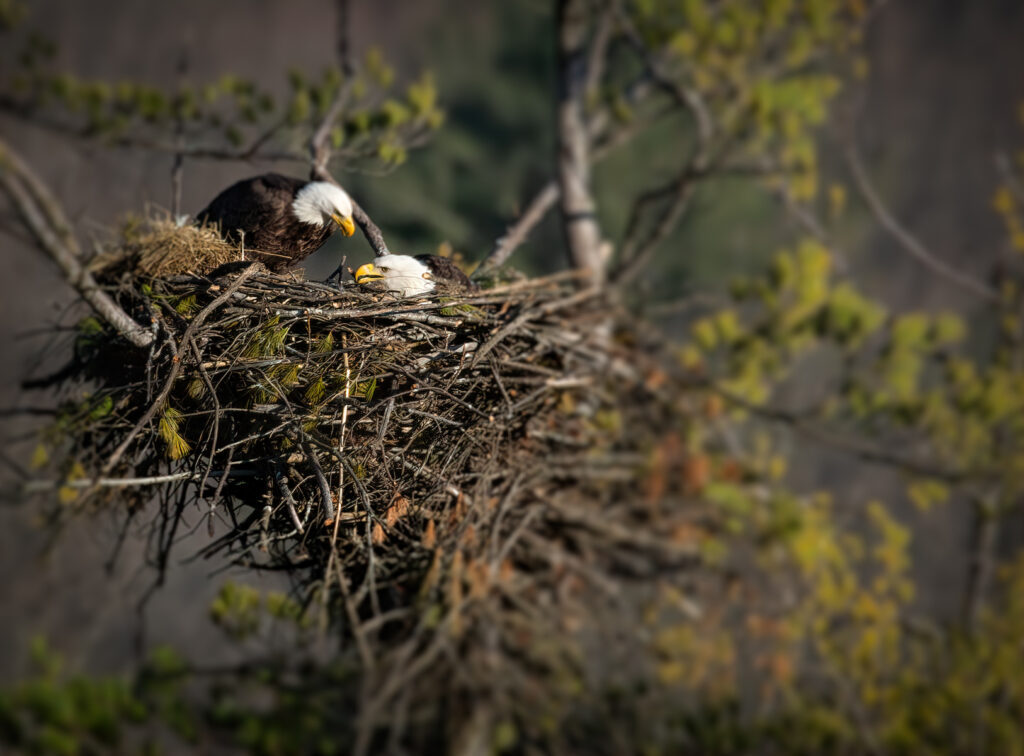
Long before an egg appears, the eagles start rebuilding. They haul in sticks as thick as my wrist and arrange them with a level of teamwork that should put us all to shame. One adult will bring the branch, the other will decide where it actually goes — and trust me, there are strong opinions.
This is the moment I know the season has officially begun.
2. Incubation: Quiet Days and Patient Watching
Once the eggs arrive, everything softens.
The eagles take turns incubating, switching roles with graceful efficiency — one returns from the river, the other lifts off in a slow, deliberate rise that always makes me catch my breath.
These are some of my favorite mornings. The nest is calm, the river is still, and time seems to stretch just a little longer.
3. The First Tiny Chirps
There’s nothing quite like hearing the eaglets before you see them.
The sound is faint, almost like a squeaky hinge, and if you’re not listening for it, you’ll miss it. But once the calling begins, you know the nest has changed forever.
Tiny heads soon follow — wisps of gray fluff, oversized beaks, and wobbly necks trying desperately to understand this wide, bright world.
4. Growing Fast: The Awkward Dinosaur Phase
Eaglets grow astonishingly quickly. One week they look like fuzzy cotton balls, and the next they resemble miniature dinosaurs — all feet, beaks, and determination. Their wings stretch a little farther each day, and their confidence grows right along with them.
This stage is a mix of comedy and wonder.
They fall asleep standing up.
Then they trip over each other.
They beg for food with the enthusiasm of toddlers at snack time.
5. Wing-Flapping and First Hops
This is when the nest gets lively. The eaglets start flapping with intensity — testing muscles, practicing balance, and learning what their bodies can do. Sometimes the entire nest shakes, and the adults sit nearby, watching with the patience of saints.
I love these moments. They remind me that every skill — even flying — starts with awkward practice.
6. Branching: Their First Taste of Freedom
One day, an eaglet will do something incredibly brave:
it will hop out of the nest and onto a nearby branch.
It’s a milestone every photographer hopes to witness.
They stand taller, look around with pride, and flap with a confidence that says, “Did you see that?”
7. First Flight: The Moment Everything Changes
The first flight is both thrilling and terrifying — for them and for me. I hold my breath every time. They launch with uncertainty, glide with shaky wings, and land with a mix of relief and accomplishment.
And just like that, the season reaches its crescendo.
A new eagle has taken its place in the sky.
Section 4 — Light, Weather & the Riverbank Rhythm: Choosing the Right Moments
If there’s one thing the eagles have taught me, it’s that timing isn’t just for the birds — it’s for the photographer, too. The riverbank has its own rhythm, its own way of breathing through the day, and the light here isn’t just illumination; it’s part of the story.
Morning Light: Soft, Gentle, and Full of Possibility
The first light of day skims across the water like a whisper, illuminating the nest in soft gold. This is when the adults are most active — bringing fish, rearranging sticks, switching incubation shifts.
I love photographing in this gentle light. It’s forgiving, flattering, and quiet enough that I feel like I’m borrowing time rather than taking it.
Midday Light: A Harsh Reality Check
By noon, the sun climbs too high, casting shadows that carve out the nest in dramatic contrasts. It’s not the most elegant light, but it’s honest. If the eaglets are particularly active — wing-flapping, feeding, wrestling over a fish — I’ll still photograph, but I use the light rather than fight it.
Some days, the harsh midday sun tells its own story.
Evening Glow: Warmth and Wingbeats
The river comes alive again when the sun starts dipping. Warm amber light hits the nest, and the adults often return from late fishing runs with their tails glowing in the last run of sunlight.
This is the time when the eaglets stretch and test their wings.
It’s a beautiful mix of color and movement — and one of my favorite times to settle in with my camera.
Weather: The Biggest Unpredictable Character
Fog, mist, drizzle, wind — the riverbank looks different every single day. Some of my favorite images came from mornings when the world felt muffled and soft, and the eagles perched quietly waiting for the weather to pass.
Bad weather doesn’t mean bad photography.
It just means a different kind of story.
The Rhythm You Only Learn by Showing Up
Year after year, I’ve found that the real secret to photographing this nest isn’t gear or settings — it’s showing up. The riverbank rewards patience. The more you stand still, the more the light reveals itself. The more you observe, the more you learn the eagles’ patterns.
It’s a slow, intentional rhythm.
And it’s one of the greatest teachers I’ve ever had.
Section 5 — The Moments You Never Forget: Stories From the Nest
Every eaglet season leaves me with a handful of moments I carry long after the feathers settle and the young ones take their place in the sky. They’re not the dramatic scenes you see in nature documentaries — no soaring slow-motion battles or thunderous takeoffs — but the quiet, personal moments that stay with you because you happened to be there, standing still long enough to witness them.
The First Peek Over the Nest
One spring morning, after weeks of listening for tiny chirps and watching the adults bring in fish after fish, I finally saw it — a little gray fluff-ball head wobbling above the edge of the nest. It looked mildly offended by the brightness of the world, blinking slowly like it needed a few more minutes to wake up.
That first glimpse always feels like a gift.
The Feeding Moments — A Beak-to-Beak Lesson in Trust
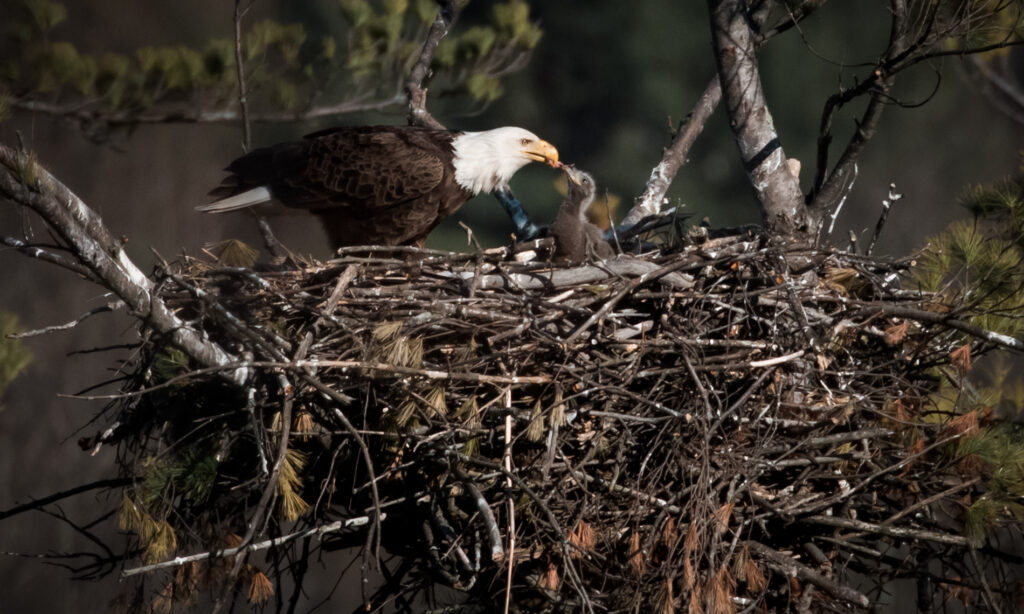
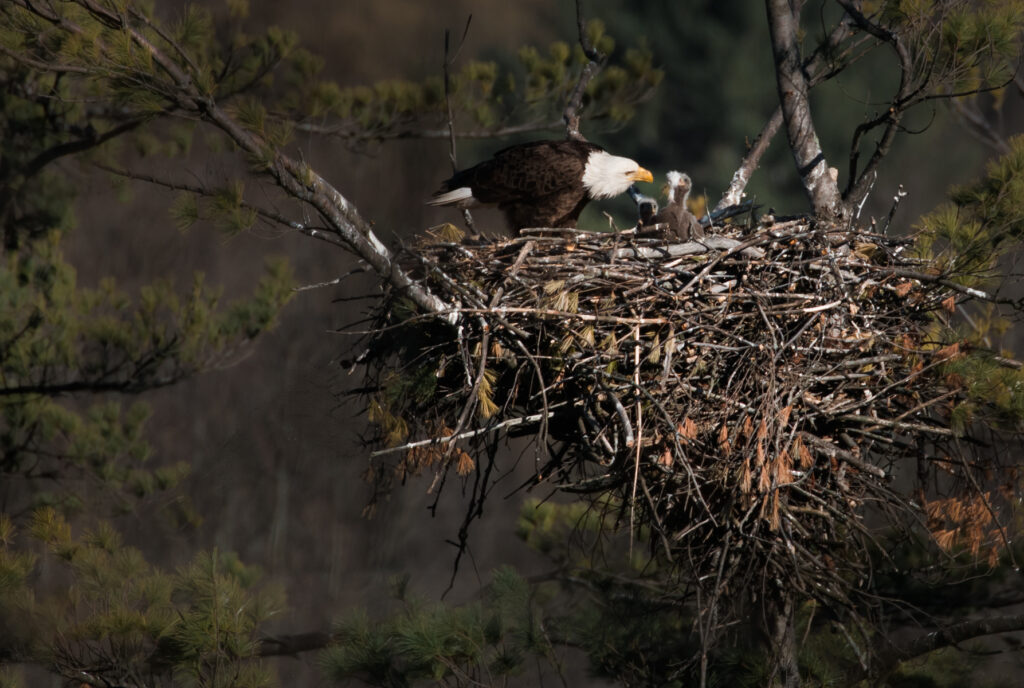
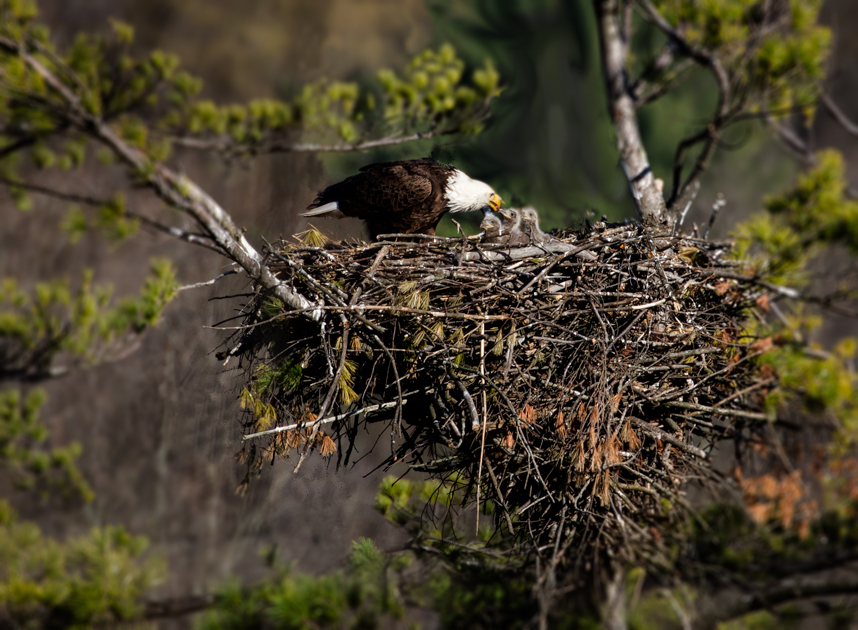
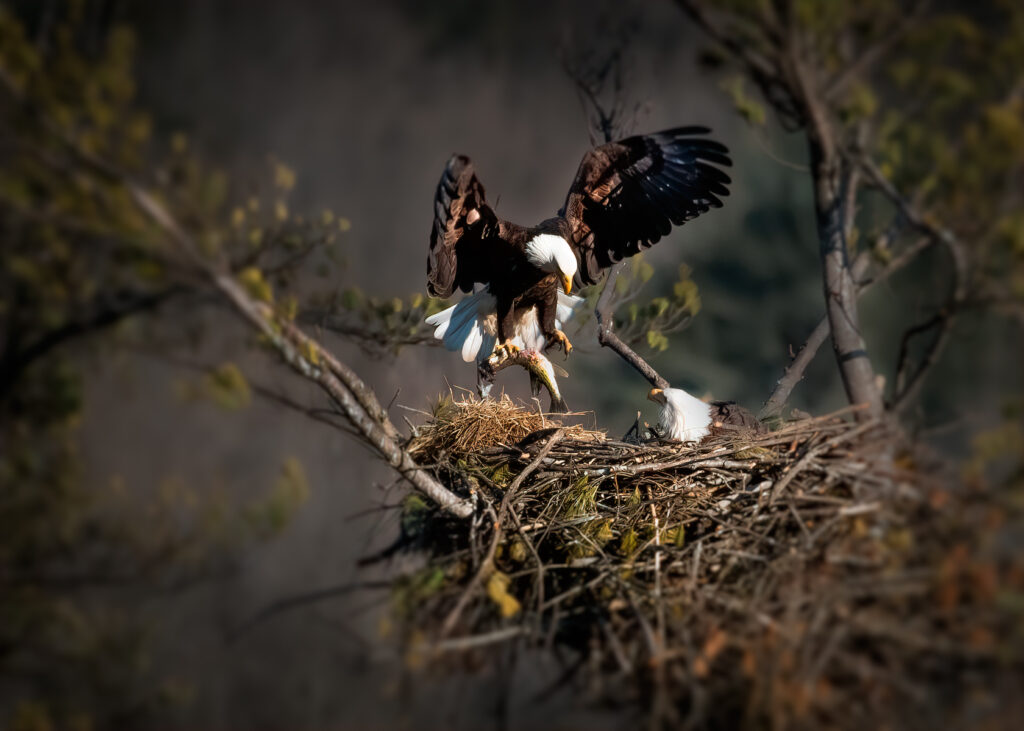
Of all the things I’ve watched over the years, feeding time is one of the most tender. The adult lands with a fish or small prey, settles into the nest, and carefully tears off pieces small enough for the eaglets. Then, with extraordinary gentleness, the adult leans down and transfers food beak to beak.
It’s intimate. Quiet. Almost delicate for a bird known for power and precision.
The eaglets stretch their necks as far as they can, tiny beaks open wide, wobbling with anticipation. Sometimes one eaglet gets overeager and bumps the other aside, but the adults manage the chaos with the patience of seasoned parents.
I have several photos of these moments — the adults leaning in, the eaglets reaching up — and every time I look at them, I’m reminded how much of wildlife photography isn’t about the dramatic action…
but the quiet acts of care.
The Sibling Debates
Eaglets may grow into fierce, commanding birds, but as babies, they behave a lot like siblings everywhere. I once watched two eaglets arguing over a fish so tiny it probably wasn’t worth the trouble.
One pulled.
The other pulled back.
Both toppled sideways into a pile of fluff and indignation.
The adult looked down as if to say, “Please… I cannot raise you two like this.”
The Wing-Flap That Nearly Launched a Bird Too Soon
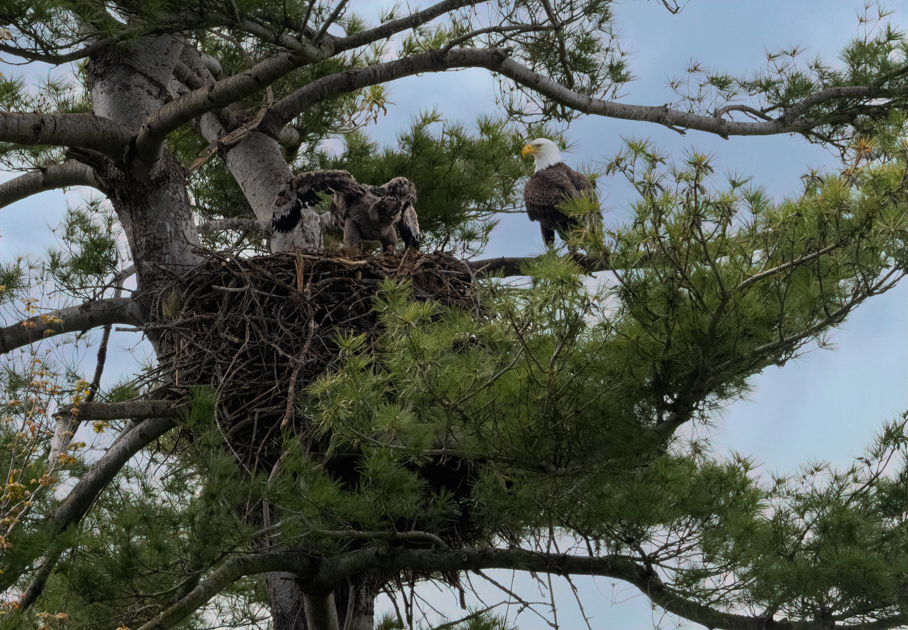
Every year there’s one eaglet who gets just a little too enthusiastic during the wing-flapping phase. One afternoon, the bravest (or least coordinated) eaglet leaned so far into a practice flap that even I held my breath.
The adult immediately stepped closer, giving a stern, unmistakable “Not yet” look.
No words, but you could feel the parenting energy from fifty feet away.
The Day an Adult Landed With a Fish Bigger Than the Eaglets
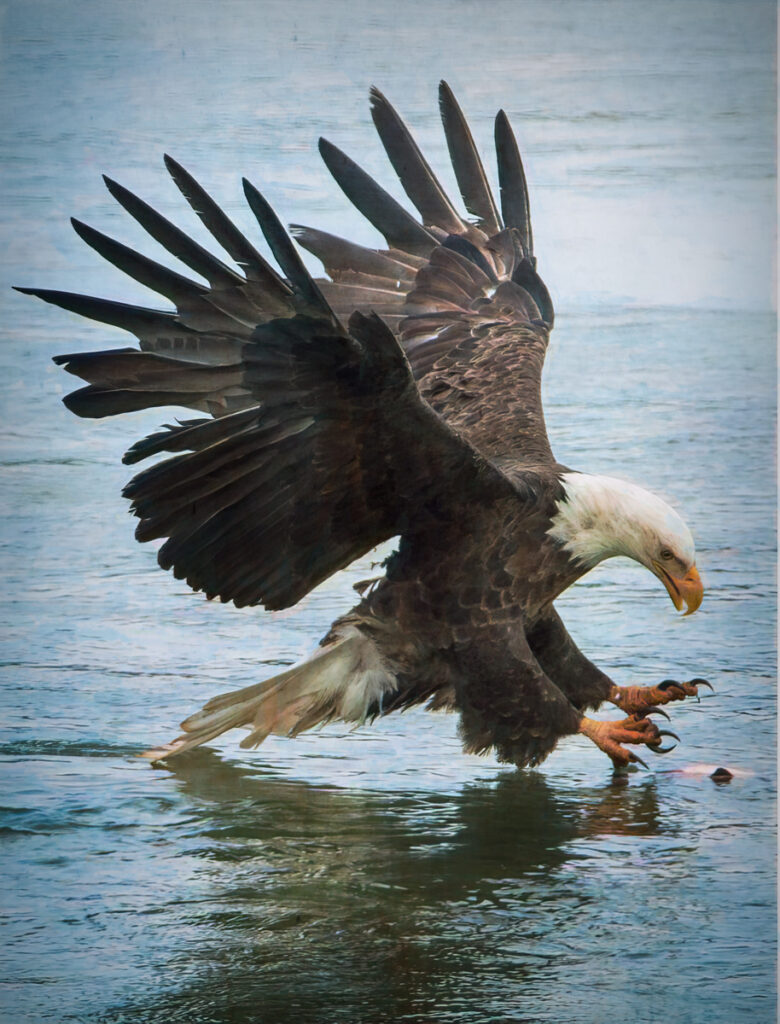
I’ll never forget the day one of the adults brought back a fish so large that it momentarily stunned the chicks into silence — a rare feat. They stared at it like it was a mythical creature. Even the adult seemed proud, standing a little taller as if saying, “Yes, I did that.”
The eaglets eventually worked up the energy to attack it with the enthusiasm of toddlers discovering cake for the first time.
The First Branching Moment
Branching — that moment when the eaglet hops out of the nest and onto a nearby branch — is always special. One year, I watched an eaglet hop up, stare at the world from its new height, then fluff itself proudly like it had conquered Everest. Moments later it lost balance and flopped back into the nest, unhurt but deeply humbled.
I couldn’t help laughing quietly.
Even eagles have awkward learning curves.
The Quiet Goodbyes
The hardest moment each year is realizing the nest has gone silent. One day the eaglets are practicing, testing, stretching. Then suddenly… they’re gone. Off exploring the river, finding their place in the sky.
The nest feels strangely empty for a few days.
But I know the cycle will begin again — and I’ll be right here when it does.
Section 6 — What These Seasons Have Taught Me
Every year, when eaglet season ends and the riverbank settles back into its quieter rhythm, I’m always struck by how much these birds teach me without ever meaning to. I don’t go down to the river looking for life lessons — I go because I love the stillness, the wildlife, the light. But somewhere between watching eggs turn into wide-eyed chicks and wide-eyed chicks turn into confident young eagles, I always walk away changed.
Patience Isn’t Passive — It’s Beautifully Active
There’s a difference between waiting and watching.
The eagles taught me that.
Standing still on the riverbank isn’t about killing time. It’s about sharpening your awareness — noticing the shift of the breeze, the shadow that passes before a bird returns to the nest, the soft chirp that announces a hungry eaglet. Patience is the art of being fully present, not simply passing minutes.
It’s a lesson that’s shaped how I photograph everything — from wildlife to small towns to sweeping landscapes on the road.
Small Moments Are Often the Biggest Ones
In a world obsessed with dramatic captures and epic scenes, eaglets remind me that photography is often about quieter moments — a parent leaning in to feed a chick, a first uncertain hop to a nearby branch, a sleepy eaglet leaning on its sibling.
These aren’t viral moments.
They’re human moments, mirrored in nature.
And they’re the ones that stay with you.
Consistency Matters More Than Perfection
I’m not out here with blinds or trackers. I’m not photographing every moment. I simply show up — morning after morning, season after season — and the nest reveals its story in pieces. Some days I see everything. Some days I see nothing. But the story builds because I’m there.
Photography — and honestly, life — works a lot like that.
Respect Builds Trust (Even When Trust Isn’t the Goal)
I never want the eagles to trust me — I want them to ignore me.
And over the years, they have.
By keeping my distance, staying quiet, and letting them lead the rhythm of every encounter, they’ve shown me what true wildlife photography looks like:
not intrusion, not performance — just coexistence. You can read more in my post on Ethics and Respect for Wildlife.
Every Goodbye Makes the Next Season Sweeter
When fledgling day comes and the nest suddenly goes silent, I always feel a little tug in my chest. They go off into the world, chasing thermals and exploring new branches of the river, and I’m left standing under the pines, camera in hand, listening to a quiet that feels different.
But spring never fails to return.
The adults rebuild.
New eaglets hatch.
And the cycle begins again.
It’s a yearly reminder that life keeps unfolding — not in grand events, but in small, consistent, beautiful rhythms.
Section 7 — Wrap-Up & Explore More
Every eaglet season feels both familiar and brand new — the same nest, the same river, the same patient parents, yet an entirely new story unfolding feather by feather. It’s one of the quiet joys of living close to wildlife: the chance to witness a cycle that has nothing to do with our schedules or plans, and everything to do with the natural rhythm of the world around us.
Standing on the riverbank each spring reminds me why I pick up a camera in the first place. It’s not about capturing perfection or chasing dramatic moments. It’s about being present. Paying attention. Showing up for the stories that unfold quietly over time. And if a few of those stories happen to involve a wobbly eaglet learning how to flap or a parent delivering breakfast with the grace of a seasoned provider, even better.
As the young eagles take their first flights and drift off to explore beyond my stretch of river, I always feel grateful — not just for the photographs, but for the hours spent in stillness, watching one small corner of the world remind me what matters.
Explore More Wildlife Photography
Here are more wildlife-focused posts that pair beautifully with this story:
From the Field
• Understanding Wildlife Behavior Before You Photograph
A cornerstone post that helps you read animal cues, patterns, and rhythms so you can photograph respectfully and safely.
• Wildlife Encounters on America’s Back Roads
Stories and lessons from photographing moose, elk, deer, bison, tortoises, eagles, and more during your travels.
Patient, Ethical, Respectful Wildlife Photography
• Mastering the Art of Patience in Wildlife Photography
The companion mindset to this eaglet story — how quiet observation leads to better images.
• Respecting Wildlife and Local Communities on the Road
A gentle guide to photographing wildlife (and people) without disturbing the world around you.
Your Local Wildlife Stories
- In Search of the Part-Albino Deer
A quiet pursuit of a rare deer along your riverbank — another story only you can tell. - Understanding the Bald Eagle Life Cycle (future post)
How juvenile eagles transform over five years into the iconic adults we all recognize - When the North Comes South: Snowy White Owls in Upstate New York – a sighting of a snowy white owl in upstate New York
- The Bald Eagle Lifecycle: From Nest to the Sky – see the stages of a bald eagle lifecycle
- Photographing Wildlife Without Disturbing
📬 Want More Wildlife Stories from the Riverbank?
I share behind-the-scenes moments from the river, updates on the local eagle families, photography tips for capturing wildlife ethically, and upcoming travel guides.
It’s the best way to follow the next chapter in this season of eaglets.