They call it the Grand Canyon of the Pacific, and when you see it for the first time, you understand why. Waimea Canyon, on the island of Kauai, stretches roughly ten miles long, a mile wide, and plunges over 3,500 feet deep — a landscape painted in layers of red, orange, and green.
Before heading to the canyon, I always suggest reading my Kauai Travel Guide, where I share island logistics, favorite scenic drives, and where to stay nearby — it pairs perfectly with a day exploring Waimea.
Formed over millions of years, Waimea Canyon owes its existence to both volcanic activity and relentless erosion. The story began when the shield volcano that created Kauai collapsed, forming deep valleys, and the Waimea River carved its way through. Over time, rainfall and landslides sculpted the dramatic cliffs we see today.
For photographers, the canyon is a masterclass in light — a real-world lesson in how color and shadow shift with each hour. If you love capturing landscapes, you’ll find some helpful insights in my post Understanding Light in Landscape Photography.
First Impressions of Waimea Canyon
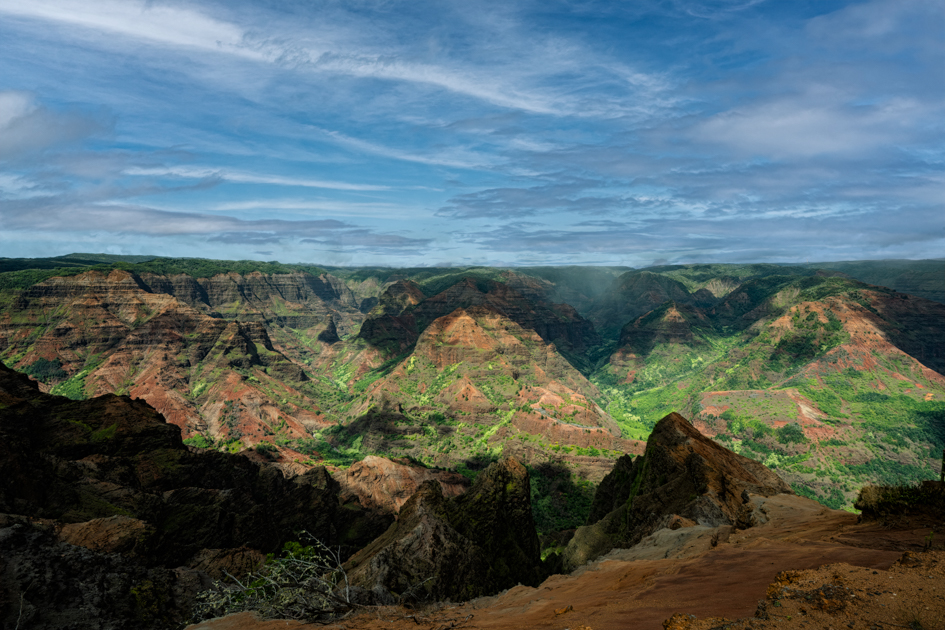
No photo prepares you for the first time you stand at the rim of Waimea Canyon. One moment you’re winding through misty forest, and the next, the earth drops away in a sea of red and gold. It’s a scene that feels straight out of the American Southwest — yet unmistakably Hawaiian.
What Makes Waimea Canyon Unique
Waimea Canyon’s magic lies in how color, climate, and geology collide. Red volcanic rock, green vegetation, and shifting clouds turn every visit into something new. After a rain, waterfalls appear as if by magic.
If you’re exploring with a camera, remember to slow down — watch how the light changes minute by minute. I share more on this in my blog Mastering the Art of Composition on the Road, where I talk about using light, weather, and storytelling to bring landscapes to life.
Getting There – Two Routes, Two Perspectives
Reaching Waimea Canyon is an adventure in itself. The drive climbs from sea level to over 3,400 feet, trading ocean views for red-dirt vistas and cool mountain air. There are two main routes, and if you can, drive one up and the other down.
Route 550 – Waimea Canyon Drive
The main route begins in Waimea on Kauai’s south shore. Route 550 winds upward through changing landscapes — sugarcane fields, eucalyptus forest, and those iconic red cliffs. Morning light creates soft shadows perfect for photography.
This drive also fits perfectly into my Scenic Drives and Road Trips collection — it’s a road photographer’s dream with every turn revealing a new view.
Route 552 – Kōke‘e Road
From nearby Kekaha, Route 552 is the quieter, less-traveled road. It joins Route 550 near Kōke‘e State Park, offering wider views and fewer cars.
For photographers, this route offers beautiful opportunities to practice patience — waiting for the light, adjusting compositions, and seeing the same view transform in seconds. It reminds me a lot of what I wrote in The Art of Patience in Wildlife Photography — patience isn’t just for animals.
I took one road to get there and the other to go back to the hotel. It was the best of both worlds.
The Lookouts – Framing the Canyon from Every Angle
Each lookout reveals a different mood and light. You could spend an entire day stopping at each one and never see the same scene twice.
Waimea Canyon Lookout
The main overlook with the classic postcard view. Visit mid-morning for full color, or just after sunrise for soft, misty tones.
Puu Ka Pele and Puu Hinahina Lookouts
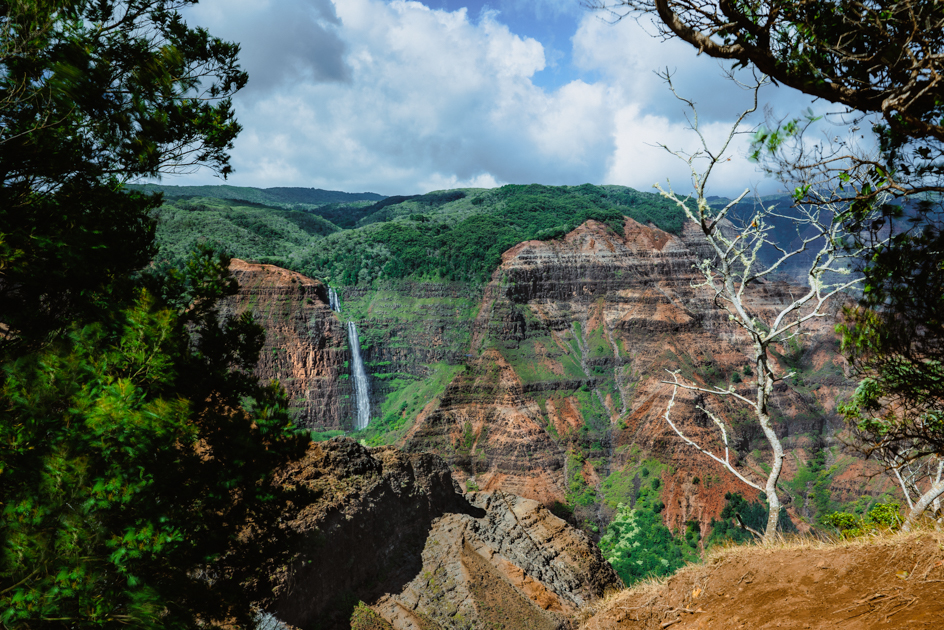
These quieter stops give new angles of the canyon and Waipo‘o Falls. I often shoot here using a polarizer to deepen color — a tip you’ll find in Travel Photography for Beginners, where I break down simple ways to elevate your photos without overcomplicating your setup.
Kalalau Lookout
Where Waimea Canyon meets the Nā Pali Coast — one of the most dramatic scenes in all of Hawaii. The weather shifts constantly, making this a playground for those who enjoy watching light change.
Puʻu o Kila Lookout
At the end of the road, you’ll find this breathtaking perch above the Kalalau Valley. It’s often the quietest, and when the mist lifts, the view is pure magic.
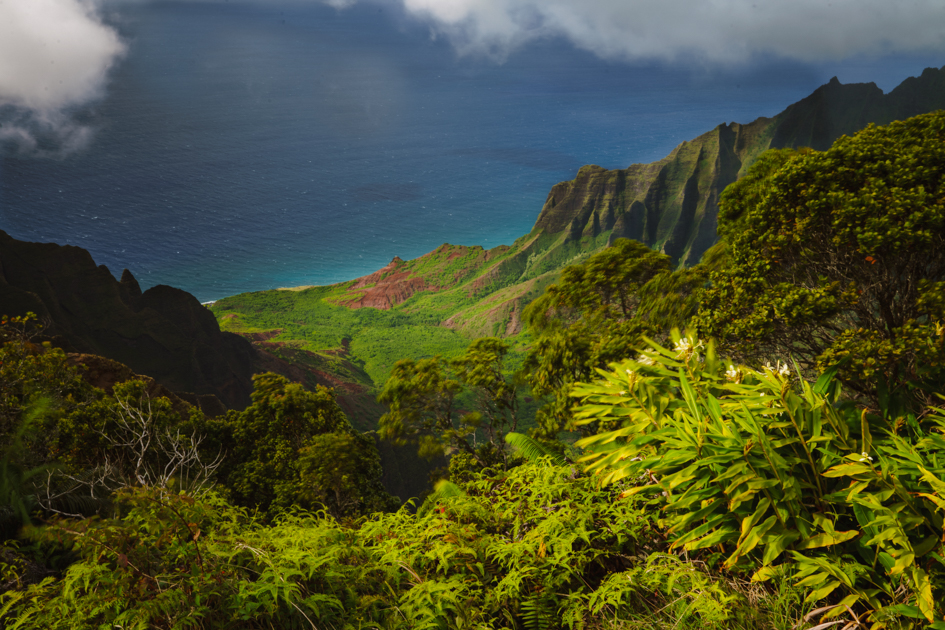
If you love this view, be sure to read my Nā Pali Cliffs post — it dives deeper into photographing the coastline you glimpse from here.
Exploring the Canyon – Beyond the Lookouts
To really experience Waimea, step off the pavement.
Waipo‘o Falls Trail
This 3.2-mile hike takes you to ledges overlooking the canyon and part of the falls. It’s one of those hikes that remind me of Mastering Travel Photography — learning to see beyond the obvious, finding small compositions within vast landscapes.
Cliff Trail and Kōke‘e State Park
Short, rewarding trails offer beautiful morning views, especially from the Awa‘awapuhi Trail. If you’re carrying camera gear, my Travel Photography Gear Guide has tips on keeping your setup light and organized for hikes like this.
Tips for Visiting Waimea Canyon
Timing and Weather
Visit early for clear skies and soft light. Mornings are best for photos; afternoons bring dramatic color.
Because the light changes so fast, I shoot both RAW and JPEG here — a workflow I explain in Shooting RAW + JPEG on the Road. It gives flexibility to handle the bright highlights and deep shadows of the canyon.
What to Bring
Water, layers, a good pair of hiking shoes — and a sense of wonder. The red dirt sticks to everything, but it’s part of the story.
Photography Tips
Use a polarizer, wide-angle for scale, and telephoto for details. When mist moves in, keep shooting — those fleeting moments often make the best images.
Reflections from the Rim
Standing at the edge of Waimea Canyon is a reminder of nature’s artistry and patience. The canyon wasn’t created overnight, and neither are the best photographs. It’s a place that asks you to slow down — to really see.
It’s a lesson that connects directly to my blog The Art of Patience in Wildlife Photography — the quiet moments between shots often hold the most meaning.
For me, Waimea Canyon is where I’m reminded why I travel with a camera: not just to capture, but to connect — with the land, the light, and the moment.
If you love discovering places like Waimea Canyon — the kind of destinations that make you pull over just to take it all in — you’ll feel right at home on Back Roads Lens. For more inspiration on routes like this, visit my cornerstone post Scenic Drives and Road Trips Across America. And if you are on Kauai, be sure to check out Kilauea Lighthouse and on Oahu visit Kolekole Pass.
📸 Subscribe to my newsletter for new travel stories, photography tips, and behind-the-scenes adventures from the back roads and beyond. It’s free, no spam, and you’ll be the first to know when new guides from Kauai, Maui, and the rest of Hawaii go live.
→ Join the Back Roads Lens Newsletter