If there’s one Alaskan town that feels like you’ve stepped straight into a history book — with a side of mountain drama — it’s Skagway. Tucked at the northern tip of the Inside Passage, this once-rowdy gold rush boomtown is where fortune seekers once lined the dusty streets, dreaming of striking it rich in the Klondike. Today, it’s a mix of preserved wooden boardwalks, colorful false-front buildings, and a sense that adventure is never too far away.
You can almost hear the echo of boots on the planks as you wander down Broadway, the town’s main street. The scent of fresh coffee mingles with the sea air, and the sound of the White Pass & Yukon Route Railroad whistles in the distance — a reminder of how this small port became a lifeline to the goldfields more than a century ago.
Skagway may be small, but it’s packed with character. From the notorious Red Onion Saloon, once a bustling brothel, to the stories of the men (and women) who risked everything to cross the mountains, the town is a living museum of Alaska’s wild past. And riding the historic White Pass & Yukon Route today isn’t just a scenic journey — it’s a trip back in time.
Exploring Downtown Skagway
A Step Back in Time on Broadway Street
Walking through downtown Skagway feels a bit like stepping back into another century. Wooden boardwalks creak underfoot, hand-painted signs swing from restored storefronts, and the air carries a mix of sea breeze and espresso from a nearby café. The town may only stretch a few blocks, but every inch tells a story from the Klondike Gold Rush days.
Most of the main street — Broadway — is part of the Klondike Gold Rush National Historical Park, where many of the original buildings have been carefully preserved. Stop into the visitor center inside the old White Pass building to grab a walking tour map. It’s a great way to explore at your own pace and learn how this little port became the gateway to one of the most extraordinary migrations in North American history.
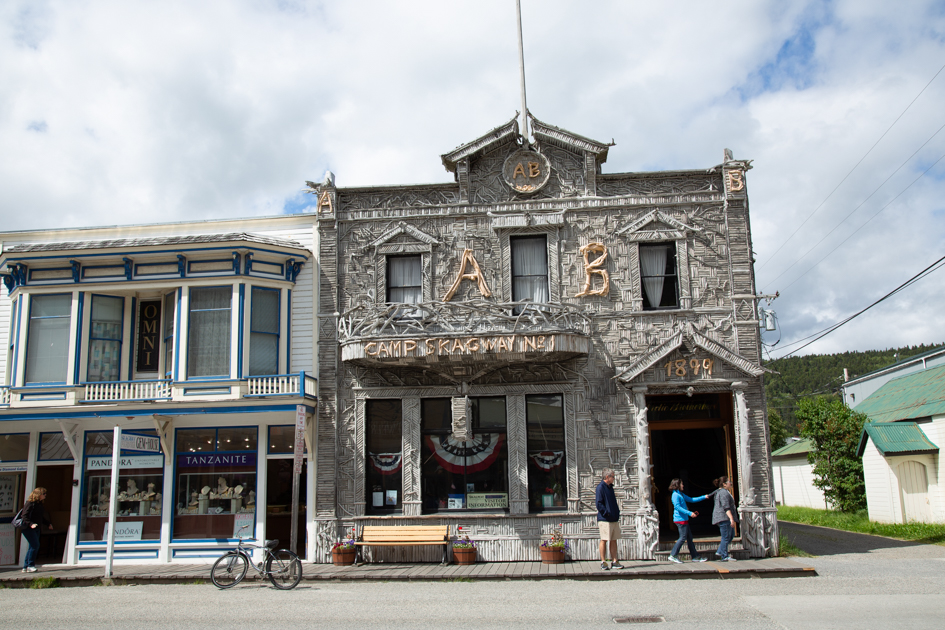
The Red Onion Saloon: History with a Wink
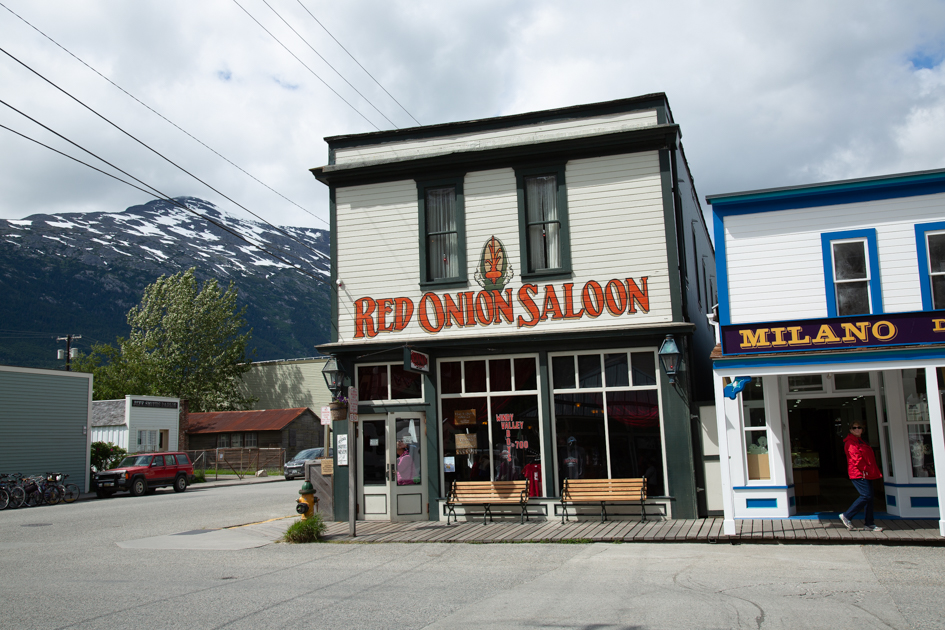
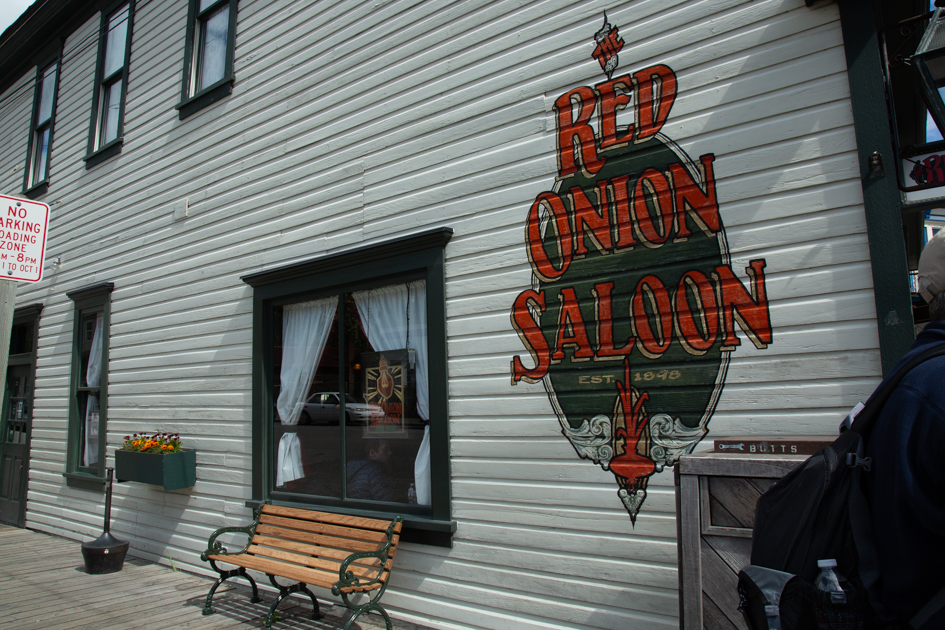
Just follow the sound of laughter and the clang of a piano and you’ll find yourself at the Red Onion Saloon, one of Skagway’s most famous landmarks. Once a bustling brothel during the height of the gold rush, it’s now part restaurant, part museum, and completely entertaining.
You can take a guided tour upstairs to see the original “cribs” where the ladies of the night once worked, complete with colorful stories and tongue-in-cheek humor. The guides keep it lighthearted while still giving you a glimpse into what life was really like during those wild years. Even if you skip the tour, it’s worth stopping for a meal or a cold drink — the atmosphere alone is worth the visit.
Shops, Saloons, and Small-Town Charm
Beyond its gold-rush roots, Skagway thrives on its small-town character. Pop into the local shops along Broadway for handmade jewelry, carved totems, or old-style souvenirs — and don’t miss Klondike Doughboy for warm fry bread sprinkled with cinnamon sugar.
A short walk toward the harbor brings you to views of Lynn Canal, often dotted with fishing boats and cruise ships. This is a great spot to pause with your camera and frame Skagway’s false-front buildings against the towering mountains beyond.
If you’re traveling deeper into Alaska, this is also a good place to unwind after exploring other coastal towns like Ketchikan – The Town Built on Stilts and Stories. Each port has its own rhythm, but Skagway’s blend of mountain scenery and frontier nostalgia makes it unforgettable.
Capturing Skagway Through the Lens
Photographers will find endless inspiration here. I like to shoot early in the morning before the streets fill up — the light catches the edges of the buildings, and the town feels quiet and timeless. The cloudy skies that roll through these valleys can create beautiful soft light, perfect for capturing texture in the wood and color in the painted facades.
If you’re building your travel-photography skills, check out Mastering the Art of Composition on the Road and Understanding Light in Landscape Photography for tips you can put to use here. Skagway is proof that sometimes the best images come from the quiet corners of a place, not the famous viewpoints.
👉 Read next: Alaska Region Travel Guide for itineraries and photography highlights from the Inside Passage and beyond.
The History of Skagway and the Gold Rush
Long before Skagway became a cruise ship stop or a picturesque mountain town, it was the wild, chaotic gateway to the Klondike Gold Rush. In 1897, news spread that gold had been discovered in the Yukon Territory, and within months, thousands of hopeful prospectors flooded north. The easiest access point to the Yukon? Skagway — a rough, lawless frontier town at the edge of the Alaskan panhandle.
By 1898, more than 20,000 stampeders had arrived, each hoping to strike it rich. The reality, of course, was far harsher. They faced steep, snow-choked trails over the White Pass or the nearby Chilkoot Pass, carrying up to a ton of supplies just to survive the trip. It was a test of endurance, determination, and sometimes desperation.
Too Many People, Too Few Rules
With so many people and so few rules, Skagway quickly became infamous. Saloons, gambling halls, and brothels lined the muddy streets. Lawlessness ruled — quite literally — under the notorious con man Soapy Smith, who ran scams, stole from newcomers, and controlled much of the town until his dramatic demise in a shootout on the Juneau Wharf in 1898. His death marked the end of Skagway’s wildest days, but his legend still lingers in local stories and historic tours.
Today, Skagway’s rough edges have softened, but its history hasn’t been forgotten. The town has done an incredible job preserving its gold rush-era buildings, many of which now belong to the National Park Service. Walking through them feels like flipping through an illustrated chapter of Alaskan history — one filled with ambition, hardship, and the kind of grit that built the Last Frontier.
It’s hard to imagine that what once was a chaotic, mud-soaked tent city became one of the best-preserved historical towns in Alaska. That transformation alone makes Skagway one of my favorite stops along the Inside Passage, not just for its views but for its stories.
👉 Also read: Ketchikan, Alaska – The Town Built on Stilts and Stories for another glimpse into Alaska’s past and how these coastal towns built their futures on hard work and hope.
The White Pass & Yukon Route Railroad
Born from the Gold Rush
When gold seekers began pouring into Skagway in 1897, their biggest challenge wasn’t finding gold — it was getting there. The overland trails were brutal, especially the White Pass Trail, where steep terrain, deep snow, and endless mud claimed lives and livestock. What the stampeders needed was a better way — and out of that chaos came one of the most impressive feats of engineering in Alaska’s history: the White Pass & Yukon Route Railroad.
Construction began in 1898, at the height of the gold rush, and the work was grueling. Thousands of laborers — many immigrants — carved a narrow-gauge line through nearly impossible terrain. Sheer cliffs, avalanches, and constant weather delays made every mile a victory. When the first train finally reached the summit in 1899, the Klondike Gold Rush was already fading, but the railroad itself became a lifeline for miners, settlers, and trade in the decades that followed.
Riding the Rails Today
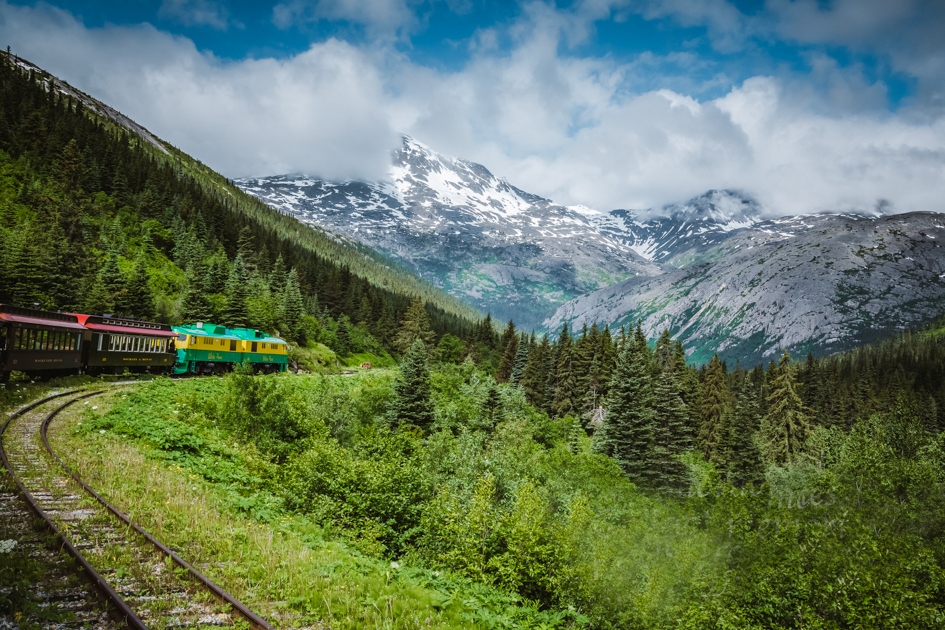
Today, the White Pass & Yukon Route Railroad is one of Alaska’s most iconic experiences — and with good reason. The historic narrow-gauge track winds 20 miles from Skagway up to the White Pass Summit, climbing nearly 3,000 feet through tunnels, over trestle bridges, and along sheer mountain ridges that drop straight into glacier-fed rivers below.
The restored vintage coaches still have their brass fittings and polished wood interiors, making you feel like you’ve boarded a time capsule. As the train climbs higher, the views just keep getting better — waterfalls, snow-dusted peaks, and glimpses of the original trail used by gold seekers over a century ago.
If you’re visiting by cruise ship, the train station is right near the pier, making it one of the easiest day excursions to plan. Independent travelers can book directly, and there are options ranging from short round-trip rides to full-day journeys that cross the border into Canada’s Yukon Territory.
Tips for Photographers
If you love photography, this ride is pure gold (pun intended). The best seats for shooting are on the left side of the train as it climbs uphill — you’ll get the most dramatic views of the valley and bridges. Keep your camera strap handy and your shutter speed fast; the train moves at a steady clip, and those sweeping vistas come and go quickly.
Overcast days often make for richer color and texture, especially when photographing the green valleys and misty peaks. For my Fuji X-T5, I like using the XF 16-80mm zoom for flexibility, but even a compact like the Leica Q3 can capture stunning wide-angle shots through the open windows.
A Journey Through Time
The White Pass & Yukon Route isn’t just a train ride — it’s a moving story of human determination and ingenuity. You can still see remnants of the old trail carved into the mountainside, reminders of the people who carried everything they owned over these same ridges.
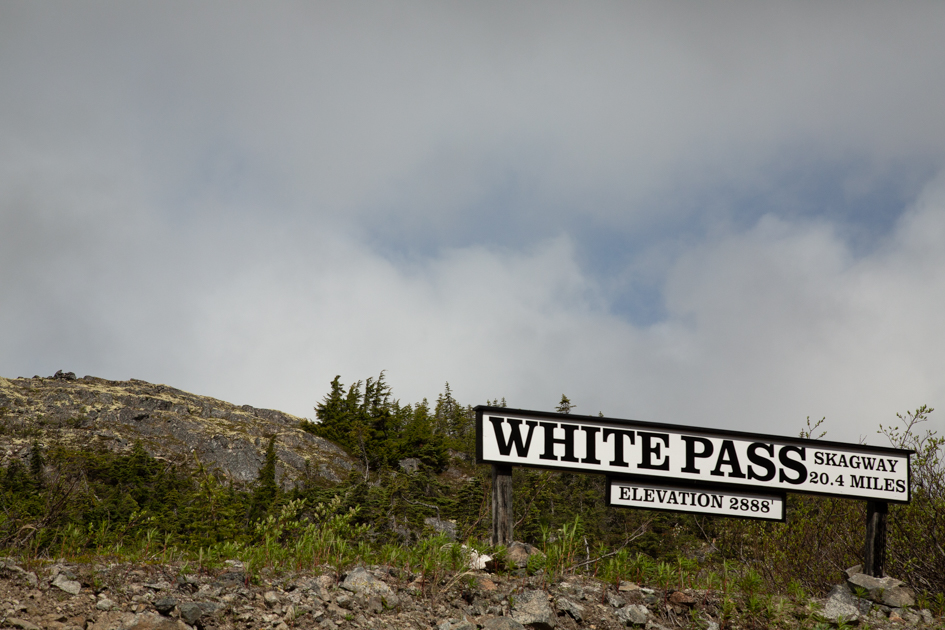
It’s the perfect way to end a visit to Skagway — a chance to experience the very route that made this little town famous and to see Alaska’s rugged beauty the same way the gold seekers once did, only with far more comfort (and coffee).
👉 Planning your Alaska adventure? Start with the Alaska Region Travel Guide for routes that include Skagway, Juneau, and Ketchikan — and pair this with your Maui Travel Guide if you’re curious where these same humpback whales migrate for the winter.
Final Thoughts: Where the Past Meets the Present
What I love most about Skagway is how its story still feels alive. The town may have traded gold dust for coffee shops and souvenirs, but the spirit that built it — adventure, grit, and curiosity — is still around every corner. Whether you’re wandering along Broadway, laughing your way through a Red Onion Saloon tour, or leaning out the window of a train as it hugs a mountain curve, you can’t help but feel connected to the people who came here chasing something bigger than themselves.
The White Pass & Yukon Route Railroad is more than a scenic ride — it’s a reminder of what determination looks like when faced with impossible odds. Standing there, camera in hand, it’s easy to imagine the echo of picks against rock, the creak of sleds in the snow, and the hum of hope that once filled these valleys.
For photographers, Skagway is a study in contrasts — wild mountains meeting a perfectly preserved town, history blending with modern adventure. It’s one of those rare places where every photo tells a story, and every story deserves to be remembered.
If you’re exploring Alaska’s Inside Passage, make Skagway a priority. Ride the rails, stroll the boardwalks, and take the time to see how the past still shapes this corner of the world. Because sometimes, the best journeys aren’t just about where you go — they’re about how deeply you connect once you get there.
👉 Continue exploring Alaska: Alaska Region Travel Guide
If you are in Alaska, check out other great places to visit:
- Skagway and the White Pass and Yukon Railroad.
- Fairbanks
- Denali National Park
- Whale Watching
- Back Roads of Alaska
- Gold Dredge 8
- Hubbard Glacier
- Ketchikan
For photographers: Mastering the Art of Composition on the Road and Understanding Light in Landscape Photography
Stay Connected
If you love exploring history-rich towns, scenic train rides, and hidden corners of the map, you’ll fit right in here at Back Roads Lens. I share new travel guides, photography tips, and stories from the road straight to your inbox — so you never miss the next adventure.
📸 Subscribe to the Back Roads Lens Newsletter for updates, behind-the-scenes stories, and photography inspiration from America’s back roads.