First Impressions of the Everglades
Before this trip, I thought I knew what to expect from the Everglades.
Like many people, I pictured a swamp—dense, dark, and maybe a little mysterious. But the reality was something entirely different.
The Everglades felt open.
Wide stretches of water reflected the sky, blending into the horizon in a way that made it hard to tell where one ended and the other began. Grasses moved gently with the wind, and the landscape felt quiet in a way that slows you down almost without realizing it.
It’s often called the “River of Grass,” and once you see it, that name makes perfect sense.
But what struck me just as much as the beauty was what’s no longer there.
Much of the original Everglades has been altered or lost over time. Development, drainage, and road building have reduced what was once a vast, slow-moving ecosystem into something far smaller than it used to be. Entire stretches of wetlands have disappeared, and cypress forests that once stood across large areas are now limited to smaller pockets.
Standing in the middle of it, you can still feel how expansive it must have been. And maybe that’s what makes it so powerful—what remains is beautiful, but it also carries the quiet reminder of what’s been lost.
As we made our way down the road toward Flamingo, stopping along the way, the Everglades began to reveal itself not as a single place—but as a series of moments. Each stop offered a slightly different perspective, a different way to experience this landscape that is both fragile and unforgettable.
This stop was part of a larger journey through the Southeast, where we explored everything from the tropical landscapes of the Florida Keys to the quiet coastal towns along the Gulf. If you’re planning a similar trip or looking for inspiration beyond this destination, visit my Southeast Region Travel Guide, where I’ve pulled together our favorite stops, scenic routes, and travel insights from across the region.
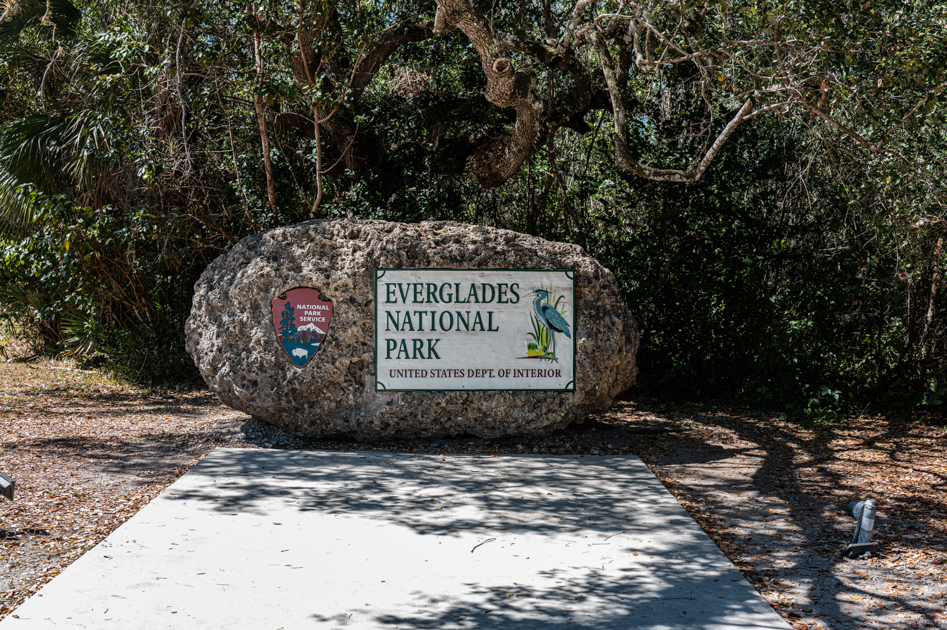
Driving the Road to Flamingo: A Journey Through the Everglades
One of the best ways to experience the Everglades is simply by driving the road that leads to Flamingo.
At first glance, it might not seem like much. The road stretches out flat and straight, with little change in elevation and no dramatic turns or overlooks like you’d find in the mountains. But this drive isn’t about the road itself—it’s about everything surrounding it.
On both sides, the landscape opens up into vast stretches of sawgrass and water. Depending on the light, it shifts constantly. Sometimes it feels silvery and reflective, other times a soft green that blends into the horizon. The sky becomes part of the scene in a way that feels almost endless.
It’s a quiet kind of beauty.
There’s no rush here. No sense of needing to get to the next stop quickly. Instead, the drive encourages you to slow down, to notice the subtle changes—the way the light hits the water, the movement of the grass, the occasional bird lifting off in the distance.
And then, unexpectedly, you come across places that break up the rhythm of the drive.
A small sign. A turnoff. A short boardwalk leading out into the landscape.
Some of our favorite moments came from these unplanned stops—including one we hadn’t expected at all, the Nike Missile Site, tucked quietly along the route. (We’ll share more on that in a separate post—it was one of the most surprising stops of the trip.)
Driving to Flamingo isn’t about checking off landmarks. It’s about experiencing the Everglades as it unfolds—slowly, quietly, and in its own way.
And along this road, each stop offers a slightly different window into a landscape that is far more complex than it first appears.
Lone Pine Key Picnic Area: A Quiet Stop Along the Way
One of our favorite stops along the drive to Flamingo wasn’t a major overlook or a well-known landmark—it was the Lone Pine Key Picnic Area.
Sometimes it’s the simplest moments on a trip that stay with you the longest.
We had picked up a sub earlier in the day, and instead of rushing through lunch, we decided to stop here and take a break. Tucked just off the main road, the picnic area felt quiet and removed, surrounded by trees and open landscape.
There’s something about sitting down in a place like this that changes the pace of the day.
The drive had already begun to slow us down, but this made it even more intentional. No agenda, no rushing—just a chance to sit, take in the surroundings, and enjoy the stillness of the Everglades.
The setting itself was beautiful in a quiet, understated way. The trees offered shade, and beyond them, the landscape opened up again into that familiar mix of water and grass. It wasn’t dramatic—but it didn’t need to be.
It felt real.
Stops like this are easy to overlook when planning a visit to the Everglades. But they’re often the moments that give a trip its rhythm—the pauses between the more well-known viewpoints, where you can actually connect with the place instead of just passing through it.
Pa-hay-okee Overlook: Seeing the River of Grass
One of the most memorable stops along the drive was Pa-hay-okee Overlook.
Up until this point, much of the Everglades had been experienced from the road—glimpses of water and grass stretching out on either side. But here, you step out and walk up to an elevated platform, and suddenly, the landscape opens up in a completely different way.
This is where you truly see it.
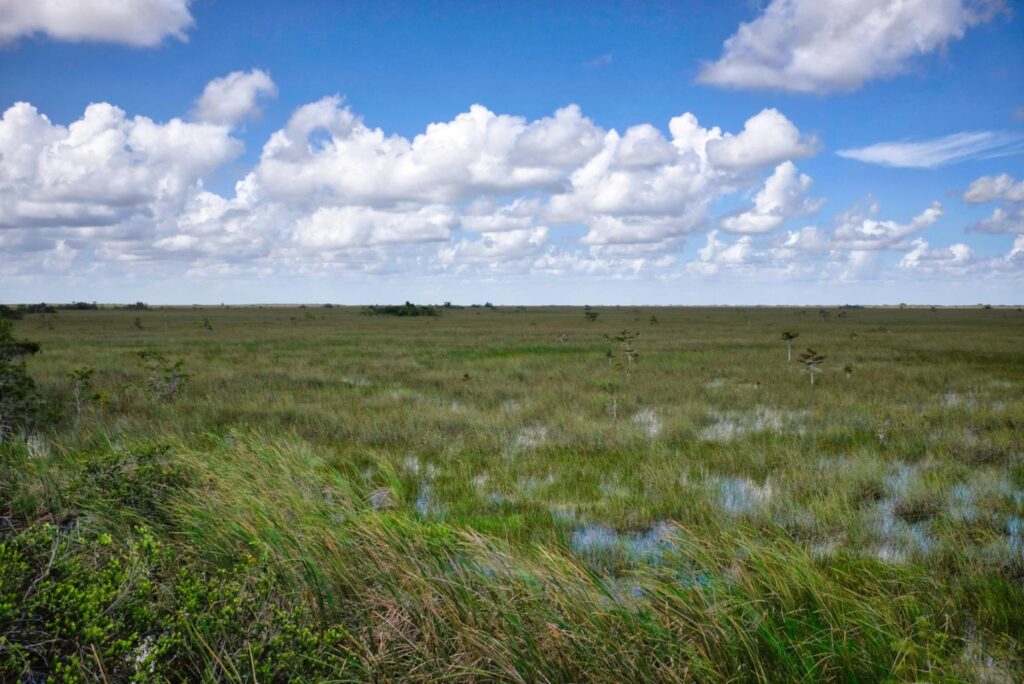
From above, the Everglades reveal themselves as an endless expanse of sawgrass and water, stretching to the horizon in every direction. It’s flat, quiet, and incredibly vast—but not empty. There’s movement in the grass, light shifting across the water, and a subtle rhythm that’s easy to miss at ground level.
It finally makes sense why it’s called the “River of Grass.”
Standing there, it’s hard not to imagine what this landscape once looked like before development reshaped so much of South Florida. What you’re seeing now is only a portion of what once existed—a reminder of both the scale of this ecosystem and how much has been lost over time.
And yet, what remains is still powerful.
There’s a stillness here that feels different from anywhere else along the drive. It’s not dramatic in the traditional sense, but it stays with you. The kind of place where you linger a little longer, taking it in, knowing that this view represents something much larger than just a single stop.
Mahogany Hammock: A Different Side of the Everglades
After the wide, open views of Pa-hay-okee, stopping at Mahogany Hammock feels like stepping into a completely different environment.
Here, the landscape closes in.
A short boardwalk leads you through a dense hardwood hammock, where the air feels heavier and the light filters down through thick layers of leaves. It’s shaded, quiet, and almost jungle-like—so different from the open “River of Grass” just a few miles away.
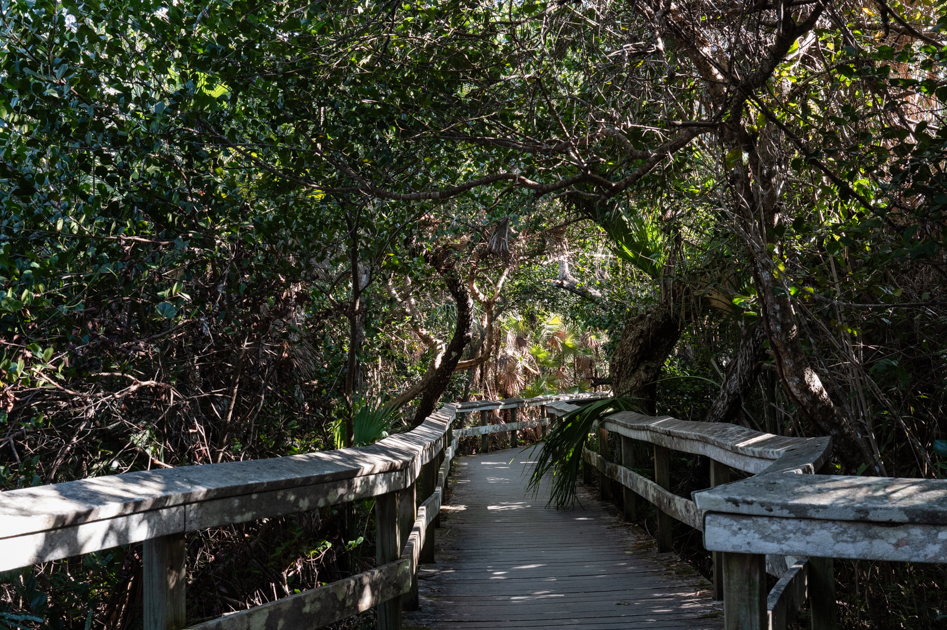
This is one of the few places in the Everglades where you’ll find large mahogany trees, along with a mix of other tropical hardwoods. The boardwalk winds through tangled roots, towering trunks, and pockets of greenery that feel untouched and a little wild.
It’s a slower experience.
You’re not looking out across the landscape here—you’re moving through it. Every turn along the boardwalk reveals something new, whether it’s the texture of the bark, the way the roots twist across the ground, or the stillness that seems to settle in under the canopy.
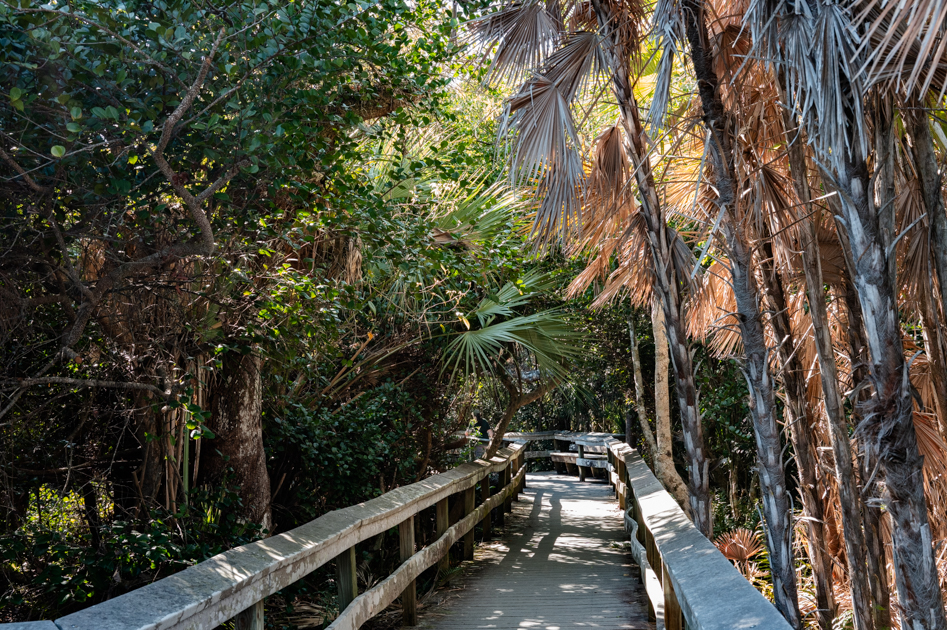
There’s a sense of contrast that really stands out.
Just a short drive away, the Everglades feel expansive and open. Here, they feel enclosed and layered. It’s a reminder that this ecosystem isn’t just one thing—it’s made up of many different environments, each with its own character.
And like so much of the Everglades, places like this are smaller than they once were. Hardwood hammocks and cypress areas have been reduced over time, making spots like Mahogany Hammock feel even more important to experience and protect.
Rock Reef Pass: Just Three Feet Above Sea Level
Along the drive to Flamingo, there’s a small, easy-to-miss stop that quietly tells a much bigger story—Rock Reef Pass.
Marked by a simple sign, this point sits just three feet above sea level.
It’s not a place you spend a lot of time, and there’s no long boardwalk or sweeping overlook. But standing there, even briefly, shifts your perspective on everything you’ve been seeing along the drive.
The Everglades aren’t just flat—they’re barely above water.
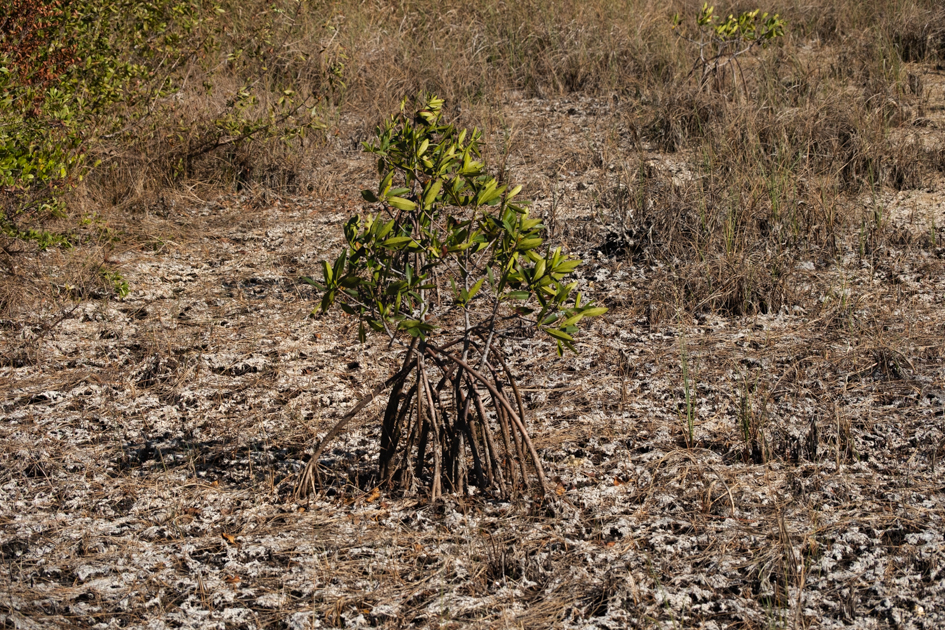
That realization changes how you look at the entire landscape. The slow-moving water, the wide stretches of grass, the subtle elevation changes—it all exists within a very narrow margin. It’s a delicate balance, one that has been shaped over time and, in many ways, disrupted by development and water management.
It also highlights just how vulnerable this ecosystem is.
With so much of the Everglades already reduced from its original size, and with elevations this low, even small changes can have a lasting impact. It’s a quiet reminder that what you’re seeing is not only unique—but fragile.
Stops like Rock Reef Pass may not be the most visually dramatic, but they add something just as important: understanding.
And sometimes, that’s what stays with you the longest.
Photography in the Everglades: Light, Simplicity, and the Leica Q3
Photographing the Everglades turned out to be a very different experience than I expected.
Going into it, I thought this might be a place where I’d want a longer lens—especially for wildlife. But in reality, we didn’t see much wildlife during our visit, and the landscape itself became the focus.
For this part of the trip, I primarily used my Leica Q3 43, and it ended up being the perfect choice.
The Everglades aren’t about dramatic peaks or bold foregrounds. They’re about subtlety—light reflecting on water, gentle movement in the grass, and layers that stretch quietly into the distance. The 43mm focal length worked beautifully for capturing that balance without overcomplicating the scene.
It encouraged simplicity.
Instead of searching for a strong focal point, I found myself paying more attention to composition, negative space, and the way the horizon divided the frame. Small changes in light made a big difference, especially as the sky reflected across the water, creating soft tones and almost mirror-like surfaces.
It’s the kind of place that challenges you to slow down as a photographer.
There’s less to “chase” and more to observe.
In many ways, the Everglades reinforced something I’ve learned over time—great images don’t always come from dramatic locations. Sometimes they come from quiet places, where the details are subtle and the experience is more about presence than pursuit.
Photographing the Everglades turned out to be a very different experience than I expected.
Going into it, I thought this might be a place where I’d want a longer lens—especially for wildlife. But in reality, we didn’t see much wildlife during our visit, and the landscape itself became the focus.
For this part of the trip, I primarily used my Leica Q3 43, and it ended up being the perfect choice.
The Everglades aren’t about dramatic peaks or bold foregrounds. They’re about subtlety—light reflecting on water, gentle movement in the grass, and layers that stretch quietly into the distance. The 43mm focal length worked beautifully for capturing that balance without overcomplicating the scene.
It encouraged simplicity.
Instead of searching for a strong focal point, I found myself paying more attention to composition, negative space, and the way the horizon divided the frame. Small changes in light made a big difference, especially as the sky reflected across the water, creating soft tones and almost mirror-like surfaces.
It’s the kind of place that challenges you to slow down as a photographer.
There’s less to “chase” and more to observe.
In many ways, the Everglades reinforced something I’ve learned over time—great images don’t always come from dramatic locations. Sometimes they come from quiet places, where the details are subtle and the experience is more about presence than pursuit.
The Everglades Today: What’s Been Lost and Why It Matters
Spending time in the Everglades, it’s easy to focus on what you see—the open water, the sawgrass, the quiet stillness of the landscape.
But there’s another side to the story.
The Everglades you experience today is only a fraction of what once existed.
Originally, this vast “River of Grass” stretched across much of South Florida, flowing slowly from Lake Okeechobee all the way to Florida Bay. Over time, development, agriculture, and water management projects reshaped that natural flow. Large sections were drained, redirected, or built over, reducing the Everglades to nearly half of its original size.
Along with that loss came changes to the landscape itself.
Cypress forests, which once covered broad areas, are now found in smaller, more isolated pockets. These trees depend on very specific water levels to survive, and as those patterns have changed, so has their ability to thrive. What remains is still beautiful—but it represents only part of what was once here.
Driving through the park, you can feel both sides of this reality.
There’s still a sense of scale, especially in places like Pa-hay-okee Overlook, where the landscape stretches endlessly toward the horizon. But knowing how much has been altered adds a different layer to the experience. It turns what might seem like a quiet, simple landscape into something far more complex.
And perhaps more fragile than it first appears.
The Everglades today is not just a place to visit—it’s a place in the process of being restored. Efforts are ongoing to improve water flow and protect what remains, but it’s a long and complicated process.
Standing there, taking it all in, you begin to realize that what you’re seeing isn’t just a destination.
It’s a reminder.
Of how landscapes can change.
Of how much can be lost.
And of why places like this matter.
What Stayed With Me
The Everglades isn’t a place that overwhelms you.
It doesn’t rely on dramatic पर्वviews or iconic landmarks. Instead, it reveals itself slowly—in quiet moments, subtle light, and landscapes that ask you to pause rather than rush through.
What stayed with me most wasn’t a single stop or standout moment. It was the feeling of the place as a whole.
The stillness.
The openness.
The way the sky and water seemed to blend together.
It’s the kind of place that doesn’t demand your attention—but rewards it if you give it.
Driving the road to Flamingo, stopping along the way, and taking the time to sit, walk, and simply look around changed how I experienced the Everglades. It wasn’t about checking off viewpoints. It was about being present in a landscape that is both simple and deeply complex at the same time.
And maybe that’s what makes it so memorable.
Not just what you see—but what you begin to understand while you’re there.
Stay Connected to the Journey
If you enjoy discovering places like the Everglades—the quiet stops, scenic back roads, and the stories that often go unnoticed—I’d love to have you along for the journey.
Join my newsletter for new travel guides, photography tips, and behind-the-scenes moments from the road. No spam—just thoughtful stories and inspiration from places worth slowing down for.
👉 [Sign up here to follow the journey]
Explore More
If you’re planning a trip through South Florida or continuing your journey along the coast, here are a few more stops from our road trip:
- Key Largo Highlights
- Biking Big Pine Key/ Key Deer, Quiet Roads, and a Stop at No Name Pub
- Nike Missile Site in the Everglades
- 30-Day Winter Road Trip
- Apalachicola / A Quiet Coastal Town Off the Beaten Path
- Back Roads Lens: How I Find Off-the-Beaten-Path Destinations in the USA
- Biking Key Largo/ An Easy Way to Explore the Florida Keys