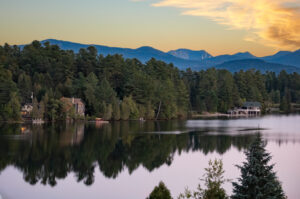
Misty Mountains, Waterfalls, and Scenic Byways of the Eastern U.S.
There’s something timeless about the Appalachian Region — where winding mountain roads, fog-draped ridges, and old stone bridges make you feel like you’ve stepped into a postcard that never goes out of style. From Virginia’s Natural Bridge to the sunlit overlooks along the Blue Ridge Parkway and the hazy peaks of the Great Smoky Mountains, this region is my go-to for slow travel and big views.
I’ve always found that the Appalachians move at their own pace — maybe it’s the mountain air or the rhythm of the winding roads, but time seems to stretch out here. It’s the kind of place where you can chase waterfalls one day, hike to a panoramic summit the next, and still find yourself sipping coffee on a quiet porch come morning.
My husband and I have explored this stretch in bits and pieces — some by car, some by bike, and always with a camera close at hand. Each stop — whether it’s the Blue Ridge Parkway, the Natural Bridge of Virginia, or the Great Smoky Mountains — has its own story to tell. And I’m already planning our next adventure: Shenandoah National Park, with its overlooks and Skyline Drive that seem tailor-made for road trippers and photographers alike.
👉 Read on for road trip routes, must-see stops, hidden gems, and photography ideas that bring the Appalachian spirit to life.
Planning an Appalachian Road Trip
Scenic Drives, Loops, and Routes Worth Slowing Down For
If you’re the kind of traveler who prefers winding roads over interstates (guilty 🙋♀️), the Appalachian Region is pure gold. Stretching from Georgia all the way into Maine, these mountains roll through some of the most beautiful backroads in the eastern U.S. For this guide, I focus on the southern and central stretches — the parts that blend scenic drives, historic charm, and those misty mountain views you can’t help photographing.
Blue Ridge Parkway: The Classic Drive
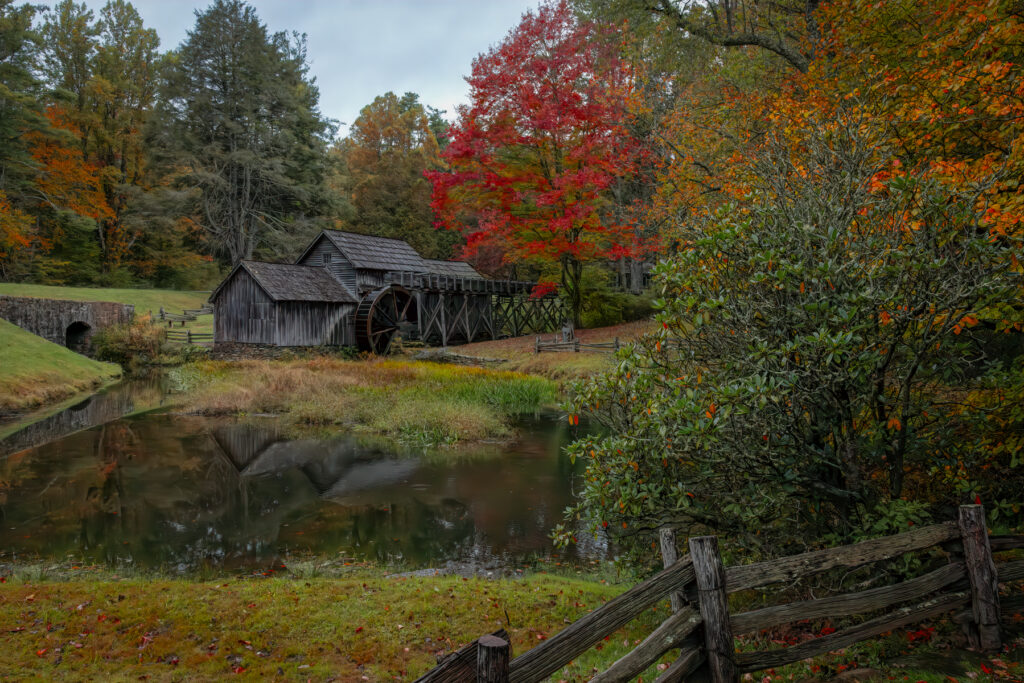
Every Appalachian road trip deserves a spin down the Blue Ridge Parkway — one of America’s most photogenic drives. We’ve explored it in sections, taking our time to stop at overlooks, waterfalls, and small towns that seem straight out of another era. It’s the kind of road where 45 mph feels fast.
If you haven’t yet, check out my detailed Blue Ridge Parkway Road Trip Guide — it includes the best mileposts, scenic stops, and tips for when to go.
Shenandoah National Park & Skyline Drive
At the northern end of the Parkway, Skyline Drive runs like a ribbon through Shenandoah National Park. It’s 105 miles of ridge-top beauty with 70+ overlooks and plenty of short hikes that reward you with wide-open views. I haven’t written this one yet (it’s on my list!), but when I do, expect plenty of sunrise shots and tips on catching the fall colors.
Great Smoky Mountains National Park
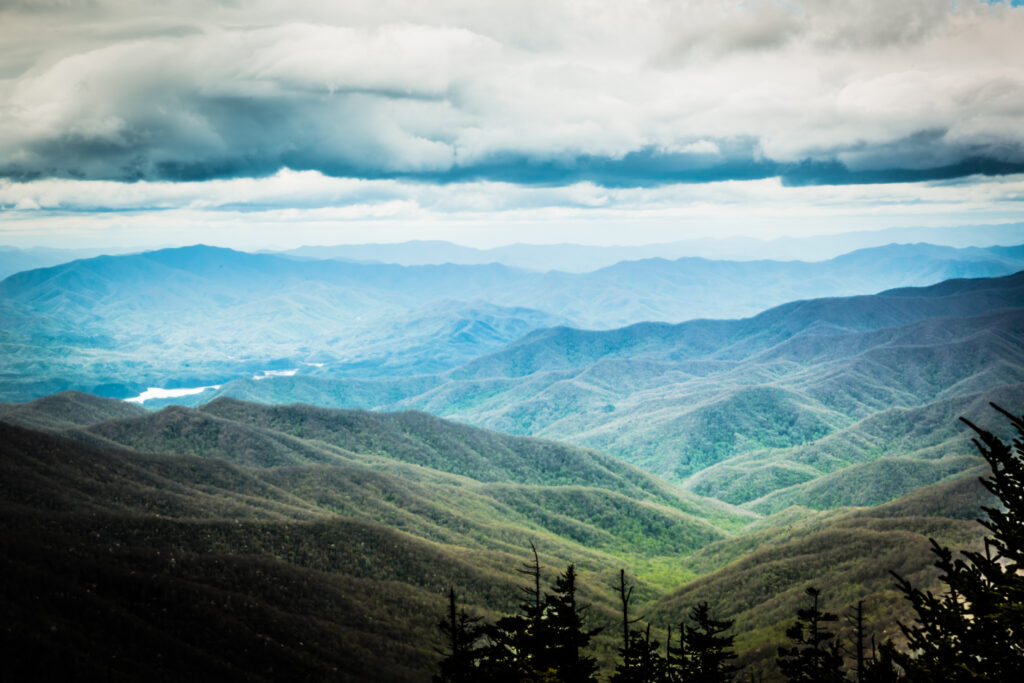
Further south, the Smoky Mountains blend blue haze, rushing creeks, and endless hiking trails. It’s where I learned that “smoky” isn’t just a poetic name — it’s the real deal. The fog drifts and curls between peaks like it’s alive. My Smoky Mountains Travel Guide dives into the best scenic drives, waterfalls, and wildlife photography spots (and yes, where to spot elk!).
Natural Bridge, Virginia
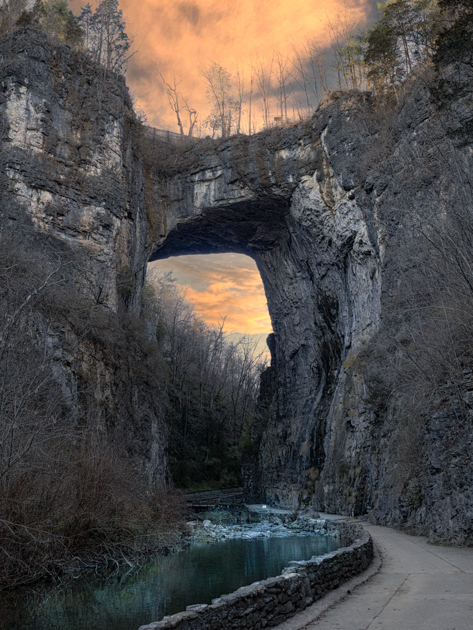
Between the Parkway and Shenandoah, make a stop at Natural Bridge, Virginia — a natural wonder that’s been aweing travelers since before George Washington surveyed it. The short trail beneath the arch feels like stepping back in time, and it’s one of those lesser-known stops that fits perfectly into an Appalachian itinerary.
Make It Your Loop
Our favorite way to travel this region is as a loop — start in Virginia, follow Skyline Drive into the Parkway, cut across into the Smokies, and then meander back through small mountain towns and bluegrass country. You can spend a weekend or a month and never run out of places to explore.
Small Towns and Hidden Stops Along the Way
Where Coffee, Crafts, and Mountain Charm Meet
For me, the heart of the Appalachian Region isn’t just in the sweeping views — it’s in the small towns tucked between them. These are the places where you find hand-painted signs, diners that still serve pie on real plates, and locals who wave from their porches as you drive by.
Asheville, North Carolina
If you love art, live music, and mountain views, Asheville is your spot. We’ve stopped here more than once for its creative vibe, cozy coffee shops, and the endless outdoor adventures just beyond town. It’s also the perfect base for exploring the Blue Ridge Parkway, since the road practically runs right through its backyard.
📸 Tip: The murals and colorful doorways downtown make perfect backdrops for travel photography — just go early before the sidewalks fill up.
Boone & Blowing Rock, North Carolina
Just up the road, Boone and Blowing Rock capture the classic small-town feel of the Appalachians. Boone’s college energy mixes with mountain charm, while Blowing Rock feels like a postcard with its flower boxes and wraparound porches. These towns make great overnight stops when you’re exploring the Parkway.
Gatlinburg & Townsend, Tennessee
If you’re heading toward the Great Smoky Mountains, you’ll pass through Gatlinburg — lively, walkable, and full of fudge shops that test anyone’s willpower. But my favorite? The quieter side of the mountains — Townsend, where the crowds thin out and you can still hear the sound of the river over the traffic. It’s one of those places that feels like “old Appalachia.”
Natural Bridge & Lexington, Virginia
Near the Natural Bridge, the town of Lexington makes a great stop for food, historic buildings, and a small-town main street that looks like it was made for evening strolls. It’s also a good jumping-off point for routes toward Shenandoah National Park.
Hidden Gems Worth a Detour
- Floyd, Virginia – Friday night bluegrass jam sessions that feel straight from another time.
- Bryson City, North Carolina – Gateway to the Smokies and home to a scenic railroad ride through the mountains.
- Waynesville, North Carolina – Small-town charm, art galleries, and the perfect spot for mountain sunrises.
🗺 Travel Note: These towns are easy to link together on a road trip — just give yourself permission to take the long way and stop wherever the view looks good. That’s where the best stories happen.
Outdoor Adventures and Photography Spots
Waterfalls, Hikes, and Scenic Views Worth Every Step
One thing’s for sure — the Appalachian Region was made for exploring outdoors. Whether you’re hiking to a misty waterfall, biking a stretch of Skyline Drive, or catching sunrise from a mountain overlook, this is where nature really shows off.
Chasing Waterfalls
I can’t drive through these mountains without finding at least one waterfall trail to squeeze in.
- Linville Falls (North Carolina): A must-see along the Blue Ridge Parkway. Multiple overlooks mean you can shoot wide landscapes or zoom in for detail shots.
- Laurel Falls (Tennessee): One of the most popular hikes in the Smoky Mountains — easy, paved, and picture-perfect after rain.
- Crabtree Falls (Virginia): A lesser-known gem and one of the tallest east of the Mississippi. Bring a tripod; the lower cascades are gorgeous for long-exposure shots.
📸 Photography Tip: Early morning or late afternoon light brings out the lush greens of Appalachian forests, and a polarizing filter helps cut glare from wet rocks and leaves.
Hiking with a View
There’s no shortage of scenic trails here — from quick overlooks to full-day hikes.
- Humpback Rocks (Shenandoah National Park): A short but steep climb with 360° views — totally worth the leg burn.
- Clingmans Dome (Smoky Mountains): The highest point in the park and a dream for sunrise photography.
- Rough Ridge Trail (Blue Ridge Parkway): Sweeping vistas and dramatic rock ledges that feel like you’re walking in the clouds.
If you’re more into easygoing adventures, the Smokies are great for biking and light hiking — many of them pass through forest tunnels and cross old stone bridges that make for wonderful photos.
Scenic Overlooks for Photographers
It’s nearly impossible to pick favorites, but a few stand out every time:
- Waterrock Knob (Blue Ridge Parkway): Sunset magic with layers of blue ridges fading into the horizon.
- Newfound Gap (Smoky Mountains): Ideal for wide-angle shots and misty morning fog.
- Thornton Gap Overlook (Shenandoah): A fantastic stop along Skyline Drive, especially when the fall colors are in full swing.
And sometimes the best shots happen when you pull off at an unmarked overlook and just watch the fog drift through the valley — no tripod required, just patience and a good cup of coffee.
When to Visit & Seasonal Tips
Fall Colors, Spring Blooms, and Mountain Weather Mood Swings
The Appalachian Region changes personality with every season — and I’ve loved each version for a different reason. Whether you’re chasing autumn colors, wildflower trails, or the cool mountain air of summer, timing your visit makes all the difference.
Fall: The Showstopper Season
There’s nothing quite like fall in the Appalachians. From Virginia down through the Smokies, the mountains explode into color — fiery reds, golds, and oranges that turn every bend in the road into a postcard. Peak color usually hits:
- Late September to early October in higher elevations (like Shenandoah National Park),
- Mid-October along the Blue Ridge Parkway, and
- Late October to early November in the Smoky Mountains.
If you plan a photography trip, bring extra memory cards — I promise you’ll fill them faster than you expect.
Spring: Wildflowers and Waterfalls
Spring feels softer here. The dogwoods bloom, waterfalls run strong, and the air smells faintly of earth and rain. It’s the perfect season for waterfall hikes and photographing wildflowers along lower elevation trails. Shenandoah’s forest floors come alive with trillium and bloodroot, while the Smokies host more than 1,500 species of flowering plants — no wonder they call it the “Wildflower National Park.”
Summer: Long Days and Cool Escapes
Summer in the mountains means green as far as you can see — and surprisingly cool temperatures if you stay above 3,000 feet. It’s ideal for camping, biking, and early morning drives when fog rolls through the valleys. The Blue Ridge Parkway is a perfect summer escape when the lowlands get too hot, and there’s nothing quite like a picnic with a view at one of its scenic overlooks.
Winter: Quiet and Peaceful
Winter is often overlooked, but it’s one of my favorite photography seasons. The bare trees reveal views hidden the rest of the year, and you can find a peaceful stillness on roads that are crowded in summer. Some sections of the Parkway and Skyline Drive may close for weather, but the trade-off is having those overlooks all to yourself.
📸 Photography Tip: Winter light is beautifully diffused — perfect for black-and-white shots or capturing texture in stone bridges and bare trees.
Where to Stay & Travel Tips
Cozy Cabins, Mountain Lodges, and Road-Trip Know-How
Finding the right place to stay in the Appalachian Region can make your whole trip. Whether it’s a mountain-view cabin, a historic inn, or a trusty Hilton you can book with points (one of my favorite travel hacks), the key is booking early — especially in fall.
Cabins and Lodges with a View
Nothing beats waking up to fog drifting through the mountains. In the Smokies, we’ve stayed in log cabins that felt straight out of a storybook — wood-burning fireplace, rocking chairs, and a front porch view worth lingering over.
Along the Blue Ridge Parkway, look for small lodges near Blowing Rock or Little Switzerland, where you can roll out of bed and be on the scenic drive in minutes.
🏡 Tip: Search for stays labeled “mountain view” or “ridge view” — sometimes that extra $20 a night buys you the kind of sunrise you’ll never forget.
Using Hotel Points to Your Advantage
I often use Hilton points to make longer road trips like this more affordable. You’ll find Hilton properties near Asheville, Lexington, and Gatlinburg, which make perfect overnight hubs between scenic drives. Using points for a few nights helps stretch the budget while keeping your stays flexible and comfortable.
Plan Ahead — and Book Early
The Appalachian Region is one of those places that gets busier every year, especially in October. Hotels near Shenandoah and the Smokies fill up months in advance, and cabin rentals can be booked solid by midsummer.
Research, research, research — I can’t say it enough. Read reviews carefully, check cancellation policies, and don’t assume cell service will work once you’re deep in the mountains (download your directions ahead of time).
Getting Around the Mountains
A good road map (yes, a paper one) is still handy in this region. GPS can be iffy in the valleys. Drive times are slower than they look on the map — the roads curve, climb, and meander. But that’s part of the charm.
If you’re flying in, major airports in Knoxville, Asheville, and Roanoke are good jumping-off points for exploring the Blue Ridge and Smokies.
Travel Smart, Travel Slow
The best advice I can give? Don’t rush. The Appalachian Region rewards slow travel — the kind where you pull over at random overlooks, talk with locals, and find yourself photographing a roadside barn because the light just happened to be perfect
I wrote about How I Find Off the Beaten Path Destinations if you would like more information.
Bringing It All Together
Finding the Magic in the Mist
The Appalachian Region is the kind of place that stays with you. Maybe it’s the layers of mist drifting through the valleys at sunrise, or the rhythm of the road as it winds past stone bridges and small towns. For me, it’s the feeling of stepping into a slower world — one where you can still hear the whistle of a distant train or the strum of a banjo on a front porch.
Each trip through these mountains has given me something different: the peaceful overlooks of the Blue Ridge Parkway, the awe of walking beneath Natural Bridge, Virginia, the quiet trails of the Smoky Mountains, and the anticipation of photographing sunrise along Skyline Drive in Shenandoah National Park (coming soon!).
If there’s one lesson these mountains have taught me, it’s that the journey matters just as much as the destination. Whether you’re chasing fall colors or simply wandering with a camera in hand, the Appalachians reward those who take the long way — who stop for pie, pull over for a photo, and let the fog roll in without rushing it away.
“Sometimes the best views come after the slowest climbs.”
So take your time here. Watch the clouds move across the ridges, explore the backroads, and find your own piece of quiet in the mountains. The Appalachian spirit isn’t about checking boxes — it’s about finding beauty in the in-between moments.
Explore More Regions
If you’re planning a larger USA road trip, don’t miss the other regions in my Off-the-Beaten-Path series. Each one captures a different piece of America’s hidden beauty:
- Northwest Region Travel Guide – Mountains, forests, and wild coastlines.
- Southwest Region Travel Guide — Red rock canyons, desert highways, and timeless light.
- Midwest Region Travel Guide – Rolling prairies and friendly small towns.
- Northeast Region Travel Guide – Covered bridges and coastal charm.
- Southeast Region Travel Guide – Spanish moss, historic towns, and coastal gems.
- Alaska Travel Guide – Untamed wilderness and dramatic light.
- Hawaii Travel Guide – Island beauty and volcanic wonder.
For more inspiration beyond this region, see my main guide to Scenic Drives and Road Trips Across America.
📬 Want more travel stories and photography tips? Subscribe to my Back Roads Lens newsletter for behind-the-scenes photography notes and upcoming route ideas.