Why Kolekole Pass Is So Special
Some hikes feel wild. Others feel sacred. Kolekole Pass Trail hike manages to be both.
Tucked high in the Waiʻanae Mountains on Oahu, this narrow corridor has carried centuries of stories—ancient legends, wartime history, and now, a rugged trail that lets you walk straight through it all.
What makes this hike special is the way it bridges Hawaiʻi’s past and present. Long before the road was carved through these ridges, ancient Hawaiians used Kolekole as a footpath connecting inland valleys with the western coast. It was a vital route of trade and travel—and, according to oral history, a place of deep spiritual power. Locals once spoke of a sacred guardian spirit and a mysterious “Killing Stone”, said to protect the pass and warn travelers to move with respect. Whether myth or memory, the sense of presence remains.
If you love discovering places like this—quiet, meaningful, and slightly off the radar—read my post How I Find Off-the-Beaten-Path Destinations in the USA, where I share how I uncover trails and hidden corners that carry both beauty and story.
From Legends to History: Kolekole Pass in Wartime
Kolekole gained new importance in the 1930s when the U.S. Army built Kolekole Road through the range, linking central Oʻahu to the Waiʻanae coast. During World War II, rumors spread that Japanese aircraft had flown through this very pass on their way to Pearl Harbor. Later research disproved that theory, but the story lingered, adding another layer of lore to this already storied gap.
Even without wartime myths, the sense of history here is tangible. Standing in the pass, you can almost hear the echo of soldiers marching and the wind whispering through the pines. It’s a place that reminds you how tightly history and landscape intertwine on these islands.
If this kind of mix of nature and history draws you in, explore more in my Hawaii Region Travel Guide, where I share trails and coastlines across Oʻahu, Maui, Kauai and the Big Island—from volcanic craters to windswept ridge hikes like Kolekole.
Getting Access: Hiking Through Schofield Barracks
Because the trail sits within Schofield Barracks, an active Army base, access is limited to specific weekends when training is paused. Planning ahead is essential—but it’s absolutely worth the effort.
Here’s what to know before you go:
- The Kolekole Pass Trail opens only on select weekends, announced by U.S. Army Garrison Hawaii.
- Check the Schofield Barracks / USAG Hawaii Facebook page or the Army Hawaii MWR site for the latest open dates.
- You’ll need either a DOD ID card or a visitor pass, which can be obtained at Lyman Gate off Kunia Road. Bring a valid REAL ID or passport for entry.
- Once cleared, follow Trimble Road to the small trailhead parking area within the base.
It’s a little extra effort compared to most Oʻahu hikes—but that’s part of what makes this trail feel so untouched. Once you’re inside, there’s no crowd, no concession stand, and no noise but the wind through the ridge.
If you’re planning your visit, my Travel Photography Gear Guide has a full list of lightweight essentials I pack for remote or restricted hikes—especially when I know I’ll only get one chance at a shot before access closes again.
Why Kolekole Belongs on Your Hawaii Bucket List
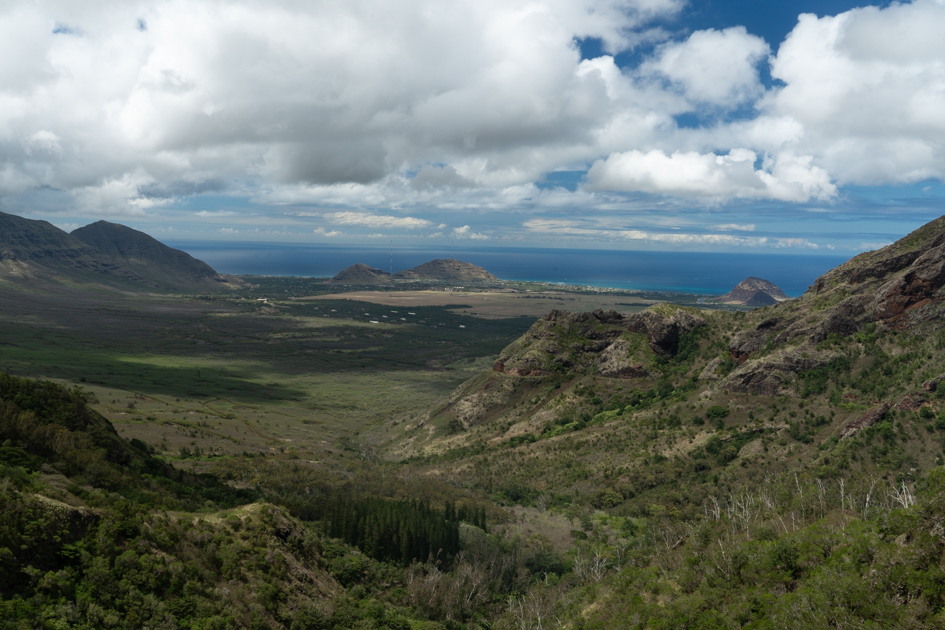
Few trails capture Oʻahu’s contrasts like Kolekole. In less than two miles, you move from dense forest to a panoramic overlook that opens toward the Pacific. The views stretch across Lualualei Valley, with the rugged Waianae Range fading into the distance. Because it opens only a few times a month, chances are you’ll have the lookout nearly to yourself—a rare luxury on an island known for crowds.
Standing at the ridge, the wind presses against you, the light changes by the minute, and the island feels ancient again. It’s the kind of place where the line between legend and landscape blurs—a photographer’s dream and a storyteller’s field notebook come to life.
For more Hawaii adventures like this one, don’t miss my Road to Hana: Chasing Waterfalls & Rainforest Light, where the same sense of discovery weaves through a very different kind of island journey. You may also want to view the natural wonder of Exploring the Na Pali Cliffs — Kauai’s Wild and Timeless Coast.
Hiking the Kolekole Pass Trail: From the Gate to the Killing Stone
After clearing the gate at Schofield Barracks, the drive through the base feels more like a quiet country road than an active military post. Rows of pines and open fields give way to the green slopes of the Waiʻanae Mountains, and before long you’ll spot the small parking area near the Kolekole Pass Trailhead. The moment you step out of the car, the wind hits you — steady, cool, and carrying that unmistakable scent of rain and earth that always feels like Hawaiʻi.
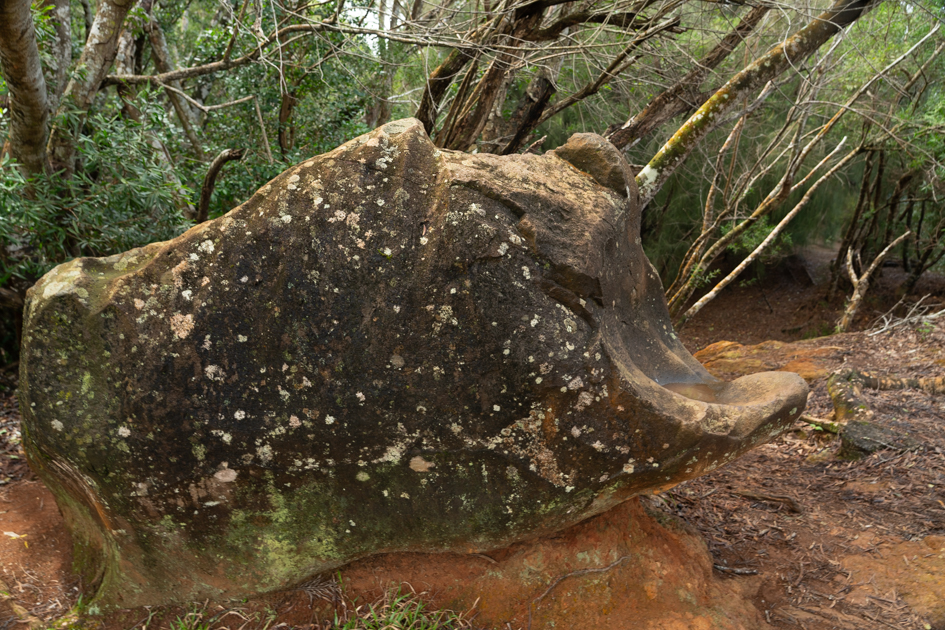
The first stretch of the trail is easygoing. A wide dirt path winds gently through the trees, shaded and peaceful, with roots crossing underfoot and occasional breaks in the canopy revealing glimpses of the ridgeline above. It doesn’t take long before you reach one of the most talked-about features along the trail — the Killing Stone.
The Legend Lives at the Start
The Killing Stone sits just off the main path near the beginning of the trail — unassuming at first glance, yet steeped in stories. In Hawaiian legend, this stone marks the site of ancient battles fought long before roads or bases ever existed here. Some versions say it was where defeated warriors were sacrificed to restore balance; others describe it as a spiritual guardian that watched over travelers crossing the pass.
Even the word Kolekole itself can mean “raw” or “bloody,” hinting at the deep significance this place once held. While historians debate whether those legends are literal or symbolic, standing there, it’s easy to understand why the story stuck. The air feels still. The ridge looms overhead. It’s one of those places where you can almost sense the past breathing just beneath the surface.
I always take a moment here — not for a photo, but simply to pause. Some travelers leave a flower or lei out of respect, following a long Hawaiian tradition of acknowledging the spirits of a place before moving on. Whether or not you believe in the stories, this simple gesture connects you to something timeless.
I talk more about this kind of experience — that feeling of connection and reverence — in my post Finding the Wild Close to Home, where I explore how wonder often lives in the quiet places we least expect it.
Continuing Toward the Overlook
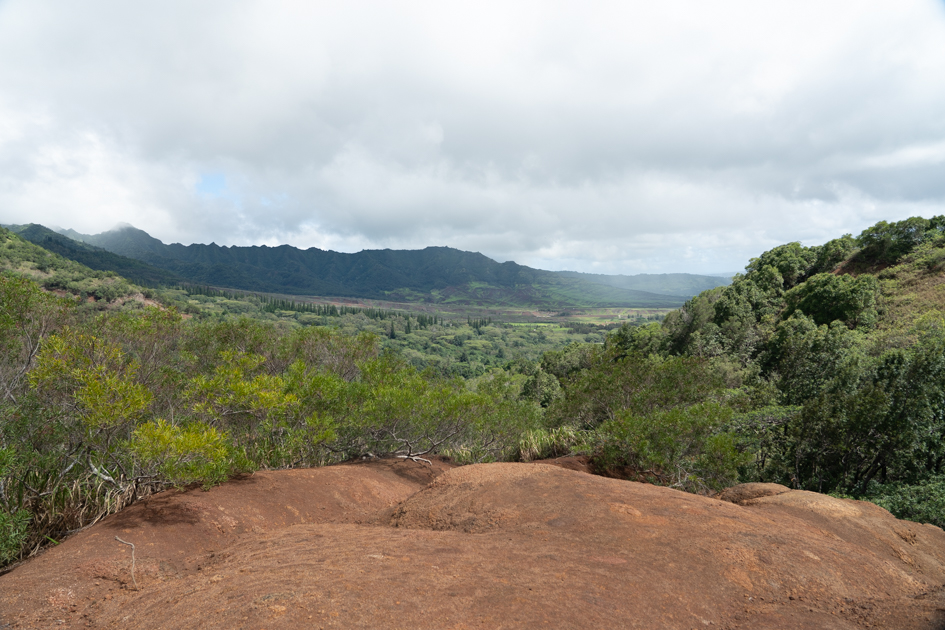
Past the stone, the trail narrows slightly as it begins a steady climb toward the main ridge. The sound of the base fades away behind you, replaced by wind and birdsong. The path threads through stands of ironwood and strawberry guava before opening to a small clearing where you can catch your first full glimpse of Lualualei Valley below.
This first lookout — often called the bench overlook — is where many hikers stop. From here, the valley spreads out in shades of green and gold, framed by distant peaks and the faint shimmer of the Pacific. On clear days, you can even see the coastline glinting beyond the far ridges.
For most visitors, this overlook is the perfect turnaround point: an easy half-mile climb with big rewards. But if you have time, energy, and steady footing, the trail continues toward the higher ridge and the Puʻu Hapapa summit — a more challenging section with steep drop-offs and incredible views.
The next section will cover that climb and the panoramic ridgeline — a stretch that turns Kolekole from a scenic stroll into a truly memorable Hawaiian hike.
Climbing Toward Puʻu Hapapa Ridge
Beyond the bench overlook, the trail becomes quieter and more rugged — the kind of path that feels like it was meant for those who enjoy both solitude and adventure. The trees begin to thin as the ridgeline rises ahead, and you start to see flashes of open sky between the branches. This next stretch of the Kolekole Pass Trail is where the real magic — and challenge — begins.
The Trail Narrows and the Views Expand
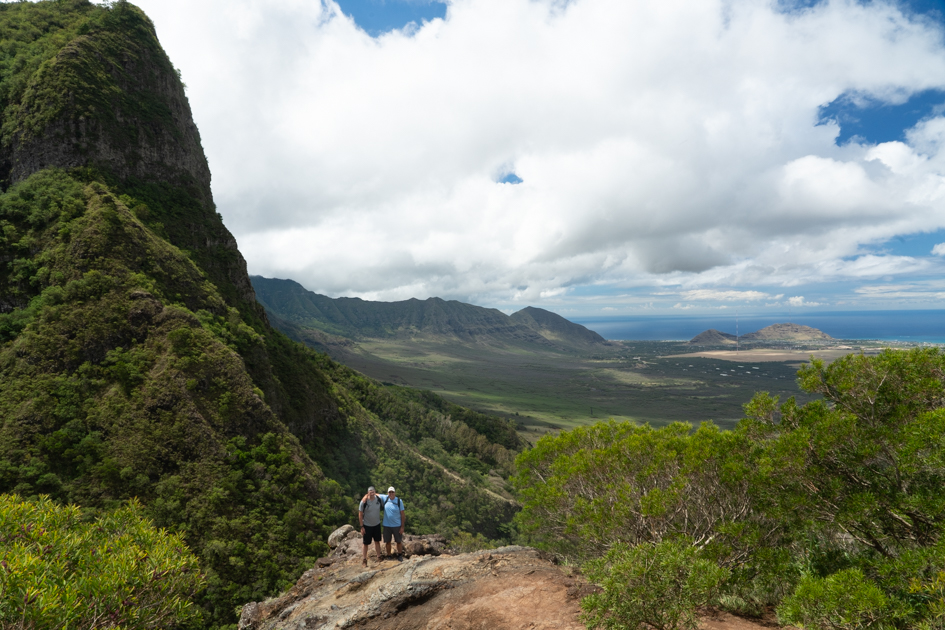
As you climb higher, the forest gives way to windswept ridges, each turn revealing wider views of Lualualei Valley below. The trail itself becomes narrower and steeper, with occasional ropes left by past hikers to help with footing. Some portions feel exposed, especially after rain, so it’s worth moving slowly and keeping a sure stance.
It’s also worth pausing here — not just to catch your breath, but to look back. From this angle, the ridges ripple like green waves, layered one after another toward the coast. The Waianae Range stretches endlessly north and south, its peaks cut sharp against the sky. When the light hits just right, it feels as if the island itself is glowing from within.
For photography, this section is where your gear pays off. I often reach for my Fujifilm X-T5 with the 70–300mm + 1.4x teleconverter to compress those distant ridges and bring out their textures, while my Leica Q3 captures the wider scene — the vastness of the valley framed by the trail ahead. (You can read more about how I balance both systems in my Travel Photography Gear Guide.
Reaching Puʻu Hapapa Summit
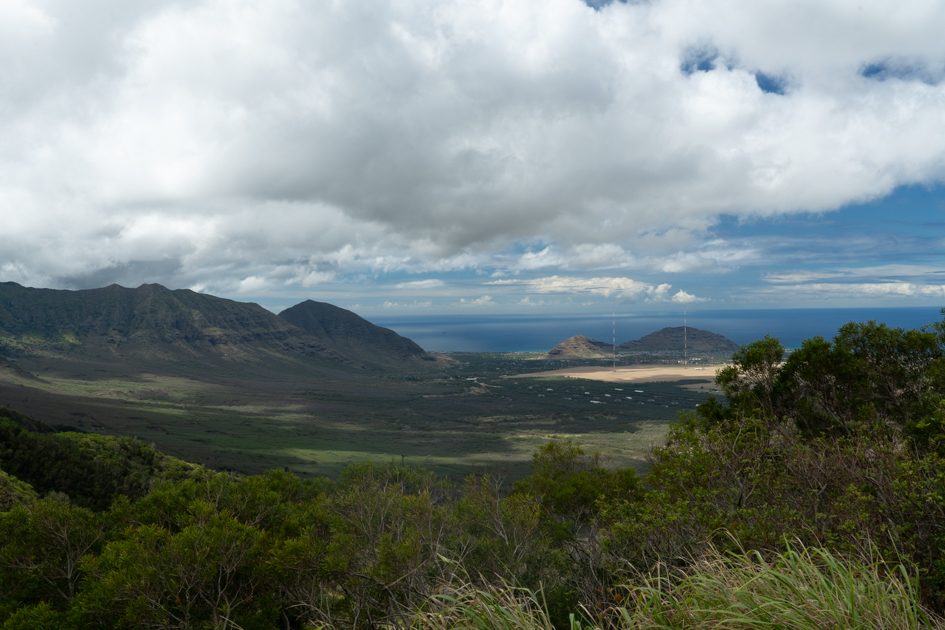
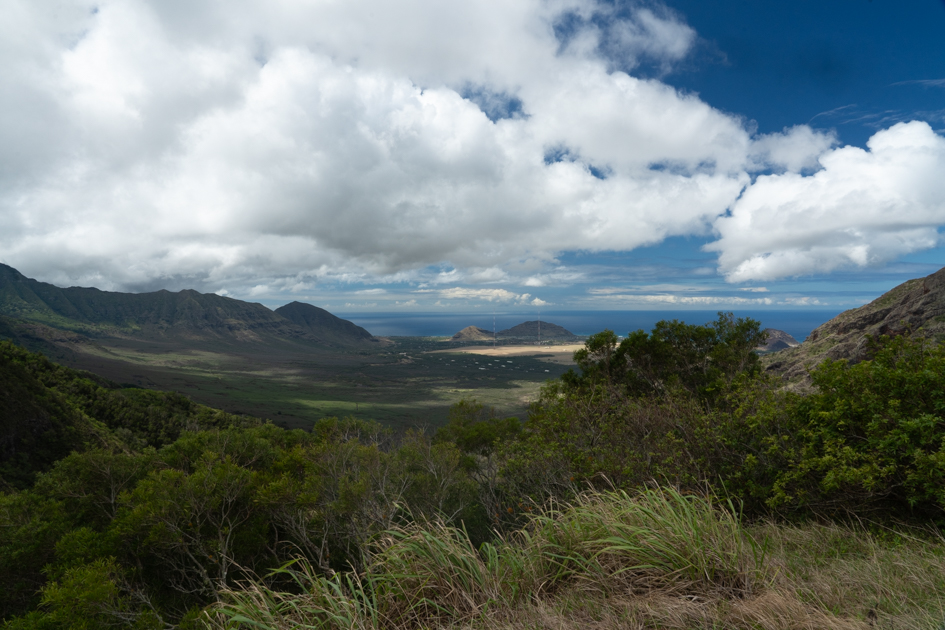
The final ascent to Puʻu Hapapa is short but steep — a true ridge climb that rewards your effort with one of the most sweeping views on Oʻahu’s west side. At nearly 2,900 feet, the summit looks out over both the leeward coast and central Oʻahu, with Mount Kaʻala rising in the distance. On clear mornings, you can even spot Pearl Harbor shimmering faintly far below.
Few visitors ever make it this far, partly because of the limited trail access, but also because it takes time and confidence to hike beyond the comfort zone. That’s exactly what makes it so rewarding — this view feels earned. Standing there, wind pressing hard against your shoulders, you’re reminded that Hawaiʻi’s beauty isn’t only found at sea level.
When I photograph this ridge, I like to wait for the shifting clouds to roll through. The play of light and shadow across the valley is dramatic, constantly changing, and often gone before you can frame it twice. It’s the kind of fleeting moment that defines travel photography — the intersection of patience, timing, and pure luck.
Turning Back Down
The descent follows the same route, and as you move downward, the sound of the wind fades back into the hush of the forest. The Killing Stone appears again near the bottom, marking your return to the trailhead like an old sentinel. By the time you reach the parking area, the whole hike feels like a journey through layers of Hawaiian history — from legend to ridge to light.
Kolekole Pass may not be long, but it holds everything I love about exploring Hawaiʻi: meaning, challenge, beauty, and mystery. It’s a reminder that sometimes the most powerful stories are found not in crowded parks or beaches, but in places like this — hidden behind a military gate, waiting quietly for those who make the effort to look.
Trail Tips, Safety, and Photography Notes
Plan Ahead for Access
Because the Kolekole Pass Trail sits inside an active Army installation, access is limited — and schedules can change quickly. Always confirm open dates before you go. The most reliable updates come directly from the Schofield Barracks / USAG Hawaii Facebook page and the Army Hawaii MWR site.
You’ll need either a DOD ID card or a visitor pass (available at Lyman Gate with a valid REAL ID or passport). Bring your ID with you on the trail, as military police may occasionally verify hikers inside the post.
Trail Conditions and Safety
Kolekole may look short on the map, but it’s not a casual stroll. The ridge past the bench overlook can be narrow and exposed, especially after rain, when the clay turns slick. Sturdy hiking shoes are a must, and trekking poles help with the descent. Start early in the day before the heat builds and always carry more water than you think you’ll need.
Cell service fades in places, and while the trail is well defined early on, the upper sections can blur into the ridge. Download an offline map from AllTrails or Gaia GPS if you plan to continue to Puʻu Hapapa. And remember: this is still an active military training zone — never wander off marked paths or into restricted areas.
Respect the Land and the Stories
The Killing Stone isn’t just a landmark — it’s part of a sacred landscape. Hawaiian tradition teaches that every place has a spirit, and Kolekole is no exception. Treat the area with respect: move quietly, leave nothing behind, and if you pause at the stone, do so with mindfulness. It’s a small gesture that honors both the culture and the land.
If you enjoy this deeper connection between travel, nature, and culture, you’ll find more stories like this in my Hawaii Region Travel Guide, which includes posts from across Oahu, Maui, Kauai, and the Big Island, such as the Kīlauea Lighthouse, Waimea Canyon, and the dramatic Nā Pali Cliffs.
Photography Notes: Capturing the Light
The ridges of Kolekole change mood constantly. Early morning brings soft shadows over Lualualei Valley, while late afternoon light sets the cliffs aglow. If you’re carrying both cameras, I like to use the Leica Q3 for wide, sweeping scenes and the Fujifilm X-T5 with the 70–300mm + 1.4x teleconverter for pulling distant ridges into focus.
A polarizing filter helps deepen the skies and cut haze — especially useful on Oʻahu’s west side. And while it’s tempting to focus on the big view, don’t overlook the details: the texture of the red dirt, the shape of roots crossing the trail, the small offerings left by visitors at the stone. These intimate shots tell as much of the story as the panorama itself.
Before You Go
- Distance: ~2 miles round trip (to the bench); longer to Puʻu Hapapa
- Difficulty: Moderate to challenging (depending on how far you go)
- Best Time: Early morning on open weekends
- Parking: Limited, near trailhead inside Schofield Barracks
- Amenities: None — bring water, snacks, and sun protection
- Access: Only during official open weekends
Final Reflection
Every time I hike Kolekole, I’m reminded that Hawaiʻi still holds quiet corners where time feels suspended. Between the ancient Killing Stone, the wartime echoes, and the ridgeline light, this little trail captures what I love most about exploring the islands — that sense of discovery waiting just beyond the obvious.
It’s not just a hike. It’s a bridge between stories — past and present, legend and landscape — and a reminder of why we chase the back roads and hidden paths in the first place. If you’re hiking Kolekole Pass, Keneke’s Grill is only minutes away — perfect for a post-hike meal and a taste of local culture.
Love exploring hidden trails and photographing quiet places like Kolekole Pass?
Join my Back Roads Lens newsletter for free travel-photography guides, behind-the-lens stories, and updates from my upcoming Hawaiʻi series — including Oʻahu, Kauaʻi, Maui, and the Big Island.