Table of contents
- Introduction: Why We Chose 30 Days
- Why 30 Days Is the Sweet Spot
- Planning Your 30-Day USA Road Trip
- Packing and Gear for a 30-Day Road Trip
- Regional Highlights for a 30-Day USA Road Trip
- Sample 30-Day Road Trip Itinerary
- Practical Tips for 30-Day Road Trips
- Conclusion: Why 30 Days Is Just Right
- Explore More
Introduction: Why We Chose 30 Days
From Two Weeks to a Full Month
Our long road trips didn’t start at thirty days. In fact, they started quite humbly — with the simple desire to escape the icy grip of an upstate New York February. If you’ve lived here, you know what I mean: weeks of gray skies, frozen sidewalks, and snowbanks piled high along the road. By February, I’m desperate for sunshine and a change of scenery.
So, we began taking two-week winter getaways. The idea was simple: drive south until we found warmth. And it worked — at least while we were there. But the moment we returned home, the snow was still waiting for us. It felt like the trip had ended before it even began. We’d just start to settle in, to relax, to breathe a little deeper — and then we were back in the cold.
Two weeks gave us a taste of something better, but it was never enough.
So we tried something different. The next winter, instead of two weeks, we planned a month-long trip to the southern U.S. And it was a revelation. A month gave us enough time to leave the winter truly behind, to actually live somewhere else for a while, and to explore more deeply without rushing. It wasn’t just a vacation — it was a journey. We discovered that four weeks away was long enough to feel like a reset, but short enough that we still looked forward to coming home.
That’s when we realized that thirty days is our sweet spot. This is part of the series, “How I Find Off The Beaten Path Destinations”. I share more on how I plan routes and photo stops in How I Plan and Photograph the Perfect USA Road Trip.”
The Freedom of Driving
Around the same time, we started thinking differently about how we traveled. We’d flown plenty of times — to Hawaii, to national parks out west, even to beautiful island getaways. Flying got us there quickly, but it never gave us the flexibility we craved. Once you land, you’re stuck in that region. Renting a car helps, but you’re still limited to what’s nearby.
We wanted something more. We wanted freedom.
So, we decided to drive. One of our first long trips was an east coast to Montana journey. And that’s when it hit me: driving is an entirely different kind of travel.
When you drive, the in-between moments matter. You’re not just hopping from one big destination to another; you’re discovering everything along the way. You can stop when a roadside sign promises something quirky or pull over because the light hits the mountains just right. You can linger in a small town you’ve never heard of before — one that isn’t in any guidebook — and find a diner that serves pie like your grandmother used to make.
On that Montana trip, I realized that the drive itself was just as important as the destination. The freedom to be spontaneous — to choose your own pace, to chase your own curiosity — became part of the joy. That’s what makes a road trip different. It’s not about rushing to the endpoint. It’s about savoring everything along the way.
Why 30 Days Is the Sweet Spot
Not Too Short, Not Too Long
We’ve tried shorter trips. We’ve thought about longer ones. But over and over again, thirty days comes out on top.
- Two weeks feels rushed. By the time you get into the rhythm of the road, it’s already time to turn around. You’ve just started to unwind, and suddenly you’re back to reality.
- Six weeks or more sounds wonderful in theory, but for us, it’s too long. Somewhere around the fifth week, we start missing home. The laundry piles feel bigger, the hotel check-ins feel endless, and the joy starts to fade.
- Thirty days? It’s just right. Long enough to settle into a relaxed rhythm, but short enough to stay fresh and exciting.
The Practical Benefits of 30 Days
For us, thirty days isn’t just about the feeling — it’s about the rhythm it creates. Here’s what makes it work:
- Driving cap: We don’t drive more than 500 miles on a “travel day.” And honestly, most days are less. When we’re stopping to sightsee, we keep it even shorter. This keeps us from burning out.
- Hub stays: Instead of moving every night, we stay several nights in one location. From there, we branch out to nearby towns, scenic drives, and hikes. It makes the trip feel less like a marathon and more like living on the road.
- Seasonal escape: Thirty days lets us trade snow for sunshine in February. It’s enough time to feel spring while New York is still buried in winter.
- Hotel perks: With our Hilton credit cards, we rack up points that cover multiple free nights a year. On a thirty-day trip, those free nights (plus Diamond-level perks like free breakfast) stretch our budget in a big way.
- Mindset shift: Two weeks feels like a getaway. Thirty days feels like freedom. By week three, you’re not rushing anymore. You’ve slowed down. You’re open to detours, to lingering, to saying yes when something unexpected catches your eye.
That’s why thirty days has become our magic number. It’s long enough to give us space to breathe, but short enough that every day still feels like a gift.
Planning Your 30-Day USA Road Trip
Using a Map and a Master List
Every trip starts the same way: in my office, standing in front of a giant wall map of the United States. It’s not fancy or digital. It’s just a big, colorful paper map that lets me see the entire country at once. I’ve learned that for long trips, I need to see the big picture — how far one region is from another, which states we might cross, and how it all connects.
The goal my husband and I set for ourselves is simple: we want to see every state. Not just drive through it, but experience it. To us, “seeing a state” means stopping somewhere meaningful — whether it’s a scenic drive, a quirky small town, or a natural wonder that gives us a sense of the place.
That’s why the wall map is so important. It helps me trace routes that don’t just get us from Point A to Point B, but loop us through states in a way that makes the journey part of the adventure. Since we live in upstate New York, most of our trips naturally stretch east to west. But in winter, when we’re trying to thaw out from February snow, our routes often run north to south. Either way, we almost always go out one way and return another — that way we maximize what we see.
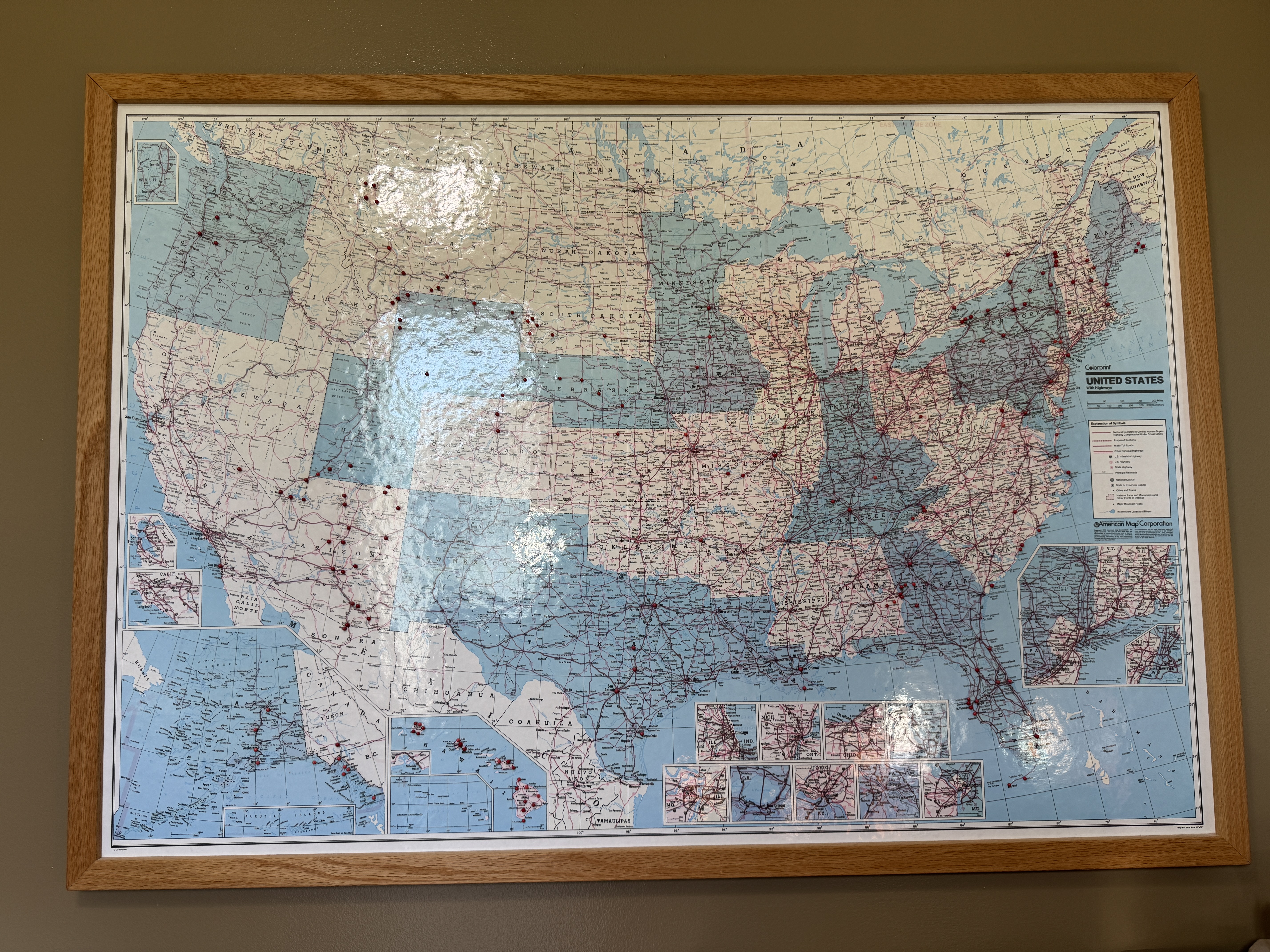
Alongside the map, I keep a running list of destinations by state. Whenever something catches my eye — a Facebook travel group recommendation, an Instagram photo that takes my breath away, a video, even a random news story — I jot it down. That list has grown over the years into a treasure trove of possibilities. When it’s time to plan a trip, I already have dozens of places I’m curious about. I cover how I find Off-The-Beaten-Path Destinations in the USA in this post.
Route Planning with Roadtrippers
Once I’ve got a starting point, I move to Roadtrippers, a digital tool that helps me turn ideas into a route. This is where I start layering practicality on top of curiosity.
For example: if a stop will take us a few hours to explore, I plan for a short drive that day — maybe 200 miles. If it’s a quick photo stop or a scenic overlook, I’ll pair it with a longer drive — closer to 400 or 500 miles.
I also build in what I call “practical days.” These are days where the focus isn’t just sightseeing, but real-life needs like laundry or errands. On a thirty-day trip, you can’t ignore the basics. I like to plan hub stays of two to four nights in one spot. That way, we can unpack a little, explore nearby attractions, and reset before moving on.
One of my favorite parts of planning is scheduling around the light. Photography drives a lot of my decisions, so if I want sunrise at a specific spot, I make sure we arrive the night before. For our upcoming trip, I’ve built the itinerary so we’ll be in Horseshoe Bend, Utah the evening before I want to shoot at dawn. The same with Monument Valley — we’ll arrive at night so I can be up before the sun to capture that iconic silhouette. These little details matter, and they often become the highlights of the trip.
Hotel Strategy with Hilton Points
Because we don’t camp, hotels are a big part of our planning. Years ago, we debated buying an Airstream. It seemed like the dream solution: take your home with you, stay in beautiful places, avoid hotel hopping. But when we crunched the numbers, the cost of an Airstream was staggering. For that same investment, we realized, we could stay in hotels for years — and enjoy a comfortable bed every night without hauling our house behind us.
That’s where our Hilton American Express Surpass and Aspire cards come in. We put almost everything on them — groceries, gas, even everyday bills — and pay them off in full each month. The points add up quickly, and combined with Diamond-level membership, we get serious perks.
On average, we earn three to four free hotel nights a year. I save those free nights for splurges. For example, on our upcoming February trip, I cashed them in for Baker’s Cay Resort in Key Largo, a luxury property that would have been well out of budget otherwise. On a trip to Lake Placid, our Diamond status gave us free breakfast at Mirror Lake Inn. The bill would have been $70, but it was free for us. Those little wins add up on a thirty-day trip.
In big towns and cities, Hilton hotels are easy to find, so we often stick with them to keep earning points. In smaller towns or scenic back roads, we mix in boutique hotels or local inns to get a taste of the community. That balance keeps our trips affordable, comfortable, and interesting.
Leaving Room for Flexibility
If you only take one tip from me about planning a long road trip, let it be this: leave room for surprises.
Yes, I love planning. I anchor our trips with must-see destinations and hotel reservations. But I also leave gaps. I don’t pack every day with rigid schedules. I don’t force us into hour-by-hour itineraries.
Because the truth is, some of our best memories have been unplanned. Like the time we went to Vermont specifically to photograph covered bridges. I had images in my head of golden light, blue skies, and colorful barns. Instead, we got stormy weather. At first, I thought it had ruined the trip. But when I looked at the photos later, the storm clouds gave the bridges mood and atmosphere. They were some of my favorite images. If we’d rushed or canceled, I never would have captured that.
Flexibility also means being open to locals’ suggestions. On Kauai, for example, a local pointed us to a beach that wasn’t in any guidebook. It ended up being one of the most memorable days of the trip — natural, uncommercialized, and filled with local families who welcomed us like we belonged. That never would have happened if we’d stuck to a rigid plan.
So yes, I plan with maps, apps, and lists. But I also plan for the unplanned. Because on the road, the best moments are often the ones you never saw coming.
Packing and Gear for a 30-Day Road Trip
Simplifying Luggage for Hotels
One of the quickest lessons we learned on our early long road trips is this: hauling big suitcases in and out of hotels every night gets old fast. After the third or fourth stop, you’re already tired of it. By the end of a month, you feel like a pack mule.
That’s when we developed our own system — one that saves time, energy, and sanity.
Instead of dragging in huge bags, we each carry a small suitcase with our toiletries and essentials. Alongside that, we keep a tote bag dedicated only to underclothing. It may sound simple, but it’s a lifesaver.
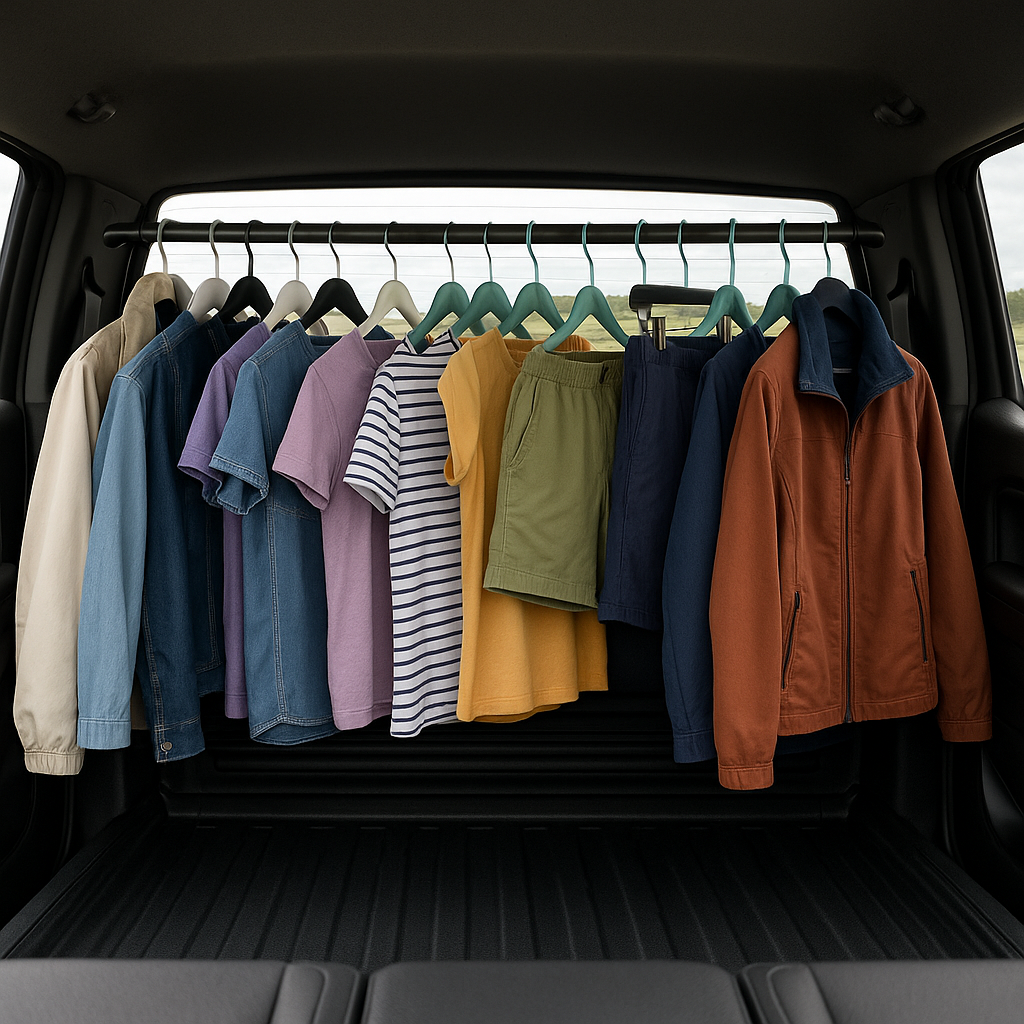
The real game-changer, though, is the hanging rack we keep in the back seat of our truck. On it, I hang matched outfits — shorts and tops for warmer days, pants and long-sleeve sets for cooler ones. When we arrive at a hotel, I check the next day’s weather, grab what I need from the rack, and tuck it into my small suitcase.
The next morning, the dirty clothes go straight into a laundry bag, the suitcase is repacked with the next day’s outfit, and we’re good to go. Instead of unpacking and repacking everything, we’re only ever carrying in one small suitcase each night.
It may not sound glamorous, but it’s what keeps us from burning out. After thirty days on the road, efficiency matters just as much as comfort.
We also keep a couple of jackets of different weights on the rack in the truck. When you’re covering multiple states, you never know what the weather will throw at you. We’ve had mornings where we needed a heavy coat and afternoons where a light windbreaker was more than enough. Having both options handy means we’re always prepared without having to dig through bags.
My Photography Gear Setup
Clothes are one thing — photography gear is another. For me, my cameras are non-negotiable. They’re not just tools; they’re the reason I travel the way I do. Capturing landscapes, hidden towns, and spontaneous moments is part of how I remember and share each journey.
That’s why my camera equipment always comes inside the hotel with me. No matter how tired I am, I never leave it in the car.
I’ve worked hard to pare down my gear to only what I truly use, but as a photographer, “pared down” still fills a backpack. Thankfully, since I shoot mirrorless, the weight is manageable. My main backpack holds everything I need:
- Leica Q3: My go-to for landscapes. The colors, the resolution, the way it renders light — it’s simply unbeatable. There’s something magical about how it makes an ordinary scene feel extraordinary.
- Fujifilm X-T5: My versatile sidekick. When I need a different lens or focal length, this is the camera I grab. It may not quite match the Leica for landscapes, but it’s no slouch. Together, they complement each other perfectly.
- Three batteries for each camera: Because nothing kills momentum faster than running out of juice at the wrong moment.
- Filters and lenses: Polarizers, ND filters, and my favorite Fuji glass — tools that let me adapt to changing light and scenes.
- Travel tripod: Lightweight enough to carry, sturdy enough for sunrise and sunset shots.
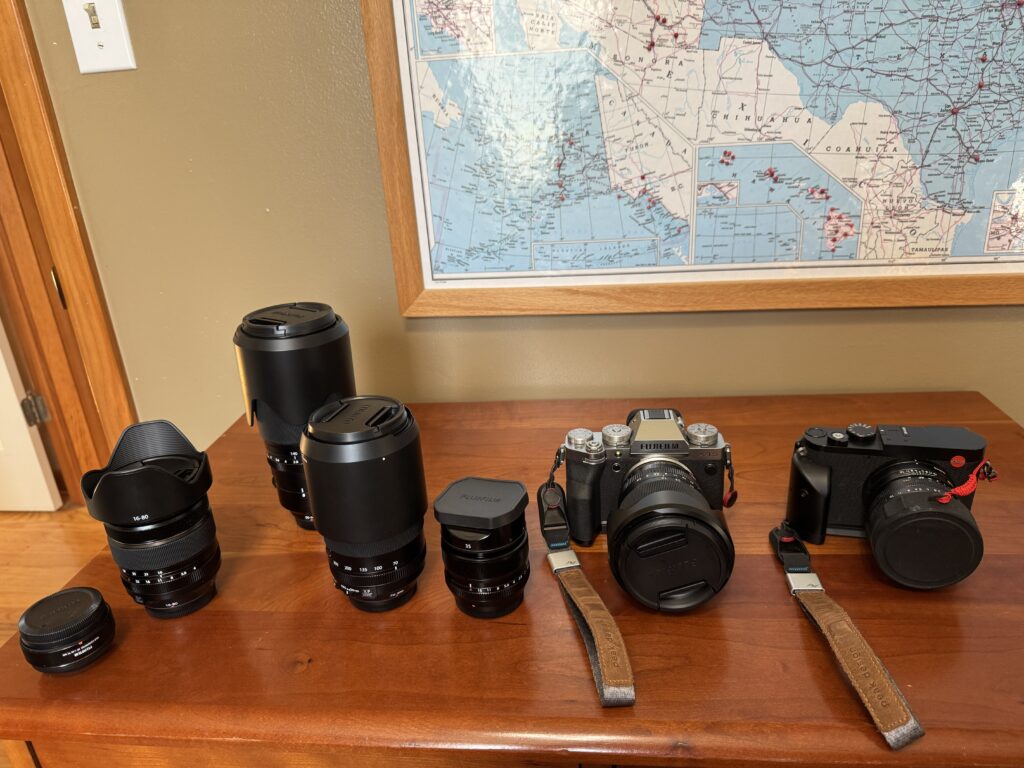
I also bring along a small, empty backpack. If we’re heading out on a short hike and I don’t want the full load, I pack just what I need into the smaller bag. For longer hikes, I bring the full kit. I never, ever leave valuable gear in the car — it’s safer (and honestly more inspiring) to have it with me. I talk about my entire travel photography gear guide if you want more information.
Lessons Learned the Hard Way
Of course, no system is perfect, and I’ve learned some lessons the hard way.
On one trip, I completely forgot to pack a charger for one of my cameras. You don’t realize how much you rely on something until it’s missing. Finding a replacement in a small town took hours, and it meant missed photo opportunities. Now, I triple-check my gear list before every trip and always pack spares where I can.
It was a stressful mistake at the time, but I’ve never forgotten the lesson. Preparation saves frustration.
Why Packing Matters on a 30-Day Trip
Packing for a weekend getaway is easy. Packing for a month on the road is a different story. You’re balancing comfort, practicality, and creativity. You want enough clothing to stay comfortable in changing weather, but not so much that you’re hauling a mountain of luggage. You want enough camera gear to cover every situation, but not so much that you can’t carry it on a trail.
That’s why our system — small suitcases, a clothing rack in the truck, and carefully chosen gear — has become second nature. It allows us to move quickly, stay comfortable, and still capture the images that matter most to me.
At the end of the day, the less time we spend fumbling with luggage, the more time we have to enjoy the trip itself. And that’s what a 30-day road trip is all about.
Regional Highlights for a 30-Day USA Road Trip
Every 30-day trip we take is unique, but one constant is that each region of the U.S. has its own character, its own rhythm, and its own surprises. Sometimes we plan carefully for a specific destination, other times we stumble into something completely unexpected. Both become part of the story.
Northwest: Landscapes on a Grand Scale
The Northwest feels vast — not just in geography but in spirit. One of the highlights for me was Devil’s Tower in Wyoming. I had two reasons for planning an overnight stay inside the park: first, I wanted to photograph the tower at night, with stars swirling above it; second, I wanted to be there at sunrise, when the first light kissed the rock. Both moments were unforgettable.
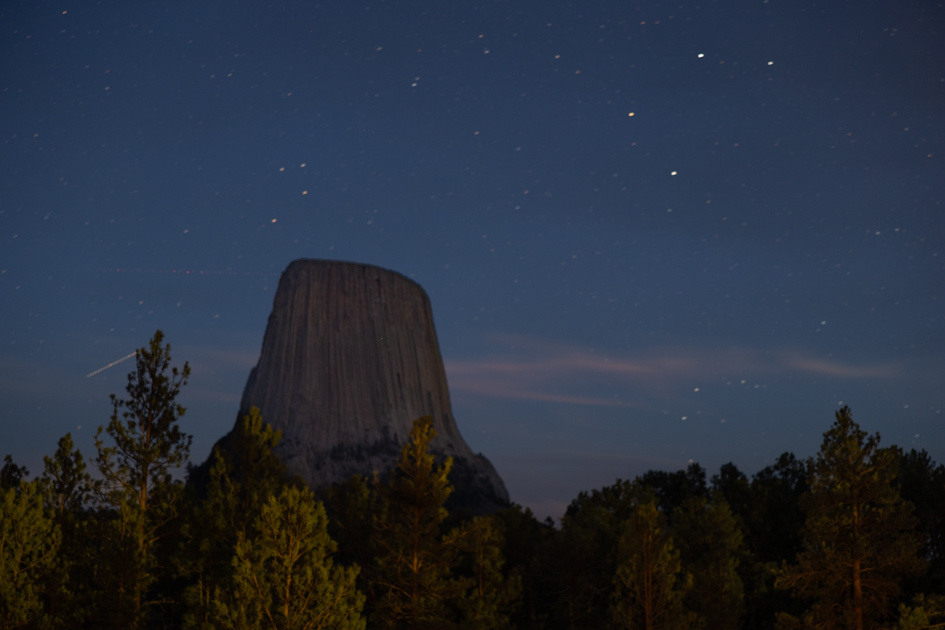
In the morning, we hiked the trail that circles the base of the tower. It’s a relatively easy walk, but what made it extraordinary was watching climbers scale the sheer vertical face. From a distance, they looked like ants inching their way up, but knowing they were people, with ropes and chalk and determination, gave me a whole new perspective on the place.
Then there’s Trillium Lake in Oregon, with Mount Hood rising behind it. I’ll never forget standing there at dawn, the lake calm and reflective, the mountain perfectly mirrored in the water. It was one of those mornings where everything aligns — the light, the quiet, the sense of awe. That photo is still one of my favorites.

The Northwest also gave us unforgettable drives: the Beartooth Highway with its sweeping mountain views, the steaming geysers and vast landscapes of Yellowstone, and the alpine lakes of Glacier National Park. Out there, you feel small in the best possible way.
Southwest: Where History Meets Red Rock
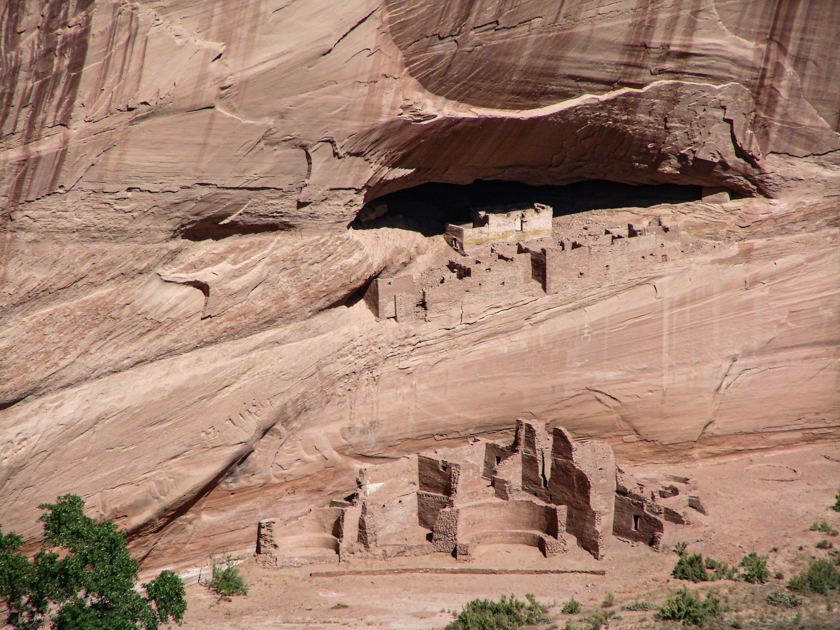
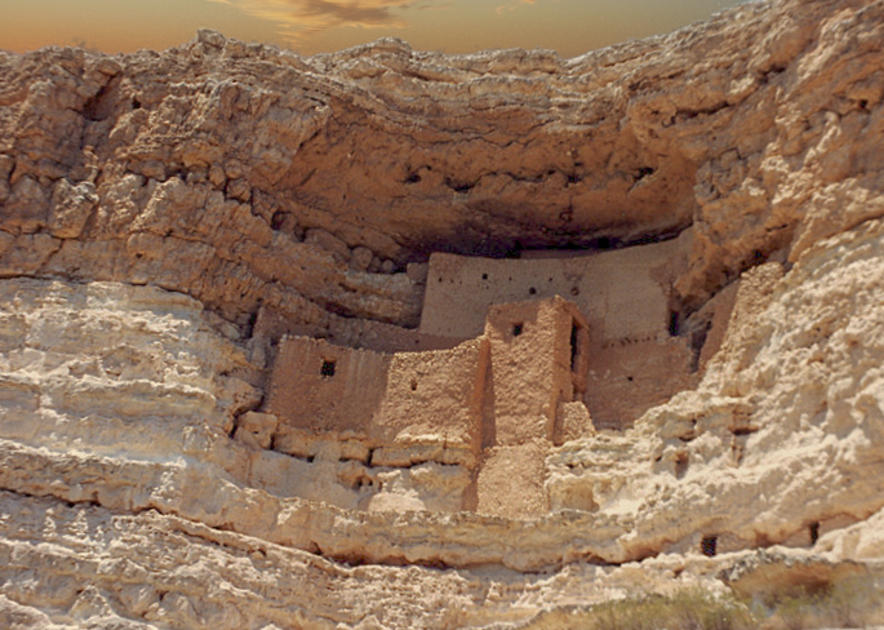
The Southwest is a region of color, texture, and history. On a previous trip, we made sure to stop at Canyon de Chelly, Montezuma Castle, and Petrified Forest National Park. These weren’t random choices; I picked them because I wanted to feel the history of the land.
At Montezuma Castle, standing at the base of those cliff dwellings, I felt connected to the people who had lived there centuries before. Canyon de Chelly, with its towering walls and ancient dwellings tucked into the cliffs, had that same effect. Petrified Forest was something else entirely — walking among ancient trees turned to stone, knowing they’d stood there millions of years ago, was humbling.
On our upcoming trip, we’ve planned for sunrise at Horseshoe Bend and Monument Valley. These aren’t just checkboxes on a list; they’re places I’ve dreamed of photographing. I’ve scheduled our route so we’ll arrive the night before, giving me the chance to capture the early morning light. That’s the kind of detail that makes a road trip feel intentional — it’s not just about seeing something, it’s about experiencing it at its best.
Northeast: Storms, Bridges, and Home
The Northeast is close to home for us, but it’s still full of surprises. I once planned a loop trip in Vermont specifically to photograph covered bridges. In my head, I pictured golden autumn light, crisp skies, and leaves in full color. Instead, it rained. Hard.
At first, I thought the weather had ruined the trip. But then I saw the images: covered bridges under stormy skies, dramatic clouds swirling behind them, wet roads reflecting the light. They turned out to be some of my favorite photos — moody, atmospheric, and completely different from what I’d expected. That trip taught me that not every plan needs perfect weather to succeed. Sometimes imperfection makes the best story.
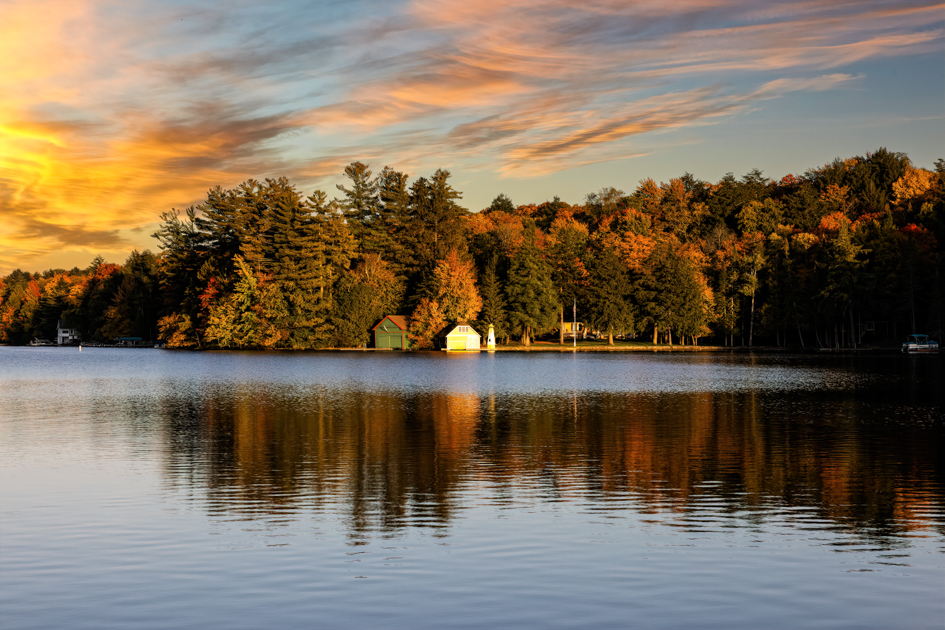
The Adirondacks and Lake Placid also hold a special place in my heart. Being from upstate New York, these places feel familiar yet endlessly inspiring. Quiet mornings by the lake, crisp air in the fall, and the nostalgia of small mountain towns — it’s a reminder that sometimes the beauty you’re searching for is closer than you think.
Southeast: Charm and Simplicity
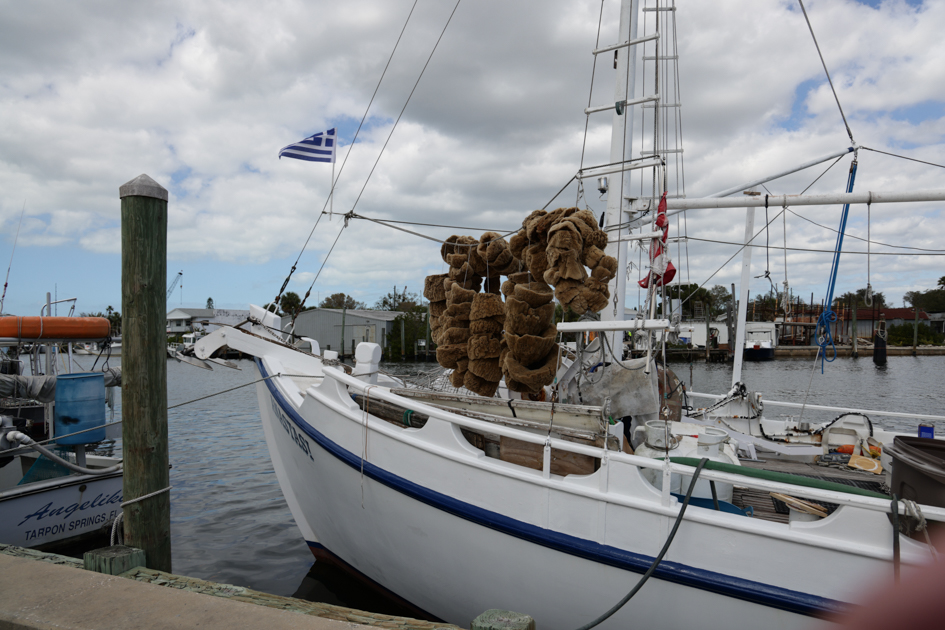
The Southeast has given us some of our most unexpectedly joyful days. Take the Pinellas Trail in Florida. I’ll admit, it didn’t produce the most spectacular photographs. But it gave us something else: memories. We biked long stretches of the trail, stopped for lunch at local restaurants, and simply enjoyed the rhythm of the day. The photos might not have been gallery-worthy, but the moments certainly were.
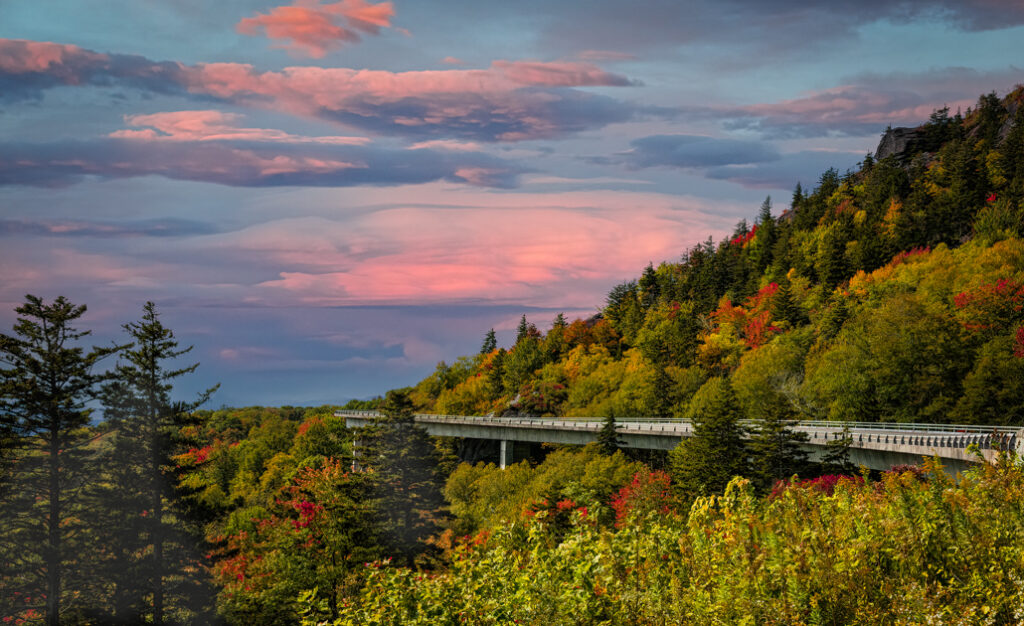
The Blue Ridge Parkway, on the other hand, delivered both beauty and photographs. Driving that winding road feels like flipping through a postcard that keeps getting better. Every overlook offers a new view of misty ridges and rolling hills. The Appalachian region has become one of my absolute favorite places to revisit.
Midwest: Beauty in the In-Between
For many travelers, the Midwest is just the land you cross to get somewhere else. For us, it’s been full of quiet surprises.
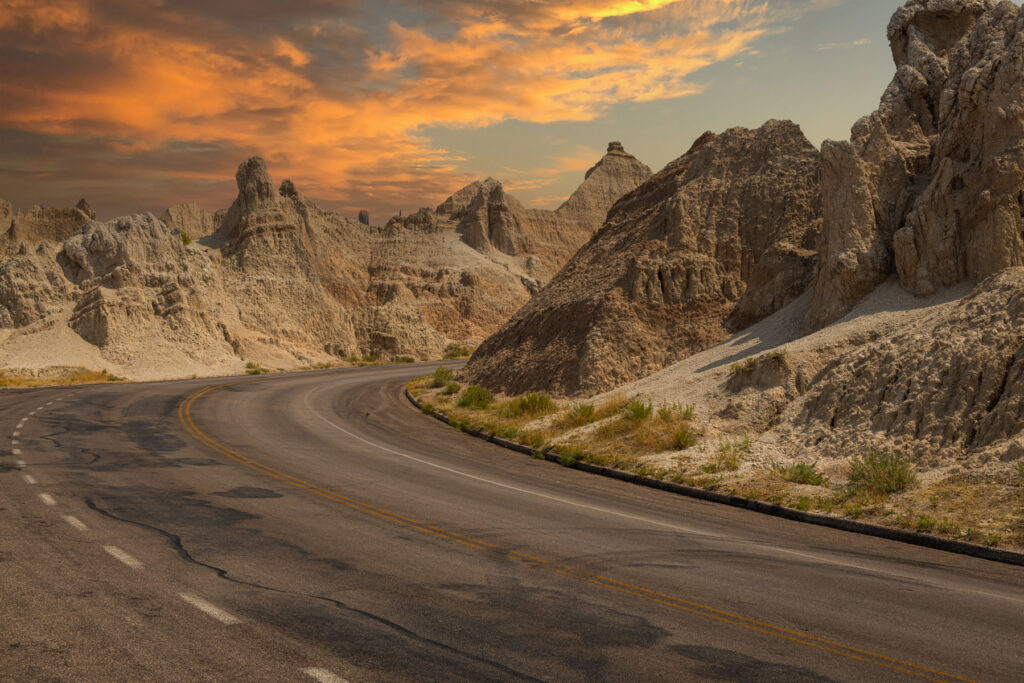
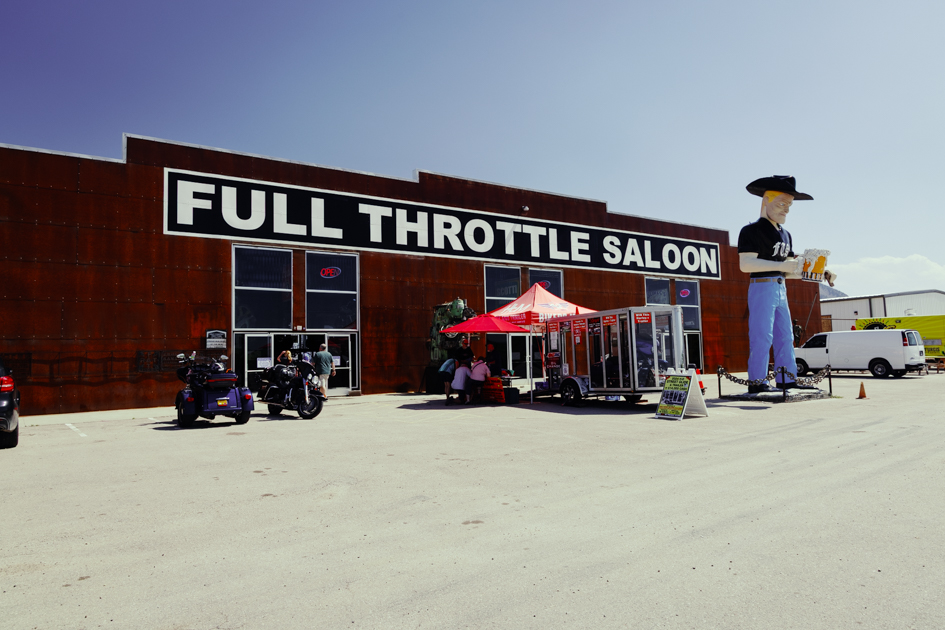
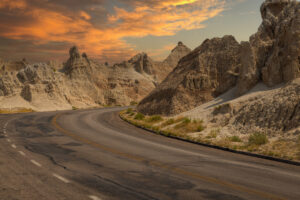
In South Dakota’s Badlands, the land looks like it belongs on another planet — striped buttes, jagged formations, and colors that change with the light. In Ohio’s Hocking Hills, we hiked through caves, past waterfalls, and into lush green forests that felt like hidden worlds. Even Sturgis, South Dakota — famous for its motorcycle rally — showed us a slice of culture that’s as American as it gets.
The Midwest may not always be the “main event” on our road trips, but driving the back roads has revealed beauty we would have missed if we’d stuck to the interstates.
Alaska: Wild and Unforgettable
Nothing prepared me for Alaska. It’s wild, vast, and unpredictable in ways the lower 48 just can’t match.
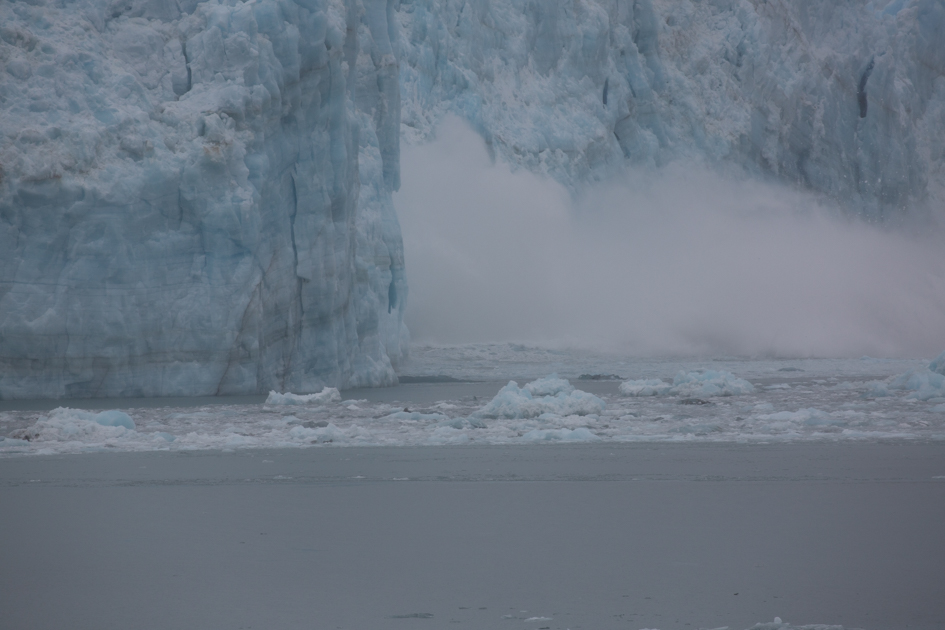
We went whale watching and saw a humpback breach, its massive body rising from the water and crashing back down with a splash that echoed. And we stood before Hubbard Glacier and watched as huge chunks of ice calved into the sea — the sound like thunder rolling across the water.
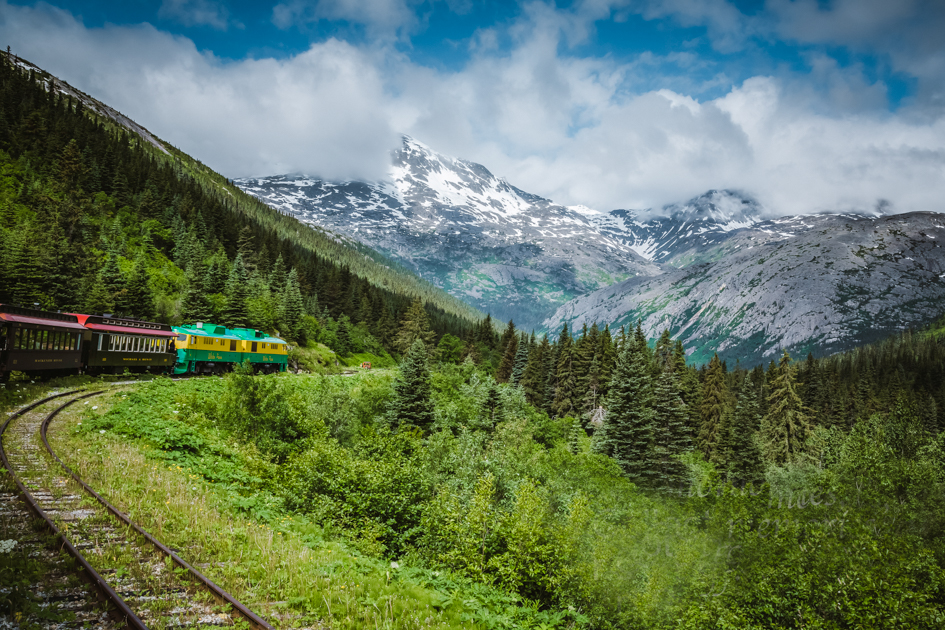
We rode the historic White Pass & Yukon Railroad, winding through mountains with views so dramatic they felt unreal. And in places like Denali National Park and the back roads of Fairbanks, we found a quiet majesty that’s hard to describe. Alaska isn’t a place you just see. It’s a place you feel in your bones.
Hawaii: A World Apart
Hawaii vs. the Caribbean
We’ve been to most of the Caribbean islands, and while each has its beauty, Hawaii is different. The Caribbean gives you beaches. Hawaii gives you everything. It’s almost impossible to describe — the sheer diversity of terrain in one place is astonishing.
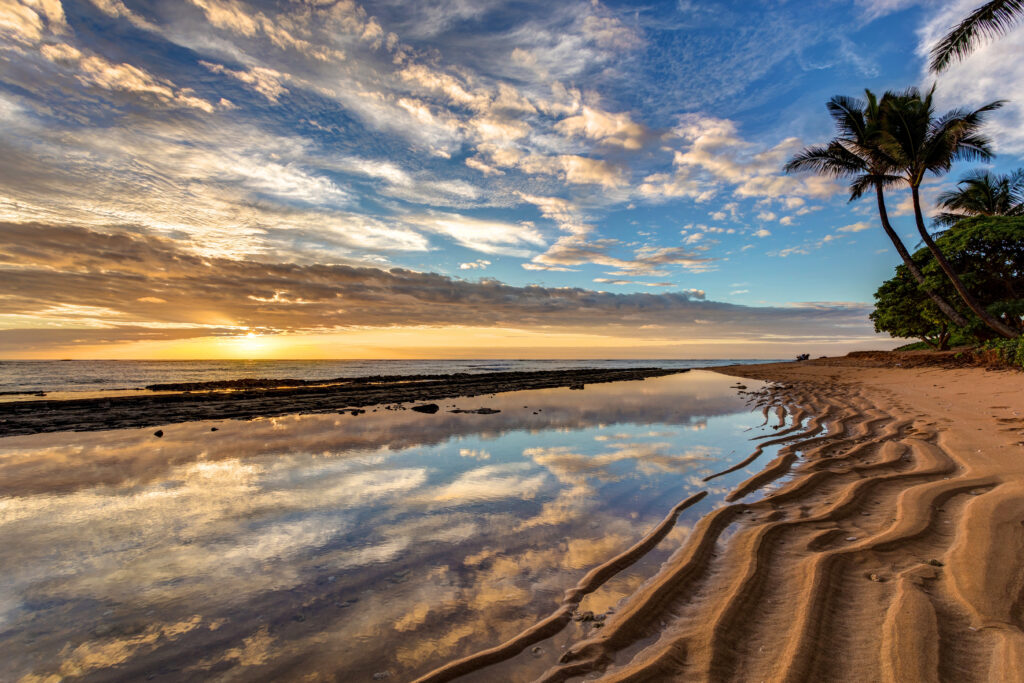
In a single day, you can stand on a black sand beach, hike through a jungle to a waterfall, and watch the sun set over lava rock. Volcanoes, cliffs, rainforests, canyons, rolling ranchland, and yes, beautiful beaches — it’s all there.
A Local Experience in Kauai
One of my favorite memories is from Kauai. While exploring, a local told us about a few beaches we “had to see.” These weren’t lined with hotels or crowded with tourists. They were natural, open, and free.

We drove out and found groups of locals who had set up for the entire day — tents, coolers, grills, music. Families and friends together, kids running in and out of the water, laughter carrying on the breeze. What struck me most wasn’t just the scenery, but how welcoming they were. They greeted us like we belonged there, asked us where we were from, and even offered us food. That day wasn’t about photography. It was about connection.
Photography in Hawaii’s Landscapes
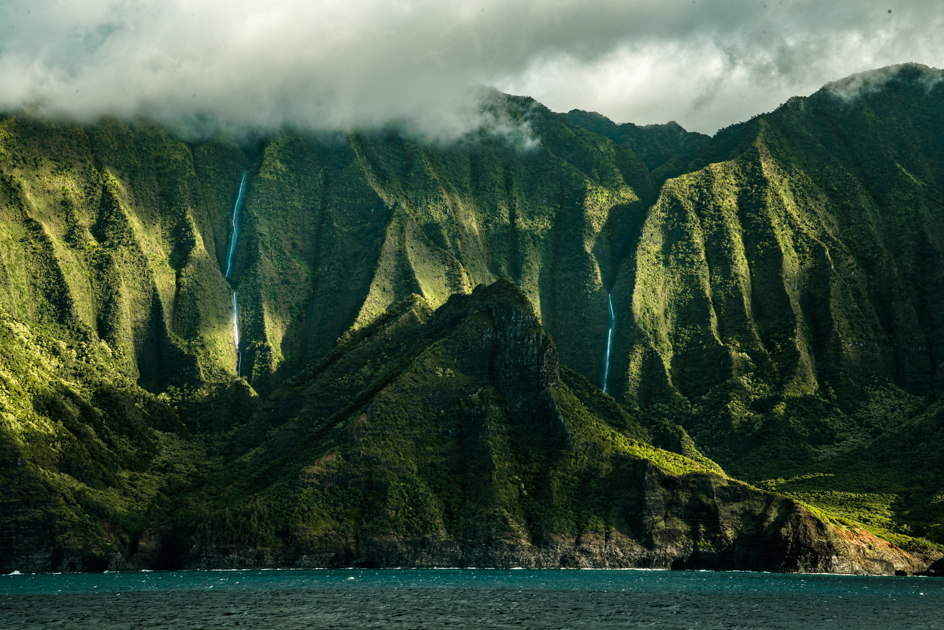
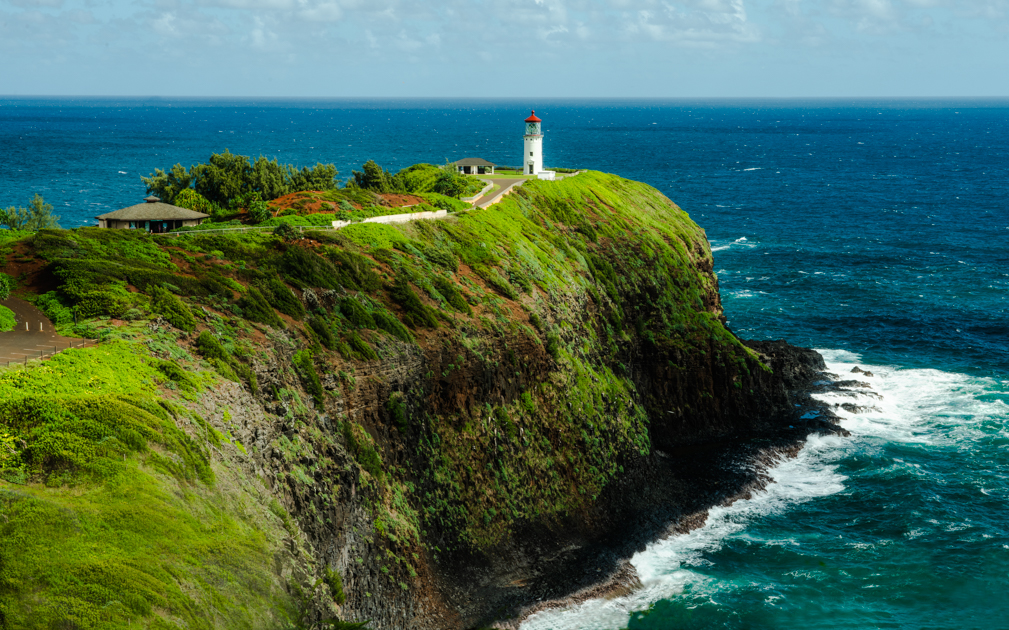
Of course, Hawaii also gave me some of my favorite images: the Napali Cliffs rising sheer from the ocean in Kauai, the winding Road to Hana in Maui with waterfalls around every turn, the fiery landscapes of Volcanoes National Park on the Big Island, and the soft light at the Kilauea Lighthouse. Sunrise and sunset were magical, but even midday had a beauty unlike anywhere else. Even though Hawaiʻi sits far from the mainland, hikes like the Kolekole Pass Trail belong on any dream itinerary for travelers chasing hidden landscapes.”
Hawaii is more than a destination. It’s an experience that stays with you long after you leave.
Sample 30-Day Road Trip Itinerary
Every trip is different, but they all share one thing: our itineraries are loose and laid back. We always have anchor points, but we leave plenty of space for surprises. A 30-day road trip isn’t about racing through states; it’s about slowing down enough to notice the details along the way.
Our Loose, Laid-Back Style
People sometimes ask me if I create detailed, day-by-day schedules for a month-long trip. The answer? Absolutely not.
I map out a framework with key destinations — the “musts” like Horseshoe Bend at sunrise, or a stretch of the Blue Ridge Parkway. Then I connect those with a route that makes sense. But beyond that? It’s flexible.
We never know what we might find. Maybe we’ll pass a sign for a scenic overlook that wasn’t on the map, or a little café that smells too good to skip. That’s the whole point of driving instead of flying. You don’t just get where you’re going; you get to discover everything along the way.
Custer State Park: A Micro-Itinerary
One of the best examples of our style was in Custer State Park, South Dakota. We spent several days there, and each unfolded differently.
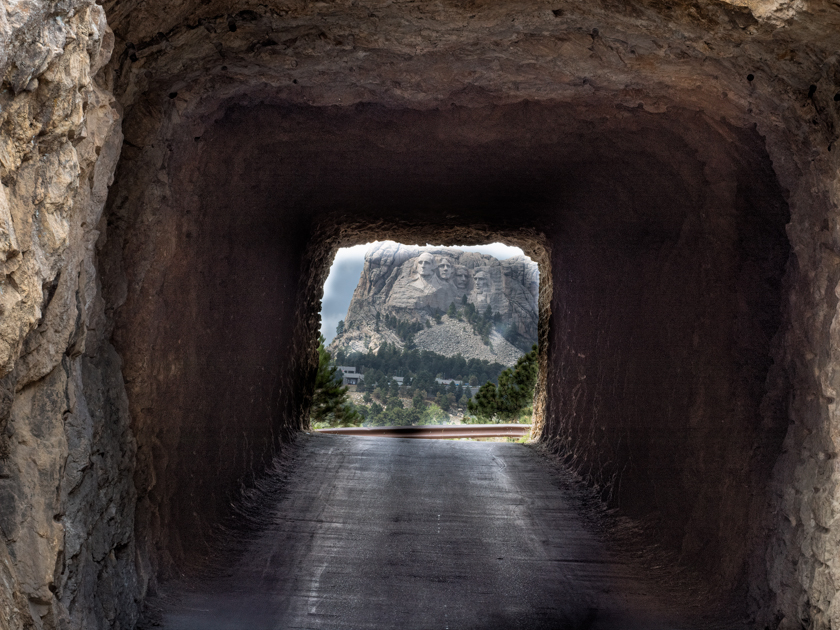
- Day 1 – Iron Mountain Road: We set out with no agenda beyond the drive itself. The winding road took us through tunnels and over pigtail bridges, and then suddenly, Mount Rushmore appeared in perfect frames through the trees. Now, Mount Rushmore doesn’t exactly fit into my philosophy of seeking “natural beauty,” but seeing it emerge unexpectedly was still striking. That drive was less about a destination and more about being surprised by what the road revealed.
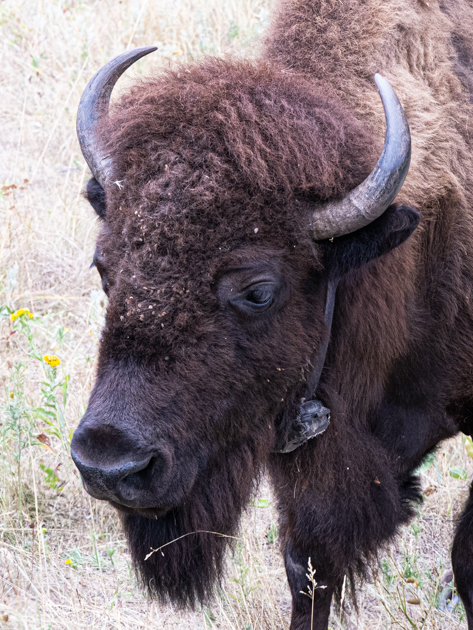
- Day 2 – Wildlife Loop: The next day, we decided to explore the park’s famous wildlife loop. The scenery itself was enough — rolling hills, wide open prairies, and skies that seemed to stretch forever. But then we spotted wildlife. At one point, a buffalo wandered so close to my window I could have leaned out and touched him. We also watched pronghorn moving gracefully across the fields. It was one of those days where you just sit back and marvel at the world around you.
- Day 3 – Needles Highway: Another day we drove the Needles Highway. The rock formations there look like sculptures, tall and slender spires of stone that rise dramatically from the earth. Driving through the narrow tunnels carved into the rock was both thrilling and humbling. I remember stopping the car, standing there with my camera, and thinking: this is exactly why we take the back roads.
Each night, we’d return to the town of Custer, where we ate at local restaurants and soaked in the small-town atmosphere. Those evenings, sharing meals and stories with locals and fellow travelers, added as much to the trip as the scenery itself.
How a 30-Day Trip Might Flow
If you were to peek at one of our typical itineraries, it wouldn’t look like a military schedule. It would look more like a rhythm — a balance between long drive days, rest days, hub stays, and photography mornings.
Here’s how it might unfold:
- Week 1 – The Southeast & Appalachians: Start in the Smoky Mountains, wander along the Blue Ridge Parkway, stop in mountain towns, and spend a few days soaking in the Appalachian atmosphere.
- Week 2 – Midwest Crossings: Explore Hocking Hills in Ohio, drive into South Dakota for the Badlands, and settle for several nights in Custer State Park.
- Week 3 – The Northwest Wonders: Spend time in Yellowstone and Glacier, drive the Beartooth Highway, and perhaps add a few days on the Oregon coast. These are long drives, but worth every mile.
- Week 4 – Southwest Highlights: Visit Canyon de Chelly, Montezuma Castle, Petrified Forest, Horseshoe Bend, and Monument Valley.
This isn’t a rigid schedule. It’s a flow. Some days we drive 500 miles, other days we drive 50. Some mornings I’m up at 5:00 a.m. for sunrise shots, other mornings we linger over coffee. That balance is what makes thirty days work — it’s structured enough to move us forward, but flexible enough to let us breathe.
Why Looseness Works
The beauty of a 30-day itinerary is that you don’t have to cram. On a one-week trip, you feel pressure to see everything. On a month-long trip, you have time to savor.
If we fall in love with a place, we stay an extra day. If weather changes our plans, we adapt. And if something surprising catches our attention, we follow it. That freedom — to linger, to wander, to change course — is what makes a road trip different from any other kind of travel.
Practical Tips for 30-Day Road Trips
Over the years, I’ve picked up little tricks that make long road trips smoother, less stressful, and far more enjoyable. These aren’t complicated, but when you’re doing something for thirty days straight, the small habits make the biggest difference.
Keep Your Camera Within Reach
My camera never rides in the back seat or the trunk. It sits right next to me. Why? Because you never know what might appear outside your window.
On the Wildlife Loop in Custer State Park, I had my Leica sitting on my lap when a buffalo suddenly appeared — so close I could have reached out and touched him. If my camera had been packed away, I would have missed the shot (and the thrill). The same goes for pronghorn darting across the fields or unexpected light breaking through the clouds. Road trips are full of surprises, and you need to be ready for them.
Build in Rest Days
It’s tempting to plan something for every day, but thirty days is a marathon, not a sprint. We schedule days with no major stops — sometimes just a morning to linger in a small town, or an afternoon for laundry and recharging. These rest days keep us from burning out and make the busy days even more enjoyable.
Focus on Fewer Places, Go Deeper
Early on, we tried to pack too much into a single trip. We wanted to see everything. But all it did was leave us exhausted. Now, we focus on fewer destinations but spend more time in each. That’s how you discover the hidden diner, the local park, or the hiking trail that wasn’t in the guidebook.
Use Hotel Points Strategically
Those Hilton cards? They’re worth their weight in gold on a long trip. Not just for the free nights, but for the perks — upgrades, breakfast, late checkouts. A complimentary breakfast for two may not sound like much, but when the bill would have been $70 (as it was at Mirror Lake Inn in Lake Placid), you realize how much it adds up.
Stay Flexible
Plans are great, but detours are often better. Our stormy Vermont covered bridge photos proved that bad weather can make better images. A tip from a local on Kauai led us to beaches we’ll never forget. If you’re too rigid, you’ll miss these moments.
Don’t Forget the Essentials
It sounds obvious, but double-check your gear. I once forgot a camera charger, and let’s just say finding one in a small town wasted time I’ll never get back. Now I always pack spares and backups for anything essential — chargers, batteries, and memory cards. The peace of mind is worth it.
Conclusion: Why 30 Days Is Just Right
After years of exploring America’s back roads, I can say with confidence that thirty days is the perfect amount of time. It’s not arbitrary. It’s the rhythm that works for us.
Thirty days is long enough to escape winter and feel a real shift in season. It’s long enough to drive west to Montana or south to the Florida Keys and not feel like we’re racing. It’s long enough to stay in one place for several days and still see plenty along the way. But it’s also short enough that by the end, we’re looking forward to home — to our own bed, our own kitchen, and the comfort of familiar routines.
More importantly, thirty days gives us space to slow down. It’s not about checking boxes or racing through states. It’s about sitting in a diner and chatting with locals, about watching storm clouds roll over a covered bridge, about listening to the sound of ice breaking off a glacier, or about feeling like part of the community on a Kauai beach.
These are the things that stay with me. Not the miles driven or the number of stops, but the moments — big and small — that remind me why travel matters.
So if you’ve ever dreamed of taking a month-long road trip, I hope our story inspires you to plan your own. Don’t be afraid to stretch beyond two weeks. Give yourself time. Build in rest days. Stay flexible. And most of all, be ready for the surprises along the way. Because on the back roads of America, you never know what you might find.
Explore More
If you’re ready to start chasing your own version of the road less traveled, here’s where to go next. These guides and stories will help you plan your trip, inspire your photography, and remind you why the back roads always have more to say.
🌍 Explore by Region
Discover the landscapes, small towns, and scenic drives that make each corner of the country unique.
🏔️ Alaska Region Travel Guides – Wild landscapes, glaciers, and unforgettable wildlife.
🌺 Hawaii Region Travel Guides – Island adventures across Oʻahu, Maui, Kauaʻi, and the Big Island.
🌲 Northwest Travel Guides – Evergreen forests, coastal highways, and hidden waterfalls.
🏜️ Southwest Travel Guides – Desert light, red rock canyons, and timeless back roads.
🌄 Appalachian Region Travel Guides – Mountain fog, winding parkways, and small-town charm.
🌻 Midwest Travel Guides – Quiet beauty, open skies, and the heart of small-town America.
🌾 Southeast Travel Guides – Covered bridges, coastal byways, and southern hospitality.
🍁 Northeast Travel Guides – Fall colors, rugged coastlines, and storybook towns.
📸 Explore by Theme
Dive deeper into the kind of travel that inspires you most.
🚗 Scenic Drives and Road Trips – From epic cross-country routes to forgotten byways.
🏞️ Regional Back Roads and Byways – Hidden gems and quiet corners off the main map.
🧭 Epic Road Trips – Month-long journeys that change how you see the road.
🛠️ Practical Travel Tips for Photographers – Smart advice for staying prepared and creative on the move.
🧳 Safety, Ethics, and Respectful Travel – Traveling with awareness and appreciation for every place you visit.
✨ Explore by Inspiration
Because travel isn’t just about where you go — it’s about what it teaches you.
🦅 The Art of Wildlife Photography – Lessons in patience and connection from the natural world.
💬 Storytelling and Creativity – Find your voice behind the lens.
🚙 My First 30-Day Road Trip – The adventure that started it all..
Hit the back roads with me—get road-trip inspiration, hidden gems, and photography stories from across the USA!




I really like how you are slowing down and spending time really exploring your destinations, such as 3 days in Custer. So many people do that in 1/2 a day, but it’s worth the extra time.
What an incredible guide! I love long USA road trips — 30 days sounds like the perfect balance between freedom and depth. I especially like your idea of focusing on fewer places and exploring them more deeply; that’s exactly how we prefer to travel. The regional highlights and practical tips make this post both inspiring and super helpful for planning future adventures!
What great tips for long term road tripping in the U.S.! I especially love the idea of picking a hub. It’s so much better than checking out of hotels every day.
I’ve always wanted to do a 48 state roadtrip (maybe with a camper van) and this 30 day usa road trip guide has so many incredible trips! I really need to start planning!
I love your post! We are very similar – love long car journeys without much planning. We did 60 days for Tasmania and Nw Zealand. You are right – road trips by car have so much flexibility of staying longer or moving on and get to see hidden gems in the form of little villages, landscapes and adventure.
I’ve never been interested in a road trip in the US, but this guide is really piquing my interest. Additionally, your photos are gorgeous.
This is my kind of list! And definitely sounds like a 30 day road trip should be our celebration for that youngest kid graduating high school in 6 years. So many details… And I definitely agree with keeping the days for surprise bc you might miss awesomeness 🙂
What a fantastic trip! The photos are stunning and the information is beyond helpful! Great Post!
Never been on a 30-day holiday but post-retirement a 30-day road trip sounds cool. And USA is the place to do it. I would love a loose itinerary taking in some national parks with big cities and small towns in between.
Your post makes me want to return to the states and do a few more road trips! There’s definitely no shortage of it in the country. I totally agree with you, 30 days is a sweet spot, in between not feeling rushed or getting a bit burnt out.
This post is perfect and I agree that 30days feels like freedom! I love the information you included around packing and staying in one place longer. I feel like this made me rethink how I travel and I need to escape during the NY winter.
I’ve never done a road trip of this scale, but I’d love to some day. Most of the travel I do is by car because I love being able to stop along the way if something catches my attention. As you said, there’s much more freedom in it. Also, I love that you use a giant paper map to help you plan!!
30 days is indeed perfect, you can slow down, but still see and experience a lot. The USA is perfect for road trips. We’ve done road trips in the USA varying from 10 days till 39 days. And loved them all.
Hello! What a decent trip and what an inspiring itinerary! I guess you made a lot of work before starting your journey because the route needs to be planned in detail, didn’t you?
You initial inspiration sounds a lot like mine, as I originally came from northwest PA, and experienced the same dreary and what felt like never-ending winters. I loved all of the detailed information you put in this post about each location and area and why you decided on a 30 day adventure- which sounds like the best length of time. This post has inspired me to add a few more stops on my bucket list!
My husband and I have driven across the states a bunch of times. I’m going to add some of these stops to our next route!