The Best Lenses for the Fuji X-T5: My Travel Photography Go-To’s
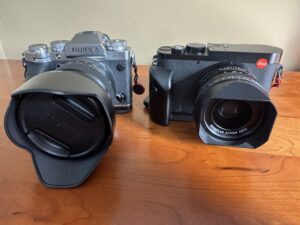
When I first picked up the Fuji X-T5, I thought, “Wow—40 megapixels in an APS-C body? This camera is going to catch every crack in the sidewalks of New York City if I’m not careful.” The X-T5 is a pixel monster, which is a blessing for travel photography—every rock in the Grand Canyon, every neon sign in Vegas, and even every feather on a bald eagle in Alaska comes through tack sharp.
When I plan my trips, I don’t just think about one lens at a time—I think about the whole kit. (If you’re curious, I’ve written a full post on building a travel photography system that shows how everything fits together for the road.)
But with great resolution comes great responsibility: you can’t just slap on any old lens and expect it to keep up. The wrong glass will make that high-res sensor yawn. So let’s talk about the best Fuji X-T5 lenses for travel photography in the U.S.—lenses that do justice to the detail-packed sensor and don’t make your backpack feel like you’re hiking the Appalachian Trail with a sack of bricks. Check out my complete travel photography gear guide for more information.
👉 Related post: Read my full Fuji X-T5 review and travel photography setup guide here.
1. Fujinon XF 16-55mm f/2.8 R LM WR – The “Do-It-All” Workhorse
If I could only take one lens on a cross-country U.S. road trip, this would be it. The 16-55mm f/2.8 is basically Fuji’s version of a pro-grade standard zoom. Yes, it’s a bit beefy, but it covers just about every scenario.
- Why it’s great for travel: From capturing the sweep of the Golden Gate Bridge at 16mm to candid portraits on Bourbon Street at 55mm, this lens handles the everyday and the extraordinary.
- Image quality: It’s razor sharp edge-to-edge and keeps up with the X-T5’s demanding sensor. Whether you’re photographing the delicate textures of Monument Valley or cityscapes from the Empire State Building, the detail is unbeatable.
- Weather sealing: Perfect for surviving those Florida downpours or the dust storms that sneak up on you in Arizona.
Think of it as the Route 66 of lenses—classic, reliable, and built to take you everywhere. If I had to choose just one lens to carry while driving coast to coast, this would be riding shotgun.
2. Fujinon XF 16-80mm f/4 R OIS WR – The Lightweight Explorer
If the 16-55mm f/2.8 is the workhorse, the 16-80mm f/4 is the easygoing cousin who still shows up when you need them. It stretches your reach out to 80mm and comes in a package light enough that you don’t curse yourself halfway up a trail in Zion National Park.
- Why it’s great for travel: It’s versatile for nearly every travel situation—think wide landscapes at Glacier National Park, street scenes in Charleston, and tighter details at Mount Rushmore.
- Optical Image Stabilization: With up to 6 stops of OIS, you can handhold while photographing the neon of Times Square at night without turning your photo into abstract art.
- Sharpness: While it’s not quite as clinically sharp as the 16-55, it holds its own. On the X-T5, you’ll have crisp detail of Glacier National Park granite and subtle textures in the Appalachian woodlands.
This is the lens I recommend when you want one-lens simplicity—especially if your trip involves planes, trains, and hikes where weight really matters.
3. Fujinon XF 23mm f/1.4 R LM WR – The Street & Storyteller
Every U.S. travel photographer needs a good “walk-around” lens, and for me, that’s the 23mm f/1.4 (about 35mm full-frame equivalent). It’s small, light, and feels just right for telling stories.
- Why it’s great for travel: Perfect for capturing the bustle of Pike Place Market in Seattle, the jazz musicians on Frenchmen Street in New Orleans, or taco trucks in Austin.
- Low light: That wide aperture is a lifesaver when you’re wandering the Vegas strip at night or inside historic taverns in Boston.
- Resolution-friendly: Redesigned to pair with high-res sensors, this lens takes full advantage of the X-T5.
The 23mm is that lens you bring when you want to be in the moment with your photography—not zooming and fussing. It’s the lens that lets me connect with a scene, whether I’m chatting with locals at a farmers’ market or sneaking a candid photo on the street.
👉 Related post: Check out my guide to off-the-beaten-path destinations in the USA, shot mostly with the Fuji X-T5.
4. Fujinon XF 33mm f/1.4 R LM WR – The Portrait Traveler
Sometimes the story of your travels isn’t about the place—it’s about the people. That’s where the 33mm f/1.4 shines. At 50mm full-frame equivalent, it gives a natural, flattering perspective.
- Why it’s great for travel: Whether you’re photographing a rancher in Wyoming, a shop owner in Santa Fe, or a surfer in California, this lens delivers portraits that feel alive.
- Sharpness: Built for high-res cameras, it captures every smile line and freckle. On the X-T5, it’s almost too honest (your friends might say “don’t zoom in that close, please”).
- Build: Compact, weather-sealed, and perfect for traveling anywhere from humid Florida to the deserts of Nevada.
When I want portraits that feel intimate yet natural, this is the lens that earns its keep.
5. Fujinon XF 35mm f/1.4 R – The Classic Charmer
The 35mm f/1.4 R is one of Fuji’s original lenses, and it still has an almost cult-like following. Why? Because it has character—the kind of rendering that makes photos feel alive, even if it’s not as “perfect” as Fuji’s newer glass.
- Why it’s great for travel: At about a 53mm full-frame equivalent, it’s wonderfully versatile. I’ve used it for city streets in San Francisco, portraits in Santa Fe, and food shots in New Orleans. It’s that “one lens” you could travel with and never feel boxed in.
- The look: Images from the 35mm f/1.4 have a dreamy, almost cinematic vibe. The bokeh is buttery, the color rendering has warmth, and there’s this intangible quality people call “pixie dust.”
- Compact & discreet: It’s small and light, perfect for slipping into a jacket pocket when wandering a farmers’ market in Vermont or exploring side streets in New York.
- Trade-offs: Autofocus is slower than Fuji’s newer lenses, and it’s not weather-sealed. But honestly, most fans don’t care—the charm far outweighs the quirks.
The 35mm f/1.4 isn’t about technical perfection—it’s about feel. If the XF 33mm f/1.4 is the clinical surgeon, the XF 35mm f/1.4 is the jazz musician, bending notes and adding soul to every shot.
6. Fujinon XF 16mm f/1.4 R WR – The Landscape Lover
If landscapes are your thing, the 16mm f/1.4 is a must-pack. It’s wide, fast, and sharp enough to capture the grandeur of America’s wild places.
- Why it’s great for travel: Capture the vastness of the Grand Canyon, the granite cliffs of Yosemite, or the spires of Bryce Canyon.
- Low light champ: The wide aperture makes it fantastic for astrophotography. I’ve used it for Milky Way shots in Arches National Park and can confirm—jaw-dropping results.
- Detail monster: Even wide open, the detail is crisp enough to make you want to print big.
This is the lens that makes me linger long after sunset at Yellowstone or set an early alarm to watch first light hit the Rockies.
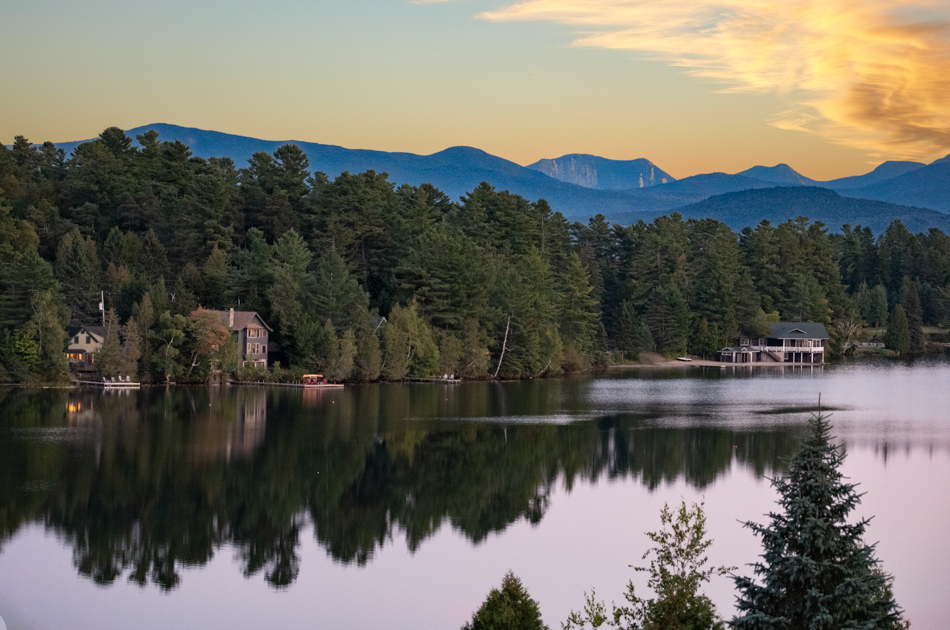
👉 Related post: See my gallery of fall colors in the Adirondacks, shot with wide Fujinon glass.
7. Fujinon XF 70-300mm f/4-5.6 R LM OIS WR + 1.4x Teleconverter – The Wildlife Wanderer
At first, I didn’t think I needed a long lens for travel. Then I went to Yellowstone and saw a grizzly across the valley. My 23mm? Utterly useless.
The 70-300mm solves that problem, and when paired with Fuji’s 1.4x teleconverter, you’ve got serious reach—out to 420mm (630mm full-frame equivalent).
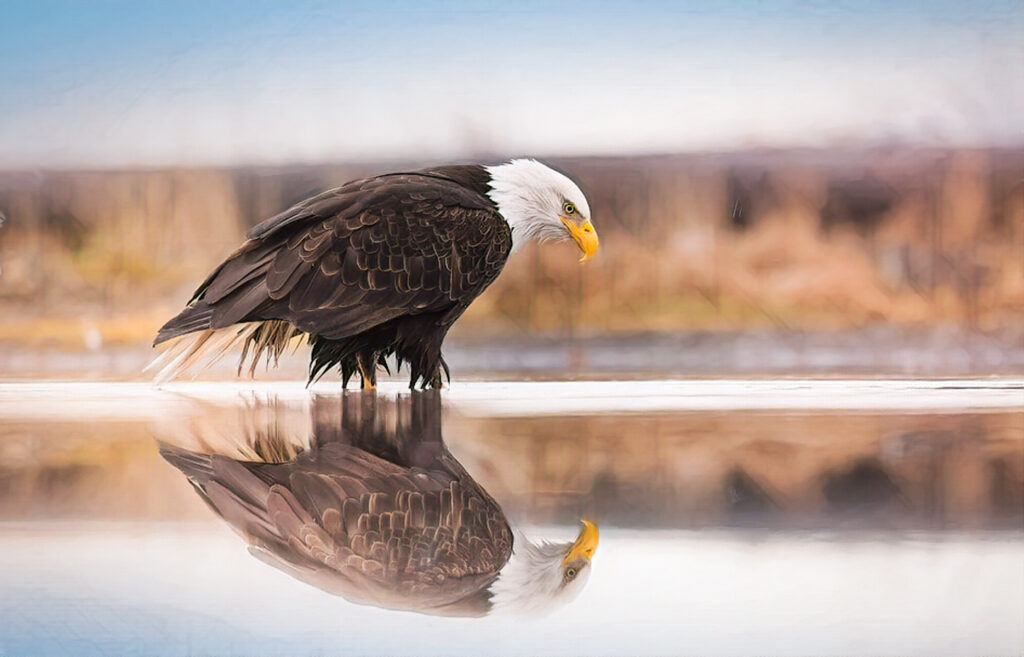
- Why it’s great for travel: Perfect for bald eagles in Alaska, bison in South Dakota, or sea lions on the Oregon coast.
- Teleconverter magic: Compact and light, yet powerful enough to make wildlife approachable without intruding on their space.
- Image stabilization: Great for handheld shots while tracking pelicans in Florida or surfers in California.
Wildlife Photography with the Fuji X-T5
One of the joys of traveling the U.S. is the wildlife. Elk in Rocky Mountain National Park, dolphins in the Gulf of Mexico, wild horses in Assateague—this combo lets you capture them all with stunning detail. And because you can keep your distance, you’re safer and the animals stay wild.
👉 Related post: Read my full Masterguide to the Art of Wildlife Photography
Honorable Mention: Fujinon XF 18-55mm f/2.8-4 R LM OIS
Yes, it’s a kit lens. But Fuji’s 18-55mm is not the kind of kit lens you leave in the closet. It’s sharp, compact, and surprisingly capable.
If you’re strolling the streets of Boston, exploring Denver for a weekend, or flying carry-on only to Miami, this lens is a reliable all-rounder. And with built-in stabilization, it handles low light better than you’d expect.
Building a Travel Photography System
Of course, choosing the right lenses is only one piece of the puzzle. Travel photography is about having a system that works together—camera, lenses, accessories, and even how you pack them. When everything fits your style and your trips, you’ll spend less time digging through your bag and more time actually making photos. If you want to dive deeper into how I put together a lightweight but powerful setup (and how you can too), check out my full guide on building a travel photography system.
Final Thoughts
The Fuji X-T5 is a dream camera for travel photography—lightweight, weather-sealed, and boasting a sensor that rivals full-frame cameras. But to get the most out of it, you need lenses that match its potential.
For me, the combo often looks like this: 16-55mm f/2.8 for versatility, 23mm f/1.4 for cities and street shots, 35mm f/1.4when I want that classic Fuji magic, and the 70-300mm with the 1.4x teleconverter for wildlife in Yellowstone or Alaska. But honestly, any of the lenses above can help you tell your story.
Because at the end of the day, travel photography in the U.S. isn’t about carrying every piece of glass you own—it’s about capturing the moment, the memory, and the magic of the place you’re in. And if your shoulders survive a week in Yosemite with your kit intact? Consider that a win.
Hit the back roads with me—get road-trip inspiration, hidden gems, and photography stories from across the USA!