Introduction – The Balancing Act of Travel and Photography
There’s a special kind of rhythm that comes with traveling as a photographer. You’re chasing light, stories, and miles all at once — part explorer, part storyteller, part logistics coordinator. Over the years, I’ve learned that photographing on the road isn’t just about finding the perfect spot at sunrise or capturing that one golden hour shot. It’s about making sure your batteries are charged, your gear is organized, and your plans have enough flexibility to let serendipity happen. This post is about the Practical Travel Tips for Photographers.
Travel photography isn’t always glamorous. There are moments when you’re juggling camera gear at airport security or trying to repack your bag in the backseat of a rental car while the light changes outside. But that’s also what makes it so rewarding — those small, imperfect moments where preparation meets adventure.
In this post, I’m sharing the practical travel tips that keep me sane and creative on the road — the kind that help you spend less time digging through your gear bag and more time behind the lens. If you’re new to this side of photography, you might also want to check out my cornerstone post, Mastering Travel Photography: Tips and Tutorials for Capturing the Road Less Traveled for a broader overview of how I approach the art and mindset of travel shooting.
Planning Ahead for the Journey
Every successful photo trip begins long before you hit the road. For me, the planning stage is as much a part of the adventure as the trip itself. I start by looking for stories hidden between the lines of the map — those side roads, small towns, and unexpected landscapes that tell a deeper story than the typical postcard view.
I use a mix of resources: Roadtrippers for mapping scenic routes, Google Earth for visual scouting, and local Facebook groups for tips from people who know the area best. But my favorite way to find inspiration is still good old-fashioned curiosity — following that winding road that doesn’t seem to lead anywhere until suddenly, it does.
I also think about light before I go. A place might be stunning at midday, but it’s rarely photogenic. Sunrise and sunset are my guiding hours, and tools like PhotoPills or The Photographer’s Ephemeris help me plan around shadows and direction of light. Still, I always leave room for the unexpected. The best photos usually happen when plans go sideways. For a deeper look at how I plan my routes and photo stops, visit How I Plan and Photograph the Perfect USA Road Trip.
If you’re just starting to build your own approach to travel research, take a look at my cornerstone, How I Find Off the Beaten Path Destinations in the USA. It’s where I share my favorite methods for discovering those hidden places that often turn into the highlight of a trip.
💡 Pro Tip: Plan Light, Pack Lighter
Don’t plan every stop to the minute — and don’t carry every piece of gear “just in case.” Flexibility leaves space for creativity, and a lighter bag means you’ll actually stop and shoot instead of thinking about how heavy your backpack feels halfway up a trail.
Packing Smart – Keeping Gear Light but Ready
Packing for a photography trip is a balancing act. You want enough gear to handle different conditions, but not so much that it slows you down or takes the joy out of exploring. I’ve learned (the hard way) that when my bag is too heavy, I take fewer photos — and I enjoy the trip a lot less.
I start by asking myself one question: What kind of trip is this?
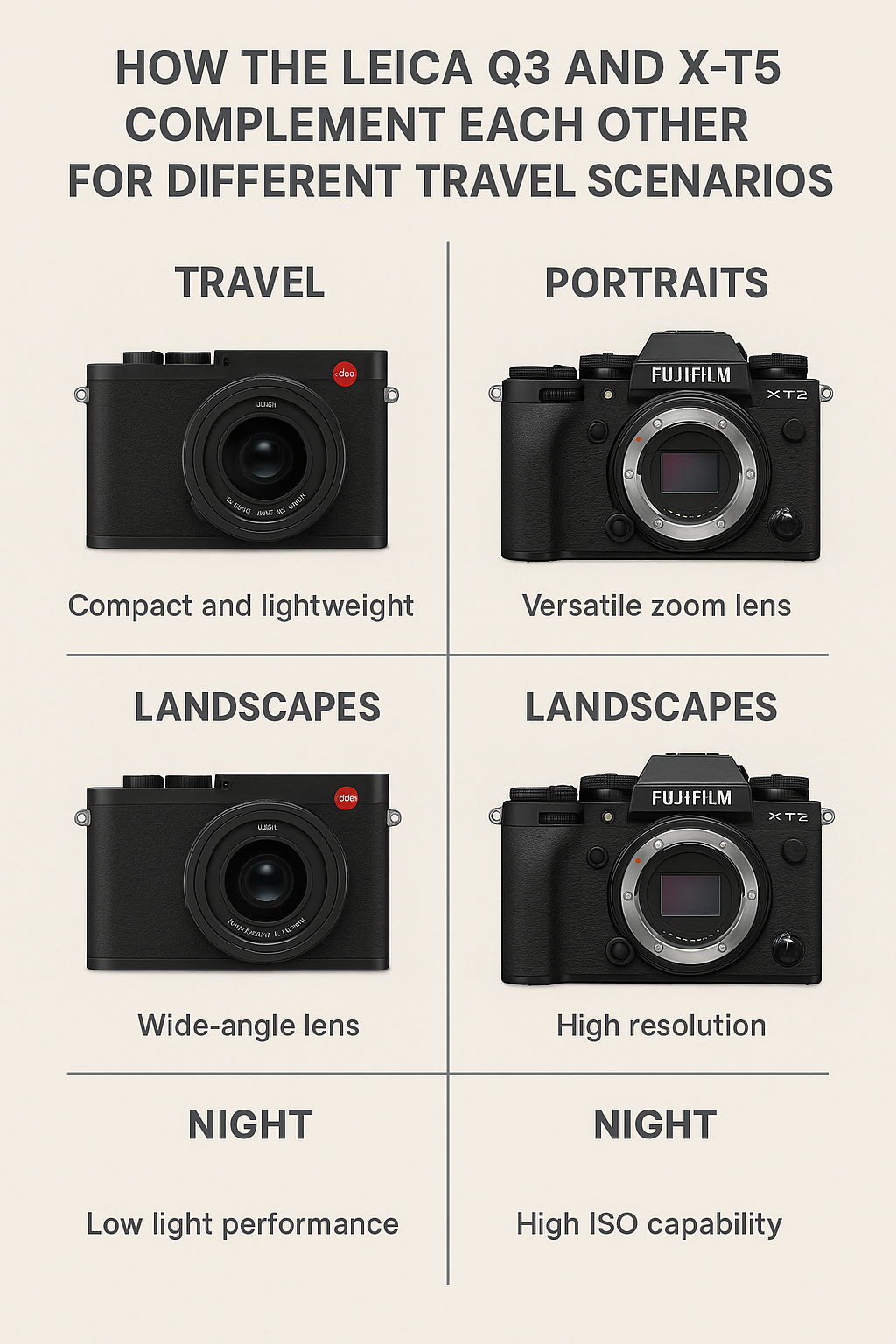
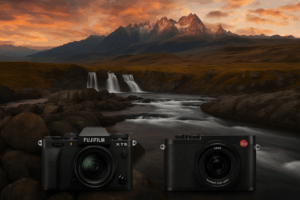
If it’s a road trip, I can stash a bit more gear in the car. But if it involves hiking, biking, or island-hopping, every ounce matters. My go-to setup usually includes my Leica Q3 for everyday shooting and the Fujifilm X-T5 with a couple of versatile lenses like the 16–80mm f/4 or 70–300mm f/4-5.6. That covers nearly everything without weighing me down.
For longer trips, I’ll bring backup batteries, memory cards, and a lightweight travel tripod. But the real secret is keeping everything organized and easy to reach. Nothing kills a photo opportunity faster than digging through your bag while the light fades.
If you’re building your travel kit, check out Choosing the Right Camera Bag for the Road for my thoughts on how to match bags to your travel style — and Packing Smart for a Photography Road Trip for a complete checklist that helps you balance efficiency with creativity.
💡 Pro Tip: Don’t Pack for “What If” — Pack for “What’s Likely”
We’ve all done it — that extra lens, the big tripod, or the filter kit that never leaves the case. Instead of packing for every possible scenario, pack for the kind of trip you know you’ll take. Leave room for souvenirs and flexibility. Your shoulders will thank you.
Staying Organized on the Road
Organization might not sound exciting, but it’s the quiet backbone of every successful photography trip. When your batteries, memory cards, and backup system are in order, your creativity has room to breathe. Nothing derails inspiration faster than realizing your memory card is full while the light is perfect — or that your spare battery is in the car an hour away.
I like to keep my gear layout consistent wherever I travel. Camera bodies in one section, lenses in another, and small accessories in labeled pouches. It’s muscle memory at this point — I know where everything is, even in the dark. For daily shooting, I use one camera bag as my working kit and leave backup items in the car or hotel room. Your bag can make or break your day. I share my go-to choices and packing strategies in Choosing the Right Camera Bag for the Road.
Backing Up
On long trips, I also keep a digital workflow checklist. Every night, I back up images to both a portable SSD and my laptop, then reformat memory cards for the next day. It sounds tedious, but it’s saved me more than once.
For those shooting both RAW and JPEG, I’ve also written Shooting RAW + JPEG on the Road — a practical look at why I keep both files and how I use JPEGs for quick reviews and social posts before diving into full edits.
💡 Pro Tip: Create a “Reset Routine”
Before every shoot — morning, afternoon, or golden hour — do a quick reset. Charge batteries, clear cards, wipe lenses, and set your camera back to default settings. It only takes five minutes, but it keeps you ready for those unplanned moments that always seem to happen when you least expect them.
Finding the Balance Between Shooting and Experiencing
One of the hardest lessons I’ve learned as a travel photographer is when to put the camera down. It’s tempting to capture every view, every meal, every passing cloud — but sometimes, the best way to remember a moment is to experience it without a lens between you and the world.
Early in my travel days, I’d rush to frame every sunset perfectly. But over time, I realized that some of my favorite memories came from simply watching the light change — not photographing it. Now I try to split my time: a few minutes shooting, then a few just soaking it in. It helps me reconnect with why I fell in love with photography in the first place.
Composition plays a big role in that balance, too. When I slow down and see the world as lines, textures, and light instead of just “subjects,” my photos become more intentional — and my travel days feel more rewarding. You can dive deeper into that mindset in Mastering the Art of Composition on the Road, where I explore how slowing down your process actually sharpens your creative eye.
And if you’ve ever wondered how to turn a photo into a story that lasts, you’ll find inspiration in Mastering Storytelling on the Road. That post explores how to connect emotion, memory, and meaning to your images — the things that make travel photos more than just pretty landscapes.
💡 Pro Tip: Shoot With Purpose, Then Step Back
Set a goal for each location — maybe it’s one hero shot, one detail, and one candid. Once you’ve captured those, step away from the viewfinder and let the rest unfold naturally. Some of your most meaningful moments will happen after you’ve packed up the camera.
Travel Safety and Respect
It’s easy to get caught up in the chase for the perfect photo — the one with the glowing sky or that hidden overlook. But as photographers, we have a responsibility that goes beyond the frame. Staying safe, respecting the places we visit, and being mindful of the people and wildlife we encounter are all part of traveling with intention. I explore this more in Respecting Local Communities on the Road: Traveling with Awareness and Integrity
Listen to Your Instincts
I’ve learned to listen to my instincts on the road. If a place feels unsafe, I move on. No shot is worth risking your well-being. I keep a simple checklist before every trip — sharing my location with someone I trust, carrying a small first-aid kit, and making sure I have enough daylight to get back from wherever I’m shooting. For more on building smart habits like these, check out Travel Safety Tips for Photographers, where I share what’s in my safety kit and the small details that make a big difference when traveling solo or in remote places.
Respect extends beyond personal safety. It’s about how we move through communities, trails, and wild spaces. Whether it’s staying on marked paths or giving wildlife plenty of space, I remind myself that being a photographer doesn’t give me permission to take more than memories. I wrote Ethics and Respect for Wildlife as a guide for photographers who want to capture the wild responsibly — with patience, empathy, and awareness.
At its core, travel photography is about connection. When we treat places and people with care, our images tell a more honest story — one that reflects not just where we went, but how we showed up.
💡 Pro Tip: Lead by Example
Other travelers and photographers are watching how we behave. If you set up respectfully — keeping your distance, avoiding fragile areas, and engaging kindly with locals — you become part of what keeps travel photography beautiful for everyone who comes after you.
Practical Workflow – Backups, Batteries, and Sanity Checks
Travel photography runs on three things: light, curiosity, and charged batteries. It’s amazing how quickly a great day can turn chaotic when your memory cards fill up or your last battery dies right before golden hour. A solid workflow — even a simple one — can save both your photos and your peace of mind.
Every evening on the road, I go through what I call my “sanity checklist.” Batteries on charge, memory cards backed up, gear cleaned, and lenses ready for tomorrow. I keep at least two backups of my images: one on a portable SSD and one on my laptop. If you’ve ever lost a week’s worth of photos, you know why redundancy matters.
Shoot RAW and JPEG
Shooting both RAW and JPEG helps me stay flexible too. I use the JPEGs to quickly review shots or post updates from the road while saving the RAW files for editing later. If you’re unsure whether shooting both formats makes sense for you, take a look at Shooting RAW + JPEG on the Road — it explains how the two file types can work together rather than compete for space.
And don’t overlook your camera settings. Understanding the exposure triangle — how aperture, shutter speed, and ISO dance together — helps you react faster when light changes unexpectedly. I cover that in Understanding the Exposure Triangle, which breaks it down in practical, real-world examples for travel photographers who need to shoot on the fly.
💡 Pro Tip: Protect Your Work Twice
Back up your images every night — and keep the second copy in a separate place. A bag gets lost, a drive fails, and suddenly that perfect sunrise is just a memory. Two backups mean one less thing to worry about, and more time to focus on the adventure.
Explore More / Final Thoughts
Travel photography is more than just collecting pretty pictures — it’s a way of slowing down, noticing details, and connecting with places in a deeper way. Every trip teaches something new: how to adapt, how to wait for light, and how to appreciate the quiet between moments. For a deeper look at how to keep your photography balanced with the journey itself, read Balancing the Journey.
The practical side of travel — planning, packing, staying organized — gives you the freedom to focus on creativity. Once those details are handled, you can lean fully into the experience: the feel of the air before sunrise, the sound of wind in canyon walls, the way colors shift as the sun drops. Those are the memories that stick long after the trip ends.
If this post helped you plan your next photography adventure, here’s where to go next:
✨ Explore More
📸 Mastering Travel Photography: Tips and Tutorials for Capturing the Road Less Traveled
Dive deeper into the art and mindset of travel photography — from creativity to technique.
🗺️ Scenic Drives and Road Trips Across America: Finding Beauty Between the Lines on the Map
Plan your next journey through the backroads and byways that make the U.S. unforgettable.
🐾 Ethics and Respect for Wildlife
Learn how to capture wildlife responsibly — with patience, empathy, and purpose.
Packing Smart for a Photography Road Trip
Get my complete checklist for balancing efficiency, safety, and creativity on the road.
💡 Pro Tip: The Best Travel Tip Isn’t About Gear at All
Stay curious. Whether you’re shooting with a professional setup or just your phone, the secret to great travel photography is paying attention — to light, to people, to the story unfolding right in front of you.
Stay Inspired
Want stories, photography tips, and behind-the-scenes moments from the back roads?
Subscribe to the Back Roads Lens newsletter and join me on the road less traveled.


Loved this post! I’ve recently been focusing more on photography when I travel, and your tips were genuinely helpful. I really appreciate how you highlight the practical side of getting great shots while still being present in the moment, something I’m trying to balance on my trips. I definitely picked up a few things I’ll be using on my next adventure. Thanks for sharing such valuable insight!
I totally enjoyed this post! I confess I’m not a good photographer. I mean, I think I have the eye but I lack skills and proper cameras. This post shows all the things photographers must think about and it made appreciate them even more!
Great tip to pack for what’s likely and not what if. It’s otherwise so easy to overpack gear!
Definitely agree regarding the balance between shooting and experiencing. It took me years to finally get that balance
This post is packed with so much information – much appreciated! Loved your emphasis on packing light, staying organized, and stepping back after the hero shot—such practical reminders for keeping travel photography creative and enjoyable.
Great tips, and reminders thanks for sharing. I too, find it hard to strike the balance between shooting and experiencing. I have to remind myself to take a day and not bring my DLSR, and when I do it’s freeing.
The routine of backing everything up, keep everything tidy and organised and charging all of our gear every day when we were backpacking for over a year was super important! But the hardest part was trying to find a balance between filming / shooting but also just experiencing things.
The balance in shooting and experiencing is always the hardest for me! Haha! I feel like if I don’t photograph it ALL, I won’t remember it!!
This was so interesting! I always really notice and appreciate the pictures in your posts. I’m not a photographer by any stretch of the imagination and I really admire people who have an eye for it. Also, love the reminders to also be present in the moment!
What a fantastic and practical guide! As someone who travels with a camera in hand on every trip, I love how you break down the real side of shooting on the road — the juggling, the planning, the backup routines, and the moments when you simply need to put the camera down and enjoy where you are. And yes — batteries, memory cards, and a reset routine can make or break a day! Once I lost photos from an entire month-long road trip, so I know firsthand how important it is to keep double copies of everything. Such a helpful resource for photographers at every level.
Solid advice on the art of travel photography. I appreciate the practical tips 🙂
I am always looking for new tips to improve my photography. Thanks!
I’m pretty much a self taught photographer and have so much to lean. Thanks for the tips!
As a travel photographer, this has some great tips!! I used to always lug my giant Tamron 150-600mm lens with me, but I stopped packing it with me for EVERYTHING. It’s a pain to travel with for air travel, so I really only pack it with me if I know the chances of wildlife are high lol. Also, good advice about finding a balance between photographing everything and just enjoying the moment. I really only try to capture things that REALLY grab my attention or if I see a great composition opportunity because I’m a sucker for interesting framing using what’s in the environment.
Really enjoyed this post! I love how you emphasise balance — the idea that travel photography isn’t just about the “perfect shot,” but about being prepared, flexible and still letting serendipity happen. The reminders to pack lighter, stay organised, and leave room for spontaneity truly resonated with me.
Also: your tips on backing up photos and using a simple workflow are so practical — it’s easy to forget how important those “behind-the-scenes” habits are until something goes wrong.
Thanks for sharing such thoughtful, realistic advice. Looking forward to trying some of these methods on my next trip!
Great tips! It’s been far too long since I travelled with my nice camera. So hard to not just rely on my phone – but these tips are motivating me to give it a try again.