Learning to See Wildlife Without Changing the Scene
Some of my most meaningful wildlife photographs were taken without ever pressing the shutter right away. Let’s discuss photographing wildlife without disturbing wildlife.
They happened while standing still along a quiet riverbank, watching an eagle settle into its morning routine. Or sitting at the edge of a field near home, waiting as deer slowly emerged from the trees at dusk. In those moments, the goal wasn’t the photo—it was understanding the rhythm of what was already happening.
Wildlife photography isn’t about getting closer. It’s about blending in.
When I first started photographing wildlife, I thought success meant filling the frame. Over time, I learned that the best images often come when you respect the space, let the moment unfold naturally, and photograph what is—not what you try to force.
That shift changed everything.
It slowed me down.
It made me more observant.
And it made my images feel honest.
I’ve written before about how some of my favorite encounters happen close to home, whether it’s watching eagles along the river or noticing familiar animals behave differently with the seasons. Those experiences taught me that wildlife doesn’t need an audience—it needs room. When you give animals that space, you don’t just get better photos. You get better stories.
This post isn’t about rules or rigid techniques. It’s about developing awareness—of your presence, your timing, and the quiet signals animals give when they’re comfortable… or when they’re not.
Because the most respectful wildlife photographs leave no trace—
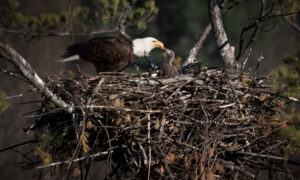
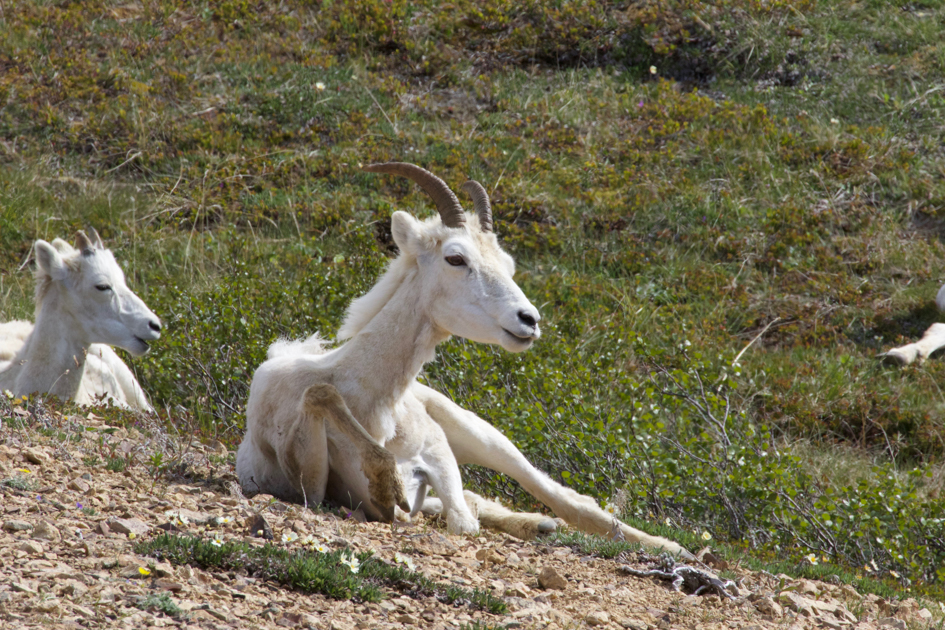
except the image itself. I could not have gotten this photo without photographing without disturbing.
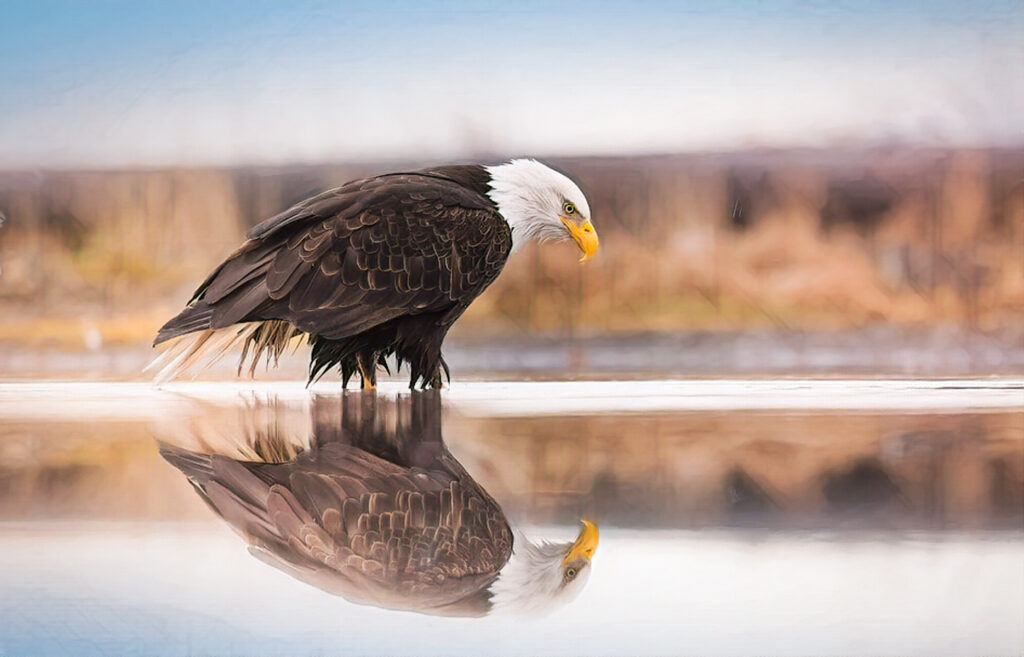
Reading Animal Behavior & Body Language
Letting the Animal Set the Rules
Before I Lift the Camera, I Watch
Wildlife tells you a lot if you’re willing to slow down and pay attention. A flick of the ears. A sudden pause. A head turning just a little too often in your direction. These small details are often the first signs that an animal has noticed you—and is deciding whether you belong in the scene.
Learning to read behavior has been one of the most important lessons in my wildlife photography. It’s something I picked up over time, from mornings spent along the river watching eagles long before they took flight, to evenings in my backyard field waiting as deer tested the air before stepping out of the woods. Those quiet moments echo what I’ve written about noticing the wild close to home—how familiarity teaches patience and awareness in a way travel sometimes can’t.
When Wildlife Is Comfortable
When an animal is relaxed, everything feels unhurried. Movements are smooth. Feeding continues. Wings preen. Heads lower. There’s a sense of rhythm. That’s your cue to stay exactly where you are.
I’ve learned this most clearly while photographing eagles along the river. When they’re at ease, they follow a predictable pattern—perching, scanning, shifting their weight before taking off. That kind of behavior mirrors what I explored in writing about patience in wildlife photography, where waiting becomes part of the process rather than something to push through.
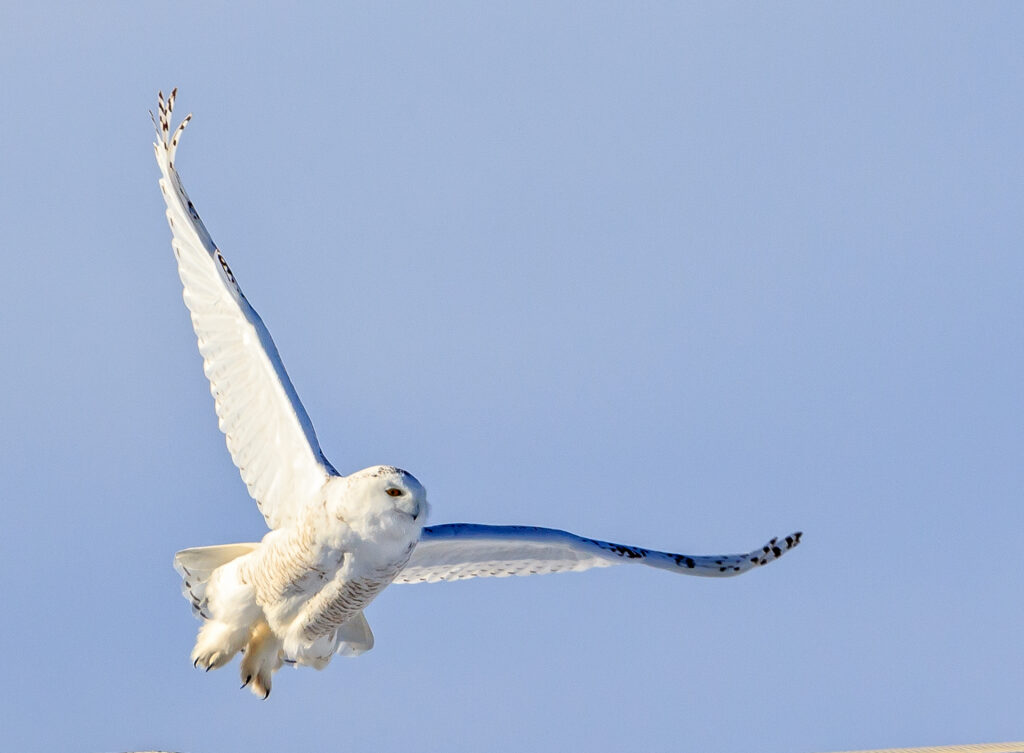
Signs You’re Too Close
But when that rhythm changes, it’s time to pause—or back away.
Repeated glances in your direction, tense posture, tail flicking, alarm calls, or sudden stillness are all signs that you’re pushing the boundary. Even if the animal doesn’t flee, those behaviors matter. They’re telling you the photo isn’t worth the cost.
This awareness ties closely to the ethics of wildlife encounters I’ve written about before—how responsible photography means choosing restraint, even when the moment feels fleeting. The absence of a photograph is sometimes the most respectful choice you can make.
Anticipation Comes From Observation
Understanding behavior also changes how you frame your images. Instead of reacting at the last second, you begin to anticipate.
You notice when an eagle shifts its weight before launch. You see the subtle cues that a deer is about to lift its head into the light. These moments feel earned because they are. They come from time spent watching, not chasing—something I’ve experienced again and again while photographing wildlife both near home and on the road.
Wildlife photography isn’t a test of how close you can get.
It’s a practice of listening without sound.
And once you start reading the signs, you realize the animals are guiding the experience as much as you are.
Distance, Space & Why Backing Away Improves the Photo
Distance, Space & Lenses
Using Reach Without Invading the Moment
One of the most freeing realizations I’ve had in wildlife photography is that distance doesn’t work against you—it works for you.
Giving wildlife space allows behavior to stay natural. It keeps movement unhurried. And it lets moments unfold without the tension that comes from feeling watched. When I step back and settle in, the scene almost always improves.
Distance creates calm.
Longer lenses play a quiet but important role here—not as a way to push closer, but as a way to stay where you are. They allow you to observe without inserting yourself into the moment. I’ve found this especially helpful when photographing eagles along the river or wildlife encountered on quiet back roads, where staying unobtrusive matters far more than filling the frame.
Reach Is a Tool, Not an Excuse
Using reach responsibly means knowing when to stop moving and let the lens do the work.
Even with longer focal lengths, space still matters. A lens doesn’t erase your presence—it simply gives you options. If an animal alters its behavior because of you, the distance isn’t enough, no matter what’s mounted on the camera. That awareness mirrors what I’ve written about ethical wildlife encounters, where respect always comes before the image.
Some of my favorite wildlife photographs include more environment than subject. Extra space in the frame tells a fuller story—one that feels rooted in place rather than driven by urgency. Those images often come from backing away, waiting, and trusting the scene.
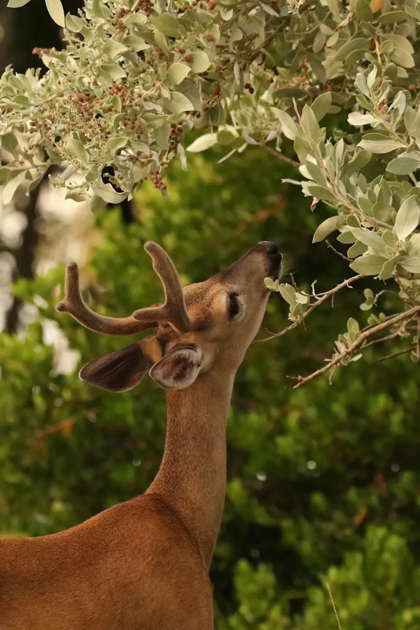
Distance Changes the Story
When animals are given room, they stay longer. They repeat patterns. They interact with their surroundings. That time allows you to notice details you’d miss if you were constantly repositioning—light breaking through branches, reflections forming on water, subtle gestures that make the image feel alive.
This approach aligns closely with how I photograph wildlife close to home as well as on the road. Whether I’m watching deer move through familiar fields or waiting quietly along the riverbank, distance helps me stay present without becoming part of the story.
Distance isn’t about separation.
It’s about respect.
And when you use space thoughtfully, the photographs that come back with you feel calmer, more honest, and more true to the moment you witnessed.
Patience vs. Pursuit
Why Waiting Always Wins
Wildlife photography rewards stillness more than speed.
There’s a temptation—especially when something unexpected appears—to follow, adjust, reposition, and try to keep up. I’ve felt that pull myself. But the moments I remember most clearly didn’t come from pursuit. They came from waiting.
Patience allows wildlife to forget about you.
When I settle into one place and stay there, the scene changes. Birds return to their routines. Deer move through the field as if I’m no longer there. Eagles resume scanning the water, shifting their weight, waiting for the right moment. That quiet return to normalcy is something I’ve experienced again and again, especially during long mornings along the river, where learning to wait has shaped how I approach wildlife photography entirely.
Let the Scene Come to You
Waiting doesn’t mean doing nothing. It means observing, anticipating, and trusting the moment to unfold.
I’ve written before about the art of patience in wildlife photography and how staying put often reveals behavior you’d miss while moving. When you stop chasing, you start noticing. Light shifts. Backgrounds clean up. Animals move into better positions on their own. The frame improves naturally, without interference.
Pursuit, on the other hand, almost always shortens the moment. Movement draws attention. Attention creates tension. And tension ends the story. Even when an animal doesn’t flee, you can feel the shift in energy—and that shift shows in the final image.
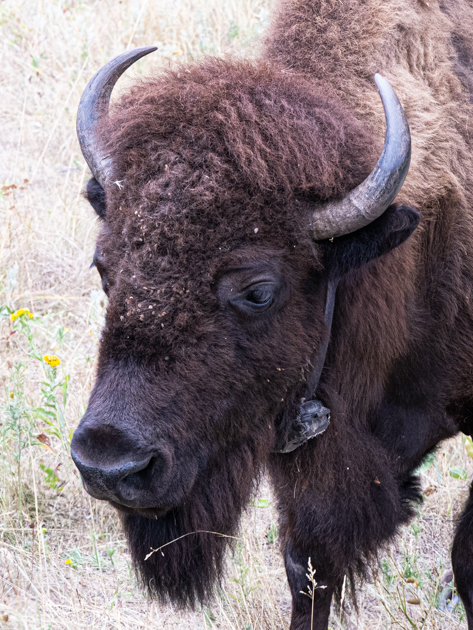
Why Patience Creates Better Images
The photographs that come from patience tend to feel grounded. They hold context. They carry a sense of place rather than urgency. You’re not just recording a subject—you’re witnessing a moment.
Those images align closely with the way I approach wildlife encounters on back roads and quiet spaces, where the goal is never to collect images, but to experience what’s unfolding naturally.
Patience doesn’t guarantee a photograph.
But it guarantees integrity.
Choosing the Moments You Don’t Photograph
When Not Pressing the Shutter Matters Most
Not every moment is meant to be photographed.
This is something I’ve learned slowly, and sometimes uncomfortably. There are times when the light is beautiful, the animal is close, and everything about the scene feels rare—yet the right choice is to lower the camera.
Sometimes wildlife is telling you it needs space. Sometimes the moment feels too intimate. And sometimes the presence of the camera itself would change what’s happening. Those are the moments I let go.
Respecting the Story Over the Image
I’ve written about ethical wildlife encounters and the responsibility that comes with being there at all. Choosing not to photograph is part of that responsibility. It’s acknowledging that the experience matters more than proof you were there.
There have been times along the river watching eagles where I never took a single photo. The interaction was quiet. Private. Undisturbed. And that mattered more than any image I could bring home.
Absence Is a Choice
Not pressing the shutter isn’t a failure—it’s a decision.
It’s choosing to leave no trace.
To let the moment exist without interruption.
To trust that there will be other opportunities.
Ironically, making peace with missed shots often leads to better ones later. When you’re not chasing every frame, you become more selective. More present. More aligned with the scene instead of trying to control it.
Wildlife photography isn’t measured by how many images you capture.
It’s measured by how little you disrupt while you’re there.
Photographing Without Disturbing
Presence Is the Practice
Ethical wildlife photography isn’t a checklist—it’s a mindset.
It’s the awareness you carry before you ever lift the camera. The patience to wait without expectation. The willingness to step back, or sometimes walk away, knowing the experience itself matters more than the image.
Over time, I’ve learned that the best wildlife photographs come from being fully present without needing to intervene. When you read behavior, give space, and choose patience over pursuit, wildlife settles into its natural rhythm. And when that happens, you’re no longer directing the moment—you’re witnessing it.
Presence changes how you see.
It softens the urge to collect images. Also, it sharpens your attention to light, movement, and timing. It reminds you that every animal encounter is temporary, and that your role is simply to observe without altering the story unfolding in front of you.
Some of my most meaningful wildlife experiences never turned into photographs. They became memories instead—quiet moments along the river, still mornings watching eagles, evenings when deer passed through without ever knowing I was there. Those moments shaped the way I photograph far more than any single image ever could.
Wildlife photography, at its best, leaves the lightest footprint possible.
If you walk away having respected the space, honored the moment, and learned something by simply being there, then the photograph—whether you captured it or not—has already done its work.
Explore More: Ethical Wildlife Photography & Intentional Moments
- Finding the wild close to home through photographing bald eagles near my backyard
- Why patience matters most in wildlife photography
- Wildlife encounters on America’s back roads and quiet places
- Lessons from the riverbank while photographing eagles in their natural habitat
- Ethics and respect in wildlife photography on the road and at home
- Mastering the Art of Wildlife Photography – lessons from the road
- When the North Comes South: Snowy White Owls in Upstate New York – snowy white owls in upstate New York
- The Bald Eagle Lifecycle: From Nest to the Sky – see the stages of a bald eagle’s growth
Stay Connected to the Quiet Moments
If photographing wildlife with patience, presence, and respect resonates with you, I share more reflections like this—along with field stories, photography insights, and behind-the-scenes moments from the road—in my newsletter.
It’s where I talk about what doesn’t always make it into a single photograph: the waiting, the learning, and the quiet encounters that shape how I see the wild.
👉 Join the Back Roads Lens newsletter and follow along as I explore wildlife, back roads, and photography with intention.