Introduction – Why Ethics Matter in Wildlife Photography
There’s a quiet responsibility that comes with every moment behind the lens.
When I lift my camera toward an eagle, a moose, or even a deer I’m not just capturing a scene — I’m stepping into their world. The choices I make in those seconds matter far more than any image that follows. In post will discuss ethics and respect for wildlife photography.
Ethical wildlife photography isn’t about following a checklist of rules. It’s about respect — for the land, for the creatures that call it home, and for the story we tell when we press the shutter. The best photographers understand that patience, restraint, and awareness are just as important as sharp focus or perfect light.
I’ve learned that lesson over and over again — from long mornings along my local river (shared in Photographing Eagles: Lessons from the Riverbank) to quiet afternoons waiting for elk to emerge on the Beartooth Highway. Each encounter reminds me: the wild doesn’t owe us a moment. We earn it through care, presence, and respect.
This post dives into what it truly means to photograph wildlife responsibly — how to balance art and ethics, how to minimize disturbance, and how to walk away knowing you left the scene just as wild as you found it.
🦉 If you’re new to the wildlife side of photography, you might also enjoy reading Mastering the Art of Wildlife Photography or Mastering The Art of Patience in Wildlife Photography — both explore mindset and field habits that complement the ethics we’ll cover here.
Section 2: Understanding Boundaries — The Invisible Line Between Observation and Interference
Every wild animal has an invisible boundary — a space where curiosity ends and intrusion begins. The tricky part is, that line isn’t marked by signs or fences. It’s something we learn to recognize through time, patience, and empathy.
When I first started photographing wildlife near my home river, I didn’t fully understand how close was too close. It wasn’t until I saw an eagle shift uneasily on a branch — feathers puffed, eyes fixed directly on me — that I realized I had crossed an unseen threshold. I backed away, heart sinking a little, and watched as the bird settled again. That small moment changed how I approached every encounter after that.
Respecting Boundaries
Respecting boundaries means letting the animal decide the terms of the meeting. If they move away, you stop. If they look tense or alert, you give them more space. Long lenses exist for a reason — use them to keep your distance and still tell the story. Your goal isn’t to get closer; it’s to see deeper. I explore this more in Understanding Wildlife Behavior Before You Photograph: Reading the Wild Before You Raise the Lens.
Pro Tip: Your best wildlife photos often happen when you slow down. Bring your longest lens and the kind of patience I talked about in The Art of Patience in Wildlife Photography. Let the moment unfold without pressure.
Understanding these invisible lines also extends to habitat. Staying on trails, avoiding nesting areas, and not trampling vegetation might seem small, but each action protects the scene you came to photograph. The more we preserve, the more moments there will be — not just for us, but for every photographer who follows.
🦌 You might also enjoy reading Finding the Wild Close to Home, where I share how observation and distance actually helped me capture better, more authentic wildlife moments right in my own backyard.
Section 3: The Photographer’s Responsibility — Setting an Example in the Field
Every time we step into a park, forest, or wildlife refuge with a camera, we become part of a larger story — not just the one unfolding through our lens, but the one told about photographers as a whole. The way we behave in the field shapes how others perceive both photography and conservation.
I’ve seen it firsthand: one person quietly sitting with a telephoto lens can inspire respect, while another chasing an animal for a close-up can ruin the experience for everyone. Whether we realize it or not, our actions ripple outward. Ethical photography is contagious — when others see restraint, respect, and awareness, they’re more likely to follow suit.
A Lesson from the Riverbank: When Sharing Goes Too Far
One moment that stayed with me happened close to home. I had been photographing a pair of bald eagles along the river — the same ones I wrote about in Photographing Eagles: Lessons from the Riverbank. For weeks, I visited quietly, keeping my distance and watching their behavior from afar. But then, the nest location was shared on social media. Within days, crowds gathered. People brought lawn chairs, telescopes, binoculars, and even drones. The noise and constant presence became overwhelming for the eagles.
Eventually, the New York State Department of Environmental Conservation (DEC) had to step in and restrict access to protect the nest. That experience was a stark reminder: sometimes, the best way to show respect for wildlife is by not sharing everything we know. A single post can unintentionally turn a peaceful nesting site into a spectacle.
Field Reminder:
It’s not just about your photo. It’s about the animal’s safety, the landscape’s longevity, and the experience of the next person who wanders down that same trail with a camera in hand.
Part of setting an example is also what we share later. Avoid posting the exact location of nests, dens, or sensitive habitats — doing so can invite disturbance. When I shared my story in Wildlife Encounters on America’s Back Roads, I focused on the feeling of connection rather than GPS coordinates. The goal is to inspire appreciation, not intrusion. Thoughtful route planning matters — see How I Plan and Photograph the Perfect USA Road Trip for how I build photography-friendly itineraries
🐻 If you’re building a wildlife photography workflow, pairing this mindset with the technical advice in Mastering the Art of Wildlife Photography will help you create both stunning and responsible images.
Section 4: Ethics Behind the Lens — Editing, Sharing, and Storytelling with Integrity
The responsibility of an ethical wildlife photographer doesn’t end once the shutter clicks. What we choose to do after the moment — in our editing, captions, and storytelling — can shape how others understand and value the natural world. Read more in Photographing without Disturbing.
Editing with Honesty
Modern tools make it easy to transform an image — to erase a branch, brighten an eye, or merge moments that never actually happened. But with wildlife, authenticity matters. Viewers trust that what they’re seeing is real. If an image is heavily altered, it becomes illustration, not documentation.
When I process wildlife photos, I adjust exposure, crop for balance, and clean minor distractions — but I avoid edits that change the truth of the scene. A photograph of an eagle’s reflection or a fox at dawn is powerful because it happened exactly that way.
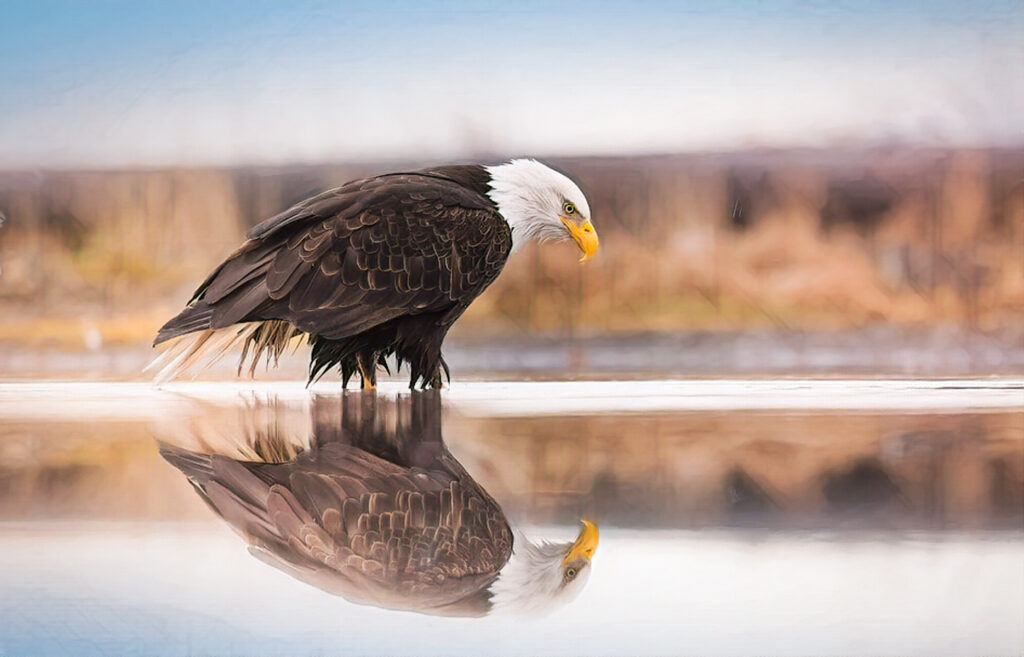
And I’ll admit it — this is one of my photography pet peeves. The rise of AI-generated wildlife images drives me a little crazy. Perfectly lit “wolves under the aurora” or “eagles over waterfalls” that never actually happened flood social media, blurring the line between art and reality. There’s nothing wrong with digital art, but when it’s presented as authentic wildlife photography, it undermines the patience, respect, and fieldwork that go into the real thing.
Pro Tip: Ask yourself, “Would this scene still tell the same story if the animal could see it?” If the answer is yes, you’re on the right track.
Sharing the Story Responsibly
The story you tell around an image can be as influential as the image itself. A caption that emphasizes wonder and respectinvites appreciation. One that adds human emotion or misinterprets behavior can unintentionally mislead.
I’ll be the first to admit — I’ve been guilty of this. I have several photos of eagles preening along the river, cleaning their feathers in that calm, focused way they do. One image in particular looks as though the eagle is bowing its head in reverence. When I shared it on social media, people loved it. The photo made an emotional impact, but the truth is simpler — the eagle was just preening, engaging in completely normal behavior.
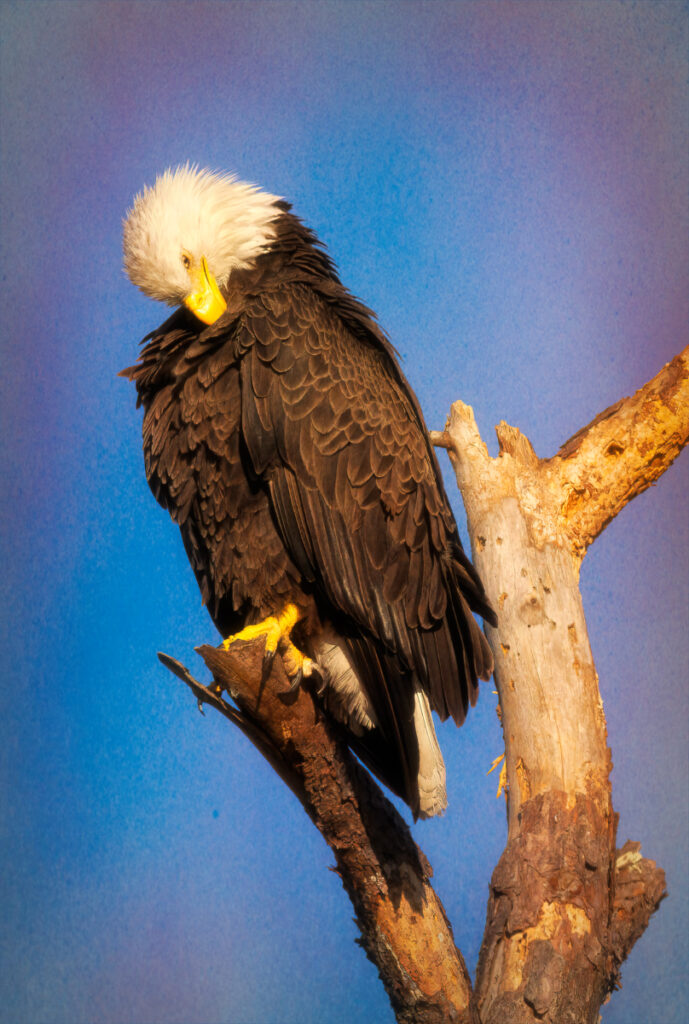
Moments like that remind me how easily storytelling can shift perception. As wildlife photographers, we walk a fine line between interpretation and accuracy. It’s okay to evoke emotion — that’s part of what makes photography powerful — but we owe it to our subjects to keep the truth intact.
When I shared my post Finding the Wild Close to Home, I focused on observation and connection rather than embellishment. The magic of that story came from patience and presence — not from assigning human feelings to wild creatures.
Responsible sharing also means being mindful of context. Avoid posting the exact location of nests, dens, or sensitive habitats. The goal is to inspire appreciation, not intrusion.
Pro Tip:
Tell the story you witnessed, not the one you wish had happened. Authenticity builds trust — and trust builds lasting impact.
The Power of Storytelling with Integrity
At its heart, ethical storytelling is about truth with empathy. The best wildlife photographers don’t just take pictures; they build trust between people and nature. When we share honestly, we invite others to care — not just about the beauty of the wild, but about its fragility.
Our stories become part of a larger conservation conversation. One that reminds people that every photo comes with a responsibility: to leave the wild as wild as we found it.
If this idea speaks to you, explore Mastering Storytelling on the Road — a post all about using your photography and words to tell stories that matter.
Section 5: Practicing Respect in the Field — Simple Guidelines That Make a Difference
Ethical wildlife photography isn’t built on complex rules. It’s built on small, consistent choices — the kind that add up to real respect for the wild places and creatures we love to photograph. These guidelines are simple, but they form the backbone of responsible field practice.
1. Keep Your Distance
Use your lens, not your feet, to get closer. Every species has a comfort zone, and pushing beyond it can change their behavior — sometimes in ways that aren’t visible right away. A bird might abandon a nest; a fox might relocate its kits.
Longer lenses like the Fuji XF 70–300mm are perfect tools for keeping your space while still telling the full story. You’ll find you capture more natural expressions when the animal forgets you’re even there. You can read more in depth in Photographing Without Disturbing.
See this principle in action in Photographing Eagles: Lessons from the Riverbank, where patience and distance led to one of my most meaningful wildlife moments. You can see examples of keeping my distance in The Heron Rookery: A Story of Patience, Renewal, and Respect.
2. Stay Quiet and Move Slowly
Wildlife notices everything — motion, sound, even the rhythm of your breathing. Move like part of the landscape. Whisper if you must speak. Every quiet step builds trust.
At home, I’m reminded of this daily. Deer wander into the field behind our yard, grazing in the tall grass as if they own the place — which, truthfully, they do. Even with the sliding doors closed and windows shut, a single clatter of dishes or my voice carrying from the kitchen can make one lift its head and stare right at me. It’s a gentle reminder that animals are always aware, even when we think they aren’t. See how I balance photography with travel in Travel and Photography Tips: Balancing the Journey.
In the field, that same sensitivity applies. Sudden movement or a burst of noise can shift the entire moment. The quieter and slower you move, the more wildlife accepts your presence as part of the environment.
I talk more about this kind of stillness in The Art of Patience in Wildlife Photography, where silence often becomes its own form of communication between photographer and subject.
3. Respect Seasons and Sensitive Times
Spring and early summer bring nesting, birthing, and migration — all high-stress times for wildlife. Avoid approaching nests, dens, or feeding areas during these periods. If you’re unsure whether it’s safe, back away. The photo can wait; the animal’s survival can’t.
4. Leave No Trace
The “Leave No Trace” ethic applies perfectly to photography. Stay on established paths. Don’t trample wildflowers or mossy riverbanks for a better angle. Pack out everything you bring — including snack wrappers, lens wipes, and coffee cups.
When photographing along back roads or in smaller parks, I also make a point to support local conservation programs. Every small gesture — a donation box drop, a quick volunteer cleanup — helps preserve the spaces we love.
5. Lead by Example
Your behavior influences more than you realize. When people see you staying back, lowering your voice, or stepping aside for an animal’s comfort, they notice. That quiet leadership helps protect wildlife and reinforces what ethical photography stands for.
If you’re part of a photography group, encourage others to discuss field ethics before heading out. Shared awareness turns individual respect into a collective effort.
🦊 For more thoughts on balancing art, responsibility, and field technique, check out Mastering the Art of Wildlife Photography — it’s designed to connect mindset, skill, and ethics across your entire workflow.
Section 6: Closing Thoughts — Keeping the Wild in Wildlife Photography
Every encounter with wildlife is a privilege. The moment an eagle soars across the river, or a fox pauses to look back through the morning fog, you’re witnessing something unscripted and deeply wild. It’s easy to get caught up in the shot — to think only about the frame, the light, the composition — but true wildlife photography is about something much bigger.
It’s about relationship. About stepping softly into a world that existed long before our cameras and will, hopefully, exist long after. When we photograph with ethics and respect, we’re not just preserving a memory — we’re helping protect the subjects themselves. Every choice we make, from keeping our distance to the way we share our images, shapes how others see and value the natural world.
Wildlife Photos are not Trophies
I’ve come to believe that the best wildlife photos aren’t trophies; they’re reminders. Reminders that we’re guests in someone else’s home, and that beauty thrives best when left undisturbed. Whether I’m sitting quietly along my local river or photographing grizzlies in Alaska, I try to carry that mindset with me: be patient, stay humble, and leave no trace but footprints.
🦅 If this message resonates with you, explore The Art of Patience in Wildlife Photography and Wildlife Encounters on America’s Back Roads — both dive deeper into the balance between artistry, awareness, and respect in the field. Ethics extends to local communities as well. You can read more in Respecting Local Communities on the Road: Traveling with Awareness and Integrity. A great story about empathy is: Roosevelt State Park and the Little White House: Walking in the President’s Georgia Footsteps.
As photographers, we have the unique power to tell nature’s story. Let’s tell it honestly. Let’s tell it kindly. And above all, let’s keep the wild in wildlife photography.
Explore More
If this post made you think differently about your time in the field, here are a few more stories and guides that will help you grow as both a photographer and a steward of the wild. For more tips see: Practical Travel Tips for Photographers.
📸 From Mindset to Mastery
- Mastering the Art of Wildlife Photography — Your essential guide to photographing wild animals responsibly and creatively.
- The Art of Patience in Wildlife Photography — Learn how waiting quietly can lead to your most powerful images.
- Mastering Shooting in Low Light – Learn how to shoot wildlife in low light.
🌿 Stories from the Field
- Photographing Eagles: Lessons from the Riverbank — What a season spent along my local river taught me about respect and restraint.
- Wildlife Encounters on America’s Back Roads — A look at how wildlife moments often happen when we least expect them.
- Season of Eaglets
- Bald Eagle Life Cycle
- Heron Rookery
- In Search of the Part Albino Deer
🦊 Explore More of the Wild
- Finding the Wild Close to Home — Discover the surprising beauty that lives right outside your own neighborhood.
- Mastering Storytelling on the Road — Learn to use your words and images together to inspire conservation through storytelling.
💌 Love stories like these? Join my newsletter for behind-the-lens updates, field notes, and photography tips from America’s back roads.