If you ever find yourself near Buffalo, there’s a little trail in Chestnut Ridge Park that hides something truly unexpected — a small waterfall that shelters a flickering flame inside it. It’s called Eternal Flame Falls, and it’s one of those places that make you stop, stare, and wonder how something like this even exists.
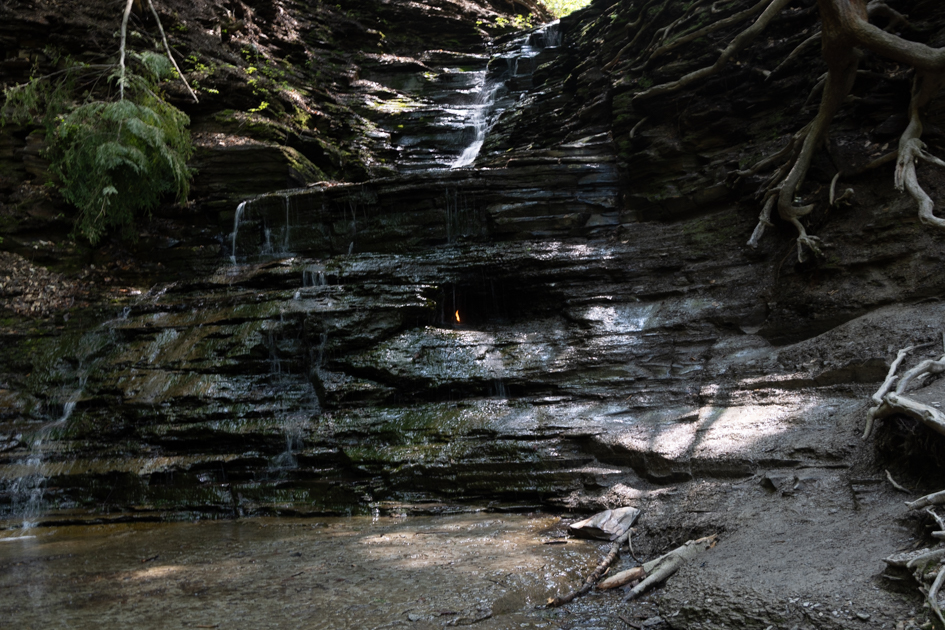
The flame is natural — yes, really. It’s fueled by a tiny pocket of natural gas that seeps from the shale beneath the falls. Through just the right mix of geology and chance, this slow leak of methane keeps a flame burning year-round, even as the water tumbles over it. You can actually see the flame glowing softly behind the thin curtain of water — a surreal mix of fire and water sharing the same space.
Eternal Flame Falls is part of Chestnut Ridge Park in Orchard Park, New York, about twenty minutes south of Buffalo. It’s an easy day trip if you’re exploring the Northeast Region or driving in from places like Letchworth State Park or the Finger Lakes. Like the Kancamagus Highway in New Hampshire or the Covered Bridges of Vermont and New Hampshire, it’s proof that the Northeast hides its most beautiful spots in quiet corners — the kind that reward curiosity and a willingness to take the long way around.
For me, this spot fits perfectly into the spirit of Finding the Wild Close to Home — discovering those places that make you feel far away without actually being far from home.
Hiking to the Flame: A Short Trail with a Challenge
The hike to Eternal Flame Falls may sound easy at less than a mile each way, but don’t underestimate it. The trail winds through thick woods that stay shaded almost all day, creating a cool, peaceful atmosphere — and a few surprises underfoot.
Once you start following the creek, the terrain turns uneven and a little unpredictable. Roots, rocks, and mud patches make each step interesting, especially after a rain. When I visited, the ground was slick in spots, and I found myself grabbing tree trunks now and then for balance. It’s not a strenuous hike, but it’s one where good shoes with traction make all the difference.
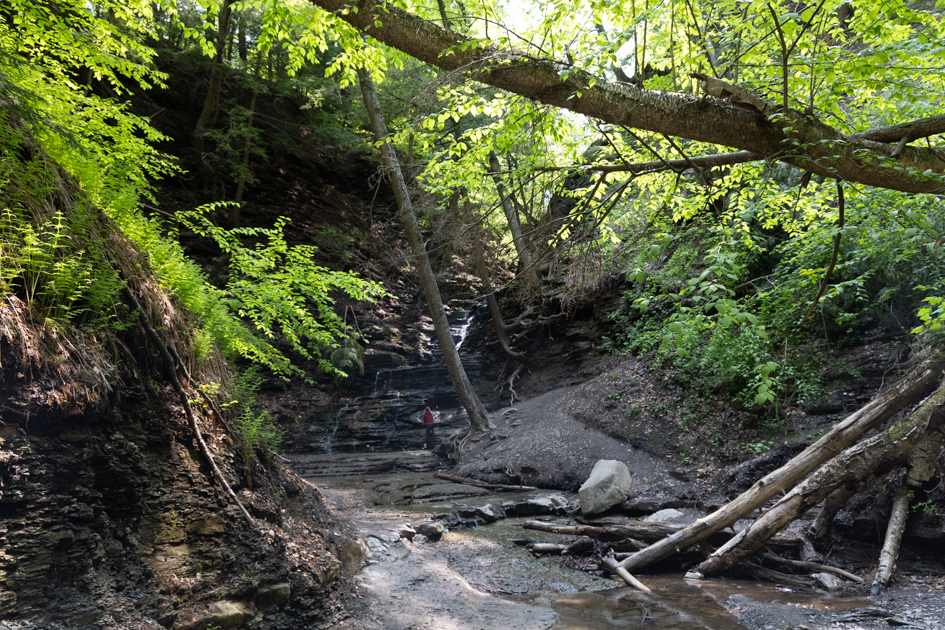
The forest canopy keeps this trail deeply shaded, which adds to the sense of mystery but also makes it dark for photography. Very little sunlight filters through the leaves, so the creek and waterfall are lit mostly by soft, diffused light. It’s one of those settings where every photo feels moody and full of texture — and patience really pays off. For more tips on handling low-light conditions, check out Mastering Travel Photography – Tips and Tutorials.
As I got closer, I could hear the steady rush of water echoing through the ravine. Then suddenly, around a bend, there it was — a small waterfall framed by forest and rock, with a faint orange glow flickering behind it. The hike might be short, but that first glimpse makes it feel like a discovery.
Photographing the Eternal Flame
Balancing Fire and Water
Photographing Eternal Flame Falls is both fascinating and tricky. The setting is dark, the light constantly changes, and you’re trying to capture two opposites — fire and water — in the same frame. It’s the kind of challenge that makes you slow down, experiment, and appreciate the balance between movement and stillness.
The flame itself is small but bright. Because the area is so shaded, it becomes the natural focal point in every image. If you expose for the waterfall, the flame tends to blow out into a blur of orange. If you expose for the flame, the rest of the scene fades into shadow. I found the best approach was to bracket exposures and take a few versions — one slightly underexposed for the flame, one balanced for the scene, and one to capture the texture of the rocks and water.
Working with Low Light
The heavy tree cover makes this one of the darkest spots I’ve photographed in broad daylight. The soft, filtered light gives everything a moody tone, but it also pushes your camera’s limits. A tripod is helpful if the ground isn’t too slippery. Slow shutter speeds are often necessary to bring in detail and texture. I used nearby rocks and roots to stabilize my camera when I couldn’t safely set up the tripod.
Capturing the Glow
Even with careful exposure, the flame flickers constantly, creating ever-changing reflections on the wet stone. That tiny glow dances against the cool blue tones of the shaded ravine — a natural contrast that makes the image come alive. I focused on those details: the way the orange shimmer rippled across the water’s surface and caught in the mist around the falls.
If you enjoy photographing natural light in challenging conditions, this place is worth every careful step. It’s not just a photo opportunity — it’s an experience. The flame feels alive, breathing with the rhythm of the falls and the quiet of the forest around it.
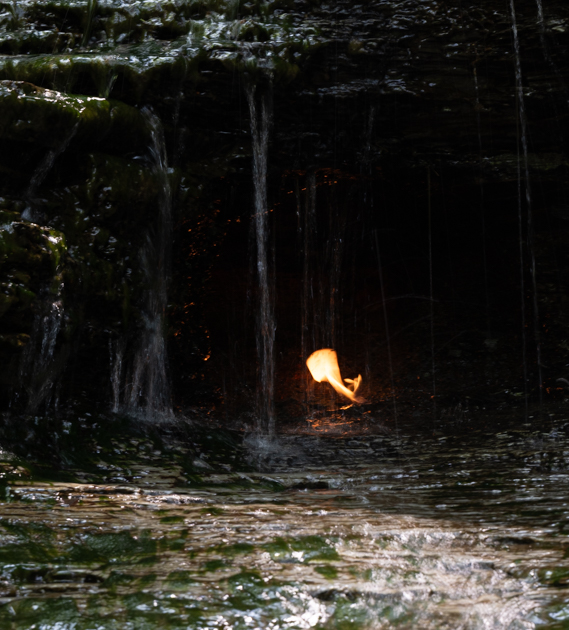
giving Eternal Flame Falls its name and mystery.
History & Legend of the Eternal Flame
Like most places that feel a little mystical, Eternal Flame Falls carries its share of legend. Some locals say the flame was first lit by Native Americans thousands of years ago, a gesture meant to honor the earth and its unseen forces. It’s a beautiful idea — that a small flame, tucked behind a waterfall, could be a living symbol of nature’s spirit.
While there’s no archaeological proof to confirm that story, it continues to echo through local lore. What we do know is just as fascinating. The flame is fueled by natural gas that seeps up through cracks in the shale, fed by deep layers of rock beneath Chestnut Ridge Park. Scientists have studied it and found that the geology here doesn’t quite match what they’d expect for such a steady flame — meaning there’s still a little mystery left to it.
Geologists from Indiana University once discovered that the shale under the falls isn’t hot or old enough to produce this kind of gas on its own. That means the fuel source might come from deeper rock formations, finding its way up through small fractures over time. In a sense, this flame has been burning on borrowed energy from deep within the earth — a natural wonder that science hasn’t completely explained.
Maybe that’s what makes this place so compelling. Whether you believe in ancient legends or natural science, the Eternal Flame seems to exist somewhere between both worlds — part myth, part geology, and entirely mesmerizing.
When to Visit & Tips for the Trail
Eternal Flame Falls is open year-round, but each season offers something different. I visited in summer, when the woods were green and the air was warm, and the steady sound of the creek followed me all the way to the falls. The trail was shaded and damp, with a few muddy spots that made me glad I wore good hiking shoes. Good shoes and dependable gear always make a difference — I share my go-to travel kit in the Travel Photography Gear Guide.
Best Time to Visit
If you want a comfortable hike and plenty of daylight, summer is ideal. The thick canopy keeps the ravine cool even on hot days. The flame glows softly against the darker background of the forest. In autumn, the trail turns brilliant with color. And in winter, the icy edges around the waterfall create a dramatic contrast to the flame’s glow. Keep in mind footing can be tricky in winter. Spring brings higher water flow but also more mud, so waterproof boots are helpful that time of year.
Photography Tips
Midday offers the best light for photography because the forest is so shady. Overcast skies actually help by softening the light and minimizing harsh shadows. A small tripod or something sturdy to steady your camera is useful near the creek. For more advice on photographing in low light or balancing moving water and flame, see my Mastering Travel Photography – Tips and Tutorials blog.
Reflections at the Falls
Standing in front of Eternal Flame Falls, I couldn’t help but pause. The mix of fire and water felt almost impossible — a small, flickering flame glowing behind a veil of moving water. I’ve traveled through so many parks and trails, but I’ve never seen anything quite like this.
It’s the kind of place that feels alive in its own quiet way. The sound of the creek, the cool air of the ravine, and that steady, warm glow all blend into something that doesn’t need to be explained. You just stand there for a moment, watching the flame dance, and realize how rare it is to find something so unexpected — and so simple.
For me, this short hike captures what I love most about exploring the Northeast Region — finding beauty in the quiet places many travelers miss. From a hidden waterfall with a natural flame to covered bridges in Vermont and peaceful harbors along the Maine coast, the Northeast is full of small discoveries that make every back road worth exploring.
If you enjoy hidden trails and off-the-beaten-path destinations like this, don’t forget to sign up for my newsletter . I share new travel stories, photography tips, and behind-the-scenes moments from the road.