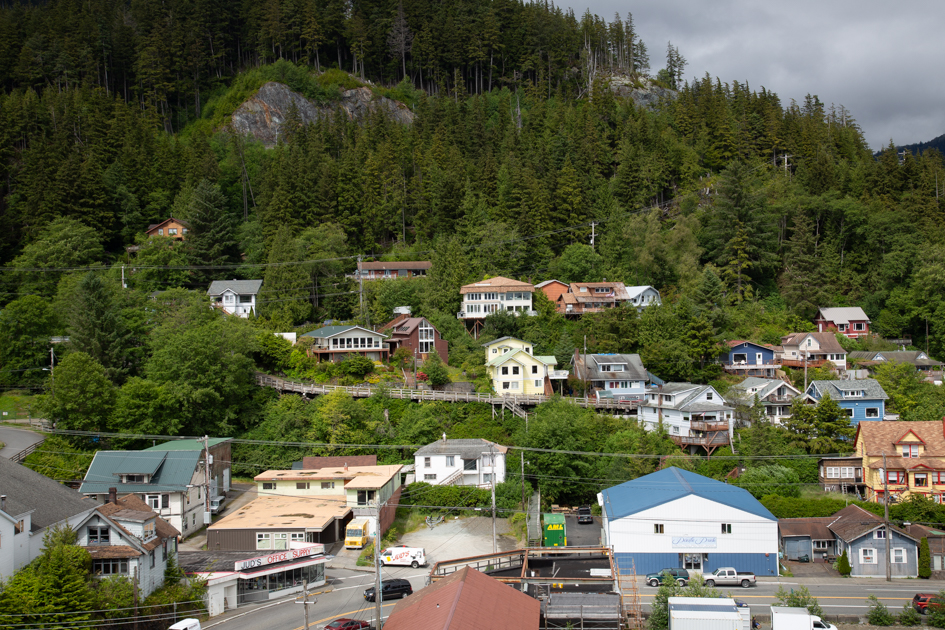
Perched on the steep hillsides of Alaska’s Inside Passage, Ketchikan feels like a town built more on imagination than flat ground. Wooden stairways double as streets, colorful houses cling to the slopes, and the harbor hums with seaplanes and fishing boats coming and going. It’s often the first stop for travelers arriving by cruise ship, but for me, Ketchikan is much more than a port of call — it’s a snapshot of Alaska’s wild past and a community that has learned to balance history, art, and grit with the rhythm of the tides.
Nicknamed Alaska’s First City because it’s the southernmost entry point along the Inside Passage, Ketchikan began as a fishing camp for the Tlingit people long before gold seekers and lumbermen arrived. Today, it’s a place where the echoes of those early days still whisper through the boardwalks of Creek Street — once the town’s red-light district — and where trails like Married Man’s Trail tell stories that are equal parts humor and history.
If you’re planning an Alaska road trip or cruise adventure, Ketchikan is one of those stops that helps you understand the character of the entire region — rugged, colorful, and full of unexpected charm. You can read my full Alaska Region Travel Guide for more on exploring Alaska’s remote roads, national parks, and towns that still feel like the frontier. Ketchikan is just one stop on my journey to find off-the-beaten-path destinations across the U.S. — see how I discover places like this in my master travel guide.
From Salmon Canneries to Sin City: The Story of Early Ketchikan
A Town Built on Salmon and Stubbornness
Before there were cruise ships lining the docks, Ketchikan was a rugged little fishing town built on salmon, sawmills, and the stubbornness of the people who called it home. The Tlingit people were the first to settle here, drawn by the abundance of salmon that filled the nearby streams every season. When prospectors and loggers arrived in the late 1800s, Ketchikan grew quickly into a hub for canneries and timber — the kind of place where fortunes were made one fish at a time.
The Rise of Creek Street
By the early 1900s, the town had gained a reputation for being equal parts hard-working and hard-living. With strict laws forbidding alcohol and “certain activities” within city limits, business found a creative loophole just across the creek. Soon, a row of colorful wooden buildings sprang up on stilts over Ketchikan Creek — a place known as Creek Street. Officially, it was home to shops and boarding houses. Unofficially, it was where fishermen and loggers went for a good time after weeks at sea.
The Secret Path: Married Man’s Trail
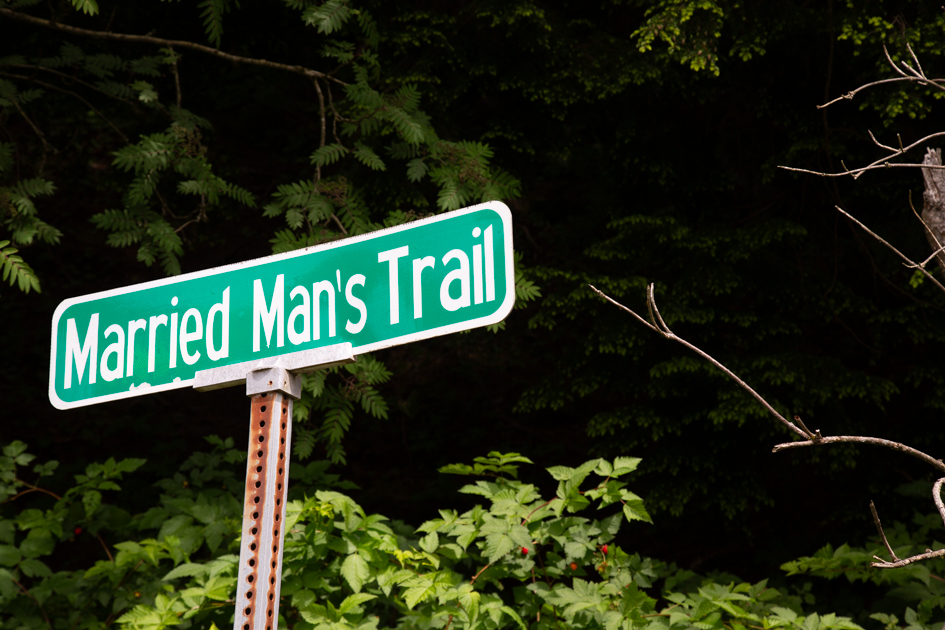
Prohibition didn’t slow things down here — if anything, it made Ketchikan’s nightlife more inventive. Whiskey was smuggled in by boat under the boardwalks, and secret tunnels were carved beneath the hillside to help patrons slip away if law enforcement decided to make an appearance. One of those escape routes later became the path known as Married Man’s Trail — a discreet way for men to “take a walk in the woods” and emerge, conveniently, far from the eyes of their wives.
Echoes of the Past
Today, the same hills that once hid scandal now hide stories — and that’s part of what makes Ketchikan so fascinating. The town never tries to cover up its past; instead, it wears it like a badge of honor, showing that Alaska’s history isn’t just about glaciers and gold, but about the people who built lives in wild and unpredictable places.
Walking Creek Street: From Brothels to Boutiques
Where History Hangs Over the Water
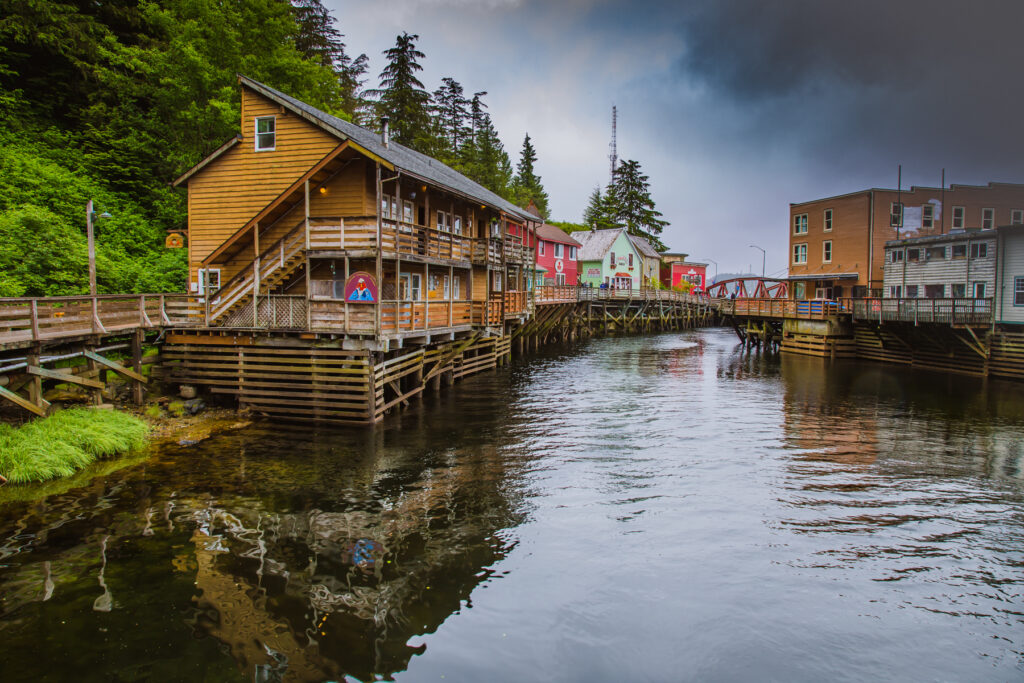
There’s something almost cinematic about standing on Creek Street — the boardwalk creaking under your feet, colorful buildings reflected in the slow-moving water, and the faint echo of history in the air. It’s one of those places that looks picture-perfect now, but if these walls could talk, they’d tell a few scandalous stories.
The Red-Light Past of Creek Street
Once known as Ketchikan’s red-light district, Creek Street was home to roughly thirty “businesses” that operated quietly above the waterline — and not all of them sold souvenirs. During the early 1900s, when the logging and fishing industries were booming, this was where tired men spent their hard-earned wages on whiskey, music, and companionship.
From Scandal to Small Shops
But times changed, and so did Creek Street. Prohibition ended, the brothels closed, and the women who ran them — many of whom were smart business owners in their own right — faded into history. Today, those same clapboard buildings house art galleries, local craft shops, and museums that tell the real stories behind the legends. It’s a transformation that feels symbolic of Ketchikan itself — a town that’s learned to honor its past without being defined by it.
Following the Famous Married Man’s Trail
As you wander along the boardwalk, it’s easy to imagine the mix of laughter, gossip, and secrets that once filled the night air. Stop for a few moments at the Married Man’s Trail sign — your photo of it will be a perfect visual for this story — and think about how the path below once offered a quick escape from scandal. Now, it’s a quiet nature trail that winds through lush greenery and salmon streams, a far cry from its colorful beginnings.
When the Salmon Return
If you visit during salmon season, you’ll see the fish fighting their way upstream right beneath the boardwalk. Locals gather here to watch the spectacle, cameras in hand, while eagles perch nearby waiting for their chance. It’s one of those moments where nature and history come together — the kind that reminds you how layered Alaska really is. If you want to find out how to take pictures of the Salmon and Alaska’s ever changing weather, check out my Mastering Travel Photography and Mastering The Art of Wildlife for photography tips and tricks.
Things to Do in Ketchikan Today
Explore the Waterfront and Historic Downtown
Ketchikan’s main street runs parallel to the waterfront, where colorful storefronts, murals, and harborside boardwalks make it easy to spend a few hours just wandering. Fishing boats still unload their daily catch, and seaplanes come and go like clockwork, giving you that sense that life here is still tied to the tides. You’ll find plenty of shops selling Alaskan art, smoked salmon, and locally made crafts — but don’t miss the small side streets that climb steeply uphill. They lead to quiet residential views that show how the town quite literally clings to the mountain.
Visit the Totem Heritage Center
A short walk from downtown, the Totem Heritage Center is one of Ketchikan’s cultural highlights. It preserves original 19th-century totem poles that were rescued from nearby Tlingit and Haida villages and provides a thoughtful look at the Indigenous artistry that still defines this part of Alaska. For photographers, the aged cedar poles and soft natural light indoors make for powerful, moody compositions.
Take a Flightseeing Tour to Misty Fjords
If you’re looking for a once-in-a-lifetime perspective, hop on a floatplane for a flightseeing trip over Misty Fjords National Monument. The name says it all — misty cliffs, deep blue lakes, and endless waterfalls cascading through the wilderness. Seeing it from the air is both humbling and breathtaking. It’s also one of those rare experiences where every photo feels like a postcard straight from the edge of the world.
Walk Married Man’s Trail and Beyond
Even if you’ve already visited the trail from Creek Street, walk the full Married Man’s Trail path — it winds through lush forest and ends near a small waterfall where salmon gather. It’s a peaceful escape right in town, and if you go early in the morning, the only sounds you’ll hear are rushing water and the occasional eagle overhead.
Discover Ketchikan’s Art Scene
Ketchikan may be small, but it’s full of creativity. You’ll find working artists’ studios along Stedman Street and in the converted buildings of Creek Street. Local galleries feature everything from hand-carved totems and jewelry to watercolor paintings inspired by the sea. During the summer, you can often watch artists at work — a great chance to connect with locals and capture candid street photography moments.
Best Photo Spots in Ketchikan
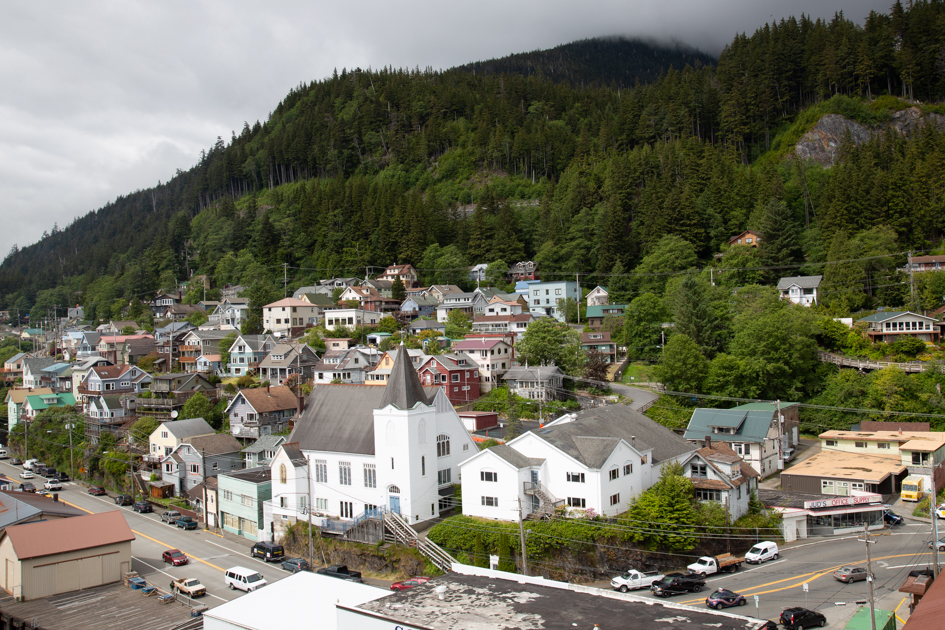
For sweeping views of the town built against its hillside backdrop, head to Cape Fox Lodge. The overlook there gives a perfect vantage point for your photo showing Ketchikan cascading down to the harbor. Another favorite spot is the Married Man’s Trail bridge, where you can frame Creek Street’s reflections during golden hour. If you’re lucky, the tide will be high enough to mirror the pastel colors of the buildings — one of those shots that sums up Ketchikan’s unique charm in a single frame.
Closing: Where the Past Still Echoes
Ketchikan is one of those places that stays with you long after you leave. Maybe it’s the sound of the seaplanes skimming across the water, or the way the fog rolls in and wraps around the hills like a secret. Maybe it’s the stories that linger — the fishermen, the madams, the artists, the Tlingit elders — all woven together in this stairway city by the sea.
Walking through town, it’s easy to see why Ketchikan feels different from anywhere else in Alaska. It’s not polished or pristine; it’s layered, honest, and still a little wild. That’s what makes it worth slowing down for — not just a stop on an itinerary, but a glimpse into what Alaska once was, and still is at heart.
If you’re planning a trip through the state, Ketchikan is the perfect first chapter. It introduces you to the balance between nature and history that defines Alaska — a theme I explore throughout my Alaska Region Travel Guide. From gold rush relics to glacial landscapes, every town tells part of the story, and Ketchikan’s chapter just happens to be one of the most colorful.
While you are in the area of Ketchikan, check out:
- Skagway and the White Pass and Yukon Railroad
- Fairbanks
- Denali National Park
- Whale Watching
- Back Roads of Alaska
- Gold Dredge 8
- White Pass and Yukon Railroad
- Hubbard Glacier
If you want to find more of my off-the-beaten-path destinations, see how I find them in my master travel guide.
Before You Go
If Ketchikan has you dreaming of misty harbors, salmon streams, and colorful hillside towns, there’s so much more waiting in the rest of Alaska. From Denali’s vast wilderness to the gold-rush history of Fairbanks, every stop tells another piece of the story.
If you enjoyed this post, don’t miss my Alaska Region Travel Guide — it’s packed with routes, tips, and hidden places that capture the spirit of the Last Frontier.
Join the Back Roads Lens newsletter to get my latest travel stories, photography tips, and behind-the-scenes road trip updates delivered straight to your inbox. It’s the best way to explore off the beaten path — one adventure at a time.