There’s a moment when you first see the Tetons that stops you cold. One minute you’re driving through wide Wyoming plains, and the next—bam—those mountains rise straight from the valley floor, sharp and dramatic against the sky. It’s one of those scenes that makes you pull over without thinking, camera already in hand.
Grand Teton National Park is the kind of place that leaves you quiet for a second. The peaks seem close enough to touch, the air smells of sage and pine, and the light changes by the minute. It’s wild, yet peaceful—the perfect mix of rugged adventure and calm reflection.
We visited on a stretch of our Northwest Region Travel Guide route, and it instantly became one of our favorite stops. The park feels different from nearby Yellowstone—less geothermal drama, more raw mountain energy. Here, everything seems cleaner, sharper, and deeply personal, as if the land has its own rhythm and you’ve just stumbled into its song.
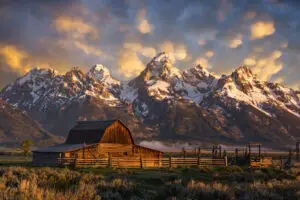
Over time, I’ve found myself drawn back again and again. Some mornings I’ve watched the sunrise pour over the Mormon Row barns, their weathered wood glowing pink against the peaks. Other days I’ve stood quietly by Jenny Lake, where reflections ripple like glass. And on still evenings, I’ve parked along Oxbow Bend, waiting for the moment Mount Moran turns gold.
Whether you’re here to hike, photograph, or just breathe it all in, Grand Teton National Park never disappoints.
What This Guide Covers
In this guide, I’ll take you through:
- A brief look at the park’s history and how it came to be
- The best scenic drives and photo stops
- Must-see highlights like Mormon Row, Jenny Lake, and Oxbow Bend
- Wildlife viewing tips and when to visit
- Practical travel advice and reflections from the road
So grab your camera (and maybe a thermos of coffee), and let’s explore one of America’s most unforgettable landscapes.
A Brief History of Grand Teton National Park
Before the Park Had a Name
Long before this land had a park sign or scenic turnouts, the valley we now call Jackson Hole was home to Native American tribes — the Shoshone, Bannock, and others — who hunted, fished, and followed the rhythm of the seasons here. They didn’t need an Instagram caption to know it was spectacular.
By the early 1800s, trappers and explorers started showing up, chasing beaver pelts and adventure. (Think of them as the original “back-roads travelers,” minus the truck and camera bag.)
Homesteaders Move In
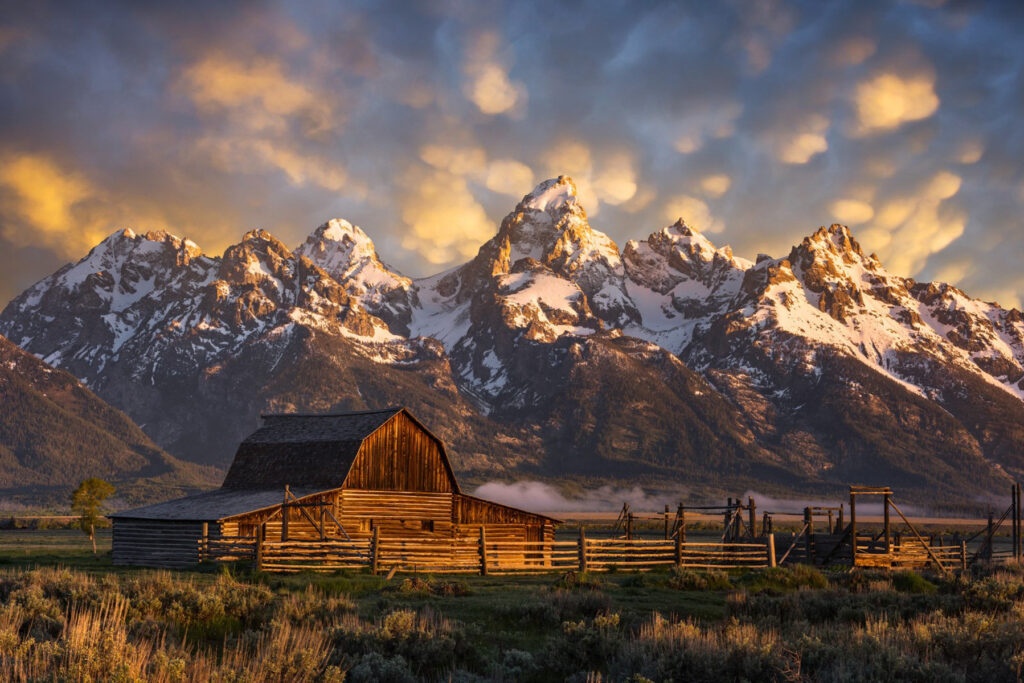
By the late 1800s, a new wave of settlers arrived — families looking for land, faith, and fresh starts. Among them were the Mormon pioneers who crossed over from Idaho and built the community of Mormon Row.
They were a tough bunch. Imagine spending a winter out here without central heating or Wi-Fi. They dug irrigation ditches by hand, built barns that somehow still stand today, and carved out lives with a view most of us would pay extra for.
Their story is one of the reasons I love photographing this park — every weathered board and rusted hinge tells you someone once believed in this place enough to call it home.
(If you like these “life on the edge of nowhere” kinds of stories, check out my Custer State Parkor Badlands National Park blogs — same grit, different zip code.)
A Park in Progress
Fast-forward to the early 1900s, when conservationists and locals began realizing this valley was something special. Not everyone agreed, of course — ranchers worried about losing land, while tourists worried mostly about where to buy postcards.
Enter John D. Rockefeller Jr., who quietly started buying up ranches under a front company to protect them from development. Eventually, he donated the land to the federal government, and in 1929 Grand Teton National Park was officially born.
It took decades (and more than a few arguments) before the park reached its current size in 1950, but the result is the stunning landscape we explore today — mountains, lakes, plains, and all that wide-open Wyoming sky.
Where History and Beauty Meet
What I love most about Grand Teton is that you can still feel its history wherever you go. Drive past the Moulton Barns at sunrise, hike the trail around Jenny Lake or stop at Oxbow Bend to watch Mount Moran reflect in the water — every corner tells a story.
This park isn’t frozen in time; it’s alive with it.
Scenic Drives Through the Tetons
One of the best parts of Grand Teton National Park is that you don’t have to hike ten miles to see something amazing. Some of the most jaw-dropping views in the entire park can be seen right from your car window. (Which, let’s be honest, is nice when you’ve already been road-tripping across half the country and your hiking boots are starting to smell suspiciously like adventure.)
Below are a few of my favorite routes — the ones that make you roll down the window, breathe in that crisp mountain air, and maybe say “wow” out loud more times than you’d like to admit.
Teton Park Road — The Classic Route
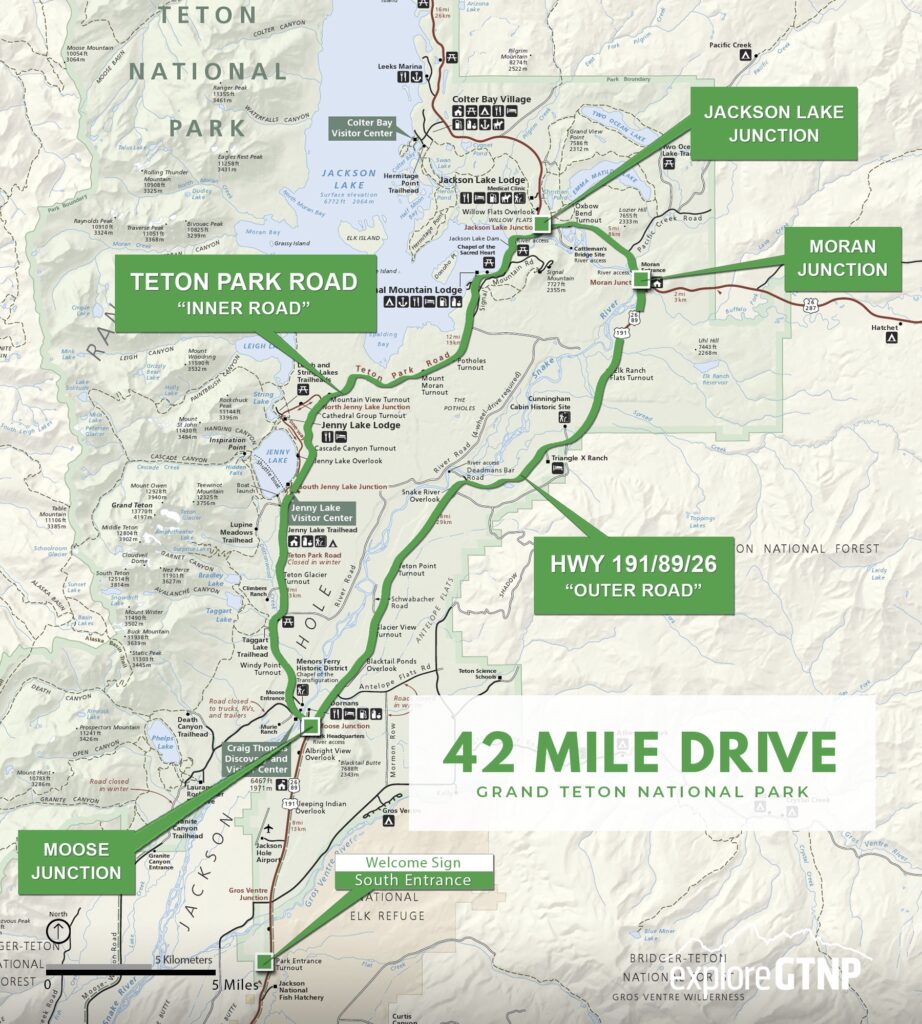
If you only have time for one drive in Grand Teton, make it Teton Park Road. This 20-mile stretch runs from Moose Junction to Jackson Lake Junction, hugging the base of the mountains almost the entire way.
It’s basically a highlight reel of the park: you’ll pass by Jenny Lake, Cascade Canyon, Signal Mountain, and more photo-worthy turnouts than you can count.
There’s a good chance you’ll find yourself pulling over every few minutes — and that’s perfectly okay. Each turnout offers something new: the peaks reflected in still water, elk grazing in the distance, or sunlight breaking through the clouds just long enough to turn everything gold.
Pro Tip: If you can, drive this road at sunrise or sunset. The light hits the mountains from the east in the morning and from the west in the evening — perfect for photography (and coffee breaks).
Moose–Wilson Road — Wildlife and Winding Turns
For a smaller, more intimate drive, take Moose–Wilson Road, which connects the town of Moose to Teton Village. It’s narrow, curvy, and at times feels more like a backcountry lane than a park road — which is exactly why I love it.
This stretch is famous for wildlife sightings: moose, black bears, and occasionally even a fox trotting through the trees. Keep your camera ready, but please — don’t block traffic when you stop for that perfect shot (we’ve all seen that person).
During summer, the road can get muddy and partially closed after rain, so check the Grand Teton National Park website before you go.
(If you love spotting wildlife, you might also like my Finding the Wild Close to Home blog — a story about learning to appreciate wildlife photography right in my own backyard.)
Highway 191 — The Grand Panorama
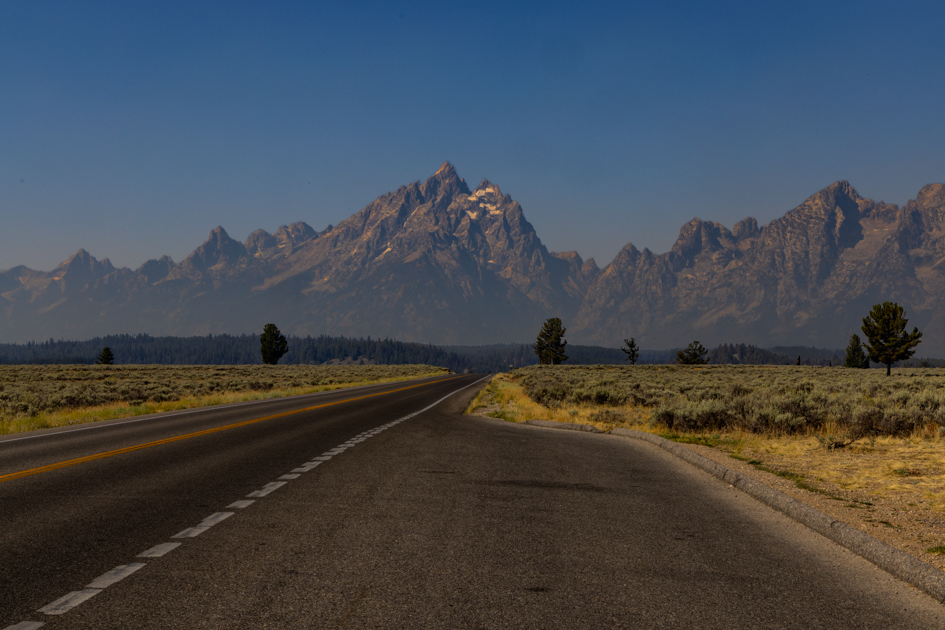
Running along the park’s eastern edge, Highway 191 offers big views and even bigger skies. This is the classic postcard shot: the Tetons rising abruptly from the valley floor, framed by open plains and endless clouds.
From this route, you can access several famous overlooks:
- Snake River Overlook – Made legendary by Ansel Adams, it’s still one of the most breathtaking vistas in the park. Early morning is best for light — and to avoid the tour buses.
- Glacier View Turnout – A panoramic view that includes Mount Moran and the southern peaks.
- Oxbow Bend – A must-see at sunrise or sunset when Mount Moran glows in the still water.
Signal Mountain Summit Road — Worth the Detour
Signal Mountain Summit Road is one of those short side trips that a lot of people skip — don’t. The road winds up about five miles to a viewpoint that gives you a 360° panorama of Jackson Hole, Jackson Lake, and the Tetons all at once.
On a clear day, it’s the kind of view that makes you forget to breathe for a second. Bring binoculars — you can often spot elk or even bear from up there.
Antelope Flats Road — History Meets Scenery
And of course, no Grand Teton road trip is complete without a drive down Antelope Flats Road, home to the famous
Mormon Row Historic District.
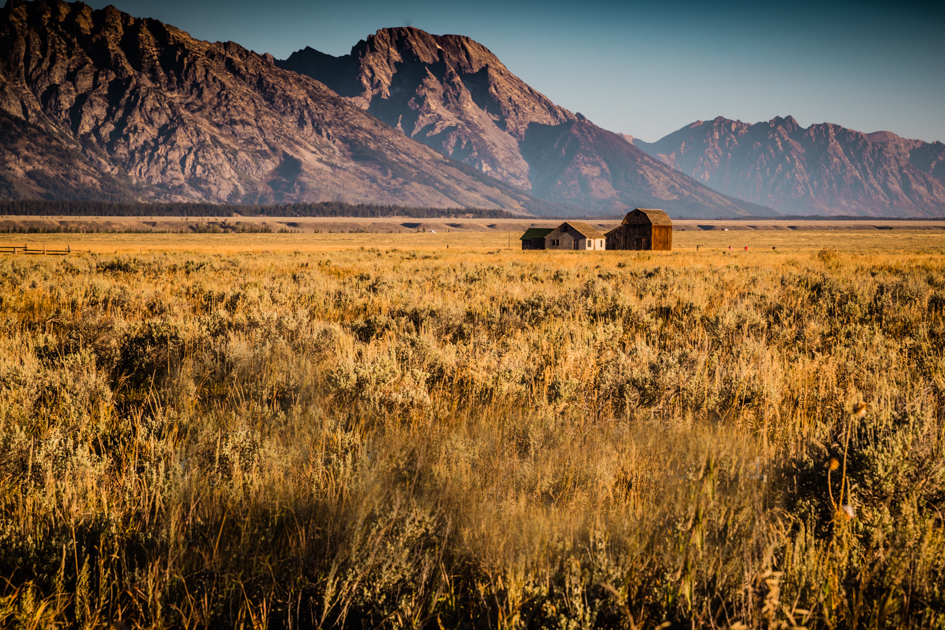
It’s a short detour off Highway 191 near Moose, but it feels like stepping into a different time. The Moulton barns, the Chambers homestead, and the open fields with the Tetons towering behind them — it’s Wyoming perfection.
If you’ve read my Mormon Row blog, you already know the backstory of the settlers who built those barns. If not, I’ll warn you: once you go, you’ll want to spend hours there chasing the perfect light.
Scenic Drive Map
If you’re a visual person (and who isn’t when it comes to road trips?), here is a map of the Scenic Drives.
Driving Tips for the Tetons
- Timing matters. Early mornings and late afternoons offer the best light — and fewer crowds.
- Bring layers. Even in summer, it can be 40°F at sunrise and 80°F by afternoon.
- Don’t rush. The park looks different every mile and every hour — give yourself time to stop and take it in.
- Wildlife first. If you’re lucky enough to see moose, elk, or bison near the road, pull over safely, stay in your vehicle, and use your zoom lens. (They might be photogenic, but they don’t love selfies.)
Must-See Stops and Hidden Gems in Grand Teton National Park
The truth about Grand Teton is simple — there’s no such thing as a bad stop. You can pull over almost anywhere and end up with a postcard-worthy view. But after spending time exploring, a few places always pull me back. These are the stops where I’ve lingered long after I meant to leave, camera battery blinking red, telling myself “just one more photo.”
Jenny Lake — Reflections and Waterfalls
Jenny Lake might be the crown jewel of the park. It’s where mountain reflections shimmer in the morning light and trails lead to waterfalls that sound like applause.
You can hike the full loop around the lake, or take the small boat shuttle across to reach Hidden Falls and Inspiration Point. On calm mornings, the reflections are so perfect you’ll spend half your time trying to decide which direction is up.
Pro Tip: If you’re not a morning person, at least pretend to be one for Jenny Lake. It’s worth every lost minute of sleep.
Schwabacher Landing — Mirror of the Tetons
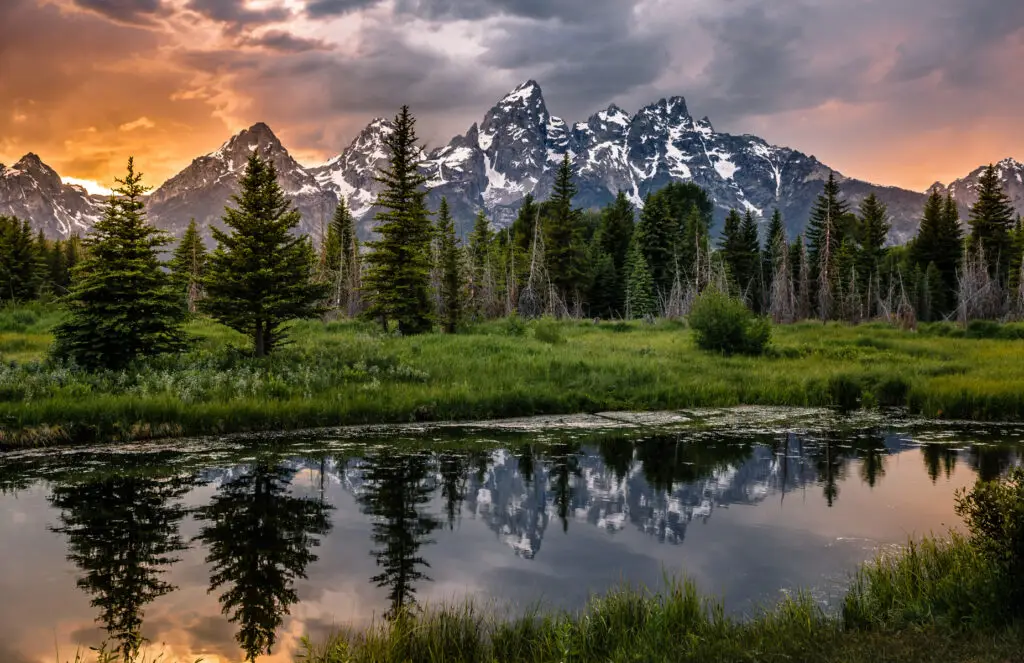
If I had to pick one place that captures the spirit of Grand Teton, it might be Schwabacher Landing. This calm stretch of the Snake River offers the kind of reflections photographers dream about.
I’ve been here at sunrise when the sky looked like it was on fire — pinks, oranges, and gold melting into the water. A beaver paddled by as if it owned the place, and a couple of elk wandered through the brush as the first light hit the peaks.
Best Time: Early morning. Bring bug spray, a tripod, and patience — nature doesn’t run on our schedule.
Oxbow Bend — The Famous Reflection
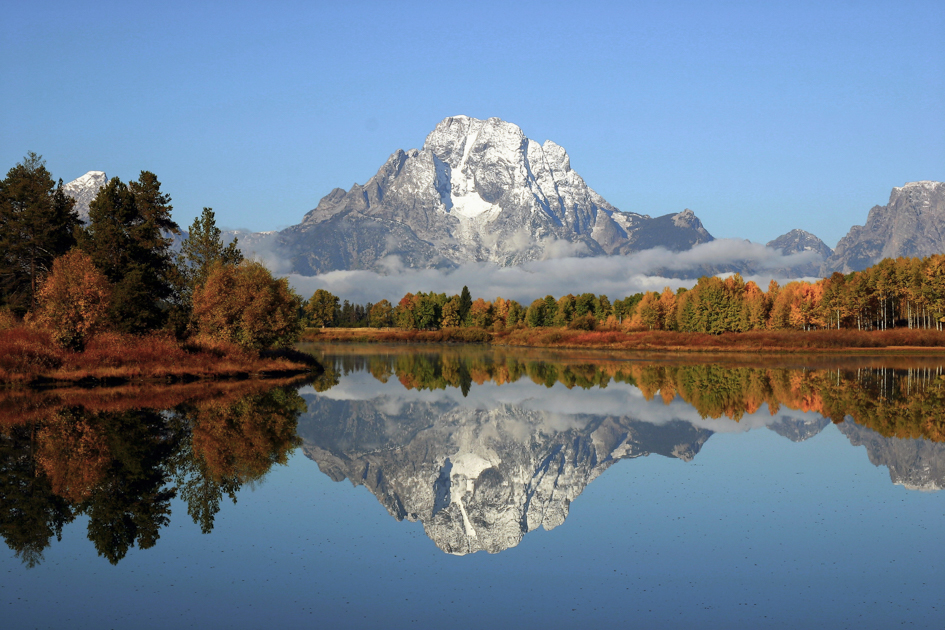
Oxbow Bend is that “wow” moment you never forget. Mount Moran rises perfectly across the water, framed by willows and cottonwoods. If the wind stays still, you’ll get a mirror-like reflection that looks almost unreal.
This is a favorite for both photographers and painters — and for good reason. Every few minutes, the light changes, and suddenly it feels like you’re in a different painting altogether.
Snake River Overlook — Ansel Adams’ Legacy
You can’t come to Grand Teton without visiting Snake River Overlook — made famous by Ansel Adams’ 1942 photograph. The view today looks almost identical: the winding river, the snow-dusted peaks, and a sky that refuses to sit still.
I stood here trying to imagine Adams setting up that massive camera, waiting for the right light. Meanwhile, I’m holding a travel mug of coffee and swatting mosquitoes — different tools, same love of beauty.
If you enjoy landscape photography stories, my Mastering Travel Photography blog dives into light, timing, and how to capture scenes just like this.
Signal Mountain — The View from Above
Most of Grand Teton’s views are from below, but if you want to feel like you’re on top of the world, drive up Signal Mountain Summit Road. It’s only about five miles long, but it gives you a full panoramic view of Jackson Hole, Jackson Lake, and the entire Teton Range.
Go at sunset — the valley glows, the Tetons fade into purple, and you’ll understand why artists and photographers never run out of inspiration here.
Hidden Corners Worth a Detour
If you have extra time and curiosity to spare, explore these quieter gems:
- Cunningham Cabin: One of the oldest homesteads still standing in the park, built in the 1880s.
- Menor’s Ferry Historic District: Near the town of Moose — a great stop for history lovers and a glimpse of early river crossings.
- Blacktail Ponds Overlook: A lesser-known turnout that’s perfect for spotting moose in the early morning light.
These spots may not make the postcards, but they’ll stick with you long after the trip ends.
Wildlife and Photography Highlights
It’s not just the mountains that make Grand Teton unforgettable — it’s everything that moves among them. This park is alive. One minute you’re scanning the willows for moose, and the next you’re watching elk step into a golden meadow like they own the place.
Wildlife here doesn’t pose; it just happens. That’s what makes it so thrilling — and so challenging to photograph.
The Big Ones — Moose and Elk
If you’ve read my Finding the Wild Close to Home blog, you already know I have a soft spot for wildlife photography — especially those early-morning moments that feel like the world’s still half-asleep.
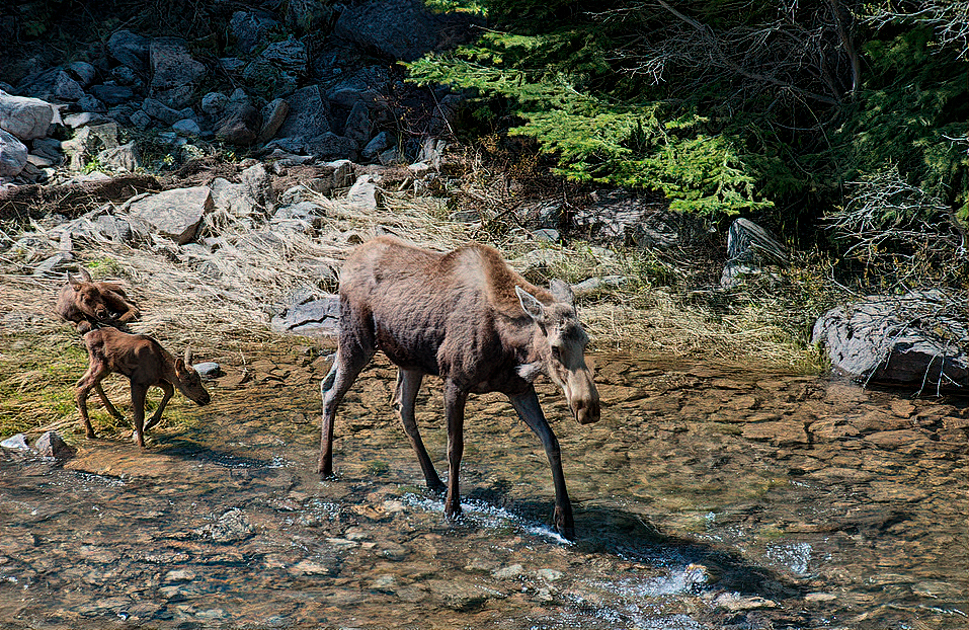
Here in Grand Teton, moose are the quiet giants. They tend to hang around Moose–Wilson Road, Schwabacher Landing, and Blacktail Ponds Overlook right after sunrise or just before dusk. Seeing one standing knee-deep in a pond with the Tetons in the background is one of those “drop the coffee and grab the camera” moments.
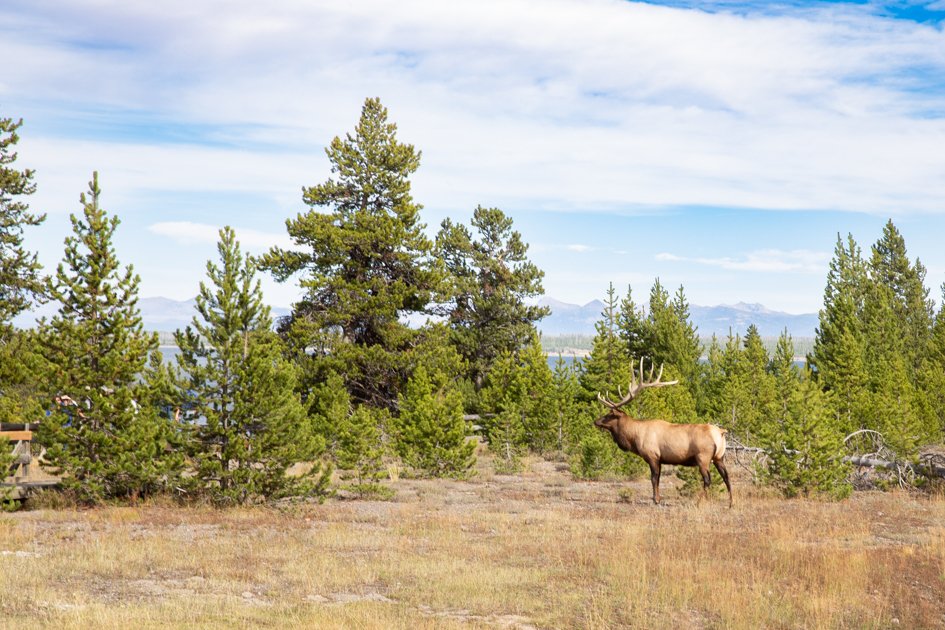
Elk, on the other hand, bring the drama. In fall, their bugles echo through the valley — it’s haunting and beautiful at the same time. You can often find them near Willow Flats or Antelope Flats, especially in the cooler hours of the day.
Camera Tips for Grand Teton Wildlife Photography
This is where the magic meets the mechanics — and where a few small settings can make a big difference. Whether you’re shooting with a mirrorless setup like my Fuji X-T5 or something smaller for travel, here’s what works best for me in the Tetons:
1. Golden Light Is Your Friend
Wildlife looks its best in the first and last hours of light. I usually start around ISO 400–800, aperture around f/5.6–f/8, and adjust shutter speed depending on the moment — 1/500 s or faster for moving elk, slower if I’m after soft reflections at dawn.
2. Shutter Priority for the Win
When things start moving fast (like an elk deciding to sprint across the field), I’ll switch to Shutter Priority (S mode) around 1/1000 s to freeze motion, letting the camera handle the rest.
3. Manual Focus Override
Moose love to hide halfway behind willows, and autofocus doesn’t always know who the star of the show is. If your camera allows it, use manual focus override for fine-tuning.
4. Use the Vehicle as a Blind
Sometimes the best way to get close safely is to shoot right from the window. I keep a small bean bag rest in the truck door for stability.
5. Don’t Forget the Landscape
It’s easy to get tunnel vision when there’s a moose in your viewfinder, but zoom out for a few shots. Let the Tetons frame the scene. That’s what makes Grand Teton wildlife photography truly unique — animals against one of the most stunning backdrops in the world.
(For readers who want to dig deeper into photography techniques, check out my Mastering Travel Photography and Travel Photography Gear Guide blogs — they’re packed with tips for shooting in changing light and unpredictable conditions.)
Other Wildlife You Might See
- Bison on Antelope Flats
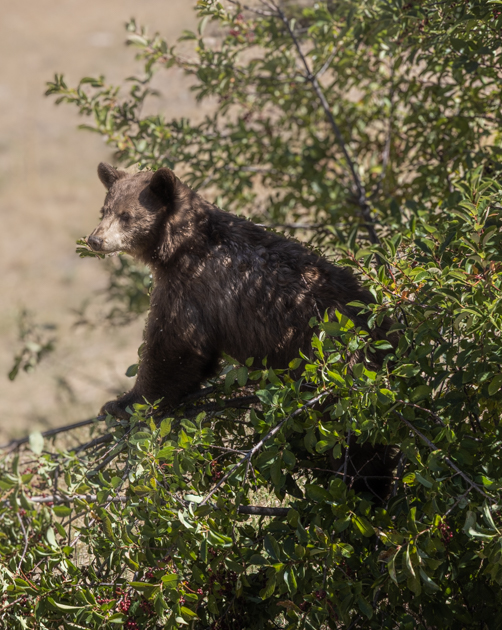
- Black bears along Moose–Wilson Road (especially late summer)
- Pronghorn near Kelly
- Beavers and otters at Schwabacher Landing and Oxbow Bend
- Bald eagles soaring over Jackson Lake
Each sighting feels like a reward for slowing down — something Grand Teton seems to encourage at every turn.
In the Moment
Some of my favorite memories from this park have nothing to do with getting “the shot.” It’s that quiet in-between moment — the sound of wind through the grass, a moose lifting its head to watch you, the soft ripple of the Snake River in the distance. Those are the scenes that stay with you long after you’ve packed up your gear.
Planning Your Visit to Grand Teton National Park
When to Go
Every season in Grand Teton brings something different — and honestly, there’s no wrong time to visit. It just depends on what kind of adventure you’re after.
- Spring (May–June): Wildlife is active, wildflowers start popping, and the crowds are still thin. Roads and facilities begin reopening after winter.
- Summer (July–August): Peak season — expect warm days, busy trails, and a steady line of cars at the turnouts. On the bright side, everything’s open, and the mountain views are at their clearest.
- Fall (September–October): My personal favorite. Crisp air, golden aspens, and elk bugling through the valley — it feels like the park was made for photographers this time of year.
- Winter (November–April): A completely different world. The inner park road closes, but you can snowshoe or cross-country ski around the edges. Jackson Hole transforms into a quiet snow-globe scene.
(If you love seasonal travel tips, my 30-Day USA Road Trip Guide has more on how to plan big road adventures around national park weather patterns.)
Entrance and Park Fees
Grand Teton shares an entrance gate with Yellowstone, so you can purchase a combined pass if you plan to visit both (and you should — they’re practically neighbors).
- Grand Teton entrance fee: $35 per vehicle, valid for 7 days
- Combined Grand Teton + Yellowstone: $70
- America the Beautiful Pass: $80 for the year — totally worth it if you’re hitting multiple parks
You can purchase passes online or at any entrance station.
(For details on park logistics like timed entries and passes, I take a deeper dive in my Acadia National Park blog — similar process, different coast.)
Getting Around
Driving is the best way to explore Grand Teton. The park roads are well-maintained, and nearly every scenic view has a turnout (which is helpful when you spot that moose mid-sandwich).
- Main Routes: Teton Park Road, Highway 191, and Moose–Wilson Road form an easy scenic loop.
- Gas & Services: Available in Moose, Jackson Lake Junction, and nearby Jackson.
- Cell Service: Spotty at best once you’re deep in the park. Download maps before you go.
- Pro Tip: Keep binoculars in your car — you’ll use them more than you think.
Where to Stay
You have plenty of options, whether you like a good mattress or prefer the sound of crickets.
Inside the Park:
- Jenny Lake Lodge: Quiet, upscale, and ideal if you like waking up with the Tetons outside your window.
- Signal Mountain Lodge: Great views, casual atmosphere, and easy lake access.
- Colter Bay Cabins: Cozy and perfect for families or photographers who like early starts.
Outside the Park:
- Jackson, WY: A fun mix of cowboy charm and modern convenience — plus plenty of restaurants, coffee spots, and gear shops.
- Teton Village: Great for those planning to mix park days with a bit of relaxation (or a ride up the tram).
If you’re road-tripping like we often do, staying just outside the park in Jackson gives you flexibility to explore both Grand Teton and Yellowstone, with all the creature comforts nearby.
(You can see how we plan stops like this in my Northwest Region Travel Guide — I always balance a few long drive days with cozy basecamps.)
Packing Tips for the Tetons
- Layers, layers, layers. Morning frost and afternoon sun can happen on the same day.
- Rain gear. Even short summer storms can roll through fast.
- Bear spray. It’s Wyoming — better safe than sorry.
- Camera gear. Wide lens for landscapes, telephoto for wildlife, extra batteries for sunrise marathons.
- Snacks & coffee. Always. You’ll thank yourself halfway through a long scenic loop.
(If you’re curious what gear travels with me on these trips, I break it all down in my Travel Photography Gear Guide — cameras, lenses, accessories, and all the little things that make road-trip shooting easier.)
Visitor Centers and Info Spots
- Craig Thomas Discovery & Visitor Center (Moose): Excellent exhibits and park info.
- Jenny Lake Visitor Center: Ideal for trail maps, conditions, and boat schedules.
- Colter Bay Visitor Center: Great for learning about local wildlife and early settlers.
Stop in at least one — they often have ranger programs or photography exhibits that are worth the time.
One Last Bit of Road-Tripper Advice
Give yourself more time than you think you need. The Tetons have a way of slowing you down — in the best way. You’ll plan to do three things and end up doing one because the light was perfect and the view demanded a long pause. That’s the kind of trip worth having.
Biking the Tetons — Two Wheels, Big Views
Some parks are best explored by car, others by foot — but Grand Teton gives you a third, perfect option: the paved bike trail system that runs through the heart of the park.
One morning, my husband and I decided to swap our truck for bikes — something that had been on our bucket list for years. It turned out to be one of the best decisions of the trip.
The Teton Park Pathway runs more than 20 miles from the town of Jackson, through Moose Junction, and all the way toward Jenny Lake. The trail is completely paved, smooth, and separate from the main road — so you can actually relax and take in the scenery instead of dodging traffic.
We pedaled past open meadows, sparkling streams, and jaw-dropping views of the Tetons that seemed to shift with every curve. There’s a quiet rhythm to it — the hum of tires, the scent of sagebrush, and the occasional gust of wind that makes you feel like you’re part of the landscape.

The Why?
It wasn’t about speed or mileage that day. It was about being in the park instead of just driving through it. Every time we stopped (which, let’s be honest, was often for photos), we just looked at each other and said, “Why didn’t we do this sooner?”
(If you want to read more about our ride, I share the full story and photos in my Grand Teton blog — including where we started, how far we went, and a few hard-earned lessons about biking at altitude.)
Pro Tip: Go early in the day, bring plenty of water, and give yourself time to stop at Mormon Row or Schwabacher Landing along the way — two of the most scenic detours anywhere in the park.
Reflections — What Makes Grand Teton Special
There’s a certain moment in Grand Teton when words just fail you. It usually happens near sunset — the light softens, the peaks turn gold, and everything goes quiet for a minute. Even the wind seems to pause. You just stand there, camera in hand, knowing you’ll never quite capture what it feels like to be here.
This park doesn’t shout its beauty; it hums it. The Tetons don’t roll in gently like other mountain ranges — they rise up out of the earth like they were drawn in a single, confident stroke. They’re dramatic and wild, but also peaceful in that way only vast places can be.
The Weight of History
What makes Grand Teton so powerful isn’t just the view — it’s knowing who walked here before. The Native tribes who hunted and camped along the rivers. The Mormon families who built barns and dug irrigation ditches by hand. The photographers and artists who fell in love with the same light we chase today.
Every ridge and valley carries pieces of those stories, layered into the landscape like brushstrokes on a canvas. When I visit Mormon Row, it’s impossible not to feel it — those barns standing strong against time, a reminder that even in harsh places, people found beauty and belonging.
(If you love exploring places with deep stories like this, my Northeast Region Guide and Schoodic Peninsula blog share that same connection between land and legacy.)
When the Day Ends
At the end of a long day of exploring, I like to park near Oxbow Bend or Schwabacher Landing, roll down the window, and just listen — the soft ripple of water, a distant elk call, the rustle of cottonwoods.
You start the day chasing photos, but you end it realizing this place isn’t about perfect shots — it’s about stillness. About feeling small in the best possible way.
I’ve stood in a lot of places across the country, from the foggy coastlines of Maine to the open roads of South Dakota, but there’s something about Grand Teton that lingers. It’s not a park you just see; it’s one you carry with you.
For more inspiration on routes like this, visit my cornerstone post Scenic Drives and Road Trips Across America. On the east coast, you may want to visit Roosevelt State Park and the Little White House: Walking in the President’s Georgia Footsteps.
Stay Connected and Keep Exploring
If this guide inspires you to pack your camera and hit the road, I’d love for you to join my Back Roads Lens Newsletter.
You’ll get updates on my newest travel stories and photography tips — straight from the back roads of America.
👉 Subscribe here to start exploring with me »