Introduction
There’s something magical about Mormon Row. On a quiet morning, with a bit of mist hovering above Antelope Flats and the Teton peaks glowing pink at sunrise, those old barns feel alive with stories. The wind whispers about homesteaders digging ditches by hand, braving hard winters, and building lives in one of America’s wildest corners.
In this blog series, I’ll take you through the history of Mormon Row in Grand Teton National Park — how it began, who settled there, why many eventually left, and how the legacy lives on in those iconic structures. I’ll weave in other posts I’ve written (and plan to write) so you can dig deeper if one story especially catches your interest.
Why Grand Teton? The Draw for Settlers
When you stand on Antelope Flats and look toward the Tetons, it’s easy to understand why people were drawn here. Even in the late 1800s, when life was tougher and winters could be brutal, the beauty of this valley must have felt like a promise. The jagged skyline, the open meadows, the steady flow of the Gros Ventre River — it all looked like opportunity.
From Idaho to Wyoming
Most of the settlers who came to what’s now known as Mormon Row were part of a larger migration from the LDS community in Idaho. Around the 1890s, church leaders encouraged families to find new land to farm and expand the Mormon presence across the West. A small group crossed the Teton Pass and followed the broad valley east of the mountains until they found this fertile spot near Blacktail Butte.
They called their community Grovont, after the nearby river. It wasn’t much at first — a scattering of log cabins and barns with the Teton Range as a dramatic backdrop — but they were determined to make it work.
(You might see a theme here if you’ve read my Northwest Region Travel Guide — so many of the places I love exploring today were settled by people chasing both hope and hard work.)
Life on the High Plains
Settling in Grand Teton wasn’t easy. The soil was rocky, the growing season short, and winters long. But these families were resourceful. They dug irrigation ditches by hand, using clever engineering to divert water from nearby creeks and make the arid land bloom with hay and grain.
Neighbors worked side by side, building barns and sharing equipment. This “line village” layout — where homes stood close together in a row instead of scattered across miles — made life feel a little less isolated. It was a practical, tight-knit way to live in such a wild setting.
When I first visited Mormon Row, that sense of community still felt strong. Even though the houses stand empty now, you can almost imagine the laughter of kids running between them or the sound of wagon wheels crunching over gravel.
(If you enjoy stories of remote communities and rugged life, my Northwest Region blogand Custer State Park post carry a similar spirit of endurance and connection to the land.)
“Grovont” Becomes “Mormon Row” – Community, Layout, and Early Life
When the settlers first arrived, they didn’t set out to create one of the most photographed places in America — they simply wanted to survive and raise families. What started as Grovont, a modest agricultural settlement, would later become known as Mormon Row, named for the church that tied these families together and for the distinctive “row” of homesteads that lined the dirt road.
Line Village in the Shadow of the Tetons
Unlike the scattered ranches you’ll see across much of Wyoming, Mormon settlers brought with them a community style called a line village. Instead of claiming land miles apart, families built their homes, barns, and corrals close to each other along a shared lane. This layout wasn’t just about companionship — it was about practicality.
When your nearest neighbor is just a short walk away, it’s easier to share tools, trade crops, or help raise a barn before winter sets in. Children went to the same small school, families gathered for church services, and everyone took part in community events.
It’s a reminder that out here, isolation could be dangerous, and cooperation was survival.
(This spirit of working together reminds me of the small towns I’ve written about in my Midwest Region Travel Guide— places like the Iowa and Kansas backroads, where neighbors still look out for one another and a handshake means something.)
Building a Self-Sustaining Life
Each family carved a homestead out of the sagebrush flats. They planted hay and grains to feed their livestock, dug irrigation channels that still trace the landscape today, and built sturdy barns that could handle the Teton winds.
There were no easy conveniences — no stores, no paved roads, and winters that could lock you in for months. Yet, the community flourished for a few decades. The land may have been harsh, but it rewarded perseverance.
By the 1920s, Grovont had grown to include several dozen families, a schoolhouse, and enough barns to make it one of the most productive farming areas in the Jackson Hole valley.
(For another glimpse into life built around the land, you can explore my Custer State Parkor Badlands National Park blogs — both places where settlers and wildlife still share a fragile balance.)
How It Became “Mormon Row”
The name “Mormon Row” came later — long after the post office at Grovont closed and the community began to fade. Locals and travelers started referring to it by the religion of its founders and the unique alignment of their homesteads.
Over time, the name stuck, and today it’s part of Grand Teton National Park’s cultural history. When you walk that dusty road, you’re not just seeing old barns — you’re stepping into the remnants of a faith-driven experiment in community living, set against one of the most breathtaking backdrops in the American West.
(If you’re following my Northwest Region Guide, you’ll notice that the landscapes here tie beautifully into that larger story — rugged places that test your limits but reward your soul.)
The Homesteads and Families — The Moultons, Murphys, and Chambers
Each barn and homestead along Mormon Row tells its own story. These weren’t just picturesque buildings dropped in front of the Tetons — they were part of real, working farms, built by families who poured everything they had into making a life here.
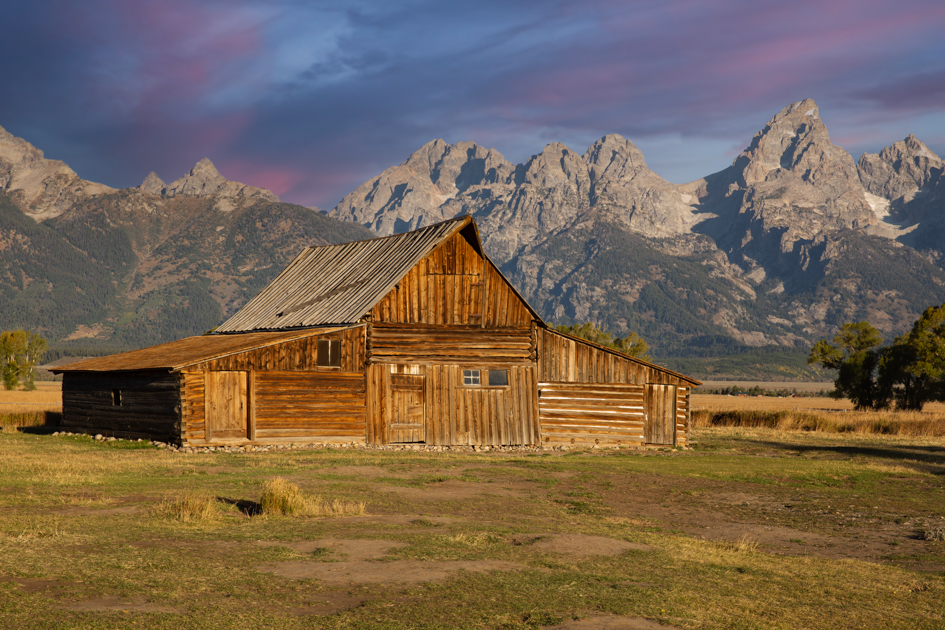
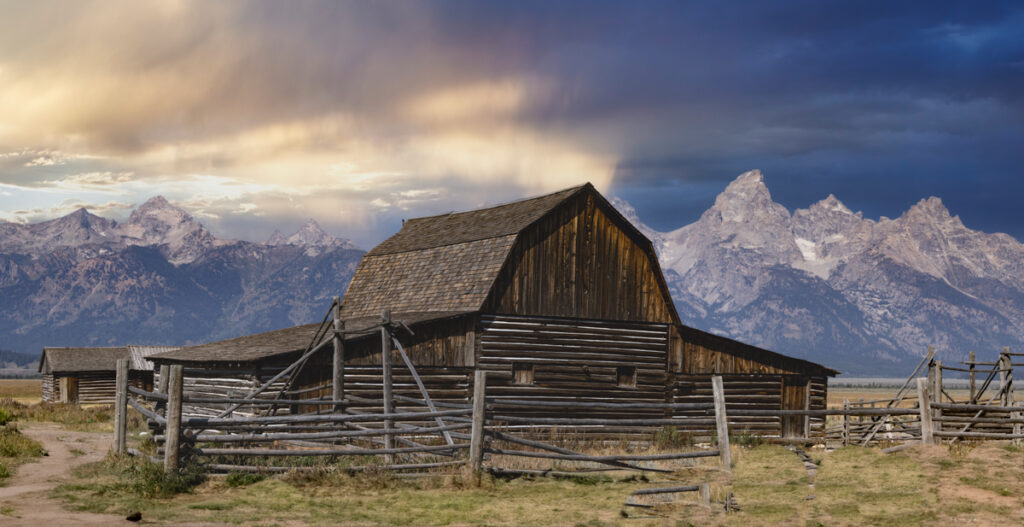
When I first visited, standing beside the famous T.A. Moulton Barn as the morning light spilled over the Tetons, it was impossible not to think about the people who built it. The craftsmanship, the stubbornness, the sheer faith it took to build something that would last through decades of Wyoming winters — it’s humbling.
T. A. (Thomas Alma) Moulton Barn
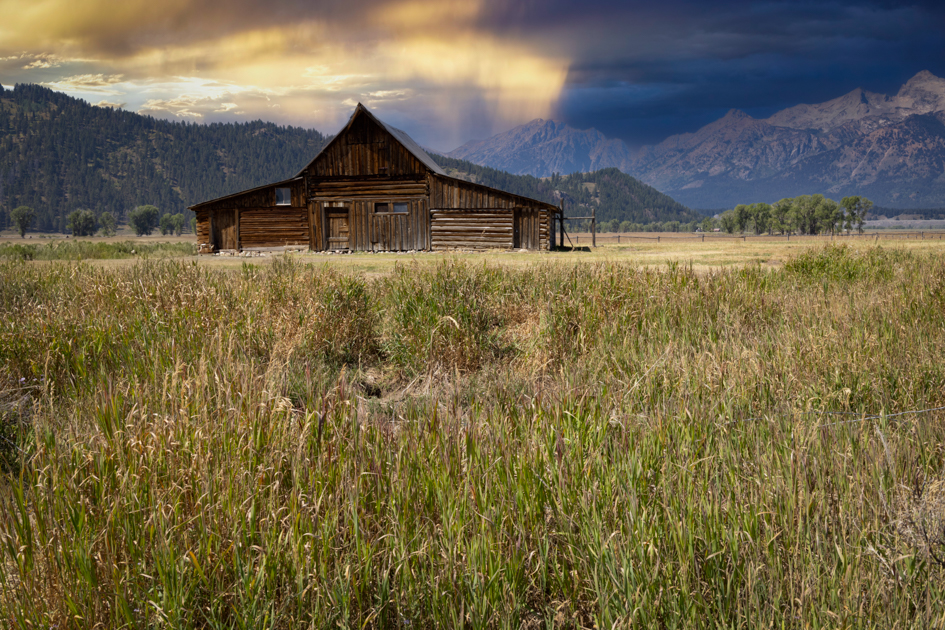
If you’ve ever seen a photograph of Mormon Row, odds are it’s the T.A. Moulton Barn — sometimes called “the most photographed barn in America.”
Thomas Alma Moulton and his brother John arrived in the early 1900s from Idaho, part of that original wave of Mormon settlers. They began homesteading around 1908, and over the years, T.A. built his barn in stages, using hand-hewn timbers and simple tools. The result was a structure that feels almost like a cathedral to hard work — symmetrical, solid, and perfectly framed by the Grand Tetons.
The Moulton family lived here for decades, farming hay, keeping livestock, and maintaining irrigation ditches that helped keep the community alive. Today, the barn stands as a powerful symbol of frontier resilience.
(You’ll see more on the Moulton family’s Wyoming spirit in my Grand Teton National Park guide — where I’ll share other places nearby that carry this same mix of natural beauty and quiet endurance.)
John and Bartha Moulton House and Barn
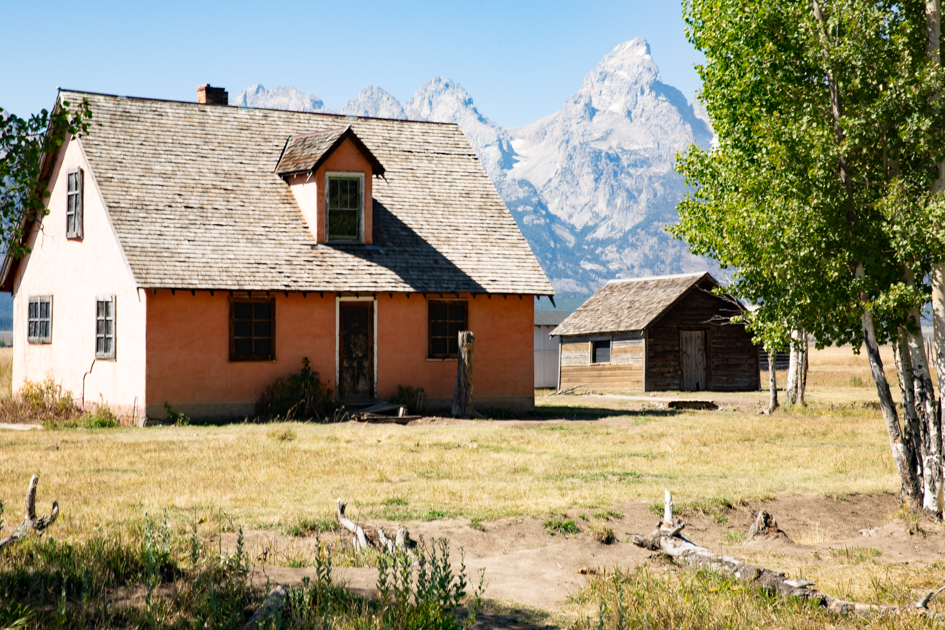
Just a little north of T.A.’s place sits the John and Bartha Moulton Homestead, instantly recognizable by its soft pink stucco farmhouse and the charming barn nearby.
John Moulton’s home feels more refined than most on Mormon Row — a reflection of years of care. The stucco coating was added later, possibly in the 1930s, and it gives the house a warmth that stands out against the sagebrush and mountain backdrop. Inside, it once held hand-painted trim, a few family photographs, and the heart of a home that thrived here for nearly half a century.
John’s wife, Bartha, was known for her hospitality — she’d often welcome travelers and photographers passing by. That friendliness helped make the Moulton name well-known far beyond Jackson Hole.
(For readers who enjoy exploring local character and hospitality, I link stories like this in my Small Towns of America category — places where you still find that same warmth today.)
Thomas Murphy Homestead
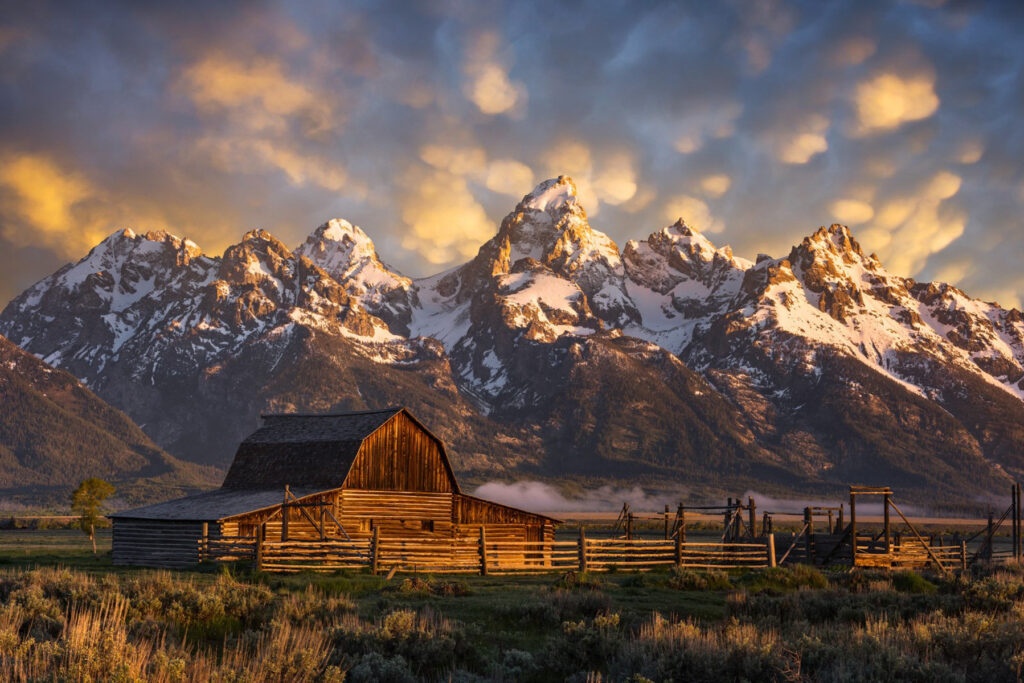
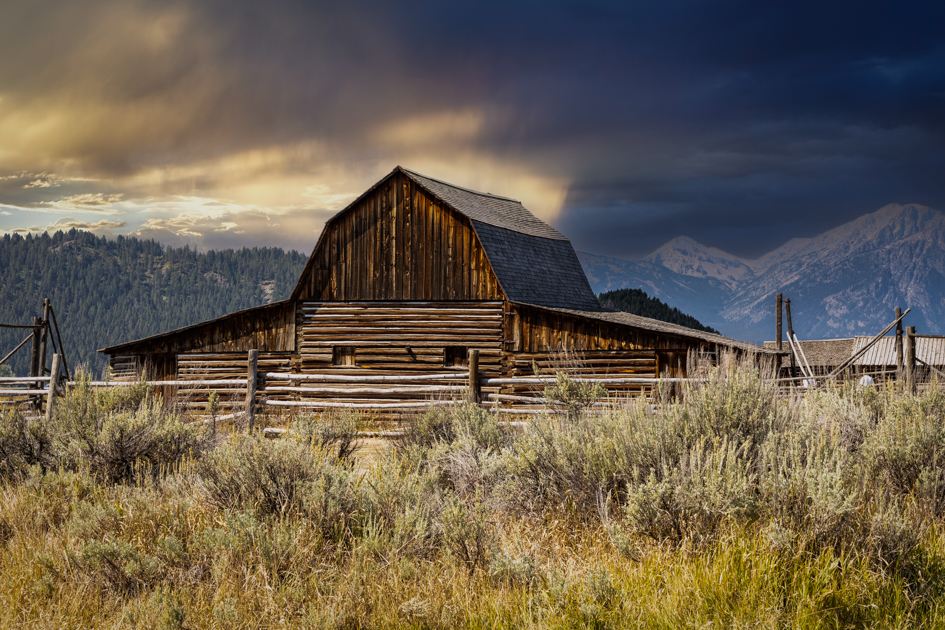
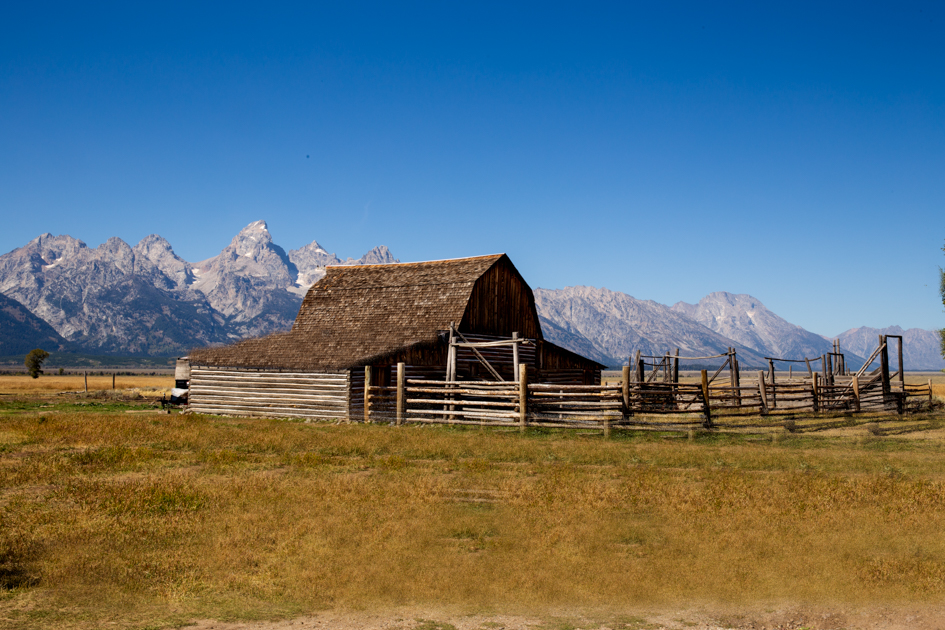
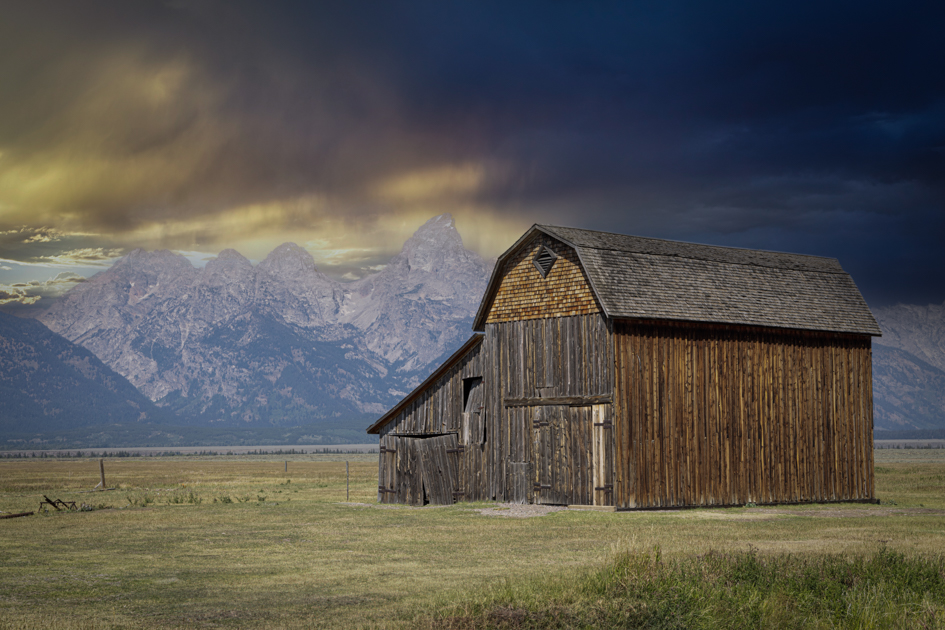
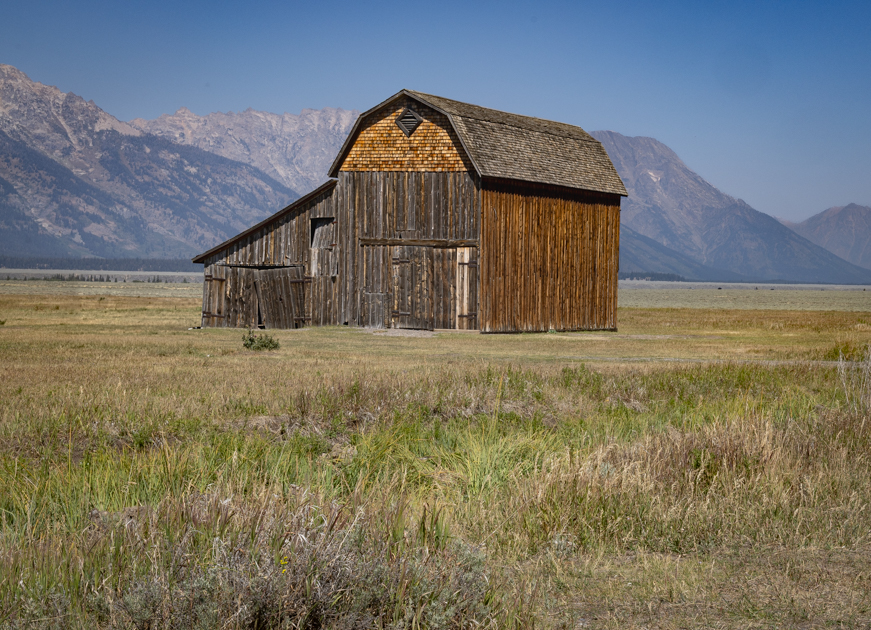
The Murphy Barn, another weathered beauty on Mormon Row, belonged to Thomas Murphy, who arrived in the early 1900s as well. His family, like many others, raised hay and grain to support livestock through the long winters. The Murphy barn has that classic timber-and-shingle look, its roofline softened with age but still standing proud against the elements.
Murphy’s homestead is less photographed but equally rich in history. You can almost picture him tending livestock while keeping a watchful eye on the mountains — a daily routine that never lost its view.
Andrew (Andy) Chambers Homestead
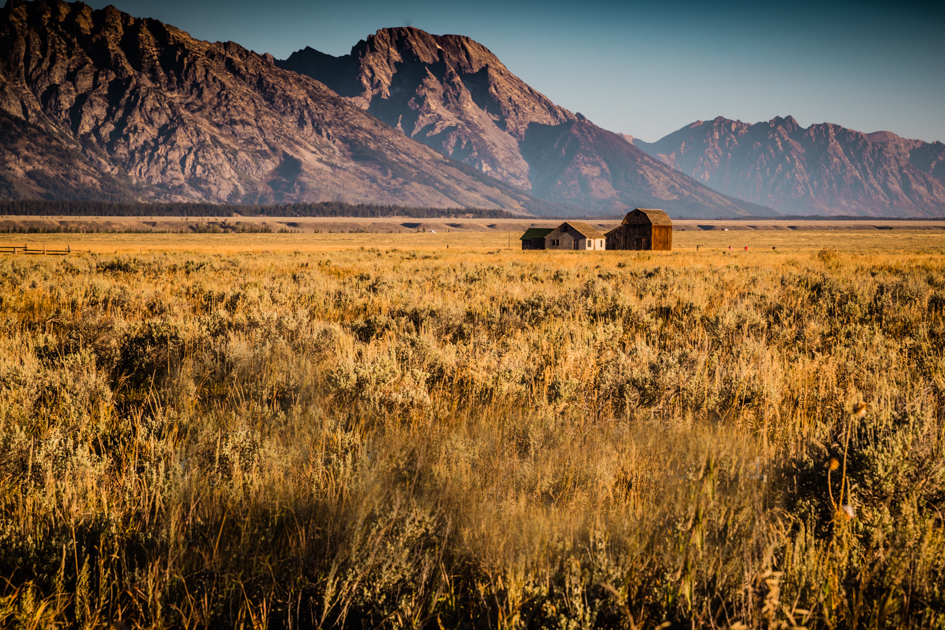
Farther south stands the Andrew Chambers Ranch, one of the most complete examples of a Mormon Row homestead still standing. Built between 1912 and 1929, it includes not only the barn but also the main house, sheds, corrals, and even remnants of the irrigation system.
Chambers and his wife Lucy worked the land for decades, leaving behind an enduring footprint of community and craftsmanship. The homestead’s layout — efficient, compact, and self-reliant — perfectly captures how families managed to survive out here.
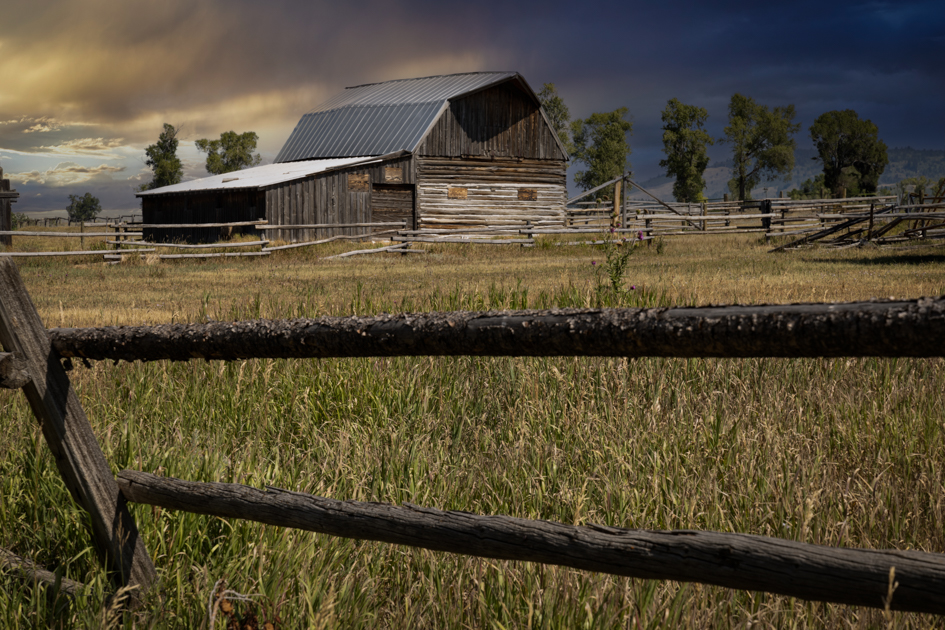
Today, the Chambers property is part of the National Register of Historic Places, ensuring that visitors can still see a nearly intact example of early Mormon agricultural life in Jackson Hole.
(For readers who like these glimpses of preserved heritage, you might also enjoy my Covered Bridges of the Northeast post — another look at how history and craftsmanship endure when people care enough to preserve them.)
A Community of Faith and Tenacity
Beyond the Moultons, Murphys, and Chambers, other families like the May, Budge, and Eggleston clans also played vital roles in shaping Grovont. Each contributed to the irrigation ditches that made the land productive and to the shared school and church gatherings that gave this remote place a sense of home.
Walking among these barns today, you can almost feel that sense of unity — people bound by shared faith, shared hardship, and a shared belief that beauty and purpose could coexist even in such a rugged corner of Wyoming.
Challenges, Changes, and Departure
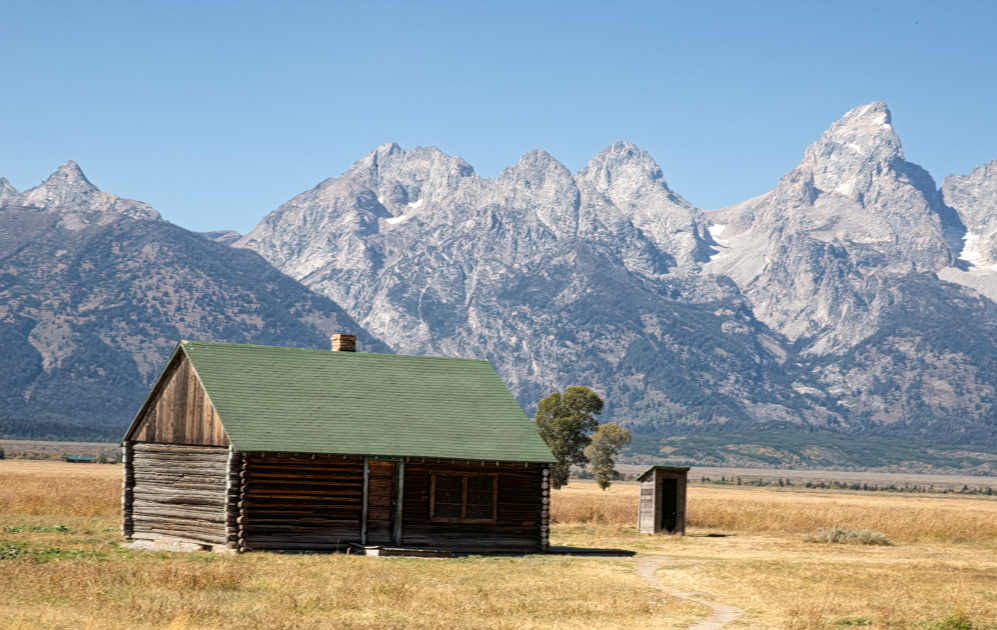
Even though Mormon Row looks peaceful now, life here was anything but easy. The families who settled this valley were tough, but the land was tougher. They built a community out of grit, faith, and teamwork — but over time, the challenges began to outweigh the promise.
Hard Winters and Harsh Realities
The same beauty that draws photographers and travelers today also made farming difficult. Winters were long, sometimes stretching from October to May, with heavy snow that isolated families for months. The short growing season meant there was little time to harvest hay or grain before the frost returned.
I try to imagine what it must have been like — the quiet of those long nights, the wind sweeping across the flats, the Tetons towering in the moonlight. There’s beauty in it, but also an edge of loneliness.
(If you enjoy these glimpses of resilience in tough conditions, I’ve shared similar stories in my Custer State Park and Badlands National Park blogs — places where weather still shapes how people live and work.)
The Park Arrives and the Valley Changes
The turning point came when Grand Teton National Park expanded. In the 1920s and 1930s, the land that surrounded Mormon Row was purchased — first by private conservation efforts led by John D. Rockefeller Jr., then eventually absorbed into the national park system.
Some homesteaders chose to sell and move on. Others held out, staying as long as they could until the federal government bought out their properties. By the 1950s, nearly all the original Mormon families had left.
Their departure wasn’t just about the park — modern life was changing, and farming in this remote valley was becoming less practical. But their legacy stayed rooted here, in weathered wood and enduring faith.
(You can read more about how park expansion reshaped communities in my Grand Teton National Park Guide— where I’ explore how history and preservation intersect across the valley.)
Preserving the Past
Today, Mormon Row is protected as part of the National Register of Historic Places, thanks to efforts by both the National Park Service and local historians. Several of the structures — including the Moulton barns and Chambers homestead — have been stabilized or restored so visitors can experience them safely.
Walking that dirt road, it’s easy to feel the pull of time. Every fence post, window frame, and patch of windblown grass tells a story about the people who made this valley their home.
Wildlife and the Open Plains
One of the best parts of visiting Mormon Row is how alive the landscape feels. Even with the barns standing silent, the valley buzzes with life. On our visit, a small herd of elk grazed in the distance while a moose slowly made its way across the sagebrush — the kind of moment that makes you forget how long you’ve been standing there.
Grand Teton National Park is home to an incredible array of wildlife: pronghorn, bison, mule deer, and even bears can sometimes be spotted near dawn or dusk. If you visit early in the morning, you’ll often find photographers lined up with tripods, quietly waiting for the first hint of movement along the horizon.
See Finding the Wild Close to Home for photographing wildlife close to home.
Photographing Mormon Row
This place is a dream for photographers. The Moulton Barns are among the most photographed structures in the American West — and for good reason. With the Grand Tetons rising sharply in the background, every sunrise seems to cast a new kind of light across the weathered wood.
Camera Tip: If you’re shooting at dawn, arrive early to find your spot and use a tripod. Aperture priority mode at f/8 to f/11 will keep your images sharp front to back. Keep an eye on the clouds — a few wisps can add depth and color as the sun rises behind the peaks.
If wildlife appears while you’re set up, switch quickly to a faster shutter speed and wider aperture. It’s amazing how fast a moose can move when you’re fumbling with settings!
Biking Through the Tetons
After photographing Mormon Row, we decided to swap lenses for bike helmets. The park’s paved bike trails are a bucket list experience — smooth, scenic, and stretching for miles through open meadows and along the base of the Tetons.
We pedaled from the Jackson, Wyoming leaving right from our hotel, toward Jenny Lake, passing through golden fields where the mountains seemed to rise right out of the earth. It’s one of those rides that makes you stop every few minutes just to take it all in — which, for a travel photographer, means you’ll never get very far but you’ll end up with some amazing photos. You can see more details in my Grand Teton National Park Guide.
Reflections on Mormon Row
It’s hard to describe just how timeless this spot feels. Standing in front of the Moulton Barns, with the Tetons glowing pink in the early light, it’s easy to imagine the lives that once unfolded here — families rising early, tending fields, and watching storms roll in over the mountains.
Even as the years pass, Mormon Row remains a testament to perseverance, simplicity, and the enduring beauty of the American West. It’s a place where history, nature, and photography all meet on the same stretch of open land — and if you’re lucky enough to stand there at sunrise, you’ll understand why people keep coming back.
Plan Your Visit
Mormon Row is located within Grand Teton National Park, just north of Jackson, Wyoming. The road leading to it is gravel but easily passable in most vehicles during the warmer months. Sunrise is the most popular time to visit, though evenings offer their own kind of magic with soft light and long shadows.
If you’re planning your trip, check park updates for road conditions and closures. And be sure to visit nearby spots like Schwabacher Landing, Jenny Lake, and Snake River Overlook — all incredible for photography and easily accessible from the same area.
For more inspiration on routes like this, visit my cornerstone post Scenic Drives and Road Trips Across America.
Related Blogs
- Grand Teton National Park Travel Guide
- Finding the Wild Close to Home
- Yellowstone National Park
- Beartooth Highway Road Trip
- Travel Photography Gear Guide
Newsletter Note
Love exploring America’s back roads?
👉 Sign up for my free newsletter for photography tips, road trip ideas, and behind-the-scenes stories from Back Roads Lens.