
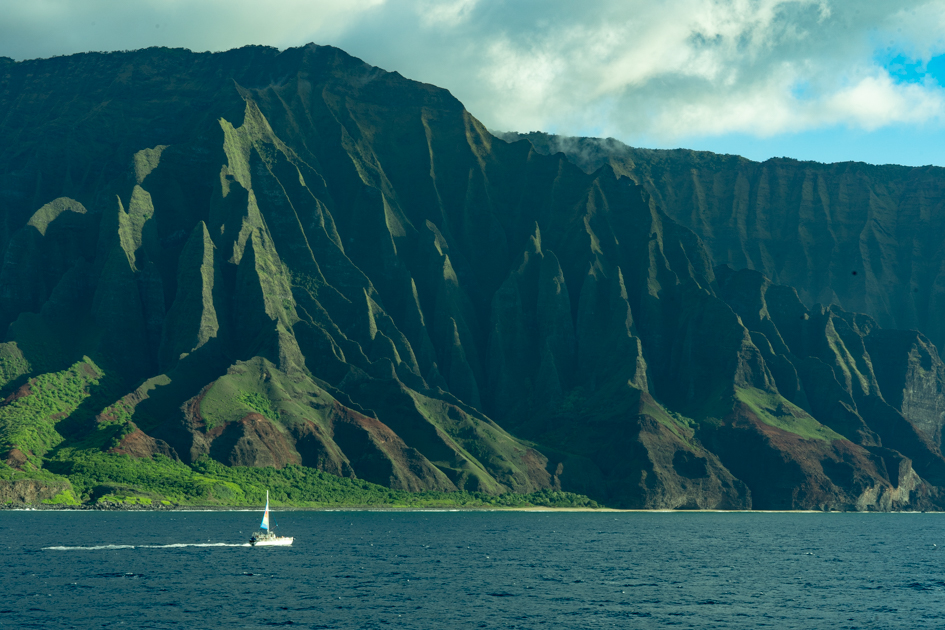
Few places in Hawaii capture the imagination like the Na Pali Cliffs on Kauai. Rising more than 4,000 feet straight from the Pacific Ocean, these emerald cliffs form a rugged wall that defines the island’s northwestern shore. Even from afar, the cliffs seem alive — shifting from deep green to gold as sunlight moves across the ridges.
The Untouched Spirit of Kauai
Standing before the Na Pali Cliffs, you can’t help but feel small. This is Kauai at its most primal — a landscape sculpted by wind, rain, and waves over millions of years. The sense of remoteness is part of what makes the experience so powerful. Unlike the resort-lined coasts of other islands, Nā Pali remains wild and largely inaccessible except by boat, helicopter, or a challenging hike.
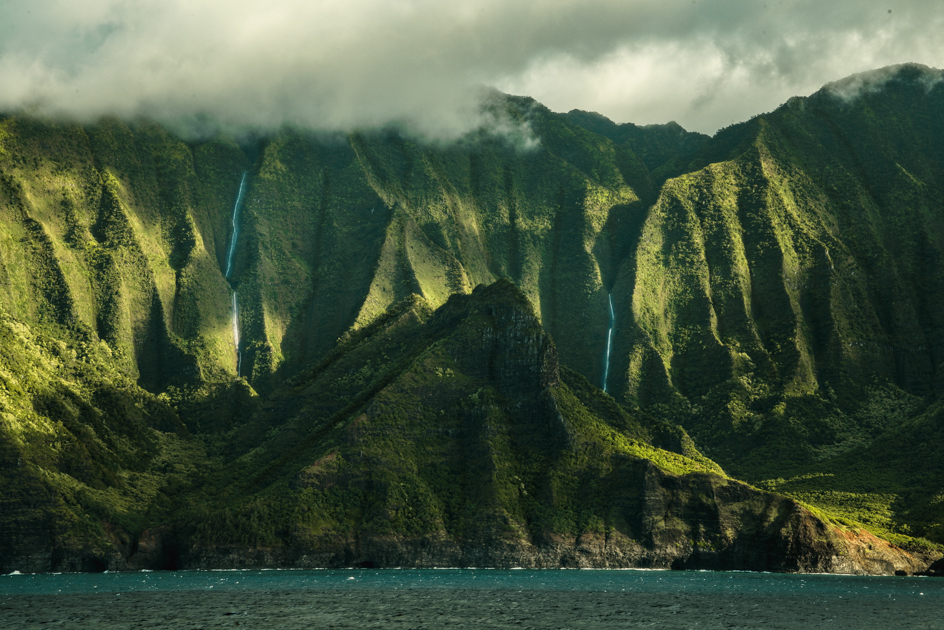
When I finally saw them from the water, it felt like stepping back in time. Jagged green spires rose out of the ocean, waterfalls spilled from hidden valleys, and clouds drifted through peaks so high they disappeared into mist. It’s one of those rare places where words and photos can only hint at the scale and magic of what you’re seeing. The cliffs here echo the drama of Oʻahu’s Kolekole Pass Trail, where the mountains rise straight from the sea breeze.
If you’re planning your Kauai adventure, you can read my full Kauai Travel Guide for a look at other highlights on the island — including Waimea Canyon, often called the “Grand Canyon of the Pacific,” and the scenic Kīlauea Lighthouse that watches over Kauai’s northern tip. Also, I plan these journeys much like I do my mainland trips, following the ideas in How I Plan and Photograph the Perfect USA Road Trip.
The History and Legends of the Nā Pali Coast
Ancient Communities Along the Cliffs
Long before tour boats traced its shoreline, the Na Pali Coast was home to thriving Hawaiian communities. Its name — Na Pali, meaning “the cliffs” — reflects both the terrain and its isolation. Steep ridges, deep valleys, and rough seas meant the only reliable access was by canoe. That isolation helped preserve a way of life deeply connected to the land and sea.
Archaeological evidence in the Kalalau, Nualolo, and Honopu Valleys shows sophisticated irrigation systems and stone terraces where taro once grew. Generations of Hawaiians fished the ocean, farmed fertile valley floors, and built heiau(temples) to honor their gods.
Legends and Sacred Ground
The cliffs are not only beautiful — they are sacred. Hawaiian legends tell of chiefs buried in the hidden valley of Honopu, their spirits said to guard the coastline even today. These stories give the cliffs a sense of reverence that visitors can still feel when gazing up at their towering faces.
By the late 1800s, most settlements were abandoned as life shifted toward more accessible parts of the island. The valleys returned to nature, leaving behind quiet traces of the people who once lived there. Today, Nā Pali stands as both a geological marvel and a cultural treasure — a reminder of Hawaii’s ancient roots.
If you enjoy exploring places where nature and history intertwine, you might also like my post on Schoodic Peninsula in Maine, another rugged coastline where timeless landscapes still shape the way of life along the sea.
How the Nā Pali Cliffs Were Formed
Born from Fire and Shaped by Time
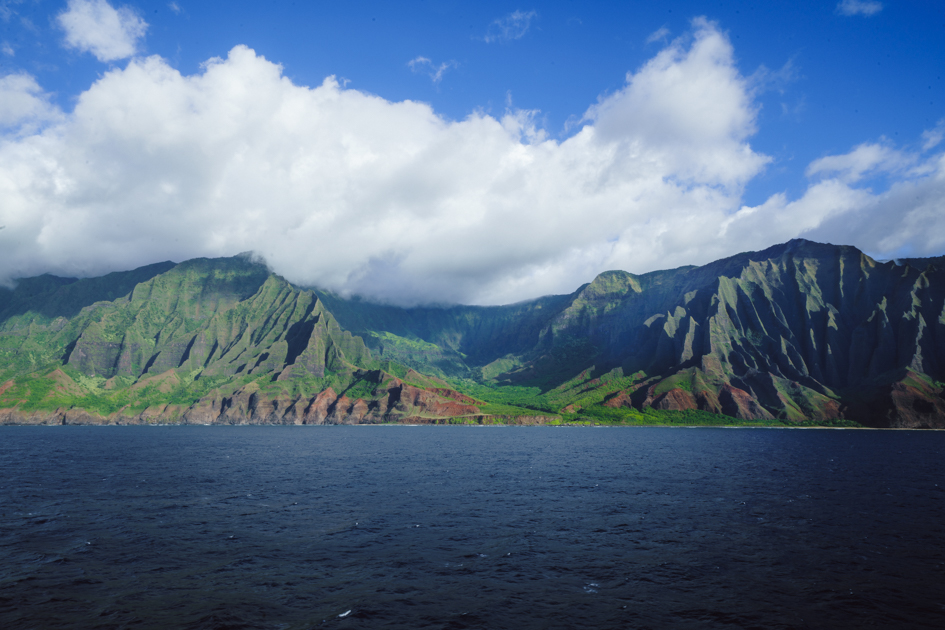
Like much of Hawaii, the story of the Na Pali Coast begins with fire. Millions of years ago, volcanic eruptions formed the island of Kauai, the oldest of the main Hawaiian Islands. Over time, nature took over as the island’s fiery origins cooled. Wind, rain, and pounding surf began carving deep valleys and razor-sharp ridges into the volcanic rock, sculpting the breathtaking landscape we see today.
The result is a coastline that looks almost impossibly dramatic — steep cathedral-like cliffs dropping straight into the Pacific, separated by narrow valleys that reach deep into the heart of the island. Waterfalls cascade down these slopes after heavy rain, adding to the sense that this land is still alive, still changing.
The Power of Erosion and the Passage of Time
The cliffs’ jagged form is the product of millions of years of erosion. Kauai’s heavy rainfall (it’s one of the wettest places on Earth) continually wears away at the volcanic rock, deepening the valleys and sharpening the ridges. The ocean below plays its part too, crashing against the base of the cliffs and carving sea caves into the shoreline.
From the sea, you can clearly see how nature’s elements have worked in harmony — and conflict — to create one of the most striking coastlines in the world. It’s a powerful reminder of how small we are compared to the forces that shape our planet.
Linking the Earth’s Story
If you love learning about how nature sculpts the landscape, check out my blog on Waimea Canyon, another incredible example of Kauai’s geologic history. I also cover other natural wonders across the islands in my Hawaii Region Travel Guide, which includes Kauai, Oahu, Maui, and the Big Island.
Ways to See the Na Pali Cliffs
There’s no single “best” way to experience the Nā Pali Coast — it depends on how adventurous you are (and how much effort you want to put in!). The coastline is remote and rugged, but that’s part of its magic. Below are the most popular ways to see the cliffs, from epic hikes to scenic boat rides — including the route I chose.
1. By Boat — The Best Way to Experience the Scale
This is how I chose to see the Nā Pali Coast, and I can’t recommend it enough. From the water, the cliffs rise straight up from the ocean, glowing green and gold in the shifting light. Our boat sailed past sea caves, hidden beaches, and waterfalls that seemed to tumble right out of the sky.
Some tours even include snorkeling stops, where you can swim alongside sea turtles or colorful reef fish in clear, turquoise water. If the ocean is calm, the captain may take you into the sea caves themselves — a surreal experience as sunlight filters through the blue water around you.
My photos from this trip include a panoramic view of the Nā Pali Cliffs, a sailboat framed against the towering ridges, and waterfalls streaming down the cliffs after a passing rain — moments that truly captured the coast’s wild beauty.
For those planning an island itinerary, my Kauai Travel Guide includes other great boat and coastal experiences, along with links to Waimea Canyon and the Kīlauea Lighthouse.
2. By Air — A Bird’s-Eye View
A helicopter or small-plane tour offers a completely different perspective. From above, you can see the full sweep of the coastline, with its folded valleys and lush green spires stretching for miles. It’s the only way to glimpse some of the most remote spots, like Honopu Valley and the upper waterfalls that disappear into the cliffs.
This is the best option for those short on time or who want an unforgettable overview of Kauai’s dramatic terrain. Just be prepared — the views may spoil you for every other flight you’ll ever take!
3. By Foot — Hiking the Kalalau Trail
If you’re up for a challenge, you can hike along the Kalalau Trail, one of Hawaii’s most famous and strenuous hikes. The full trail runs about 11 miles (one way) from Ke‘e Beach to Kalalau Beach, tracing the coastline high above the ocean. It’s not an easy trek — steep climbs, narrow paths, and muddy conditions are common — but the rewards are incredible.
Many hikers only go as far as Hanakapiai Falls, a roughly 4-mile round trip that offers a taste of the Nā Pali’s beauty without committing to the full expedition. Reaching Kalalau Beach, however, requires a special camping permit and strong experience with backcountry hiking.
Even if you don’t plan to hike the full distance, visiting Ke‘e Beach and walking the first mile or two gives a fantastic glimpse of the coast.
4. From the Lookouts — Easy but Beautiful
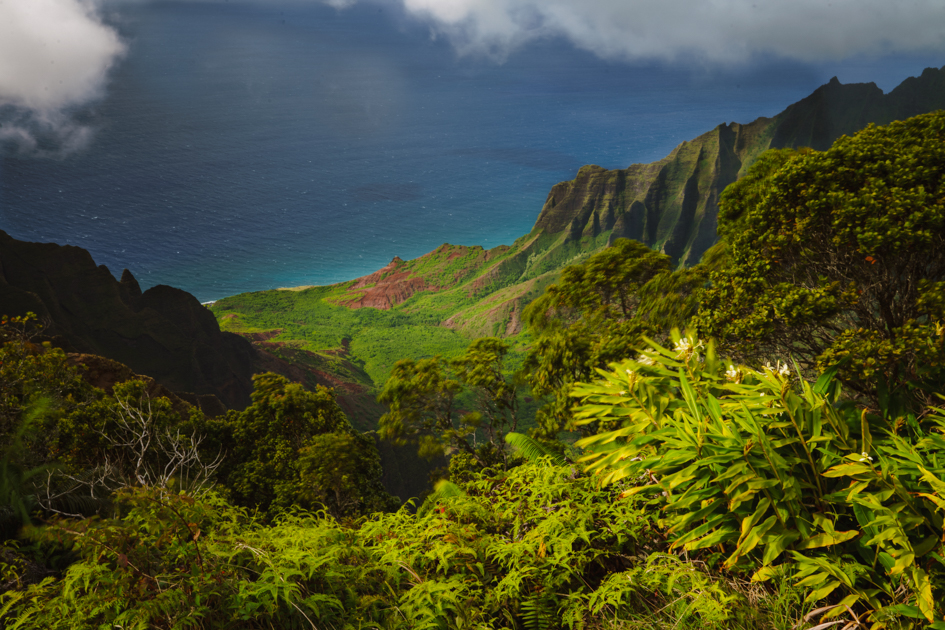
If you prefer a more relaxed option, some of the best views of the Nā Pali Coast come from above — specifically at Kalalau Lookout and Puʻu o Kila Lookout. These two overlooks sit at the end of the Waimea Canyon Drive, and they’re absolutely worth the trip.
How to Get There
Start by driving up Waimea Canyon Drive (Highway 550) from the town of Waimea. The road climbs through Waimea Canyon State Park — another stop worth making for its sweeping red-rock views (I cover this in my Waimea Canyon Blog). As you continue past the canyon, the road transitions into Kokeʻe Road, winding through cool mountain forest until it reaches the park’s upper lookouts.
- Kalalau Lookout sits at around 4,000 feet in elevation and offers one of the most famous views in Hawaii — a sweeping vista over the Kalalau Valley and out to the Pacific Ocean. On clear days, the deep greens of the cliffs contrast with the vivid blues of the sea below.
- Drive just a little farther and you’ll reach Puʻu o Kila Lookout, the final stop at the very end of the road. It’s slightly higher and offers an even broader perspective of the coast, especially at sunrise or late afternoon when the light paints the cliffs gold.
Tips for Visiting
- Weather changes fast — fog and clouds can roll in suddenly, so aim for early morning for the clearest views.
- Bring layers. Even though it’s Hawaii, temperatures can drop significantly at that elevation.
- Parking is limited, especially on weekends. The earlier you go, the easier it is to find a spot and enjoy some quiet.
Both lookouts are easily accessible by car, making them perfect for travelers who want stunning photos without the challenge of hiking. And if you plan to explore further, Kokeʻe State Park also offers several short trails with beautiful forest and ridge viewpoints nearby.
For more off-the-beaten-path viewpoints like these, you might enjoy my post on Kolekole Pass on Oahu, another spot where Hawaii’s landscapes reveal their hidden side.
5. Combining Experiences
Many travelers choose to combine two perspectives — hiking or driving to the lookouts one day, then seeing the cliffs from the ocean or air the next. Each view tells a different part of the story, and together they give you a complete sense of the coast’s power and beauty.
For a full island itinerary, my Hawaii Region Guide ties together all the must-see experiences on Oahu, Maui, Kauai, and the Big Island — perfect for anyone planning a multi-island trip.
Reflections on the Nā Pali Cliffs
Hard to Put Into Words
Some places simply defy description, and the Nā Pali Cliffs are one of them. No matter how many photos you take, no image ever feels big enough to capture their scale — or the quiet power they hold. As our boat drifted along the coast, I found myself lowering the camera more than once, just to take it all in.
The sharp ridges glowed green in the sun, waterfalls tumbled from hidden valleys, and the ocean shifted from deep blue to turquoise in the changing light. But beyond the beauty, there’s something deeper — a presence that you can feel but not quite explain.
A Living Link to the Past
Knowing that Hawaiian communities once lived here gives the cliffs a sense of timelessness. They’re not just a natural wonder — they’re part of Hawaii’s living history. Generations fished these waters, farmed in the valleys, and built temples (heiau) to honor the gods who shaped this land.
When you see the cliffs rising above the ocean, it’s easy to imagine what life might have been like — isolated yet deeply connected to nature. The same wind that rushes through the ridges once carried voices, songs, and stories that echoed along this coast. The Nā Pali Cliffs are more than a view; they’re guardians of those memories.
A Reminder from Kauai
As our boat turned back toward port, I glanced over my shoulder for one last look. The cliffs faded into mist, the sunlight softening their edges as if they preferred to keep a few secrets. It felt like Kauai was reminding me that some experiences aren’t meant to be perfectly described — they’re meant to be felt.
The Nā Pali Coast has a way of humbling you — reminding you of how small we are compared to the forces that shape this world. For me, it was one of those rare travel moments that stays with you long after you leave, quietly urging you to return.
If you’re planning your own journey through Hawaii, explore more of my island stories in the Hawaii Region Travel Guide, which links to highlights across Kauai, Oahu, Maui, and the Big Island— each with its own wild beauty and stories waiting to be discovered.
For more inspiration on routes like this, visit my cornerstone post Scenic Drives and Road Trips Across America.
Stay Connected
Love discovering hidden corners of America’s backroads and wild coastlines?
Subscribe to my Back Roads Lens newsletter to get travel photography stories, gear tips, and new guides — including more adventures from Hawaii’s islands — delivered straight to your inbox.


The photo from the lookout is breathtaking! I am enjoying reading your Hawaii posts. We traveled to Maui in 2019 and knew we would have to go back.