Sometimes the best adventures happen when you don’t overplan them. Acadia National Park was one of those for me — a quick detour that turned into a highlight of my Northeast travels. I’d been exploring the quieter side of coastal Maine, spending time on the rugged Schoodic Peninsula (where the fog rolls in faster than your shutter speed can keep up). From there, it only made sense to hop across Frenchman Bay and see Acadia’s better-known side for myself.
While the Schoodic side feels wild and remote, Mount Desert Island — home to Acadia’s main park loop — is full of contrasts: winding roads, ocean overlooks, and postcard-perfect towns like Bar Harbor. It’s the kind of place where you can watch the sunrise before most people have had their first cup of coffee and still have time to bike through century-old forests before lunch.
Even on a short visit, Acadia has a way of making you slow down. Whether it’s standing at the top of Cadillac Mountain as the sun spills over the Atlantic, photographing the iconic Somesville Bridge, or pedaling along the peaceful Carriage Roads, this park invites you to rediscover the rhythm of nature — one winding trail at a time.
Cadillac Mountain: Chasing the First Light in America
The Magic of Sunrise on Cadillac Mountain
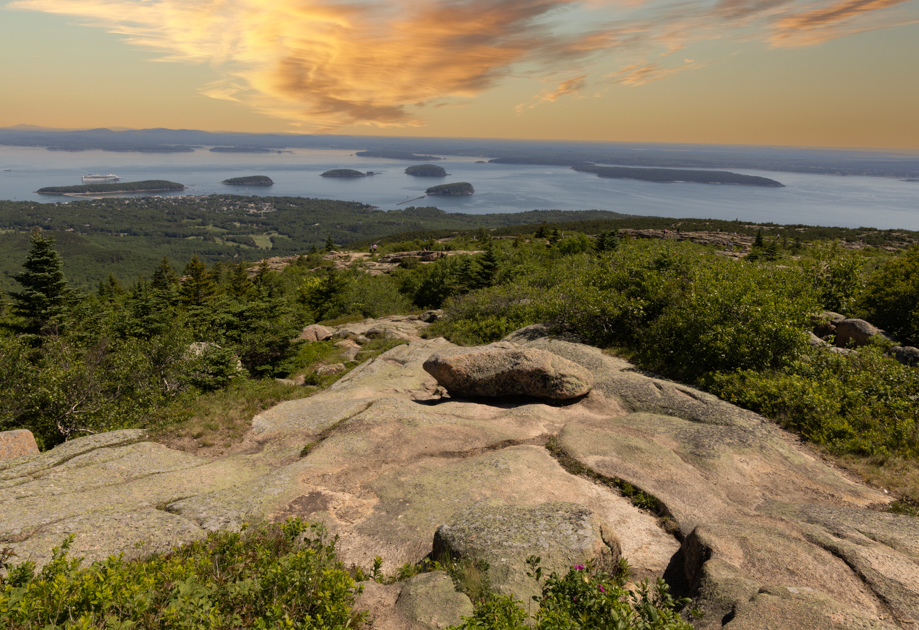
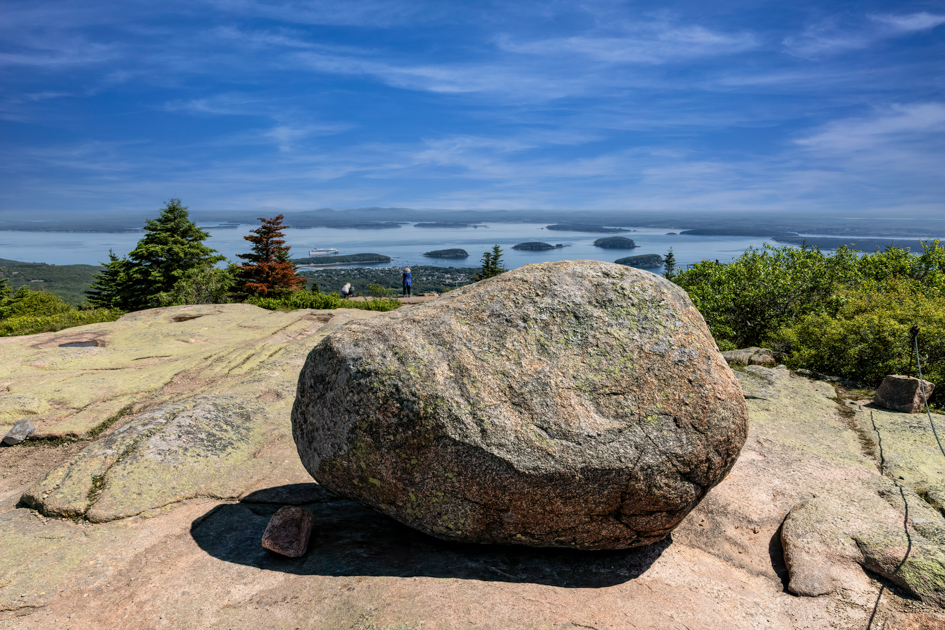
There’s something humbling about standing on Cadillac Mountain before sunrise — that soft, breath-holding silence when even the gulls haven’t decided whether it’s worth waking up yet. The air feels cooler up there, the kind of sharp coastal chill that sneaks under your jacket and makes the first sip of coffee taste better than it probably should.
From October to early March, Cadillac Mountain is the first place in the continental United States to see the sunrise. Watching that first light touch the Atlantic feels like witnessing the world wake up in real time. Even if you’re not a morning person (I definitely am not), it’s a moment worth losing sleep for.
Planning Ahead: Timed Entry and Park Passes
To enjoy that sunrise view, you’ll need to do a little advance planning. The Park Loop Road and summit access are open seasonally, and during peak months, a timed-entry vehicle reservation is required to drive to the top. These are in addition to the regular Acadia National Park entrance fee.
The National Park Service limits vehicles to protect the fragile summit environment and ensure a quieter visitor experience. Reservations often sell out days in advance — especially for sunrise — so it’s worth booking early. You can reserve your pass and check the most current regulations directly through the official National Park Service Acadia website.
If you’d rather skip the reservation system, you can also hike up Cadillac Mountain via the North Ridge or South Ridge Trails. Just remember to bring a headlamp and leave extra time if you’re planning to reach the top before dawn.
A Moment in the Dawnland: Honoring the Wabanaki People
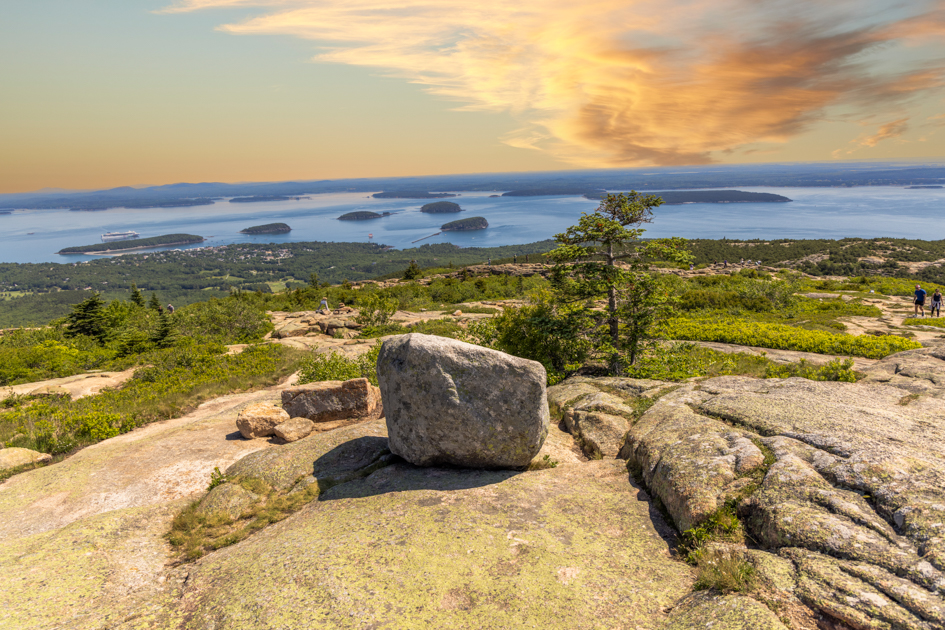
As the sky starts to glow, the mountaintop slowly comes to life — camera shutters click, tripods shuffle, and people quietly whisper “wow.” In that moment, it’s easy to see why the Wabanaki people, the Indigenous stewards of this land, call themselves the People of the Dawnland. Long before this was a national park, the Wabanaki gathered on this same mountain to welcome the sunrise.
Thinking about that legacy adds a sense of perspective that goes beyond photography. It’s a reminder that this beauty has been witnessed and honored for generations — and that we’re all just visitors passing through the same light.
Photography Tips for Capturing the First Light
For photographers, Cadillac’s sunrise is both exhilarating and challenging. The light shifts quickly, and the wind can make a lightweight tripod tremble. I like to arrive at least 45 minutes before sunrise to find a composition that balances the granite ridges and low alpine vegetation in the foreground.
A few tips that have worked for me:
- Use f/8 to f/11 for crisp focus throughout your frame.
- If the sky is much brighter than the landscape, try a graduated ND filter or exposure bracketing for post-processing.
- Pack a small, sturdy tripod — and something to weigh it down when the wind starts showing off.
When the sun finally breaks the horizon, the granite warms to gold, the sea turns silver, and everyone forgets how early it is. In that instant, you realize the photograph is just a souvenir — the real reward is standing there, watching the first light in America rise over the Atlantic.
Somesville Bridge: A Postcard in Real Life
Finding the Little White Bridge That Everyone Loves
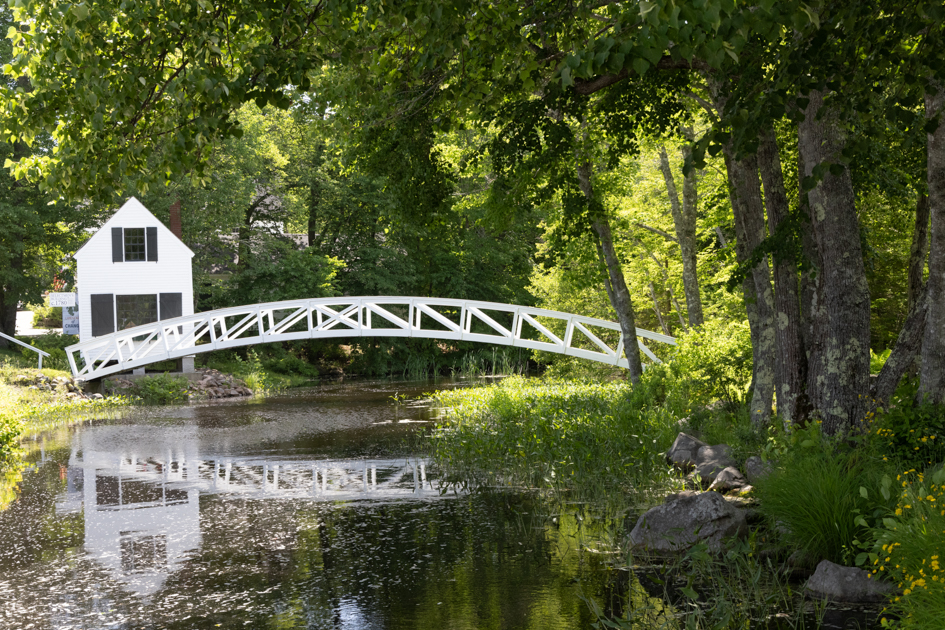
Just a few minutes from the bustle of Bar Harbor, tucked inside the quiet village of Somesville, sits one of the most photographed spots in Maine — the white Somesville Bridge. It’s small, charming, and looks like it stepped right out of a New England postcard. With its graceful arch, white rails, and a flower box that explodes with color all summer, it’s easy to see why everyone stops here.
I’d been chasing sunrises and sea spray around Acadia, so arriving in Somesville felt like stepping into calm. The bridge stretches across a narrow mill pond that perfectly mirrors its reflection — a dream for anyone who loves symmetry and still water. If you arrive early, before the tour buses, the only sound you’ll hear is the soft splash of ducks gliding under the bridge.
Photography Tips for a Perfect Reflection Shot
Morning is the best time to photograph Somesville Bridge — the light is soft, the pond is glassy, and the scene glows with that signature Maine freshness. I like to shoot from the far side of the pond so the full arch of the bridge and the flower box reflection sit perfectly centered in the water.
A few quick photography tips:
- Use f/8 or f/11 to keep the bridge and reflection sharp front to back.
- Bring a polarizing filter if you want to reduce glare on the water.
- A tripod helps for crisp detail, especially if the light is still low.
- Try a vertical composition for print or social media — it frames beautifully.
If you’re visiting in fall, the trees around the pond turn gold and orange, and the white bridge pops even more. In summer, the flowers bring bright pinks and reds — a living accent against all that white wood.
A Little Piece of Maine’s History
The bridge sits next to the Somesville Museum and Gardens, run by the Mount Desert Island Historical Society. The museum tells the story of the island’s early settlers, including Abraham Somes, who founded the village in 1761. The bridge itself has been rebuilt over the years but remains a tribute to the craftsmanship and pride that define small-town Maine.
As I photographed the bridge’s reflection, I couldn’t help but think how it connects beautifully — quite literally — to the stories behind other wooden bridges I’ve found in New England. If you love scenes like this, you might enjoy my post on Covered Bridges in the Northeast, where I explore several of these charming spans, including Vermont’s Taftsville and New Hampshire’s Honeymoon Covered Bridge.
Quiet Moments Off the Main Road
What I love most about Somesville Bridge isn’t just how it looks — it’s how it feels. Even though it’s one of the most photographed places in Maine, standing there early in the morning feels personal. There’s a serenity in watching the light change and the reflection sharpen as the world wakes up around you.
It’s one of those stops that doesn’t take long to visit but stays in your memory. A reminder that travel photography isn’t always about grand landscapes — sometimes it’s about slowing down and capturing the charm of the small places in between.
Biking the Carriage Roads: Stone Bridges and Still Waters
A Day on the Tri-Lakes Loop
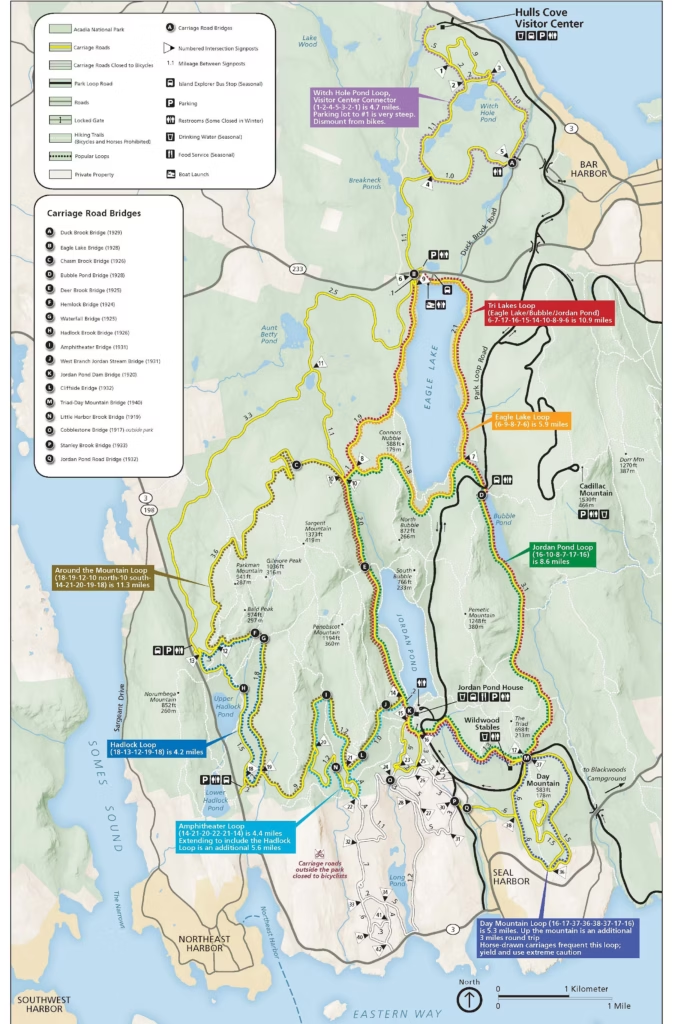
When we packed for this trip, our bikes were non-negotiable. The Carriage Roads in Acadia are a dream for cyclists — no cars, just a gentle rhythm of gravel paths winding through forests, around lakes, and over those famous stone bridges. We chose the Tri-Lakes Loop, marked in red on the park map, which links Eagle Lake, Bubble Pond, and Jordan Pond in one smooth ride.
It’s a little hilly in spots, but the views make up for every uphill stretch. The crushed-stone surface is well-kept and easy to ride on, and each turn reveals something new — sunlight flickering through birch trees, the call of loons echoing across still water, or a perfect photo stop at one of the hand-crafted bridges.
How the Carriage Roads Came to Be
The story behind these roads is almost as inspiring as the ride itself. Between 1913 and 1940, John D. Rockefeller Jr.financed and oversaw the construction of 45 miles of these beautifully designed roads. He wanted a way to experience Mount Desert Island’s wild beauty by horse-drawn carriage — free from the noise of motor cars that were beginning to dominate the roads elsewhere.
Every curve, bridge, and viewpoint was carefully planned to complement the landscape, not conquer it. The signature stone bridges — 17 in total — each have their own personality, built from local granite and designed to blend naturally into the scenery.
Though Rockefeller was the visionary here, I like to think that Theodore Roosevelt’s conservation legacy helped shape this spirit of stewardship. Both men believed in preserving the wild for future generations, and when you bike along these peaceful paths, you can feel that philosophy in every turn.
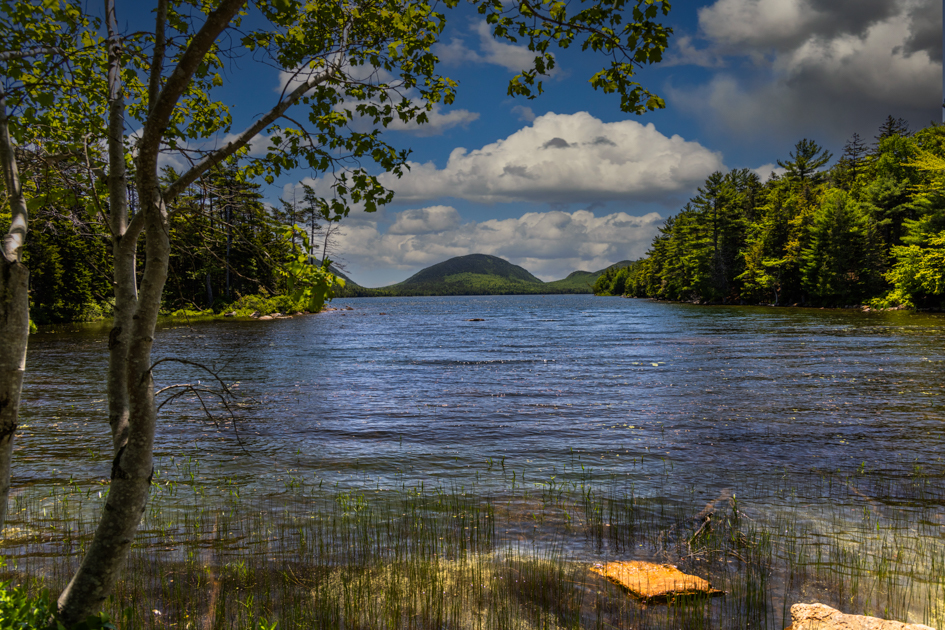
Riding Beside Eagle Lake
We started our ride around Eagle Lake, where the morning mist still hovered over the water. The reflections were incredible — soft blues and greens melting into each other. It’s one of those places where you can’t take a bad photo, no matter which direction you point your lens. The wide open stretches along the lake make for perfect long-exposure shots if you have a tripod, or quick handheld captures if you’re balancing on a bike (been there).
Lunch at Jordan Pond House
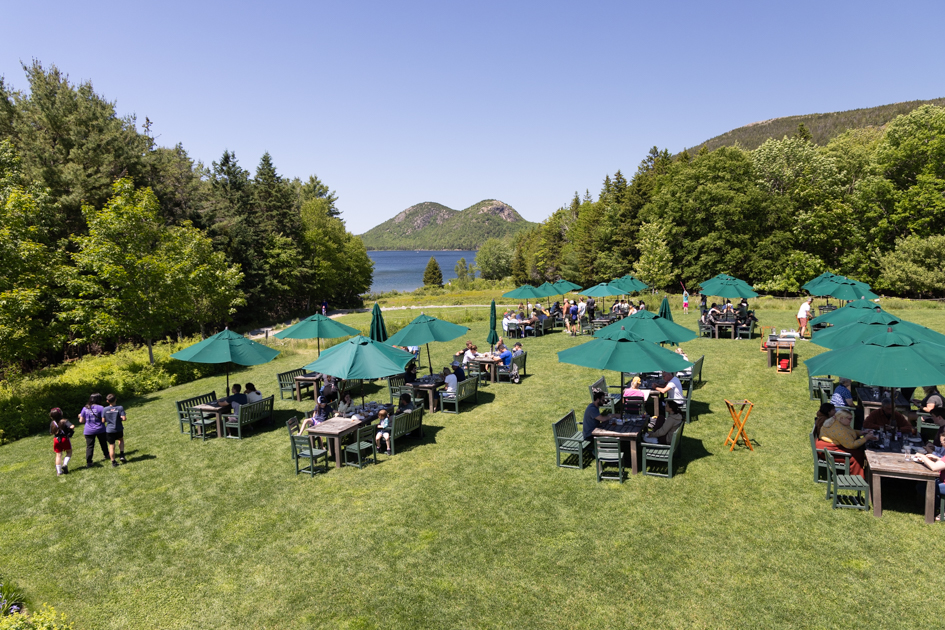
By midday, the scent of fresh popovers was enough motivation to pedal the final stretch to Jordan Pond House. It’s an Acadia tradition — ordering tea and warm popovers with butter and jam while looking out over Jordan Pond and the twin Bubbles rising in the distance.
We parked our bikes, grabbed a table on the lawn, and watched the ripples of the pond shimmer under the afternoon sun. It’s one of those perfect travel moments — simple food, a beautiful view, and a quiet sense of accomplishment after a good ride.
Jordan Pond: Still Reflections and Soft Light
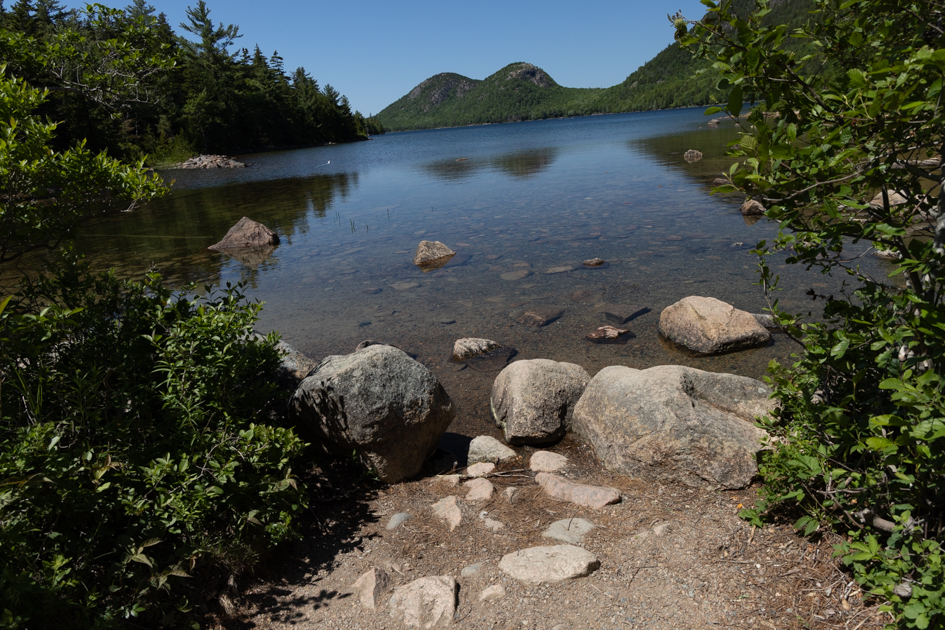
After lunch, we walked down to the water’s edge. Jordan Pond is known for its clarity — some of the clearest freshwater in Maine — and on calm days, the Bubbles reflect perfectly on the surface. For photography, I love shooting here in late afternoon when the light softens and the reflections deepen.
A few quick camera notes:
- For mirror-like water shots, use ISO 100, f/11, and a polarizing filter to manage glare.
- If clouds drift by, keep shooting — their reflections add texture to the scene.
- Bring a microfiber cloth… Jordan Pond breezes and camera lenses don’t always agree.
A Ride to Remember
By the time we looped back toward Eagle Lake, the light had shifted again — warmer, softer, more golden. That’s what I love about the Carriage Roads: they change with every hour, every direction, every season. Whether you’re biking, walking, or just photographing, they invite you to slow down and notice the small things — the sound of tires on gravel, the cool air off the lakes, the rhythm of nature at your own pace.
For anyone visiting Acadia, the Carriage Roads are a must. They’re not just scenic; they’re a living part of the park’s history — proof that beauty and preservation can coexist on the same path.
Wrapping Up: The Many Moods of Acadia
Every corner of Acadia tells a different story. From the quiet dawn atop Cadillac Mountain, to the still reflections of Somesville Bridge, to the rhythmic hum of tires on the Carriage Roads, this park has a way of showing its beauty one scene at a time.
What struck me most during this quick trip was how different the park feels depending on where you stand. The main loop on Mount Desert Island offers postcard-perfect views and easy access to famous spots, while the nearby Schoodic Peninsula delivers raw, untamed coastline and solitude. Together, they capture both sides of Acadia — the celebrated and the serene.
If you’re planning your own visit, my post on the Northeast Region is a great place to find nearby destinations and hidden detours worth adding to your route. And if you love photographing these kinds of landscapes, check out my Travel Photography Gear Guide — it’s where I share the exact setup I use for everything from mountain sunrises to soft water reflections.
Acadia is the kind of place that stays with you — not just for its views, but for its pace. Whether you’re catching the first light on Cadillac, coasting along the lakes, or watching fog drift over the coast, you can’t help but slow down. And that, I think, is what makes this park unforgettable.
Love sunrise views and back-road adventures? Join my newsletter and get travel photography stories, tips, and hidden destinations delivered straight to your inbox.